


If you want the freedom to game whenever and wherever you like, it’s hard to beat a gaming laptop. Today’s top machines pack enough grunt to replace a full desktop setup for most players – but with the bonus of being portable enough to take with you on the go.
Thanks to platforms like Steam, you can even stream your games from your laptop to your TV or other devices, turning it into a powerful console alternative when you want to kick back.
Gone are the days when gaming systems were massive, heavy beasts tethered to the nearest power point, and there’s even a whole breed of slimline gaming laptops delivering impressive performance in a thin, stylish package.
Whether you're after something sleek enough to slip into your bag and take to work or uni, or a full desktop replacement you can lug to your next LAN party, we’ve combed through the latest releases to help you find the best gaming laptop in Australia for your needs.
It’s also worth noting: our Australian lineup does look a little different compared to the US and UK markets. Thanks to the infamous 'Australia tax' on tech, local pricing can shift the value equation – but rest assured, every laptop here still delivers serious bang for your buck.
The best gaming laptops in Australia for 2026
Why you can trust TechRadar We spend hours testing every product or service we review, so you can be sure you're buying the best. Find out more about how we test.
Below you’ll find our full write-ups for each gaming laptop in the list.
The best gaming laptop overall
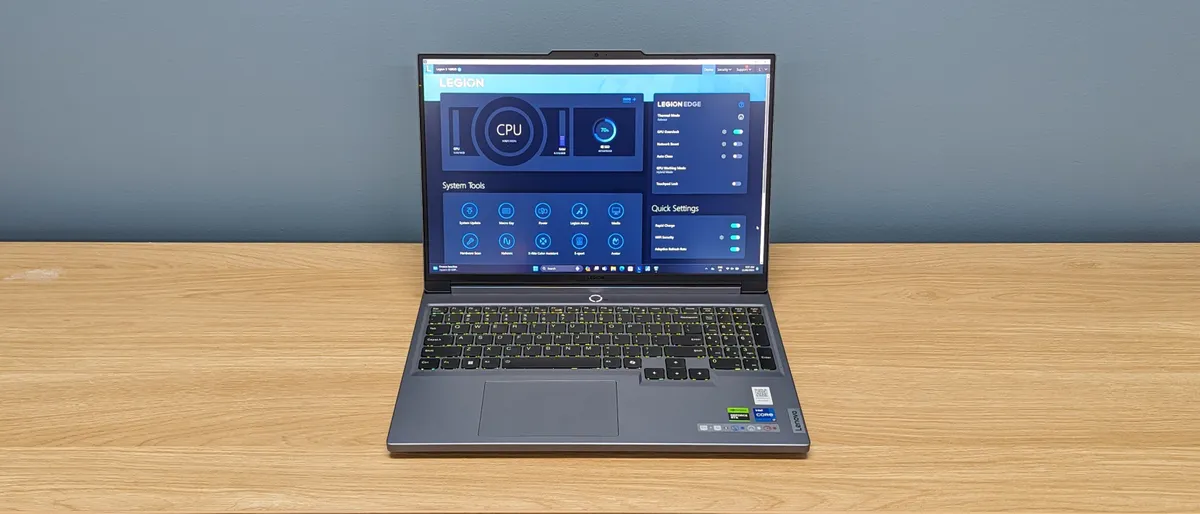
The Lenovo Legion 5i has long been a favourite amongst gamers looking for a great value laptop, and the Gen 11 model continues that formula with newer Intel CPUs, RTX 50-series graphics and an updated 15.3-inch OLED display. Our review of the Gen 11 Legion 5i is still in progress, but we have included a comparison below with the older model using the RTX 40-series GPU.
The best pricing for the 5i is often direct from Lenovo Australia — but only when discounted from full price. Discounts of around 20% to 30% are common, though the exact saving varies between configurations. Other retailers often have different configurations of the Legion 5i compared to Lenovo — such as extra RAM — but again they are only good value when discounted from RRP.
While the Gen 9 Legion 5i we tested had the Intel Core i7-14650HX CPU and an RTX 4070 GPU (as well as RTX 4050 and 4060 options) plus a 16-inch, 1600p, 165Hz display, the Gen 11 model is slightly different. You now have the option for an Intel Core 7 245HX, Core Ultra 7 251HX or Core Ultra 9 290HX Plus CPU, paired with an RTX 5060 or 5070 GPU. The display is now a slightly smaller 15.3-inch OLED panel, but keeps the same 2560 x 1600 pixel resolution and 165Hz refresh rate, while adding 100% DCI-P3 colour coverage and 500-nit brightness.
Gaming performance for the Legion 5i series is excellent, and the Legion 5i has a powerful cooling system that allows the GPU to work to its full potential. For the RTX 4070 Gen 9 model tested, even intense games such as Cyberpunk 2077 can achieve decent frame rates at the display's native resolution. Our Gen 11 testing is still in progress, so we will update this section with direct RTX 50-series performance results once it is complete.
Overall, the 5i is a powerful option for those who need a productivity laptop for work or uni, and while on the larger side, it's still able to be carried day to day without too much fuss.
Our Lenovo Legion 5i Gen 11 review is still in progress. In the meantime, read the full Lenovo Legion 5i (Gen 9) review
The best budget gaming laptop

The Victus 15 is designed with the cost-conscious buyer in mind and keeps prices low without sacrificing too much in terms of performance. Even in its base configuration, it can handle high-end games surprisingly well while remaining versatile enough for everyday tasks. While it’s not the flashiest laptop on the market, and battery life leaves something to be desired, its balance of price and performance makes it an appealing affordable gaming laptop for budget-conscious gamers.
Physically, the Victus 15 is a bit chunky, making it less ideal for travel, but its sturdy build ensures durability. The 15.6-inch display is a highlight for the price, offering good visuals and resolution alongside a surprisingly smooth 144Hz refresh rate. It also includes a solid selection of ports and a basic but functional keyboard, with current configurations offering backlighting for late-night gaming.
Still, all in all, given its affordability and well-rounded specs, the Victus 15 is a strong contender for those looking to game on a budget without compromising too much on performance.
Note that our linked review covers an older Victus 15 configuration. For current Australian models, we recommend the RTX 4060-equipped Victus 15 for now, as it offers much better value, but the RTX 5060 model is quickly dropping in price.
Read our full HP Victus 15 review
The best high-performance gaming laptop

The Lenovo Legion Pro 7i is one of the most powerful gaming laptops we’ve reviewed so far, thanks to its RTX 5090 mobile GPU. When we tested it out, it delivered some incredible gaming performance, absolutely smoking through every one of our graphics-based benchmark tests with flying colours.
Its display is an absolutely gorgeous 16-inch WQXGA OLED screen with a 240Hz refresh rate and 500-nit brightness, which means that when we took it for a gaming test drive, we found the refresh rate to be butter smooth. The laptop also features an RGB-lit keyboard with an excellent port selection to boot.
Of course, the chassis is very bulky and heavy, as expected for a desktop replacement laptop, with an uninspiring 4 hour, 37 minute battery life.
Still, this laptop was made purely for performance, and the trade-offs are worth it.
Read the full Lenovo Legion Pro 7i review
The best value gaming laptop

The Alienware 16 Aurora is a great mid-range gaming option that is surprisingly affordable — especially when on sale. It's a great option for those who want one laptop for gaming and work or study, as the 16-inch form factor gives you loads of screen real estate yet remains somewhat portable for a gaming laptop.
Our pick uses the Intel Core 7 240H and RTX 5060. Gaming performance from the RTX 5060 is pretty good, but important here is the power envelope used. This model only has a TGP of 80W, so it's slower than a 115W TGP RTX 5060, but it's still a reasonable deal for the specs if you want a more efficient but gaming capable machine. Note that with a 2560 x 1600 display, you will need to drop the game resolution or details back on demanding titles if you want to hit close to the panel's 120Hz refresh rate.
We don't yet have a review of this particular Australian variant. But perhaps most importantly, you can take an extra 13% off using the code FUTURE13%.
So if you are willing to time your purchase to match the discounted pricing, the Alienware 16 Aurora offers great bang for buck.
The best desktop-replacement gaming laptop

Alienware’s 18-inch Area-51 leans hard into the nostalgia of the old Area 51-M, with a chunky, metallic “Liquid Teal” carapace, sloped edges and a translucent rear that houses most of the ports and vents. RGB is everywhere, including fans and even the trackpad. PC Gamer found the optional Cherry MX mechanical keyboard responsive but disappointingly cheap-feeling for a laptop at this price.
Under the hood (depending on the variant chosen) you get hardware like an Intel Core Ultra 9 275HX CPU and a 175W RTX 5080, 64GB DDR5 RAM and a speedy NVMe SSD, backed by four fans and a 2560 x 1600, 300Hz IPS display.
PC Gamer tested the RTX 5090 version of the Area-51 and found its plugged-in gaming performance to be excellent, with only a similarly equipped HP Omen Max 16 edging it out in most of its gaming tests. Its large four-fan cooling system also performed well, and while the fans can get loud at maximum speed, PC Gamer found the character of the noise less irritating than on some high-performance laptops. Performance drops significantly away from mains power, and PC Gamer recorded around 80 minutes in a light gaming battery test.
The Area-51 also offers plenty of upgrade potential for a laptop this size. There’s no soldered memory, and its three M.2 slots give you room to expand the storage later.
The Area-51 comes in both an 18-inch and a 16-inch variant and includes GPU options up to the mighty RTX 5090.
All in all, while Alienware hasn’t nailed absolute world-beating performance, the design, feel and generous upgrade options make this a great option if you want to game primarily on a laptop, but want a desktop replacement and still need to carry it around without too much fuss.
While we have not yet been hands on with the 18-inch model, you can read the full PC Gamer Alienware 18 Area-51 review for its testing of the RTX 5090 configuration, or check out our review of the 16-inch Area-51 variant.
The best compact gaming laptop

Sure, it might be expensive, but the Razer Blade 14 is just a thing of beauty: a compact, lightweight, quiet, durable, and powerful gaming laptop that ticks just about every box.
Top-notch internal components are joined by a bright and vivid OLED display, with the classic machined metal chassis that has come to define the aesthetic of the Blade laptop line.
What's even better here is that despite its thin and light chassis, it boasts excellent gaming performance that's comparable to similarly-specced yet less portable gaming laptops. Also, for a thin laptop, it's got impressive cooling.
Read the full Razer Blade 14 review
The best slim 16-inch gaming laptop

The Asus ROG Zephyrus G16 and G14 have regularly been at the top of our best gaming laptop roundups thanks to their strong performance and slim, portable designs.
The G16 stands out thanks to a combination of a slim build that's perfect for carrying every day when on the go, and high-end GPU options for gaming and creator use. The 2026 G16 pairs an Intel Core Ultra 9 386H processor with an Nvidia RTX 5070, 5080 or 5090 GPU. The RTX 5070 is the entry point and should make the most sense for buyers who want to keep costs down, while the RTX 5080 and 5090 configurations offer more graphics power if you need it.
The G16 has a very stylish design, with LEDs that can be customised to stand out, or toned back for use in class or at the office. The 16-inch screen is a vibrant 2560 x 1600 OLED panel with 100% DCI-P3 colour reproduction and a 240Hz refresh rate for gaming. You can also choose between 32GB and 64GB of LPDDR5X memory, though the RAM is soldered and can't be upgraded later.
Previous G16 generations were available with both Intel and AMD processors, but the 2026 Australian range we're recommending here uses the Intel Core Ultra 9 386H.
Our review of the 2026 model is still in progress. In the meantime, read the full Asus ROG Zephyrus G16 (2025) review from our friends at PC Gamer
The best RTX 5090 gaming laptop


The MSI Titan 18 HX AI (2025) is an absolute monster of a gaming laptop, easily outperforming much of the competition. It's packed full of high-end hardware, such as a gorgeous 4K+ mini LED display and a mighty RTX 5090 GPU.
All those top-tier specs and performance come at a cost though, with the reviewed 2025 model launching at AU$11,799 in Australia, making it one of the most expensive gaming laptops available.
In our testing, the Titan 18 HX was able to easily achieve 60 FPS at 4K in many of the best PC games.
No surprise – battery life while gaming is terrible, but that really shouldn't be a concern since you're rarely going to take this beast off your desk and onto battery power unless you're going into another room in your house.
MSI now sells a newer Titan 18 HX A2W in Australia, with an Intel Core Ultra 9 290HX Plus processor and a 240Hz Mini LED display. For now, the 2025 Titan 18 HX AI remains our pick here because it is the model we've fully reviewed.
Read the full MSI Titan 18 HX AI (2025) review
The best dual-screen gaming laptop

The ROG Zephyrus Duo is one of the more interesting high-end gaming laptops available and is unlike almost any other machine.
The underlying spec is very premium — it pairs up to an Intel Core Ultra 9 386H processor with an Nvidia GeForce RTX 5090 laptop GPU running at up to 150W, giving it the headroom for demanding games and creative work.
The real draw, though, is the dual 16-inch 3K OLED touchscreen setup. Both panels use a 16:10 layout, giving you a proper multi-screen workspace in a laptop body, which is genuinely useful for streaming, editing, coding or keeping chat or other tools open while you work.
It’s still a big, expensive and niche machine at 2.82kg, but the CNC aluminium chassis, magnetic keyboard, vapour chamber cooling, 90Wh battery and generous port selection mean this is one hell of a laptop for the right buyer.
Our review is still in progress, but read more about this laptop from our friends at PC Gamer.
How to choose the best gaming laptop for you
Choosing the best gaming laptop is easy when you’ve got deep pockets or have a couple of thousand dollars to spare. It’s when your budget is more limited that getting a great gaming laptop becomes trickier.
Lucky for us, we’re getting plenty of more affordably-priced CPUs and GPUs that don’t compromise on power. The latest internals are more capable across a wide range of price points. That means that gaming notebooks under AU$4,000 can deliver excellent gaming performance while offering a portable, space-saving alternative to a gaming PC.
Still, some components are more powerful or cheaper than others. While it’s no longer a hard and fast rule, AMD’s offerings are generally more affordable, which means that AMD Ryzen-powered laptops tend to be slightly cheaper.
In terms of graphics cards, Nvidia is still king when it comes to performance, although which RTX card you should go for depends on the type of gaming experience you want. The RTX 4060 can still offer excellent value when heavily discounted, while the newer RTX 5060 brings a modest raw-performance uplift alongside newer DLSS features. For high-resolution gaming, look towards an RTX 5080 or 5090.
Consider the RAM as well. Other things to look at are the amount of storage, type of display, and type and variety of ports. Take a look at the battery life as well, especially if you plan on gaming on the go. Know that just because something is premium doesn’t automatically mean it’ll deliver a long battery life. And, of course, since you do have to like how your gaming notebook looks, think about the design and whether or not you want RGB lighting.
Whichever one you pick, however, we guarantee one of our recommended gaming laptops will let you dive into your favourite games, from the best cheap PC games to the best laptop games and the best PC games – all without tethering you to a desk.
What is the best laptop for gaming?
At a base level, you’re going to need a gaming laptop that runs the newest game releases, whether they’re AAA titles or games that require lower graphics settings. Ideally, you’ll want to pick a gaming laptop with a decent graphics card - it doesn’t have to be as advanced as the Nvidia GeForce RTX 5090, which can play even the most graphically intense games at the highest settings, but you’ll want something that can play any and every game, even if that means dropping back the detail levels in more demanding titles.
An RTX 5060 is typically the best bang for buck GPU on the more affordable side (or an RTX 4060 if you can find one), but the RTX 5070 can offer great value in many circumstances and is ideal for higher resolution screens or use with external monitors. The RTX 5080 and 5090 are very powerful, but need large cooling systems so are typically only seen in 16 or 17-inch or larger gaming laptops.
Memory is crucial in the best gaming laptops as well – especially for games with a lot of textures. The last thing you want is for your game to sputter or freeze in the middle of important action sequences or cutscenes, so you’ll want a gaming laptop with plenty of RAM to tackle those high-intensity games.
Screen size should also factor into your gaming laptop decision, and 14-inch, 15.6-inch and 16-inch models are the most popular. 17-inch or larger screens are great for gaming, but are much less portable than smaller laptops.
If you travel a lot or want to use your gaming laptop for work or uni, you’re going to want to consider weight, as well as if you need to use the big AC charger or whether USB-C charging is an option. Travelling will often also mean you need to make sure your gaming laptop has a decent battery life – though the best power banks can help top up compatible laptops between outlets.
How much RAM do I need for gaming?
Most gaming laptops start off with 16GB of memory in the base spec, which is a workable minimum these days. However, if you play a lot of demanding AAA titles or tend to keep other apps open while gaming, 32GB is usually the better sweet spot.
64GB can make sense if you also use the laptop for heavier creator work, virtual machines or other memory-hungry tasks, but it isn't necessary for gaming alone. Many larger gaming laptops still have upgradeable RAM, but thinner models increasingly use soldered memory, so check the exact configuration before buying if you think you'll want to upgrade later.
Is it worth it to get a gaming laptop?
Absolutely. Gaming laptops have closed much of the performance gap with desktop gaming PCs while becoming slimmer and more powerful. If you need something that's space-saving and/or portable yet powerful enough to tackle your favourite games, no matter if those are not-so-demanding games or the most graphically-intensive titles, one of the best gaming laptops is worth considering.
What is the best thin and light gaming laptop?
The best thin and light gaming laptops balance portability with enough cooling to keep gaming performance strong. The Razer Blade 14 is our pick if you want something compact and lightweight, while the Asus ROG Zephyrus G16 is a strong slim gaming laptop if you want a larger 16-inch display without moving to a bulky desktop replacement. Just keep in mind that thinner gaming laptops often cost more for a given level of performance, and may run their GPUs at lower power than bulkier models.
How we tested these gaming laptops
Testing a gaming laptop isn’t as easy as you might think. But, then again, neither is narrowing down your options and choosing the best one for you, which is why we take our job seriously. Even if that means gaming for hours on end – hey, someone’s gotta make the sacrifice, right?
In all seriousness, we put every gaming laptop we test through its paces to make sure it delivers as promised and is worth your hard-earned cash. That means that, on top of playing the latest and hottest games on it, noting things like gaming and thermal performance, we also run synthetic benchmarks like PCMark 10, 3DMark, UL Procyon and Geekbench 6 as well as battery tests.
Because a gaming laptop is only as good as its elements, we take a look at how smooth and fast the display is, how comfortable and responsive its keyboard is, whether or not there are enough ports on hand, and how good its overall design is. We also test the webcam, in case users want to utilise it for game streaming.
We then take everything we’ve learned about the gaming laptop and compare it to its price – whether or not its performance and features are worth that price tag, and whether or not it offers the best value to customers.
Latest updates
August 2026
Updates to reflect new gaming laptop generations, rising prices and new value areas.
