


We've done a little refresh of this list as Apple's new iPhone 18 Pro modes have arrived to win the position as best iPhone. While we've bumped up the Samsung Galaxy S26 Ultra as the best Android phone, given OnePlus has pulled out of the UK market, so the stellar OnePlus 15, while mentioned below, no longer gets a spot on this list.
While we chew other new phones, as we only put in phones in this list that we've thoroughly reviewed and tested and digested, the list is somewhat more condensed than before. But you can rest assured that the phones on this roundup are the ones we stand behind as the best you can buy today.
For more specific buying advice and top picks, read our best iPhone, best Android phone, best cheap phone, and best camera phone guides. Otherwise, read on for the best phones we recommend you checkout if you're in the UK.

I'm TechRadar's Phones Editor, and have been reviewing and writing about the best mobile devices for several years. Based in the UK, I handle news and feature coverage for the phones section of the site, and regularly edit TechRadar's phones-related reviews and buying guides. You'll find my byline on over 1,500 TechRadar articles.
The best phone for most people
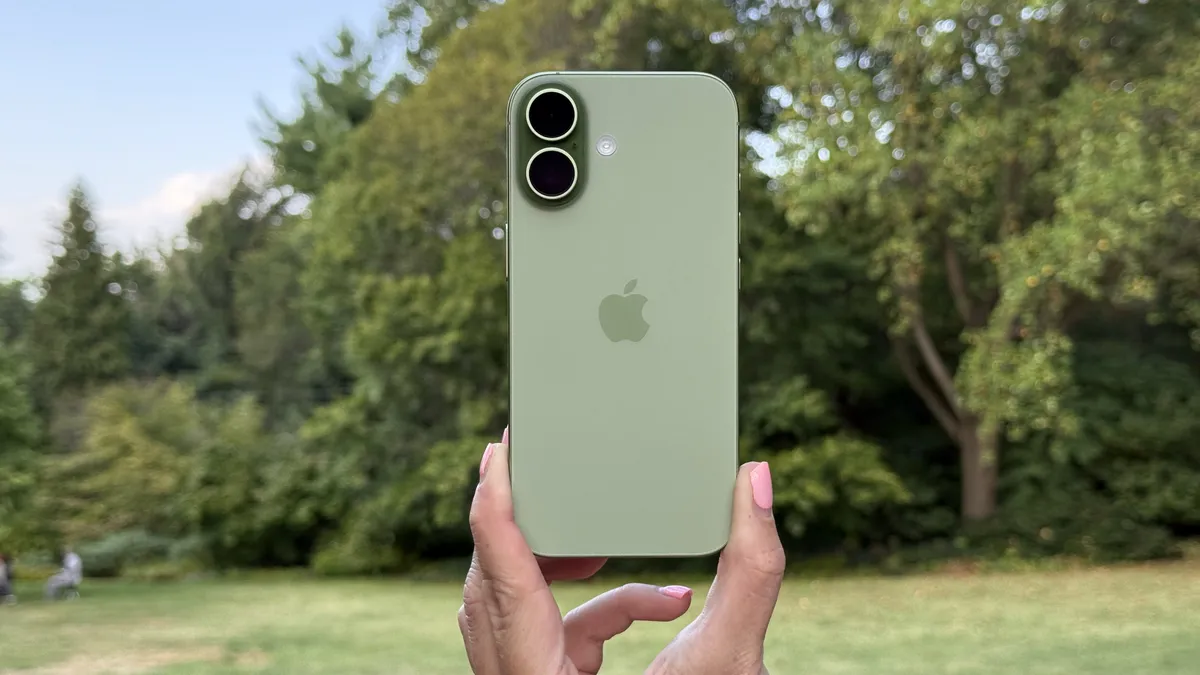


✅ You want a do-it-all iPhone: The iPhone 17 strikes a near-perfect balance between affordability and high-end features.
✅ You want a versatile camera system: Apple's 48MP main camera is plenty capable, but its revamped 18MP selfie camera is a real game-changer.
✅ You don't want to worry about storage: With its 256GB starting storage capacity, you'll be able to save hundreds of photos and videos on the iPhone 17 without worry.
❌ You want a dedicated zoom camera: The iPhone 17 offers a 2x sensor crop, but that can't compete with a dedicated telephoto lens.
❌ You want a bigger screen: At 6.3 inches, the iPhone 17 is a compact phone by today's standards. If you prefer bigger phones, go for the iPhone 17 Pro Max or iPhone Air.
For those who neither want nor need the feature overkill of Apple's Pro-level iPhones, the iPhone 17 is the best all-round phone on the market right now.
Why? Well, despite its relatively modest £799 price tag, Apple's latest base model still looks and feels like a flagship phone. It gets the same superfast 120Hz ProMotion display as the iPhone 17 Pro, as well as the same customizable Action button, Camera Control button, scratch-resistant Ceramic Shield 2 display cover, 48MP main camera, 18MP selfie camera, and, crucially, 256GB starting storage capacity.
Powering all of the above is the iPhone 17-exclusive A19 chipset, which facilitates a supremely slick scrolling, streaming, and gaming experience, not to mention the new and upcoming Apple Intelligence features.
In truth, the only real reason to go for the iPhone 17 Pro over the iPhone 17 is the latter's 48MP telephoto camera, superior heat efficiency credentials, and slightly better battery life. If you're a keen mobile gamer or video editor, those things may matter to you, but you'll have to pay a £299 premium to get them.
As regards its Android competition, the regular Samsung Galaxy S25 is a better phone for zoom photography, while the OnePlus 15 is a battery life champion. In fact, the iPhone 17 isn't the best at any one thing – but as a jack of all trades, it's hard to beat, especially considering that attractive 256GB starting storage capacity.
Read our full iPhone 17 review
The best iPhone


✅ You want the best iPhone cameras: The iPhone 18 Pro and 18 Pro Max take their three 48MP cameras to the next level, adding a variable aperture to the main camera and Pro controls across the board.
✅ You want that fastest iPhone: The new A20 Pro chipset continues to keep Apple's flagship phones firing on all cylinders.
❌ You want an affordable flagship: Now with a price hike, the iPhone 18 Pro and Pro Max are seriously expensive non-folding phones.
❌ You have an iPhone 17 Pro: The iPhone 18 Pro and 18 Pro Max refine their predecessors' formula rather than reinvent it, so the upgrade is less substantial, especially if you're not interested in the small changes.
Just as night follows day, a new iPhone Pro inevitably takes the crown from its predecessor. Enter the iPhone 18 Pro and iPhone 18 Pro Max, currently standing as the absolute best iPhones money can buy.
While both models see a slight price hike and maintain a largely familiar design, a few key refinements help them stand out. Powered by the new A20 Pro chip, performance is effortless. Casual users might not spot a drastic jump over the iPhone 17 Pro, but heavy users, like those importing massive 4K video files, will notice the speed boost, all kept cool by a new internal vapor chamber.
The visual experience gets a upgrade, too. A new anti-reflective display coating makes outdoor viewing easier, paired with a subtly smaller Dynamic Island. Battery life remains exceptionally strong: reviewer Jacob Krol squeezed around 30 hours of real-world use out of both models. In Future Labs' standardized tests, the 18 Pro lasted 16 hours and 17 minutes, while the Pro Max stretched to 18 hours and 27 minutes. Upgraded wired charging now juices the battery to 50% in just 15 minutes.
The star of the show, however, is the camera. The main 48-megapixel sensor now features a mechanical variable aperture (f/1.48 to f/4.0), offering photographers significantly better control over depth of field and low-light exposure. Combined with baked-in manual controls for shutter speed, white balance, and aperture, it's a serious upgrade. Even in point-and-shoot mode, Krol highlighted sharper details, richer highlights, and more natural focus falloff.
On the software front, iOS and updated Siri AI capabilities arrive out of the box, offering deeper app integration and personalized context (currently US-only).
If you have the budget and aren't already holding an iPhone 17 Pro, the iPhone 18 Pro and 18 Pro Max are top-tier flagship smartphones that comfortably head the pack.
Read our full iPhone 18 Pro and iPhone 18 Pro Max review
The best Android phone


✅ You want the most flagship of phones: There is no other phone around in our opinion that matches everything the Galaxy S26 Ultra can do, especially with is Privacy Display.
✅ You want a smart, smartphone: With improvements to Galaxy AI, Bixby and integration of Google's Gemini, the Galaxy S26 Ultra feels like a proper AI phone, with plenty of smart features to use when you need them.
✅ You want a phone that'll last for years: With seven years of major Android OS updates and plenty of AI features available now and likely to come in the future, plus a lot of performance overhead, the Galaxy S26 Ultra will last you for ages.
❌ You don't need a flagship phone: The Galaxy S26 Ultra is arguably overkill for most people who won't put all its power and features to use.
❌ You already have a Galaxy S25 Ultra: The chip and camera upgrades the S26 Ultra offers are iterative, and even with the Privacy Display, the minor updates don't make it worth upgrading to from the previous generation.
Samsung hasn't changed the Galaxy Ultra formula much from last year, but tweaks to the design, such as a subtly rounded chassis that improves one-handed comfort compared to the S25 Ultra, more performance, and slightly improved cameras, all make this flagship phone that little bit better.
The 6.9-inch Dynamic AMOLED 2X is still class-leading with its 1Hz–120Hz adaptive refresh rate and fantastic colours. But the new Privacy Display that selectively deactivates pixels in the screen to limit what can be see on the display if you're not looking at it directly, is a standout feature. In our use, it works very well, with a solid depth of customisation available.
That screen goes nicely with the snappy performance of Snapdragon 8 Elite Gen 5 for Galaxy. In our Future Labs testing, in Geekbench 6.5, with a single-core score of 3,766 and a multi-core score of 11,537 to the flagship iPhone 17 Pro Max’s respective scores of 3,871 and 9,829. So that's a lot of power that'll blast through multitasking and gaming.
Battery life is solid too, with a runtime of 16 hours and 10 minutes in our testing; it's slightly beaten by the iPhone 17 Pro Max, but only by an hour. The Galaxy S26 Ultra won't let you down on the battery front regardless.
While we can't say the cameras in the S26 Ultra have made significant steps over those in the Galaxy S25 Ultra, given the specs are basically the same, the small tweaks to aperture size and image processing has meant the Galaxy S26 Ultra remains a top pick for the best camera phones. Improved AI features also help make the S26 Ultra into a bit of a photo and video creation machine.
Of course, all this comes at a price, unless you get lucky in a seasonal sale. But for the starting price of £1,279, you get a very powerful and capable flagship smartphone and the best non-folding Samsung phone to date.
Read our full Samsung Galaxy S26 Ultra review
The best budget phone


✅ You want a smart smartphone for just under £500: This is a proper AI phone for below £500, and one that offers offers some of the most compelling AI features for the price.
✅ You want a durable phone that will last a while: The Pixel 10a is designed to last with a solid build quality and seven years of major Android OS and security updates.
✅ You want the cleanest Android experience: While not quite stock Android, the Pixel 10a comes with Google's best take on Android and is simply a joy to use with smart features all neatly integrated into it.
❌ You want the best in phone design: The Pixel 10a is pretty uninspiring on the design side and it's not going to win any phone design awards in my opinion.
❌ You have a Pixel 9a: If a Pixel 9a there here aren't enough upgrades here to justify upgrading to this phone.
WIth all the AI features the Pixel 10a offers, plus some neat design tweaks such as a flat pair of rear cameras while keeping the still impressive 6.3-inch OLED 'Actua' display, the new affordable Pixel phone replaces the Samsung Galaxy A56 on this list.
The Pixel 10a's Tensor G4 chip won't blow rivals away in benchmarks, but in our testing it rarely left us wanting more power in daily use; hardcore mobile gamers might want to look elsewhere, like towards our list of the best gaming phones. Occasionally, some slowdown popped up when more demanding tasks like image editing or summarisation, but this isn't a deal-breaker. Seven years of software and security updated should help keep the Pixel 10a ticking along nicely for some time.
The 5,100mAh battery is solid too; the Pixel 10a performed well in Future PLC’s lab battery test, keeping up and running for 15 hours and 16 minutes, which is some two hours longer than the Pixel 9a in the same test.
No big upgrades on the camera front means you don't need to rush out and get the Pixel 10a over the 9a, but the newer phone still delivers excellent photos with nicely balanced colors. One neat touch is the new Camera Coach feature that uses AI and haptics to nudge users into taking what the Pixel 10a reckons is the best possible photo.
By sticking with the same £499 price as its predecessor, the Pixel 10a continues to offer solid value at this price point. But like with previous A-series phones, expect potential discounts down the line, making it potentially an even better bargain if you don't need a new phone right now.
Read our full Google Pixel 10a review
The best foldable phone


✅ You want the most powerful foldable: With its Snapdragon 8 Elite for Galaxy chipset, the Galaxy Z Fold 8 Ultra is massively powerful;.
✅ You want strong foldable cameras: Despite its foldable form factor, the Galaxy Z Fold 8 Ultra boasts an impressive array of cameras, including a new 50MP ultra-wide camera.
✅ You don't want a visible crease: The Galaxy Z Fold 8 Ultra fold flat and has a barely visible crease.
❌ You want to use the S Pen: Samsung has stuck with ditching the digitizing layer on the Galaxy Z Fold 8 Ultra, so the phone doesn't support the S Pen accessory.
❌ You have a limited budget: Samsung has upped the price of its foldable flagship, with the Fold 8 Ultra costing as ,uch as a well-specced laptop.
Despite the "Ultra" name, the Samsung Galaxy Z Fold 8 Ultra is an iterative refinement on the Galaxy Z Fold 7, rather than a full redesign. Yet, these subtle tweaks elevate the market’s top foldable, firmly preserving Samsung’s dominant lead in the segment.
The updated chassis unfolds completely flat and boasts a thinner profile, rendering the 8-inch dynamic refresh rate display virtually creaseless for an exceptional mini-tablet experience. Despite the slimmer body, Samsung managed to fit a 5,000mAh battery that lasted 12.5 hours in reviewer Lance Ulanoff’s real-world testing, and stretched to an impressive 14 hours in standard lab benchmarks.
Powered by the Qualcomm Snapdragon 8 Elite Gen 5 for Galaxy, it easily handles heavy productivity tasks and mobile gaming, though the rear panel can run warm under sustained stress.
Camera upgrades are modest, headlined by a sharper 50MP ultra-wide sensor alongside improved image processing and AI tools. While the lingering 10MP 3x optical zoom feels stingy for a flagship, the overall camera array competes well with top non-folding devices.
At £1,899, driven up in part by soaring memory costs, it is a steep investment. However, if you want the absolute pinnacle of foldable tech, nothing else compares.
Read our full Galaxy Z Fold 8 Ultra review
The best flip phone


✅ You want the most powerful flip phone: With its Snapdragon 8 Elite chipset, the Razr 60 Ultra trumps the Samsung Galaxy Z Flip 7 for raw performance.
✅ You want a long-lasting flip phone: The Razr 60 Ultra boasts truly all-day battery life thanks to a bigger, faster-charging battery than the Galaxy Z Flip 7.
✅ You don't want a visible crease: The crease (or lack thereof) on the Razr 60 Ultra is among the best on any flip foldable right now.
❌ You're a keen zoom photographer: As with all other flip phones right now, the Razr 60 Ultra doesn't have a telephoto lens, so its zoom capabilities are limited.
❌ You're on a budget: At £1,099, the Razr 60 Ultra is incredibly expensive; cheaper flip options are available from Samsung, Xiaomi, and Nubia.
For the most complete flip phone experience money can buy, our recommendation is the Motorola Razr 60 Ultra (otherwise known as the Motorola Razr Ultra 2025 in the US).
For fans of Samsung's OneUI software, the Samsung Galaxy Z Flip 7 is an equally strong option, but as you can read in our Samsung Galaxy Z Flip 7 vs Motorola Razr 60 Ultra comparison, the Motorola is the on-paper champ.
Specifically, it boasts a more powerful chipset (the Snapdragon 8 Elite), more RAM (16GB), more megapixels in some of its cameras (a 50MP main and ultra-wide), a bigger, faster-charging battery (4,700mAh), and brighter, higher-resolution screens.
In other words, the Razr 60 Ultra doesn't ask that you compromise on performance by choosing its foldable form factor. Instead, it's a powerful, long-lasting device with intuitive Android software and a range of great colour options.
As for criticisms, there's no telephoto camera to speak of on the Razr 60 Ultra, so keen zoom photographers will want to look at one of the best camera phones instead. Additionally, Motorola's AI features aren't anything special just yet (in that battleground, Samsung's Galaxy AI is the clear winner), though Motorola has committed to providing the Razr with three major Android OS updates and four years of bi-monthly security updates.
Of course, at £1,099, it's also an extremely expensive phone. But the Galaxy Z Flip 7 is only marginally cheaper in the UK (£1,049), and as mentioned, the Razr 60 Ultra bests the Samsung in a number of hardware departments.
Read our full Motorola Razr 60 Ultra review
FAQs
What is the best phone?
Objectively speaking, the best phones right now are the Apple iPhone 17 Pro Max, Samsung Galaxy S26 Ultra, or OnePlus 15, but all three excel at different things. The former boasts the best mobile cameras on the market, while the Samsung is a feature-packed powerhouse. The OnePlus 15, meanwhile, is the battery life champion. If you're not looking to pay their stratospheric asking prices, the iPhone 17 is our current pick as the best phone for most people, while for foldable phone fans, the Samsung Galaxy Z Fold 7 and Motorola Razr 60 Ultra are worth considering.
How to choose the best phone for you
Depending on the way you use your smartphone, there are likely to be one or more aspects of a device that are important to you.
If you want a hardy smartphone, you should check whether it has an IP rating – this will dictate how protected it is against dust and moisture. Also consider its material – ceramic is very fragile, as is glass, but plastic and metal can be more protective.
If you stream a lot, you might want a good-looking display. Bigger, up to 6.8 inches, might be useful for you, as will a resolution over 1080p. Refresh rates of 90Hz or 120Hz also ensure that motion looks smoother.
Battery life can be a pain for people, though capacity doesn't always dictate how long a mobile lasts. A phone needs to last at least a day to be useful for most people, though some go up to two days.
Charging speed is also important, and anything of 65W or up is good, though some phones now offer over 120W. The best phones power up in under an hour, and some even take less than 30 minutes.
Camera quality is hard to convey through a specs list, so you'll have to rely on our analysis and testing to see how good they are – but it's always useful to find a camera phone with multiple lenses and modes.
What is the best gaming phone?
The best gaming phone on this list is either the iPhone 17 Pro Max or the OnePlus 15. The former's powerful A19 Pro chipset and new vapor chamber cooling system mean it’ll run demanding games smoothly while keeping uncomfortable heat away from a user’s fingers. The OnePlus, meanwhile, can top out at 165Hz in compatible titles like Call of Duty: Mobile for a super smooth gameplay experience.
What smartphone has the best battery life?
The OnePlus 15 offers the best phone battery life; in our testing, it lasted for three full days of casual use. The iPhone 17 Pro Max is also a long-lasting phone, but with its 7,300mAh battery, the OnePlus 15 is the undisputed endurance king.
How we test
Every phone on this list was subjected to a full TechRadar review, and therefore our entire testing process. The core part of this process involves using the phone as our own for one week or more. We slot our SIM card in, and use the device for social media, entertainment, photography and other normal tasks.
This is so we can emulate how you'll use the device if you buy it. It helps us understand all the quirks of a phone that you don't notice if you just leave the device in a lab and test it. Of course, we do some lab tests, too, for some direct comparison.
So, we'll game and we'll do benchmark tests to work out how powerful a phone is; we'll time a phone when it's charging but also just work out how powering fits into our morning routine; we'll test how long a phone takes to run down, but also just handle it day-to-day for a long period of time.
Our main areas of focus in our review are the phone's design, display, cameras, performance, software and battery life, though of course its price is also important for our final judgement.
Not found the best phone yet?
Why you can trust TechRadar We spend hours testing every product or service we review, so you can be sure you're buying the best. Find out more about how we test.
You're at the end of our best smartphone guide, but that doesn't mean we can't help you further. If you still can't decide which model is right for you, we've got a tool that can compare all the phones together to help you determine which one suits you best, based on the cost.
If you want to get all the info, head over to our full mobile phone deals page.
- You've reached the end of the page. Jump back up to the top ^