





The ultimate Galaxy Ultra phone, boasting a slimmer design, stronger performance, and smarter features, though it's not such a big leap over the previous model that every S25 Ultra owner needs to rush out and upgrade.
Pros
- Unique Privacy Display
- The most powerful chipset on the market
- Phenomenal cameras
Cons
- More expensive in certain regions
- Still no MagSafe-style wireless charging
The Galaxy S25 Ultra remains a superb all-round flagship with excellent performance, battery life, cameras, and useful AI features; the Galaxy S26 Ultra simply refines this winning formula.
Pros
- Still-powerful chipset delivers blazing performance
- Gorgeous 6.9-inch display
- Excellent battery life
Cons
- No Privacy Display or Super Steady mode
- Slightly thicker and heavier
The Samsung Galaxy S26 Ultra has arrived, and on paper, it looks like exactly the kind of update Samsung likes to make to its biggest flagship: it's slimmer, faster, and a little smarter, but doesn't stray far from a formula that already worked. Put it next to the Galaxy S25 Ultra, and you're looking at a more polished version of one of the best phones money can buy.
That leaves the Galaxy S25 Ultra in an awkwardly strong position: it's still a premium, hugely capable phone with excellent cameras, outstanding battery life, and more power than most people are ever going to need. The newer model may be thinner and more advanced, but the older one has not suddenly become less impressive, especially if it starts showing up with discounts or generous contract deals.
So, which device makes more sense for you? In this Samsung Galaxy S26 Ultra vs Galaxy S25 Ultra face-off, we've compared their price, designs, displays, and more key features to help you answer that question.
Samsung Galaxy S26 Ultra vs Samsung Galaxy S25 Ultra: specs comparison
Before we dig into the details, here’s an overview of both phones’ key specs:
| Header Cell - Column 0 | Samsung Galaxy S26 Ultra |
Samsung Galaxy S25 Ultra |
|---|---|---|
Dimensions: |
163.6 x 78.1 x 7.9 mm |
162.8 x 77.6 x 8.2mm |
Weight: |
214g |
218g |
Display: |
6.9-inch Dynamic AMOLED 2X |
6.9-inch Dynamic AMOLED 2X |
Refresh rate: |
1Hz–120Hz |
1Hz-120Hz |
Peak brightness: |
2,600 nits |
2,600 nits |
Chipset: |
Snapdragon 8 Elite Gen 5 |
Qualcomm Snapdragon 8 Elite |
RAM: |
12GB / 16GB |
12GB |
Rear cameras: |
200MP main, 50MP ultra-wide, 10MP + 50MP telephoto |
200MP main, 50MP ultra-wide, 10MP + 50MP telephoto |
Front camera: |
12MP |
12MP |
Battery: |
5,000mAh |
5,000mAh |
Charging: |
60W wired, 25W wireless |
45W wired, 15W wireless |
Storage: |
256GB / 512GB / 1TB |
256GB / 512GB / 1TB |
Samsung Galaxy S26 Ultra vs Samsung Galaxy S25 Ultra: price and availability


Samsung launched the Galaxy S26 Ultra in March 2026, with prices starting at $1,299.99 / £1,279 / AU$2,199 for the 256GB model, rising to $1,499.99 / £1,449 / AU$2,199 for the 512GB model. A 1TB version is also available for $1,799.99 / £1,699 / AU$2,649.
The Galaxy S25 Ultra arrived a year earlier and started at $1,299 / £1,249 / AU$2,149 for 256GB, then $1,419 / £1,349 / AU$2,349 for 512GB, and $1,659 / £1,549 / AU$2,749 for the 1TB option above that.
That leaves the basic shape of this contest pretty clear. In the US, Samsung has effectively held the line at the entry level, but in the UK, the Galaxy S26 Ultra has edged up in price, and the gap gets wider once you move beyond 256GB.
The newer S26 Ultra is not wildly more expensive, but it is still asking for more money in a category where the S25 Ultra already felt firmly premium.
Winner: Galaxy S25 Ultra
Samsung Galaxy S26 Ultra vs Samsung Galaxy S25 Ultra: design


At a glance, these two phones are clearly cut from the same cloth, but the Galaxy S26 Ultra does make a better first impression.
To start with, it's slightly thinner and lighter than the Galaxy S25 Ultra (at 7.9mm and 214g), and Samsung has softened the corners a touch, which helps it look and feel a little less severe in the hand.
There is also a new raised camera surround on the back, giving the S26 Ultra a fresher look without pushing into full redesign territory.
Mind you, the Galaxy S25 Ultra still looks and feels every bit the premium flagship, with its strong titanium frame, built-in S Pen, and more squared-off Ultra styling. You won't be disappointed by the appearance of either phone.
Interestingly, the two phones do actually use different materials, with Samsung moving from titanium on the S25 Ultra to Armor Aluminum on the S26 Ultra. That sounds like a downgrade, but in real-world use, aluminium has slightly better thermal performance than titanium.
Winner: Galaxy S26 Ultra
Samsung Galaxy S26 Ultra vs Samsung Galaxy S25 Ultra: display


This is one of the closest sections in the whole comparison.
Both phones pair a 6.9-inch Dynamic AMOLED 2X display with a 1440 x 3120 resolution, a 1Hz–120Hz adaptive refresh rate, and a peak brightness of 2,600 nits, so the core experience is much the same on paper.
Essentially, the Galaxy S25 Ultra already had one of the best screens around, and the Galaxy S26 Ultra does not try to reinvent that formula.
The new twist is Samsung’s built-in Privacy Display on the Galaxy S26 Ultra, which narrows viewing angles to make the screen harder to read from the side, giving the newer phone a genuinely useful extra. Of course, you can get this effect on other phones using a special screen protector, but it's nice to have the option to turn it on or off on the Galaxy S26 Ultra.
The trade-off is that our testing found the S26 Ultra to be slightly dimmer than the S25 Ultra in practice, even if the difference is small enough that most people are unlikely to notice it day to day. Some users have also complained of headaches being caused by Privacy Display, though that's not something we've experienced ourselves.
Winner: Galaxy S26 Ultra
Samsung Galaxy S26 Ultra vs Samsung Galaxy S25 Ultra: cameras


2026 is not a year in which Samsung has ripped up its flagship camera hardware and started again.
Both the Galaxy S26 Ultra and S25 Ultra give you a 200MP main camera, a 50MP ultra-wide, a 10MP 3x telephoto, a 50MP 5x telephoto, plus a 12MP selfie camera, so you're covered at a very high level with both phones.
On paper, in fact, the two camera setups look almost identical, but the S26 Ultra does slightly pull ahead when you dig into the details.
Samsung has widened the main camera’s aperture from f/1.7 on the Galaxy S25 Ultra to f/1.4 on the S26 Ultra, and the 5x telephoto moves from f/3.4 to f/2.9, which helps both lenses gather more light in darker scenes.
Samsung claims 47% more brightness for the main camera and 37% more for the telephoto, and while those figures don't make the S26 Ultra a drastically better camera phone than the S25 Ultra, our review found the S26 Ultra to be a touch clearer and cleaner in low light and at longer zoom ranges.
Video is strong on both phones, too. The Galaxy S25 Ultra can shoot in up to 8K at 30fps, so it's not missing any headline capture mode, while the Galaxy S26 Ultra builds on that with more advanced video tools aimed at people who want to do more than just point and shoot (like the APV codec).
The newer phone also boasts an amazing Super Steady mode, which uses a gyroscope and accelerometer to hold the horizontal plane even as you turn the S26 Ultra a full 360 degrees. It's quite something in reality.
Of course, the S25 Ultra is not suddenly a weak camera by any means, and indeed, it featured on our list of the best camera phones for most of 2025. But in a head-to-head shootout, the Galaxy S26 Ultra is the more capable photography package, even if the upgrade is more about refinement than reinvention.
Winner: Galaxy S26 Ultra
Camera samples
To help you visualize the similarities and differences between the two phones' cameras, here's a selection of similar images taken by TechRadar's Editor-at-Large, Lance Ulanoff, with the Galaxy S26 Ultra and Galaxy S25 Ultra.
Galaxy S26 Ultra camera samples


Galaxy S25 Ultra camera samples


Samsung Galaxy S26 Ultra vs Samsung Galaxy S25 Ultra: performance and software


The Galaxy S26 Ultra has the easy but potentially undeserved win here.
The device runs on Qualcomm’s Snapdragon 8 Elite Gen 5 for Galaxy, comes in a choice of either 12GB or 16GB RAM, and ships with Android 16, giving it the stronger spec sheet and a little more long-term breathing room.
Samsung also claims meaningful gains in CPU, GPU, and NPU performance, which matters less for basic day-to-day use than it does for gaming, heavy multitasking, and the growing pile of AI features.
That said, the Galaxy S25 Ultra is hardly struggling: it already felt excessive for most people, with a Snapdragon 8 Elite for Galaxy chip, 12GB of RAM, and more than enough power for demanding apps, photo editing, and years of use.

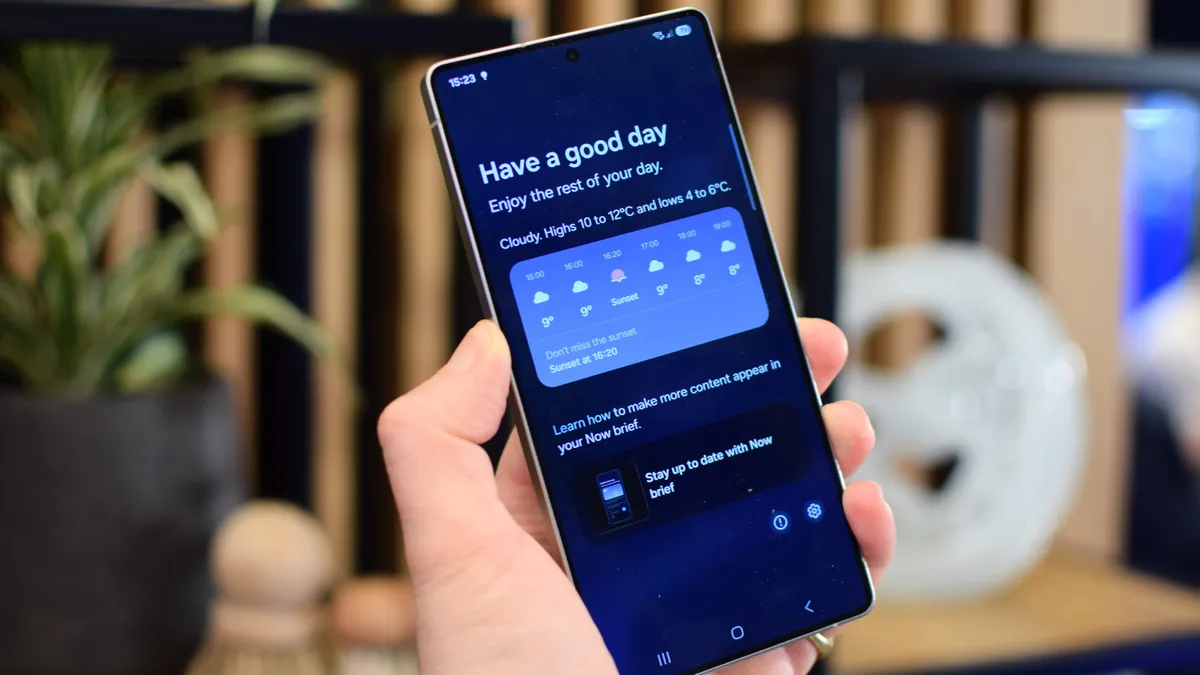


The performance gap, then, is real but not dramatic in everyday use. In truth, 99% of users won't be able to tell the difference in power between these two phones.
The Galaxy S26 Ultra looks better equipped for the long haul (you'll also get one extra year of software support), but the Galaxy S25 Ultra continues to offer more power than most buyers will ever truly need. Both are powerhouse performers.
Winner: Galaxy S26 Ultra
S26 Ultra vs S25 Ultra: battery


When it comes to battery life, the Galaxy S26 Ultra doesn't change much on paper, but it still has a small advantage, keeping the same 5,000mAh battery as the Galaxy S25 Ultra but adding faster charging at up to 60W wired and 25W wireless.
As with performance (and cameras, and display...), the Galaxy S25 Ultra is hardly weak in this area. Its 5,000mAh battery already delivers excellent stamina, and 45W wired charging plus 15W wireless charging is still solid by flagship standards.
Indeed, in our testing of the S25 Ultra, it managed to run for 18 hours and 35 minutes at the standard 60Hz refresh rate, only dropping to 17 hours and 15 minutes when we switched to the more resource-intensive adaptive refresh rate.
It's a similar story for the Galaxy S25 Ultra, which we found comfortably lasted beyond 24 hours in normal use, even with the brightness pushed up, the refresh set to 120Hz, and the resolution at QHD+. In a similar screen-on lab test, it would surely last just as long as the S25 Ultra, if not longer.
For many buyers, battery life is unlikely to be a deciding factor between these two phones, because both are built to go the distance.
Winner: Galaxy S26 Ultra
S26 Ultra vs S25 Ultra: verdict

In short, the Galaxy S26 Ultra is — surprise! — the better phone overall. It's slimmer and lighter, adds a couple of useful camera upgrades, brings faster on-paper performance, and charges more quickly, all without losing the core strengths that made the S25 Ultra so easy to recommend last year.
The catch is that the Galaxy S25 Ultra has not dropped far behind: it's still a brilliant flagship with a huge, high-quality screen, excellent cameras, top-end power, and battery life that remains hard to fault.
If the official price gap is wide enough, or you find a strong deal on the older model, it's arguably the better pick. But in a spec-by-spec comparison, the newer Galaxy S26 Ultra takes the crown.
Overall winner: Samsung Galaxy S26 Ultra
Follow TechRadar on Google News and add us as a preferred source to get our expert news, reviews, and opinion in your feeds. Make sure to click the Follow button!
And of course you can also follow TechRadar on TikTok for news, reviews, unboxings in video form, and get regular updates from us on WhatsApp too.