


If you're on the hunt for the most capable camera available today, then mirrorless is where it's at – and the TechRadar team has tested every major release from the likes of Canon and Sony over the past 15 years. The format has evolved dramatically since the earliest Micro Four Thirds models by Panasonic and Olympus, usurping DSLRs to become the default choice for almost every kind of photographer and filmmaker.
Whether you want an entry-level body or a professional hybrid, mirrorless sets the benchmark today. Consider the Sony A7 V: with crisp 33MP stills, blazing fast performance, and robust battery life, we found it a superb all-rounder during our in-depth review. That said, other models excel in different ways. The Canon EOS R10 remains our favorite mirrorless camera for beginners, while the recent Hasselblad X2D II has seriously raised the bar for image quality.
This guide includes our top mirrorless picks across a range of categories and budgets. Every camera featured here has been put through extensive real-world testing by our experienced team, so we can confidently recommend them based on that in-depth experience. We’ve also included a few worthy alternatives because it's a well-contested space, plus a look ahead to upcoming models that might be worth waiting for.

I'm TechRadar's Cameras Editor and have been reviewing cameras for over 15 years, during which time the best mirrorless cameras have really come to the forefront; Canon, Sony, Nikon, Fujifilm, Leica, Panasonic, OM System and more – they are all in on the action. From entry-level hybrids to high-res workhorses, competition is fierce across all categories, so only the very best cameras feature here, for every kind of photographer and budget.
Why you can trust our judgement
Every mirrorless camera featured in this guide has been extensively tested by one of our expert reviewers, and our team has decades of collective experience when it comes to testing and assessing photography equipment – we’ve reviewed every major mirrorless model since the format first emerged.
☑️ 100s of cameras reviewed
☑️ 15 years of product testing
☑️ Over 16,000 products reviewed in total
☑️ Nearly 200,000 hours testing tech
We test each camera in authentic conditions. Think studio shoots, street photography, and video production. Our reviews dig into all of the headline specs, too, like image quality, autofocus performance, handling, battery life, usability, and video features.
We kick things off by looking at the camera's design, handling, and controls to get a sense for the kind of photographer it's made for and who'll most enjoy shooting with it. Then, when we take the camera out on a shoot, we'll use it both handheld and on a tripod to pinpoint its strengths and test its startup speed.
To test performance, we use the fastest formatted memory card compatible with the camera – whether that's UHS-I, UHS-II, CFexpress A or B – and shoot in both raw and JPEG formats if available. Continuity is important, too, so we use the same camera settings (1/250 sec, ISO 200, continuous AF) when vetting the camera's continuous high burst mode for high-speed photography. We'll also look at how quickly the buffer clears and repeat the test for both raw and JPEG files.
⭣ Read more
Next up, we'll test the different autofocus modes in various lighting conditions, using a variety of subjects. This includes people (subject and Eye AF). If Adobe Camera Raw supports the camera's raw files, we'll process test images to see if we can push areas like shadow recovery, and test ISO performance to get a sense of the levels we'd be comfortable pushing the camera to.
Official CIPA ratings come in handy for estimating a camera's battery life, but the reality often differs – for better or worse. That's why we run our own real-world tests, ensuring that the screen brightness is set to its basic factory setting. Once the battery reaches zero, we'll count the number of shots and compare our results to the CIPA rating. Finally, we round things off by examining the camera's video capabilities, shooting test footage at different frame rates, resolutions, and any available companion apps.
We'll compare each mirrorless model against its closest competitor, too, to assess how it stacks up for different users with different needs. Overall value for money is another key consideration – and we'll note which mirrorless cameras are especially budget-friendly. Then, we take everything we've learned about the camera, factor in its price, and reach our final verdict – which you'll find distilled in the entries below. Our goal is to help you buy your next mirrorless camera with confidence.
Meet the team
Collectively, our team of reviewers has amassed over a hundred years of camera experience and testing, covering all of the latest and greatest cameras in the last 20 years.

Mark is TechRadar's Senior news editor and has been a technology journalist since 2004. Formerly Trusted Reviews and TechRadar's cameras editor, Mark has tested cameras over many years from all of the leading brands.

Amy has been writing about cameras, photography and associated tech since 2009. Amy was once part of the photography testing team for Future Publishing working across TechRadar, Digital Camera, PhotoPlus, N Photo and Photography Week.

James Abbott is a professional photographer and freelance photography journalist. He contributes articles about photography, cameras and drones to a wide range of magazines and websites where he applies a wealth of experience to testing the latest photographic tech.

Jon Devo is a seasoned professional with 20 years of experience in photography and videography. After studying Journalism and Psychology at City University London in 2009, he transitioned into presenting and journalism. Jon is the founder of Devoted Creatives, a photo and video studio based in West London.

Richard Sibley is a photographer and writer passionate about travel and landscape photography. With over 15 years of experience writing and reviewing in the photo industry, he was formerly Deputy Editor at Amateur Photographer magazine and has had his words and images published in numerous other magazines and websites.
The best mirrorless cameras for 2025
Why you can trust TechRadar We spend hours testing every product or service we review, so you can be sure you're buying the best. Find out more about how we test.
You'll find full write-ups for the best mirrorless cameras below. We've tested each entry extensively in real-world shooting scenarios, so you can rest assured that our recommendations are trustworthy.
The best mirrorless camera overall


Sony A7 V sample images


✅ You want a versatile stills camera: The A7 V's 33MP partially stacked sensor and new processor combine for rich photos and blistering fast burst shooting.
✅ You want a mid-range workhorse: An intuitive design and power-efficient processor deliver a superb shooting experience and class-leading battery life.
❌ You're a video shooter first: We reckon the A7 V caters to photographers slightly over filmmakers – its video recording is capped to 4K and there's no open gate. Nikon and Canon rivals each have their own advantages over the A7 V.
❌ Its performance upgrades are overkill: It's faster than the A7 IV in many ways, but the predecessor still has the same 33MP resolution, and it costs much less, making it the budget choice for simple stills shooters.
Sony's A7 V beats the Canon EOS R6 Mark III to replace the superb Nikon Z6 III in the top spot of this best mirrorless cameras guide. Truth be told, each camera has its own advantages, but overall the A7 V has the edge. During our testing, we appreciated its 33MP partially stacked sensor (for more detailed shots than the Z6 III), class-leading 16EV dynamic range, and blazing fast 30fps continuous shooting, supported by Sony's latest and greatest autofocus performance. That partially stacked sensor has fixed the rolling shutter issue in the A7 IV, for slicker 4K recording up to 60fps, or up to 120fps with a severe crop.
Where other Sony models feature separate AI autofocus and processor chips, the A7 V is the first to roll them into one, the upshot of which is a power-efficient operation and class-leading battery life, without a compromise on performance.
It's not a complete win for the A7 V over rivals – the Canon and Nikon models are arguably more polished for video, while the A7 V's EVF feels a little dated by comparison. And the Z6 III has come down in price, making it the value pick of the three. But if you are a stills-first shooter, the A7 V takes the crown – it's an absolute joy to use.
Read our in-depth Sony A7 V review
Top alternatives...
- Canon EOS R6 Mark III – Features-wise, the EOS R6 III is the closest rival to the A7 V, also with 33MP stills (but no stacked sensor). The Sony has better dynamic range, but the EOS R6 III shoots 7K open gate video, arguably making it the better hybrid.
- Nikon Z6 III – the obvious Z6 III drawback is its lower resolution 24MP stills, but it otherwise holds up well against the A7 V and EOS R6 III, for a much lower price tag.
The best mirrorless camera for beginners


Canon EOS R10 sample images


✅ You're shopping for your first proper camera: From its versatility to its handling, the EOS R10 ticks all the right boxes for beginners buying their first serious camera.
✅ You want an affordable camera for action stills: Despite its mid-range price, the EOS R10 benefits from top-tier autofocus performance and burst shooting speeds.
❌ You want a wide choice of native glass: One of the major drawbacks of the EOS R10 right now is the lack of native lenses for Canon's RF mount.
❌ You mainly record video: Though the R10 can produce nice uncropped 4K/30p video, the lack of an audio port and image stabilization means this isn't a vlogging camera.
There are cheaper mirrorless cameras for beginners, but none that can match the versatility of the Canon EOS R10. From our tests, two features set the Canon EOS R10 apart for learners: its 15fps burst shooting rate and powerful subject-tracking autofocus, which operates across 651 AF points. These two features combine to make the R10 a fantastic performer in a range of scenarios, particularly when subjects are fast-moving and for tracking the eyes of subjects.
It’s not a perfect camera for beginners: we found the EVF a little small and also noted the lack of image stabilization, a feature which is offered on rivals like the Olympus OM-D E-M10 Mark IV (below). Then again, we also found that the R10’s low weight and deep grip make it a forgiving camera for novices to use. We also noted positively in our review the helpful presence of an AF joystick. The only major drawback is the lack of native lenses currently available for Canon’s RF mount. In all other respects, the R10 is a versatile option for photographers getting started.
Read our in-depth Canon EOS R10 review
Top alternatives...
- Nikon Z50 II – It's a tough call between the two – the Z50 II is arguably the better all-rounder, but with a lower-resolution 20MP sensor.
- Fujifilm X-M5 – if video is more your thing, the compact X-M5 offers superb value and a much better lens selection.
The best mirrorless camera for pros


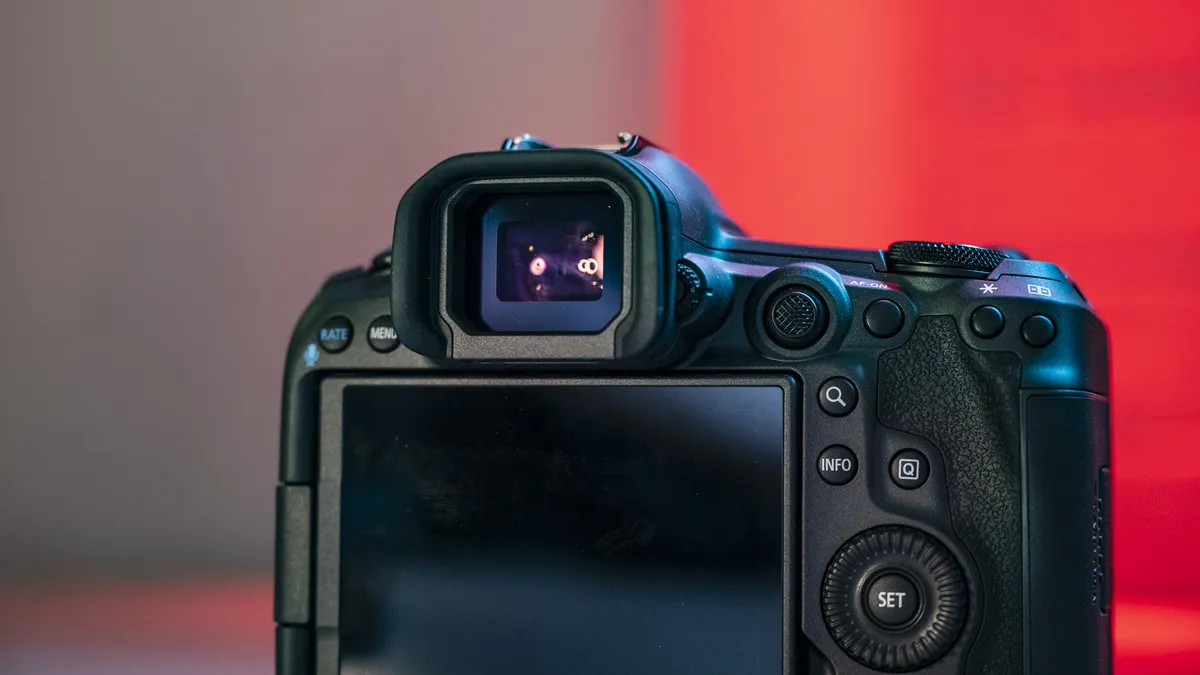


Canon EOS R5 Mark II sample images


✅ You want Canon's best-ever mirrorless camera: With a new 45MP stacked sensor and an extra processor, the EOS R5 Mark II is as capable at shooting stills as it is video, and represents a big update of the EOS R5.
✅ You want cutting-edge autofocus: Canon's new autofocus skills are designed for various sports especially, while eye-control AF is a treat.
❌ You’re on a tight budget: The EOS R5 Mark II’s body-only cost is slightly more than rivals and a lot more than the now discounted EOS R5, and that's before you get to Canon's pricey lenses.
❌ You shoot mainly stationary subjects: Many of the EOS R5 Mark II improvements impact high-speed performance for high-speed subjects. If you're a landscape photographer, the EOS R5 could be a better option.
The EOS R5 Mark II is Canon's most versatile camera ever. It builds on the stellar 45MP and 8K video-toting EOS R5 by incorporating a new stacked sensor, which virtually eliminates the adverse effect of rolling shutter, while a second processor improves the camera's overall speed, meaning this is a much faster camera for action photography.
Not only is the EOS R5 Mark II a much quicker camera, but it totes new autofocus modes, some of which can detect specific sports, such as soccer and basketball, and intelligently select where to focus based on the subject's posture and the position of the ball, including for up to 10 stored faces. Canon's eye control AF is also a revelation – tracking where you're looking in the viewfinder to know which subject you'd like to focus on.
There's more: in-camera image upscaling can increase the size of your photos by 400% – that's 180MP – with super-impressive results. Overall, testing the EOS R5 Mark II blew us away, and there was a sense that we were only scratching the surface despite our lengthy test period. For out-and-out sports pros, the pricier EOS R1 is the camera to pick. But for practically every other professional, the EOS R5 Mark II is the smart choice. The fact that it's much cheaper than Sony's A1 II sweetens matters further.
Read our in-depth Canon EOS R5 Mark II review
Top alternatives...
- Nikon Z8 – the closest rival goes toe to toe in many aspects, and it costs less. However, the R5 Mark II has unique features we can't ignore.
- Sony A1 II – have a deeper wallet? The A1 II offers a minimal performance and resolution boost, but at around 40% more.
The best mirrorless camera for video


Panasonic Lumix S1 II sample video
✅ You want incredible video quality: Panasonic has majored on video quality and squeezed more out of the S1 II's sensor than similar rivals, including more video codecs and a dynamic range boost mode.
✅ You're a run-and-gun filmmaker: The S1 II's class-leading image stabilization for video, versatile touchscreen, reliable phase-detection autofocus and durable body are a powerful combination.
❌ You need a video camera that goes all day: Panasonic hasn't quite optimized battery life in the same way as certain rivals yet (ahem, Sony) – so for an all-day shoot you'll need to pack multiple extra batteries or at least have scope for on-the-go USB-C charging.
❌ The S5 II is enough camera for you: The S1 II is Panasonic's absolute best mirrorless camera for video now, but it's currently twice the price of the older Lumix S5 II, which shares many of the same features.
Our previous top video camera pick was 2023's Lumix S5 II, but we've swapped it out for Lumix S1 II even though the newer model costs so much more. That's because the S1 II represents a meaty upgrade, being the fastest and most capable full-frame Lumix camera for video yet.
One key upgrade is that the 24MP sensor is now partially stacked, just like we've seen in the Nikon Z6 III. However, Panasonic has squeezed more out of the sensor for videographers, offering 6K open gate recording, an enviable array of video codecs (that for me are verging on overkill), and the fabulous dynamic range boost mode which delivers probably the best video quality we've ever seen at this price point.
Panasonic continues to impress with its implementation of video image stabilization, with unmatched performance and versatility – we were completely comfortable shooting 6K 60fps video handheld. The S1 II's design is highly functional, including that dual-axis vari-angle touchscreen, while the usual connectivity that pros demand is there, including full-size HDMI, headphone and mic ports. Panasonic hasn't addressed battery life yet, which is mediocre. If your budget doesn't stretch to this uncharacteristically pricey Lumix camera, the S5 II is a solid alternative, as is Nikon now with models like the Nikon ZR. But if you want the absolute best for the money, the Lumix S1 II gets our vote.
Read our in-depth Panasonic Lumix S1 II review
Top alternatives...
- Nikon Z6 III – although the Lumix S1 II has the edge with its open gate video and impressive dynamic range boost, Nikon's Z6 III – the top entry in this guide – runs it close, with the same partially stacked 24MP sensor and 6K video skills. There's also the new Nikon ZR to consider with its generous 4-inch monitor, aggressive pricing and, once again, the same sensor.
- Panasonic Lumix S5 II – the Lumix S5 II from 2023 has many of the same features and capabilities as the Lumix S1 II, but it costs much less – you can pick it up for around half the price.
The best crop sensor mirrorless camera


Sony Alpha A6700 sample images


✅ You’d like class-leading autofocus: Boasting the same powerful AI chipset as the Sony A7R V, the A6700 can recognize and track pre-selected subjects with class-leading speed and accuracy.
✅ You want a powerful travel camera: Compact proportions, a decent grip, superb battery life, and that sharp APS-C sensor with five-axis image stabilization and cutting-edge AI autofocus combine for an excellent travel camera.
❌ You mainly shoot video: The A6700 has excellent video skills, but there are better options if footage is your focus. For instance, there’s a heavy crop on 4K 120p video, while Active SteadyShot stabilization doesn’t smooth footsteps well.
❌ You like an easy menu system: Sony has tweaked the system interface on the A6700, but finding less common settings still requires much digging.
If we are to say which is the absolute best mirrorless camera with a crop sensor, there's a strong case for the Canon EOS R7. However, there are only a few native lenses available for it, and none of them are particularly exciting – a major downside, as is the case with the Nikon Z50 II. That leaves us with the likes of the Sony A6700 and Fujifilm X-T5, both of which have an enviable choice of lenses and are powerful cameras in their own right. Take the Sony A6700, a powerful hybrid for hobbyists, with a 26MP APS-C sensor armed with five-axis stabilization, plus a 759-point phase detection with Sony’s Real-time Recognition AF.
The camera consistently delivered sharp, balanced images during our review and recognized and tracked a range of targets with class-leading autofocus accuracy. Video quality impressed us too – its 4K 60p video, oversampled from 6K, proved crisp in clear conditions.
The A6700 isn't perfect – we encountered noise when shooting at higher ISOs, while its metering system struggled with underexposure on overcast days. As for video, there’s a 1.6x crop on 4K 120p footage, which isn't ideal, plus Sony's complex menu system leaves something to be desired. That said, Sony has improved the handling from previous A6000-series models, deepening the grip and giving direct-access controls, while maintaining compact dimensions. If you want a tidy APS-C hybrid with the latest autofocus performance, we think the A6700 is still a great choice. If you'd rather a retro feel and exposure dials, check out the X-T5, while if you want the fastest performance, the EOS R7 tops the bill.
- Read our in-depth Sony A6700 review
Top alternatives...
- Fujifilm X-T5 – If you're more of a photography purist, then the X-T5 could be a better pick with its 40MP stills and retro controls.
- Canon EOS R7 – The R7 beats the A6700 for speed and resolution, but its lack of native lenses is a major issue.
- OM System OM-1 II – Going another sensor size smaller, the OM-1 II is my favorite Micro Four Thirds (MFT) camera, with incredible computational photography skills.
The best mirrorless camera for travel
Fujifilm X-M5 sample images


✅ You're a vlogger on the go: The Fujifilm X-M5 is a filmmaker's dream, offering 6K open gate video recording, three internal directional mics, and a modest price tag.
✅ You need a compact camera: the X-M5 is seriously tiny and, when paired with smaller lenses, is ideal for capturing video while travelling light.
❌ Stabilization is a must: with no in-body image stabilization, you'll have to rely on digital image stabilization (and a 1.1x crop of the image area), or invest in ultra-wide-angle lenses.
❌ You shoot more still photos than videos: the X-M5 is undeniably video-focused, and without a viewfinder, photographers will find it trickier to shoot in bright light.
No two vacations are made equal, but whether you're headed for the beach or a busy city break, the Fujifilm X-M5 is a compact and capable camera with especially impressive video recording capability. The X-M5 delivers 6K video, as well as 4K up to 60fps for a cinematic half-speed effect, and the extra cherry on top is the open gate video recording. This prompts the camera to use the entirety of the 3:2 image sensor to capture a taller, wider image of whatever vistas or familial chaos you’re documenting, instead of being restricted to a 16:9 crop.
The X-M5 is no slouch when it comes to still photography, either. We particularly enjoyed that the 8fps burst shooting rate can be upped to 30fps if you opt for the electronic shutter rather than the mechanical one. It’s a nice option to have, especially if you plan on photographing busy scenes or events, but it is worth noting that the Fujifilm X-S20 is capable of capturing more frames (though you'll pay more for the privilege). The film simulation dial is a neat little extra, too, and applies a pre-set filter inspired by classic 35mm film stock to your travel snaps for that vintage feel.
In practical terms, the X-M5’s compact, lightweight body is a double-edged sword: it’s easy to carry around all day, but the small grip can feel cramped with larger lenses or after a long shoot. The X-M5 also lacks a few pivotal photography features – like in-body image stabilization and a viewfinder. While the former can be remedied by investing in stabilized lenses for steadier results, it's worth keeping in mind that the X-M5 is better suited to recording your on-the-go memories than as a dedicated camera for still photography.
Read our in-depth Fujifilm X-M5 review
Top alternatives...
- Fujifilm X-S20 – The X-S20 and X-M5 both shoot 10-bit 6K video and 26MP stills, but you'll also get a viewfinder and in-body stabilization. The downside? The X-S20 is undeniably pricey.
- Panasonic Lumix S1 II – Our fourth overall pick, the Lumix S1 II doesn't compromise on video quality, thanks to its image stabilization and phase-detection autofocus. It's a great pick for run-and-gun vloggers.
The best value mirrorless camera
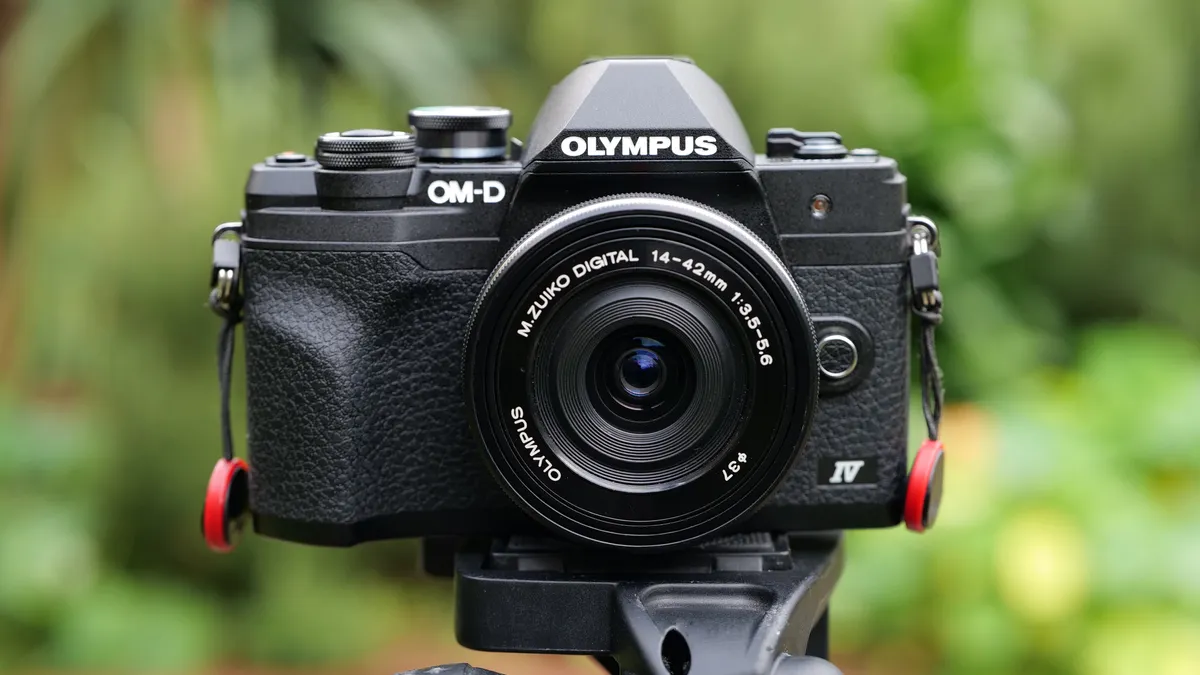


Olympus OM-D E-M10 Mark IV sample images


✅ You'll invest in a range of lenses: Micro Four Thirds has been around for ages, and there's a huge selection of excellent and affordable lenses.
✅ You like to shoot handheld: The E-M10 IV boasts class-leading image stabilization, which can keep your handheld shots sharp at slow shutter speeds.
❌ You also shoot video: The E-M10 Mark IV lacks phase-detection autofocus, a mic input, and a USB-C port, while video is capped at 4K/30p, meaning no slow-motion recording.
❌ You're looking for the best autofocus: The E-M10 Mark IV's specs are surpassed by some rivals, especially its autofocus chops.
On paper, the E-M10 Mark IV is an easy camera to overlook. But in reality, it’s one of the best cameras for beginners who are mainly focused on stills rather than video. It might lack advanced features such as phase-detection autofocus or a microphone input, but it ticks all of the key boxes for beginners. A compact body and approachable button layout make it an accessible upgrade for smartphone photographers, as do Wi-Fi and Bluetooth connectivity.
In our tests, we found that the 20.3MP sensor to be plenty capable enough to capture consistently attractive images, while in-body image stabilization works a treat for shooting snaps at slower shutter speeds. The 121-point contrast detection autofocus won’t make headlines, but it does a decent job of consistently tracking faces and eyes. Add classic styling to the mix, plus a handy flip-down touchscreen and an Advanced Photo mode that makes it easy to experiment with complex techniques, and the Mark IV proves itself a well-rounded beginner mirrorless option.
Read our in-depth Olympus OM-D E-M10 Mark IV review
Top alternatives...
- Canon EOS R100 – there's no cheaper mirrorless camera than the EOS R100, and it has the same 24MP sensor as the R10. However, its handling is much simpler.
- Nikon Z30 – Nikon's cheapest mirrorless camera is designed for vlogging and does that job really well. However, you lose out on a viewfinder.
The best medium-format mirrorless camera


Hasselblad X2D II 100C sample images


✅ You're a minimalist: The X2D II's minimalist design is stunning and helps you focus on the task of taking pictures.
✅ You want the best possible image quality: 100MP stills, a sensor larger than full-frame, Hasselblad's natural color science, and end-to-end HDR combine for industry-leading image quality.
❌ You're on a budget: Despite the price reduction – kudos, Hasselblad – it's top dollar for this top camera, especially when you factor in the cost of lenses.
❌ You shoot video: There are no video recording capabilities at all, seriously.
The Hasselblad X2D II 100C is unique in this list in more ways than one: it's a stills-only camera, plus it utilizes a larger 44 x 33 mm sensor. The upshot is a refreshingly minimalist experience and industry-leading photo quality. In fact, we fell in love with the X2D II might just be my dream camera for landscape photography trips and portraits.
That's not to say the X2D II is pedestrian – far from it. There's a gorgeous 3.6-inch tilt display with touch response akin to a phone, stripped-back menus and a 1TB built-in SSD, which you'll need for those massive 200MB raw files. There's also continuous autofocus (which is a first for Hasselblad), complete with subject tracking skills and LiDAR, courtesy of parent company DJI.
Combine those focusing skills with class-leading image stabilization, and you have a versatile camera for handheld use. Image quality, which was already stunning in the original X2D, is further bolstered with end-to-end HDR capture. Those natural colors and improved dynamic range are next level to your average full-frame mirrorless model.
If you shoot action photography or video, the X2D II isn't for you. But if detail and outright image quality matter most, there's nothing better. Hasselblad set the X2D II price much lower than its predecessor, too – so major kudos there.
Read our in-depth Hasselblad X2D II 100C review
Top alternatives...
- Fujifilm GFX100 II – for once, Fujifilm is pricier than Hasselblad; however, the GFX100 II is a better hybrid, being able to shoot 8K video.
- Fujifilm GFX 100S II – want the 100MP sensor for less? Try the GFX 100S II, whose GF lenses tend to cost less too.
The best mirrorless camera for action


Sony A9 III sample images


✅ You want the fastest camera in the world: With burst speeds of up to 120fps and 1-second pre-capture, the Sony A9 III is unmatched in speed.
✅ You're serious about action photography: As well as those rapid burst speeds, a global shutter eliminates rolling shutter in fast panning shots.
❌ You're on a limited budget: The Sony A9 III offers unmatched speed with a price to match; you'll find better value if 30fps is enough.
❌ You need high-res images: The A9 III favors speed over size; if you need to print big, you're better off with a Nikon Z8 or Sony A7R V.
There is no faster camera right now than the Sony A9 III: thanks to a world-first global shutter, it can shoot at speeds of up to 120fps. As confirmed by our in-depth tests capturing pro track athletes in action, that makes it an incredible choice for sports photography. So does the fact that the global shutter eliminates rolling shutter, meaning you can pan quickly without any distortion. Backed up by class-leading subject-tracking AF, the A9 III proves an unmatched choice for capturing fast-moving subjects.
In our review, we also praised the A9 III’s design as one of Sony’s best: it’s well-built and neatly sized with a comfortable grip. What you don’t get with the A9 III is a high-resolution sensor, so if you need stills bigger than 24MP, you’ll be better served elsewhere. The global shutter also limits dynamic range and produces more noise in low light, while the use of (pricey) CFexpress Type A cards can fetter performance. Nonetheless, its outright shooting speeds make the A9 III the ultimate choice for action photographers.
Read our in-depth Sony A9 III review
Top alternatives...
- Canon EOS R1 – the EOS R1 is simply Canon's most powerful mirrorless camera with incredible autofocus features and neat in-camera editing skills.
- Nikon Z9 – the Z9 isn't nearly as fast in terms of burst shooting, but it is also a stellar action camera, with higher-resolution 45MP stills and 8K video.
Also consider
We've already touched on some of the best alternatives for each entry in this guide. In the summary below, we further unpack those cameras, plus a few others which are truly worth considering:
Best for detail – Sony A7R V: At 61MP, the full-frame A7R V has class-leading resolution and up to eight stops of image stabilization, making it a fantastic choice for landscape or studio pros. It also boasts a powerful Bionz XR processing engine and AI-powered Real-time Recognition AF that reliably locks onto a range of subjects, working particularly well with people.
Best crop-sensor Canon – Canon EOS R7: The Canon EOS R7 is like one of the camera giant's full-frame EOS R cameras, only with a smaller APS-C sensor. For the price, it's impressively powerful, particularly if you're a fan of shooting wildlife or sports scenes. That's because it boasts a 32.5MP sensor with 15fps burst speeds. The main drawback is the severe lack of native lenses, which is why we prefer the Sony A6700.
Best value hybrid – Panasonic Lumix S5 II: Regularly available for less than $1,500 / £1,300, the Lumix S5 II is a lot of camera for your money, shooting 24MP stills and 6K video with class-leading image stabilization for video.
Best A7 V alternative – Sony A7 IV: If the speed upgrade of the A7 V isn't for you, then you can save a packet by opting for the older A7 IV instead, and it also delivers 33MP stills, superb autofocus and 4K video.
Best Micro Four Thirds – OM System OM-1 II: Don’t let its smaller sensor fool you: this is an incredibly powerful camera for its size. One of the most advanced cameras on the market, the OM-1 II benefits from clever computational shooting modes, including AI subject recognition, as well as impressive image stabilization and Live Graduated ND filters.
Best for vlogging – Sony ZV-E1: Equipped with the same sensor as the Sony A7S III, as well as super-responsive autofocus boosted by AI, the ZV-E1 makes it simple for solo creators to capture quality 4K vlogging content. Its size is perfect for handheld videos, as is the reliable in-body image stabilization system. We think it’s one of the best vlogging cameras.
Best for wildlife – Panasonic Lumix G9 II: The Lumix G9 II offers higher-resolution photos, more video recording modes (including ProRes raw to an external SSD) and a faster processor than the G9, plus hybrid phase detect autofocus. Its sensor format and lens selection are particularly well suited to wildlife and sports photography.
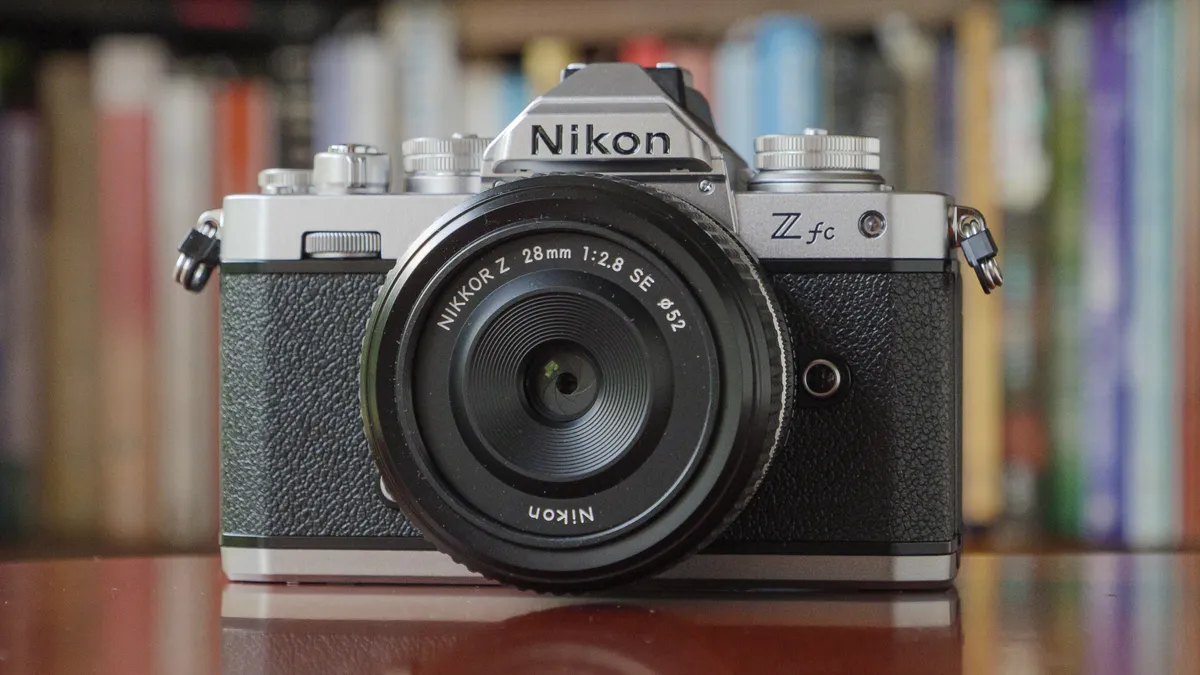
Best retro Fujifilm alternative – Nikon Zf: Fujifilm forged the retro mirrorless camera path, but Nikon has its own winner with the stunning full-frame Zf, a faithful reimagining of the Nikon FM2, with some of the best manual focus tools, too. It's not all looks, either. The Zf packs Nikon’s latest processor, 24.5MP stills up to 30fps, its best in-body image stabilization yet, and powerful autofocus.
Upcoming mirrorless cameras

Mirrorless cameras continue to set the bar today, so as we step into 2026, what new models can we expect? We've rounded up some of the likely candidates in my 12 most exciting cameras for 2026 list, and these include the Canon EOS R7 II, which would upgrade Canon's current flagship APS-C model, perfect especially for enthusiast wildlife and sports photographers.
Tipsters are suggesting that Nikon could get in on this action too, with a surprise mirrorless version of its sports Nikon D500 DSLR. And there could be further action in this sensor format from Fujifilm – the X-T5 is about due an upgrade, while Fujifilm fans continue to clamour for an X-Pro 4.
With Canon and Sony recently launching the EOS R6 Mark III and A7 V respectively, and the Nikon Z6 III still fairly new, we don't expect much action in the full-frame market. Looking wider in this format, however, we could expect a Leica M12 digital rangefinder.
We keep this guide regularly updated, so be sure to check back in for the latest mirrorless camera rumors. Rest assured, the very best mirrorless cameras already feature in this guide.
How to choose the best mirrorless camera for you

How to choose the best mirrorless camera
It's a great time to buy a mirrorless camera, but also a slightly overwhelming one. An explosion in the number of options available at all price points from the likes of Canon, Sony, Nikon, Fujifilm, Panasonic and a reborn Olympus (now known as OM System) means that photographers and videographers have never had more choice. So where to start?
Sensor
Sensor size is often a good barometer of a camera's character and shooting style. Models that are built for professionals and keen amateurs will have either a full-frame sensor or a slightly smaller APS-C chip. The latter tend to be smaller and more affordable than full-frame cameras, if not quite as portable as those with Four Thirds sensors (from Panasonic and Olympus).
Displays
Other important features to look out for are electronic viewfinders (EVFs), which bump up the price but are nigh-on essential for most photographers. It's also worth considering what kind of lenses you'll need.
Lenses
If you like to specialize in a particular area (for example, wide-angle architecture or macro), then check the system you're looking at to make sure it has the right options for you. In the full-frame mirrorless space, Sony offers the most choice right now, while on crop-sensor APS-C cameras, Fujifilm has a wide range of options at most focal lengths.

Mirrorless or DSLR: what's the difference?
The mirrorless vs DSLR debate has been a hot topic since the arrival of the first mirrorless cameras. Which is best for you will always be a personal choice, although most manufacturers are now focused on pouring their best tech into mirrorless models. Our dedicated mirrorless vs DSLR guide should help you decide which one is right for your needs, but there are a few key ways in which the two formats are different.
Size
Mirrorless cameras allow you to change lenses like a DSLR. But unlike a DSLR, they don’t use a mirror to direct light onto the sensor inside. Instead, light is received and processed by the sensor directly. Because they don’t need a bulky mirror, they can be made more compact than a traditional DSLR. No mirror to move also means faster potential shutter speeds.
Viewfinder type
The other key difference is the viewfinder. Where DSLR cameras use an optical viewfinder to help you frame scenes, mirrorless cameras rely either on an electronic equivalent, or require you to compose using their rear screen. While the latter can be problematic in bright conditions, the former is no longer the dealbreaker it once was: modern EVFs are bright and sharp, giving you a realistic preview in real-time, with the benefit of data readouts.
Mirrorless cameras initially featured smaller sensors than DSLR cameras, but today you’ll find a catalogue of mirrorless models with full-frame and APS-C sensors. This means there’s no clear difference in image quality between the best DSLR and mirrorless cameras.

Why are mirrorless cameras better?
Is a mirrorless camera better than a DSLR? There are still quite a few pros and cons to both designs, so if you want to find out more, read our Mirrorless vs DSLR cameras guide.
Availability
Mirrorless cameras certainly offer more choice. If you're looking to buy a DSLR, there are only really two main players in the shape of Canon and Nikon. If you opt for a mirrorless camera, the choice of brands is much broader, with the likes of Canon, Panasonic, Fujifilm, Sony, Olympus and Leica all offering a wide range of cameras to suit most budgets.
Right now, every major camera manufacturer has something to shout about, and their latest models are different enough from their rivals to stand out in some way.
Affordability
While it would be very easy to select 10 high-end models to make up our pick of the best mirrorless camera, we've tried to pick out some more affordable options as well. These models might not be dripping with features, but they represent great options for new users and those on a budget. That said, if you're looking specifically for a budget mirrorless camera, take a look at our best beginner mirrorless camera guide.
So whether you're after a better camera than the one featured on your smartphone or are looking for an advanced, high-end model to push your creativity even further, read on to find out what the best mirrorless cameras are you can buy right now.
Are mirrorless cameras good for beginners?
While flagship mirrorless cameras might be designed to fulfil the needs of enthusiasts and professionals, the best entry-level mirrorless cameras offer everything a beginner could ask for at the start of their photography journey.
Light weight
Many of our favorite beginner mirrorless cameras are lightweight and easy for learners to handle, while still offering the sort of performance that will allow you to grow as a photographer. The exact specs will vary from camera to camera, but the core components usually include a capable sensor and reliable autofocus.
Smartphone step up
Besides striking a balance between price and performance, most mirrorless cameras are user-friendly for beginners, thanks to their touchscreen interfaces. Even if you’re a complete novice, these should feel familiar if you’re upgrading from a smartphone.
What you miss
By choosing a beginner mirrorless camera, you won’t generally get all of the more advanced features found on premium models. That sacrifice could be in-body image stabilization, burst shooting speeds, or perhaps the frame rate at which a camera can record 4K video footage. Still, mirrorless cameras remain a versatile choice for new photographers. And because their lenses are interchangeable, you’ll be able to upgrade to different glass as your skills improve.
I’ve picked out my favorite beginner mirrorless camera above, together with a couple of the best alternatives. However, you can find an in-depth selection by reading our dedicated round-up of the best beginner mirrorless cameras. There you’ll find options for every budget and preference, ranging from the best entry-level all-rounders to video-focused mirrorless hybrids for budding vloggers.
TechRadar cameras coverage
Buying guides
- Best cameras for photography
- Best camera for beginners
- Best beginner DSLR cameras
- Best beginner mirrorless camera
- Best DSLR
- Best 4K camera
- Best full-frame camera
- Best compact camera
- Best Nikon camera
- Best Canon camera
- Best Sony camera
- Best Fujifilm camera
- Best travel camera
- Best professional camera
Top reviews
- Nikon Z6 III review
- Canon EOS R10 review
- Canon EOS R5 Mark II review
- Panasonic Lumix S5 II review
- Sony A6700 review
- Nikon Z fc review
- Olympus OM-D E-M10 Mark IV review
- Hasselblad X2D II 100C review
- Sony A9 III review
- OM System OM-5 II review
Explainers
- What camera should I buy?
- Mirrorless vs DSLR: 10 key differences
- Camera rumors
- Looking for a travel camera? Make sure it has these 9 useful features before you buy
First-hand experience
- Photography and hiking are my idea of a dream weekend – this is the perfect camera system I take into the great outdoors
- I turned my Fujifilm X-T3 into an infrared wonder – and it's the best photography decision I've made in years
- I took the new Fujifilm X-E5 and pancake lens on a city break, and they're a dream pairing for travel photography
- I ditched my pricey full-frame camera and downsized for a year – here are 5 lessons learned
- Nikon Z cameras turn 5: why I’m glad I made the leap from a Nikon DSLR to the Z6 II