


An NBN 500 plan is one of the fastest options available on the fixed-line NBN network, offering a theoretical maximum download speed of 500Mbps. I consider them to be the sweet spot for most Australian homes, due to the fast speeds and relatively low cost. This is one of the many reasons they sit atop my guide to the best NBN plans.
While it's often the case that many internet service providers (ISPs) don't yet claim maximum plan speeds on the fastest NBN plans, that's seemingly not the case for NBN 500, with virtually all providers promising customers will indeed get the speed they're paying for. That makes choosing the best NBN 500 plans a little trickier, but I'm up for the challenge.
What makes an NBN 500 plan the best?
To help make things a little easier, I've given myself just two distinct categories — the best NBN 500 plan overall, and the plan with the cheapest first-year cost. That way, it whittles down the huge selection to just the cream of the crop, in my opinion at least. If you'd like to view more options, you can do so via the price comparison tool further down this page.
How do I get a NBN 500 plan?
The main thing you need to be aware of is that in order to sign up for an NBN 500 plan, you need to connect to the fixed-line NBN network via fibre to the premises (FTTP) or hybrid fibre coaxial (HFC). You can easily check which connection you have by either going to the NBN Co address checker, or by using the address checker of your chosen telco. If you don't connect via either of the aforementioned methods, you're likely eligible for the free NBN fibre upgrade, and your chosen provider will usually be able to handle the upgrade process for you.
If you do connect via either of these, and have previously signed up to one of the best NBN 100 plans, you should have now received the 5x speed boost upgrade for free.
Below you'll find my top recommendations for an NBN 500 plan, but be sure to view more prices via the price comparison tool.
Best NBN 500 plans
Best overall
Why you can trust TechRadar We spend hours testing every product or service we review, so you can be sure you're buying the best. Find out more about how we test.

Cheap first-year cost

More NBN 500 plans to consider
NBN 500 FAQ
How fast are NBN 500 plans?

As is the case with all speed tier naming conventions, NBN 500 plans offer a theoretical maximum download speed of 500Mbps — five times the maximum of the NBN 100 plans they replace. Upload speeds have also increased from the maximum of 20Mbps on 100Mbps plans, to 50Mbps.
Can I get NBN 500?
As with all fixed-line NBN speeds over 100Mbps, NBN 500 plans are only available to customers who connect to the network via a fibre to the premises (FTTP) or hybrid fibre coaxial (HFC) connection. If you currently connect via fibre to the node (FTTN) or fibre to the curb (FTTC), then you won’t have the technology to support the faster speeds.
If you’re not sure what connection type you have at home, you can use NBN Co’s address checker. If you find you do connect via either of the inferior technologies (FTTN/C), then you may be eligible for NBN Co’s free fibre upgrade program, which provides a full fibre FTTP installation at your address.
If your home isn’t currently in an eligible upgrade location, or you choose not to upgrade, then following the introduction of the new tiers, you’ll still see NBN 100 as your fastest possible option and not NBN 500. If you can take advantage of the upgrade as soon as possible, you’ll be in the best position come September when the increased speeds take effect.
How much are NBN 500 plans?
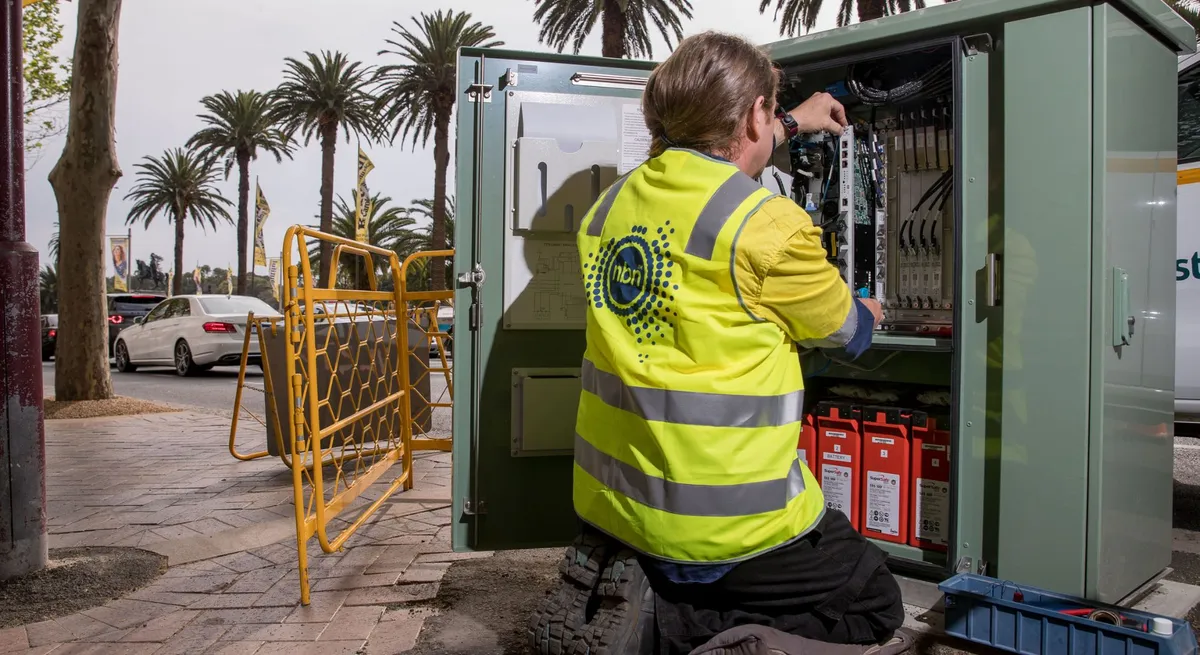
Perhaps the biggest selling point of NBN 500 plans is that they cost the same as the slower 100Mbps alternatives. In short, that makes for excellent value in my opinion.
The cheapest introductory cost I've seen to date has been AU$50p/m for the first 6 months from Amaysim, but that was for a very limited time. The current-cheapest introductory cost comes from Tangerine at AU$62.90p/m for 6 months.
At the time of writing, the average monthly cost of an NBN 500 plan is just over AU$95, roughly AU$1 less than the average NBN 100 plan cost.
Should I get an NBN 500 plan?
In some ways, this is a tricky question to answer. If you’re already signed up to an NBN 100 plan and you connect via FTTP or HFC, then you’ll automatically be moved over to an NBN 500 plan at no extra cost.
However, there’s a strong case to be made for everyone else – even those who are signed up to one of the best NBN 1000 plans – to switch to a NBN 500 plan. This is because we believe the combination of fast speeds (500Mbps should service the majority of Australian homes more than adequately) and the great value already offered by NBN 100 plans (which generally cost less than AU$10 p/m more than slower NBN 50 plans), makes for a potent combination.
We’d even go as far as saying we reckon they could become the most popular NBN plan of them all – a position currently held by NBN 50 plans, which make up around two-thirds of fixed-line NBN subscriptions at the time of writing.
If you’re currently signed up to one of the best NBN 250 plans, then you will also receive a speed increase to a 750Mbps NBN 750 plan. If you think this might be a bit of overkill, then dropping down to an NBN 500 plan will likely save you some money – depending on the provider you choose, of course.
