


How was 2025 for Microsoft? This year was shaky in many respects for the software giant, and notable stumbling blocks included a lacklustre level of migration to Windows 11 – despite the official end of Windows 10 happening in October (with a notable caveat) – and a huge drive with AI features that led to some immense pushback from disgruntled users who are unhappy with the current state of Microsoft's desktop OS.
Let's dive into the details of how Microsoft performed in 2025, starting with those key issues around Windows, and moving on to consider hardware, a glaring gaming fail, and other aspects where the company dropped the ball somewhat – plus there were some highlights, too.
Windows 10 support ran out – but there was no rush to upgrade to Windows 11
On October 14, 2025, the curtain was drawn over Windows 10, as the final official update for the last-gen operating system was deployed. But uniquely for consumers, this wasn't necessarily the end, as for the first time, everyday users were offered the chance to sign up for extended updates (along with businesses that have always had this privilege).
The Extended Security Updates (ESU) scheme was yours for the price of $30, or alternatively, you could just sync your PC settings to OneDrive and avail yourself of a year of extra support (through to October 2026) for no financial cost.
It was good to see Microsoft make this move – by which I mean the (effectively) free option for extended updates, which was implemented relatively late in the day – and it meant that quite a few folks remained on Windows 10 as a result. However, in turn this also meant that migration to Windows 11 has been more of a trickle than a torrent. (Although due to a good many older PCs not being compatible with its steeper system requirements, that was always going to be the case to an extent).
As to how many people ultimately make the move from Windows 10 to 11, that remains to be seen next year, when extended support runs out (assuming there's no further extension to the single additional year currently offered to consumers).
So, Windows 10 support ending turned out to be something of a non-event, although not entirely, as some Linux distros claimed that they were getting a substantial number of Windows defectors right off the bat. Is this the beginning of the long-predicted rise of Linux in the sphere of desktop operating systems? Let's not get carried away yet, but Valve is throwing its weight around in this area too with SteamOS (and I'll come back to why that's important shortly).

Microsoft's big push for more AI in Windows 11 – and how it backfired
It's been a turbulent ride for Windows 11 with AI this year, after Microsoft doubled down on its ambitions in this regard. 2025 was the year that the company declared its ambition to 'make every Windows 11 PC an AI PC' built on voice input, new powers for Copilot and AI agents.
And boy, did that not go down well. Not well at all, at least with many vocal members of the Windows community, and in fact we witnessed an outright rebellion of sorts. The leaders of that uprising came down hard on Microsoft for relentlessly pushing AI features that 'no one wants', and reminded the software giant of what people do want – the bugs and fundamentally wonky parts of Windows 11 to be fixed.
Did Microsoft listen? Er, not exactly – some execs even fired back at AI skeptics, and a quagmire of buzzwords ('agentic AI platforms' and so forth) continued to bubble forth from the company's marketing department and top brass (who'd clearly been primed with an AI hymn sheet to sing from).
It wasn't all bad news for Microsoft regarding AI in 2025, though. Some of the AI features which have emerged are quite nifty, like supercharged searching for Windows 11 on Copilot+ PCs, which is genuinely useful. An AI agent arriving in the Settings apps could actually be quite handy, too (but is some way off that yet).
However, the overall focus on AI feels way too heavy, and just that fact makes people suspicious and wary (at least on the consumer side, anyway). There are also serious privacy worries and security concerns about AI agents in Windows 11, and rightly so – some of Microsoft's acknowledgements on the security front aren't comforting.
It's been a rocky road for AI in Windows 11 this year, and I don't see that path getting any smoother in 2026, either – unless Microsoft seriously rebalances its priorities with Windows 11 (and its PR and marketing efforts, to boot).

Elsewhere Windows 11 plodded along and still struggled with bugs
Away from AI, which was the big focus as mentioned, Microsoft didn't do a whole lot with Windows 11. And certainly not with the big annual upgrade, as there was very little to see with the 25H2 update. That said, there were some useful improvements made to Windows 11 this year, including a laudable new PC recovery option and a redesigned Start menu which made some useful changes.
However, the overriding theme was what Microsoft failed to do with Windows 11 – namely to sort out its quality assurance, keep a lid on bugs, and improve poor areas of the interface and inner workings of the OS where performance is lacking. The gaming side of Windows 11 was particularly problematic at times in 2025, as you may have noticed.
While the bugs weren't quite as prevalent as we witnessed last year, when the 24H2 update – which did make big changes to Windows 11 – caused quite some chaos, there were still too many of them in 2025. And there were some truly odd glitches – like the flashbang when opening folders, or having the interface displayed in a mishmash of two different languages somehow – which make you wonder what's going on at Microsoft, frankly.
And this is who we're trusting to get things right when it comes to autonomous AI agents working with our files inside Windows 11? You can see why people are nervous – and why Microsoft needs to get a better handle on dealing with Windows 11 bugs, and fast.

Gaming woes with Windows 11 as Microsoft treads a difficult path
As noted above, there were some nasty bugs that hit gamers on Windows 11 this year, and quite a bit of frustration therein. And in many ways, that's bad timing for Microsoft, as its operating system is coming under threat from a rival gaming platform – namely SteamOS.
As gamers on Windows 11 feel increasingly annoyed about the various bugs that are chucked their way, they are likely eyeing the progress Valve is making with SteamOS in terms of game compatibility. Moreover, in 2025 Valve changed up another gear with the revelation of its incoming new Steam Machine, which could be a genuine threat to Microsoft, aiming to make gaming in the living room as neat and convenient an experience as possible.
At the end of 2025, Microsoft acknowledged its gaming shortfalls on Windows 11 and promised (broadly) to be fixing them – but again, there's plenty of skepticism around that. And while the company made some commendable efforts to address Windows 11's issues on handhelds – where SteamOS looks so slick in comparison – these, too, fell short, and the Xbox Full Screen Experience represents more of a fudge than a fix (at least so far).
On the handheld front, Microsoft brought out new hardware, too – teaming up with Asus to release the ROG Xbox Ally X portable – and while this device had strengths, certainly, the price tag attached proved a big stumbling block and difficult to swallow.

Xbox Game Pass price hike misery
Sadly, Microsoft dropped the ball in another cost-related way on the gaming front during 2025, and that was with the Xbox Game Pass.
A substantial price increase was introduced in September 2025, when the Ultimate tier for the Xbox Game Pass was hiked to $29.99 / £22.99 / AU$35.95 per month. This was badly received (putting it mildly) and it sparked mass departures from disgruntled gamers (with so many reaching for that cancel button that Microsoft's systems crashed).
Microsoft argued that this price rise was in line with the value being added to the Xbox Game Pass in terms of additional games and extras, but many subscribers didn't feel that those moves justified anything like the increase levied – and voted with their feet.
While subscriber numbers could have suffered – and likely did, though we don't have any figures – revenue didn't, as per mid-2025 (and Microsoft's end of fiscal 25 earnings report) Game Pass annual revenue hit nearly $5 billion for the first time (including PC subscribers, that is). The apparent exodus of gamers after the price hike might rock that boat, but then again, in terms of revenue, those who've stuck with the top-tier of the service are paying a lot more.
All of this could be wrapped up in the bigger financial picture for the Xbox group and purported profit margin targets – don't forget Microsoft also axed jobs in the Gaming division to the tune of 9,000 in July 2025.
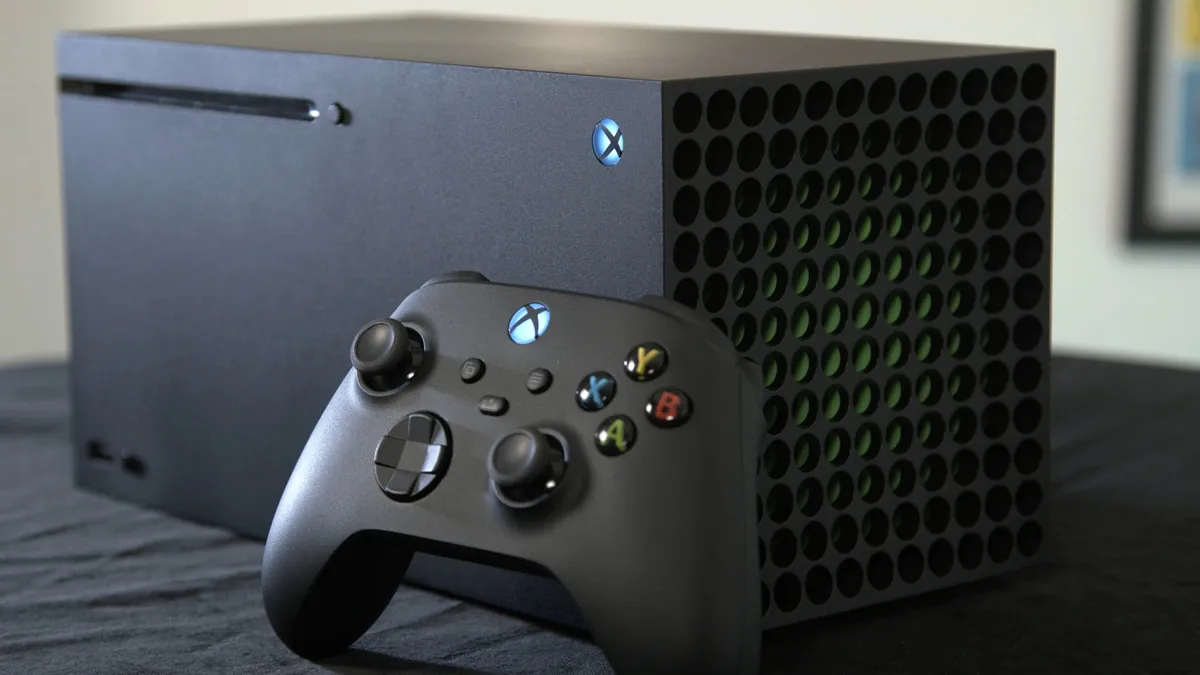
Xbox console sales crash and burn
There was more bad gaming news for Microsoft at the end of the year, as sales of its Xbox console were judged to have fallen off a cliff.
According to figures from an analyst firm aired in December, Xbox sales dropped 70% year-on-year – and while Sony didn't do well either, it didn't experience that big a drop (the PS5 was down 40%).
Of course, the Xbox has been struggling against the PS5 in the console wars anyway, and Microsoft's price hikes for its gaming hardware this year clearly didn't help.

Surface hardware didn't have quite the same impact
Last year was a big one for Microsoft's Surface division, as new Arm-based Surface Pro 11 and Surface Laptop 7 offerings scored resounding home runs. Did we see a repeat of that success in 2025? Not so much.
The Surface Pro 12 felt like a downgrade from the last model in some ways – which admittedly was related to bringing the price down – and while it wasn't a bad device by any means, it failed to carry the excitement through from the last iteration.
The Surface Laptop 13-inch for 2025 made a better impression, and is without doubt a good notebook, but it can't compete with the MacBook Air 13-inch (M4) in performance terms, and loses out in the value battle against that Apple laptop.
All in all, it wasn't a bad 2025 for the Surface line-up, but it fell short of what Microsoft achieved last year.

Conclusion
It was not a good year for Microsoft. Between job losses, and unpopularity around AI, Windows 11 bugs, Xbox Game Pass and console price hikes alongside plummeting Xbox sales, as well as a (predictable) struggle to stoke migration to its newest OS, there was a lot of negativity directed towards the company this year.
In fact, I've been writing these end-of-year roundups for a long time now, and I can't recall many summaries that have been gloomier than Microsoft's report card for 2025.
Not from a consumer point of view, anyway, but here's the twist: in terms of balance sheets and shareholders, Microsoft had a buoyant 2025. The company saw the aforementioned gaming revenue high (with Game Pass), and its juggernaut cloud service tied in with AI witnessed impressive growth, justifying Microsoft's huge investments in AI – at least from a business perspective.
My worry remains that Microsoft is becoming too focused on profits and talking up AI with incessant marketing to please the shareholders, and it's forgetting about the little guys. You know, the people like you and me who use Windows 11 (or 10) on a daily basis.
I'd suggest this is a course Microsoft continues to pursue at its own peril, and I think the firm needs to remember who its grassroots customers are next year – and not just talk about improvements for Windows 11 like fixing gaming, but to actually act on them.
Follow TechRadar on Google News and add us as a preferred source to get our expert news, reviews, and opinion in your feeds. Make sure to click the Follow button!
And of course you can also follow TechRadar on TikTok for news, reviews, unboxings in video form, and get regular updates from us on WhatsApp too.