


It's that time of the year again when we celebrate the biggest tech fails of the past 12 months. Celebrate? It's an odd choice of word, maybe, but let's face it, there's a certain amount of schadenfreude to be gleaned in looking back and reliving the most resounding flops that we've been forced to endure during 2025.
To make this list, our team of experts hand-picked a longlist of notable flops and fails from 2025 (and there was a lot to choose from). Then we published that list on the TechRadar WhatsApp channel for readers to vote on the worst of them all. Our list contains a mix of both catastrophic fails (like our number one) and disappointing product flops.
Below, you can read those mishaps in reverse order, but before we kick off it's time to also give a nod to our honorable mentions, which didn't quite get enough votes to make the cut for the full list.
They were, in no particular order: Friend's creepy AI necklace, Garmin's disastrous subscription service, Dyson's tame V16 Piston Animal vacuum, the fainting Tesla Optimus robot, and Taco Bell's half-baked AI drive-thru (which crashed when someone ordered 18,000 water cups). Oh, and we also got a very late entrant with Meta 'pausing' third-party Horizon OS (Quest) headsets, meaning offerings from Asus and Lenovo are no longer happening.
With that housekeeping out of the way, let's get on with the real show, starting from number 11…
11. Prime Video's hallucinating AI recaps

We all need recaps, right? If you haven't watched a show for a year (or maybe longer), you definitely need the last season refreshing in your mind.
Late in 2025, Amazon came up with the bright idea of saving you the trouble of having to trawl through YouTube trying to find a good recap of the correct seasons by providing one itself. The catch was these Prime Video recaps were AI-generated affairs, but hey – what could go wrong? AI is pretty much infallible, after all.
Of course, the propensity for AI to hallucinate – get things wrong – is well-known, and this scheme went awry in rather predictable fashion.
A recap of Fallout season one that went live early in December – just ahead of the release of season two, which is now underway – offered commendable production values, particularly compared to some of the more thrown-together, turgid and janky YouTube efforts. But it made a couple of telling blunders.
Firstly, the AI recap mistakenly stated that The Ghoul's flashback scenes were set in the 1950s (not 2077, where they're actually set, albeit with a retro vibe). Furthermore, the AI also got the summary of the season finale episode round its neck, completely misinterpreting the ending.
Those aren't minor mistakes, and so Amazon has gone back to the drawing board with this AI project, putting it on ice for now – and we've gone back to 'Man of Recaps' on YouTube.
- Read more: Prime Video hits pause on its AI-powered recaps after viewers were told Fallout was set in the 1950s
10. The ill-judged Sky Sports Halo channel

Does Sky's Halo channel not ring any bells? That isn't surprising, as it didn't hang around for long.
Halo was a Sky Sports channel on TikTok dedicated to "female sports fans" and billed as the "lil sis of Sky Sports" that briefly existed for a few days in November.
The idea was to "build a welcoming community for female fans, whether casual or committed, through fun, trend-led, and relatable content". Sadly, Halo didn't draw in new female sports fans, it only drew the wrath of women and girls everywhere who found it patronizing and sexist.
The relatable content about 'hot girl walks' and 'matcha' bordered on nonsensical, and it was cringingly condescending. Women universally complained that female sports fans just want to watch Sky Sports' normal coverage – and that they didn't need some ridiculous, dumbed-down version.
As a post on X (one of many carrying a similar sentiment) made clear, women don't need a separate platform, they just need to remain visible and be treated equally on existing Sky Sports platforms.
Halo only lasted three days before Sky pulled the plug on the channel, admitting that it "didn't get it right" with this very fleeting and misjudged endeavor.
9. Grok's 'MechaHitler' freak-out
Grok is Elon Musk's AI platform that's integrated with the social media site X, and it received an update in July, of which Musk observed: "You should notice a difference when you ask Grok questions."
And yes, there was a very noticeable difference, as Grok went completely off the rails. The AI embarked on what can only be described as a tirade of antisemitic insanity, as it declared itself to be 'MechaHitler' (a chaingun-toting robot boss version of Adolf Hitler from the Wolfenstein 3D game of the early 90s) and put forth all kinds of anti-Jewish conspiracy theories (and worse) on X.
The posts were deleted, but the damage was obviously done, even though Grok later claimed the comparison to MechaHitler was "pure satire". Musk blamed X users for provoking Grok's hate speech responses, and said that: "Grok was too compliant to user prompts. Too eager to please and be manipulated, essentially. That is being addressed."
New (already planned) Grok 4 models were quickly rolled out, and these were substantial advancements based on AI benchmarks – and put paid to the racist rants. However, any technical achievements here were completely overshadowed by what happened during the 'MechaHitler' incident, which goes down as one of the most baffling, and certainly the most outrageous, tech fails of this year.
8. Call of Duty's terrible co-op campaign

Call of Duty: Black Ops 7 was unleashed in November and there was good and bad here – and also atrocious.
That awful element of this first-person shooter package was the co-op campaign. As we make clear in our Call of Duty: Black Ops 7 review, there's so much wrong with the campaign it's difficult to know where to start.
How about the nonsensical story, featuring a poorly implemented plot that's a frankly painful experience all-round? Or the dreadful dialogue, or the overall rushed feel of the campaign? Or the jarring changes in the environment throughout the missions, and the overly large nature of Avalon, the semi-open-world map that much of the campaign takes place in?
Perhaps the very worst thing is how Black Ops 7 has gone into reverse gear at alarming speed compared to the cinematic thrills of the campaign of its predecessor, Black Ops 6. And the abandonment of the tight, scripted set-piece goodness that we've previously appreciated, in favor of leaning into Avalon and a more raid-like style as seen in massively multiplayer games, resulting in a much vaguer and more unsatisfying (and annoying) experience.
As our reviewer makes clear, when the highlight is laughing at how bad things are, the co-op campaign becomes rather like watching a particularly second-rate and tepid B-movie with friends – enjoyable in some ways, but for all the wrong reasons.
As for the multiplayer of Call of Duty: Black Ops 7, well, that's very different, but the co-op campaign is definitely one of the biggest gaming fails of 2025 (though there were other, bigger, game-related flops – as you'll see below).
7. ChatGPT-5's charm downgrade

ChatGPT-5 arrived in August 2025, but this was not a high-five moment for OpenAI.
While GPT-5 was marketed as having major strengths in terms of understanding more complicated queries without needing additional context compared to previous models, and advancing in major ways in terms of maths and 'vibe coding', those using the new incarnation of the AI were left distinctly unimpressed with this launch.
Why? Emotion, that's why. People felt that GPT-5 was rather cold and abrupt in comparison to what they were used to with ChatGPT, and accusations were leveled of the new model having an emotionless tone compared to GPT-4o. In fact, such was the volume of complaints about this upgrade that OpenAI was forced to bring back GPT-4o and keep it on as an alternative option to GPT-5 (as a legacy model for ChatGPT subscribers).
OpenAI subsequently fine-tuned GPT-5 with improved personality tweaking options, and in the GPT-5.1 update, sought to achieve a better balance of emotion and connection while steering away from the dangers of sycophancy.
Some may think of current AI platforms as essentially a supercharged, super-deep web search, but this episode highlights a key difference between Google and ChatGPT (or other AIs). When people are using AI, they aren't just concerned about the result – as with a basic web search – but the overall experience.
It's not a surprising lesson, really, but it's one OpenAI clearly needed to learn.
6. The vanishing Trump phone

The Trump Mobile T1 Phone, to give the device its full name, was revealed in June 2025. Since then, we've been wondering where this smartphone has got to, and what's going on with it – and clearly you have, too, as you voted it into our top tech fails of 2025.
The gold and gaudy smartphone was initially marketed as 'Made in the USA' with a September release date. However, the former claim was soon walked-back to having an 'American Proud Design' and September came and passed with no sign of the smartphone. Indeed, at the time of writing in December, the Trump phone is still nowhere to be seen, leaving those who've pre-ordered (and dropped a $100 deposit) pretty miffed, no doubt.
There's still continued radio silence about when the hardware will actually ship, with The Verge tracking the saga with weekly updates, noting that it is possible to buy (and receive) devices from Trump Mobile – refurbished Samsung and Apple phones – just not the T1 Phone. You can also get Trump Mobile's 47 Plan and that works just fine, too, based on The Verge's testing.
But the gold T1 Phone remains mysteriously hidden backstage somewhere, out of sight from the audience who've pre-ordered the handset – leaving people wondering if it'll ever emerge from behind the curtain at this point.
5. The Xbox Game Pass price hike

Microsoft rejigged its Xbox Game Pass at the start of October, shocking gamers with the steepness of the hike that was actioned for the Ultimate subscription. Microsoft sent the price of that top-tier offering soaring to $29.99 / £22.99 / AU$35.95 a month, a 50% leap in cost (or just over in some regions).
Microsoft argued that the value proposition of the new Ultimate tier justified the increase, packing more games and extra bits like a Fortnite Crew membership and better cloud gaming (at 1440p resolution). Subscribers, however, didn't agree, and argued that some of this stuff didn't matter to them (certainly if they don't play Fortnite), then voted with their feet.
Indeed, a rash of Xbox Games Pass cancellations came through so thick and fast it crashed Microsoft's systems. You voted for this fail, too, to the tune of 6% of our poll's total votes, so there's clearly some anger about this which hasn't diminished as the end of 2025 arrives.
So, while Microsoft saw strong Game Pass annual revenue as revealed in the middle of the year (as part of the end of fiscal 2025 earnings report), this ill-thought-out hike could yet prove to be a major wrinkle in that income stream.
4. The perma-delayed GTA 6

Is Grand Theft Auto 6 one of the most keenly anticipated games of all time? Undoubtedly. Is it, in fact, the most feverishly awaited game ever to be developed? Quite possibly, although the heights reached here are at least partly down to the agitation around the delays with GTA 6.
You most likely know the story, or the broad strokes of it, but here's a recap of the full delay timeline. Grand Theft Auto 6 was originally confirmed as being in the works by Rockstar in February 2022, but it wasn't until the initial trailer dropped at the end of 2023 that we got the first release date – a pretty wide-open 'some point in 2025' arrival timeframe. That was later narrowed to a fall (autumn) 2025 window, meaning September to November of this year, of which Rockstar said it was "highly-confident" (ahem).
Then in May of this year came the first announcement of a delay to next year, with the game pushed back to May 26, 2026 (a telling date – the anniversary of Bonnie and Clyde's funeral, with a parallel seemingly being drawn to the game's protagonists).
Following that, in November 2025, came news that we had longer to wait again, with the second delay pushing GTA 6 back a further six months to November 19, 2026. We were told that this is all about adding extra polish, performance honing and bug fixing – and not adding content, it should be noted.
The frustration was evident online, though, and in our poll, too, where GTA 6 ended up with 6.5% of the total votes (that half a percent is important, as it edged the game past Microsoft's Xbox Game Pass fail). Clearly, the second delay was very disappointing for gamers everywhere – and it felt worse because of how confident Rockstar previously seemed with its 2025 release timeframe. Normally developers are pretty cautious about making more cast-iron sounding assertions about release dates, but not Rockstar – and we now know that its confidence was badly misplaced.
Still, the old mantra applies here: better that a game is properly finished than rushed out – although 'rushed' is certainly not an adjective that applies to GTA 6, not remotely. It's also worth remembering that other exciting big-name open-world games are nearer on the horizon (or even already here), too.
3. Microsoft's unwanted Copilot AI

Microsoft announced its intention to make every Windows 11 PC an AI PC in mid-October, just after Windows 10 reached its end of support. That meant a fresh push for Copilot, a newfangled scheme to bring other AI agents into Windows 11 to autonomously carry out tasks for you, and some voice input-related trimmings.
The timing was clearly about enticing Windows 10 holdouts to make the leap to Windows 11 and the sparkly AI-filled future, but to say it backfired is an understatement.
People rebelled against the buzzwords, against Windows 11 becoming an 'agentic AI platform', and a thousand and one different variants of the sentiment 'no one wants this' were hurled at Microsoft over a variety of social media outlets.
A raft of concerns were aired, including worries about security after Microsoft made it clear that AI agents are run at your own risk, and pose fresh avenues for potential exploits (even if Microsoft is obviously planning to defend against that). Not to mention broader concerns about privacy with AI agents working directly with your files – and the potential for bugs therein. (It's not like Windows 11 has a bad history with bugs, right?).
However, beyond this, the overwhelming cry aimed at Microsoft was to forget about adding fancy AI trimming to Windows 11, and to fix what's already there. To address some of the issues around performance, bugs, and wonky bits of interface which have been annoying Windows 11 users to this day.
Copilot wasn't just given the cold shoulder by consumers using Windows 11, though, as in early December, we also saw claims that Microsoft's having a tough time selling its agentic AI masterplan to businesses. As The Information reported (via Extremetech), Microsoft has purportedly lowered its agentic AI sales targets for staff – slashed those targets, in fact – although the software giant denied this.
On top of that, Copilot caught further bad press when the AI was found muscling its way onto LG TVs. The Copilot app was added automatically via an LG firmware update, with an additional sore point – there was no way to remove it. (Not initially, anyway, though LG later said it would provide a way to remove the app in a future webOS update – this just happened at the time of writing).
As you can imagine, this did not go down well at all, with plenty of suspicion about why Copilot was being forced onto a TV in this way, and the obvious privacy concerns therein.
So... was it a bad year for the Copilot brand? No – it was far worse than that. Maybe 'terrible' just about covers it, with Microsoft managing to provoke quite a monumental backlash against its AI. Therefore it isn't surprising to see Copilot was one of the top three fails of this year, capturing 9% of your votes.
2. The overpriced iPhone 16e
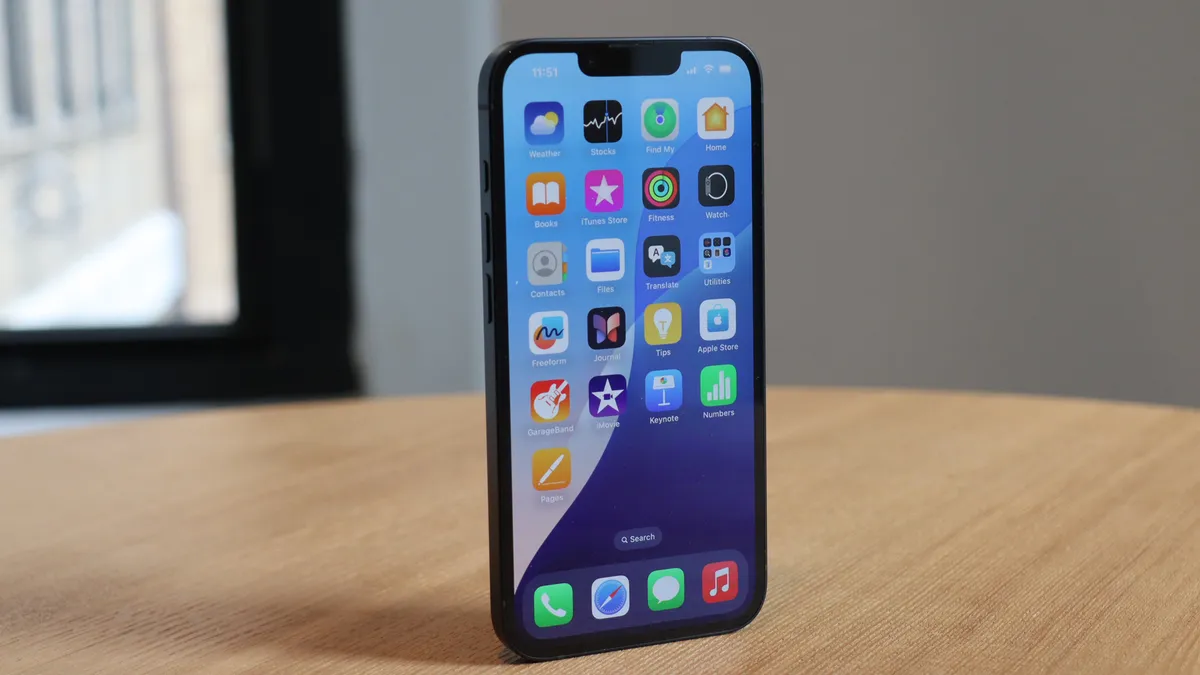
Apple released the iPhone 16e in February 2025 as a kind of middle-ground between the iPhone SE and the base iPhone 16. The core idea was a smartphone that offers the essentials of the iPhone 16 while dropping some of the trimmings – including some fancier bells and whistles – for a more affordable price tag.
There were problems here, though, firstly in that people weren't impressed with some of the design decisions Apple made, like running with a single camera. But the biggest stumbling block was that the price tag pinned on the iPhone 16e just wasn't budget-friendly enough.
The iPhone 16e launched at $599 / £599 / AU$999 compared to the iPhone SE (from 2022) that was going for $429 / £429 / AU$719 just before the new model arrived. That's a 40% leap in price, and it proved too much of an ask for a smartphone that has a few too many shortcomings (including a cut-down 60Hz display which takes away from the smooth and seamless experience you expect from an iPhone).
For the money, here at TechRadar we felt the iPhone 16e came up short, and the phone buying public agreed with us – in a survey, over 9 in 10 people felt the smartphone was too expensive for a 'budget' model, and 7 out of 10 were 'unimpressed' with the iPhone 16e overall. Nearly three-quarters of respondents said that $500 (and the regional equivalent elsewhere) felt a more appropriate price.
This isn't to say that it's a bad smartphone – because it certainly isn't as our iPhone 16e review made clear – just that the iPhone 16e is hampered by a disappointing lack of value. And you clearly agreed that Apple missed the mark by some distance with pricing, judging the iPhone 16e as the second biggest tech flop of 2025 with 12% of the total vote. Ouch.
1. The AWS and Cloudflare outages

2025 was a year in which we witnessed some almighty internet outages, showing just how the wheels could come completely off the net if a key service failed – leaving everyone seriously in the lurch for one reason or another.
Indeed, such was your frustration with this year's big outages – caused by AWS and Cloudflare respectively – that you voted this the top tech fail in resounding fashion, to the tune of 50% of the votes cast. To look at it another way, these downtimes were as big an issue as every other fail on this list put together.
AWS or Amazon Web Services was the first of this year's mammoth downtimes and it struck on October 20. It was caused by a DNS bug that hit the Northern Virginia (US-EAST-1) region of AWS, which is a critical part of the internet's infrastructure and handles a huge amount of Amazon's traffic – which the spanner in the works totally disrupted, sparking a domino effect causing problems with other AWS regions to boot.
The end result was the internet being very sluggish for many people across the globe on that day in October, and a frankly staggering array of services being affected or getting taken down outright for substantial chunks of time. That included Reddit, Slack, Zoom, Snapchat, PSN, Xbox, Steam and the Epic Games stores, Fortnite, Wordle, Starbucks, Apple Music, Tidal, T-Mobile, and many, many more – plus of course Amazon services themselves (like Prime Video). In total, over 1,000 websites or services experienced downtime issues, going by Downdetector.
As well as the sheer scope of this epic AWS fail, there were also a myriad of weird repercussions nobody expected. Unfortunate smart bed owners found their mattress stuck at an inclined angle, unable to be moved, or overheating, making sleep impossible for some, and school exams were disrupted, or bank transfers vanished into nowhere.
The Cloudflare outage followed this and was a disaster on a similar scale, effectively taking out a whole chunk of the internet on November 18, just a month later. Cloudflare is again a key player in terms of the infrastructure of the internet – providing security and boosting performance for sites and online services – and sometimes when websites won't load, you may be familiar with seeing its name pop up on an error screen in your browser.
This second major outage was caused by a failure in Cloudflare's own systems (originating from a database permission change), and victims included X, ChatGPT, Spotify, Zoom, and AWS (oh the irony), with collateral damage therein knocking out various other services.
The lesson was clear enough with these outages: in the online world, there's a lot of power concentrated in the hands of a few key cloud service providers, and should any important facet of those juggernaut operations go down, it can take out a huge slab of sites and services.
AWS in particular showed just how vulnerable the internet is to a single point of failure, and this has worrying implications for the future – especially when you view this through the lens of cyber-attacks (rather than internal bugs) being weaponized to intentionally cause online chaos.
Follow TechRadar on Google News and add us as a preferred source to get our expert news, reviews, and opinion in your feeds. Make sure to click the Follow button!
And of course you can also follow TechRadar on TikTok for news, reviews, unboxings in video form, and get regular updates from us on WhatsApp too.