Rumor has it, Apple's pricey Vision Pro is headed for the scrap heap of failed tech gadgets. Rumor also has it that it's fine and will see either further upgrades or iterations. Rumor further has it that even if the Vision Pro doesn't get significant upgrades, it will stand as the progenitor of Apple AR glasses, the wearable everyone will probably want.
By now, you should know that no one knows anything about the future of the woebegone spatial computer except for Apple, which, for the moment, is busy celebrating a significant Vision Pro win: eye surgery completed via a surgeon wearing the headset.
That news is a double-edged sword. On the one hand, it's a fist-pumping validation of Vision Pro's potential as a life-altering piece of wearable technology for enterprise. On the other hand, consumers may see it as yet another sign that the Vision Pro was never intended for them in the first place.
It's been almost three years now since Apple unveiled Vision Pro at WWDC 2023 and gave a small group of attendees, including me, the chance to try it out. As I wrote back then:
Perhaps it was the moment a virtual butterfly effortlessly landed on my extended finger, or maybe it was the dinosaur's snaggle-toothed maw that came within inches of my face, or even the mountaineer who balanced barefoot on a thin cable pulled taut across a vast ravine. In truth, it was all of those experiences with Apple's stunning Apple Vision Pro spatial computing headset that convinced me I'd just experienced the true future of VR.
To this day, I do not think this was hyperbole. I had never in decades of using technology and even trying VR (going all the way back to the mid 1990s) and AR tech for the last two decades, experienced anything like it.
As most people know, the Vision Pro arrives with a hefty price tag of $3,499. If you held, wore, and experienced the spatial computer, you could understand, if not justify, the price, but between the sometimes uncomfortable nature of wearing the 1-pound device on your face and the instant out-of-reach for average consumer price, the Vision Pro was a hamstrung consumer product from the get-go.
Apple did not win over consumers
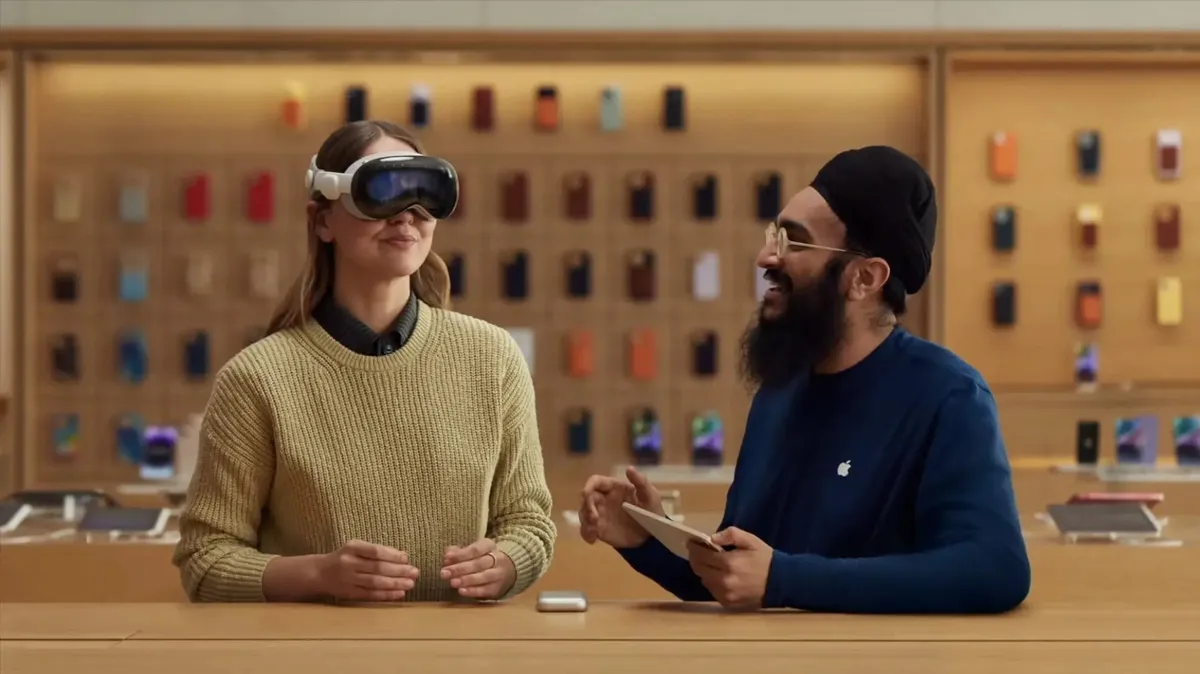
Over the last year or so, Apple has done what it could to attract consumers, like integrating more entertainment and experiences, letting people turn any photo into a spatial image, updating the processor to the M5 chip, and radically improving the headstraps to finally make the Vision Pro truly comfortable to wear for hours at a time.
But there has always been a disconnect. Even aside from the price, consumers showed little interest in being cut off from family, friends, and coworkers. Because that's what Vision Pro was asking of you: dive into a 3D movie while your family does something else. Work at a massive virtual desktop while your coworkers sit nearby, staring at you incredulously.
The latest software lets you bring other coworkers into your virtual space, and it's a wild experience, but it requires that they also wear a Vision Pro headset. It's overkill for remote work, where Zoom will probably suffice.
The Ternus factor
It doesn't take a genius to figure out that the Vision Pro is not the breakout consumer hit Apple imagined. I don't see the headsets in offices, and I do not get questions about them from consumers.
Stories about using them and the eye-popping experiences you can find (like the spatial vision of U2 lead singer Bono's documentary) drive little to no interest.
Apple will still point to the goggles as a point of pride. In a recent discussion with Tom's Guide, John Ternus called them "an extraordinary product."
The vote of confidence is important because Ternus is now just months away from stepping into the Apple CEO role. It sounds like he likes Vision Pro. On the other hand, now is not the time to tear down products championed by Tim Cook, his soon-to-be former boss and predecessor. It would be the height of bad form.
Perhaps it's Ternus's recent appointment that's recharged the rumor mill here, but fresh reports indicate Apple's failure to ignite widespread consumer adoption with the Vision Pro M5 upgrade may have doomed the product. Bloomberg's Mark Gurman has claimed in the past that Ternus was not necessarily a fan, but more recently said that he may have killed a lower-cost Vision Pro product project.
Apple has no public statements to support any of this conjecture, but anyone with a brain knows that a product struggling at this level will at least need solid repositioning. The closest Apple has come to admitting that it's not a consumer hit is Tim Cook mentioning Vision Pro's big enterprise potential. I do think the Vision Pro could have a long-term future with the corporate set. On the other hand, Microsoft (HoloLens) and Google (Google Glass) both followed that path only to eventually shelve their wearable AR products.
More certain is that everything Apple and John Ternus learned from Vision Pro about spatial computing will be poured into Apple Glass, iGlass, or whatever Apple calls its lightweight, affordable mixed-reality glasses that draw most of their intelligence from the iPhone in your pocket.
For as much as Ternus may have disliked the Vision Pro project, he will look to the glasses — and maybe the folding iPhone — to be his signature products, the ones people talk about when he steps aside 15 years from now.
No matter what happens to Vision Pro, nothing can diminish the accomplishment. Apple's spatial computer remains the apex product in the category (yes, outdoing the Galaxy XR headset for now) and marked a turning point in wearable hardware. Sure, it's been overshadowed by AI and Apple's failure to deliver a more powerful Siri, but I will encourage you to head over to an Apple Store and put on a Vision Pro headset, just so you can someday tell your grandkids about it.

Follow TechRadar on Google News and add us as a preferred source to get our expert news, reviews, and opinion in your feeds.