





TechRadar Verdict
I thought the Rokid AI Glasses Style could be the new budget smart glasses to beat, but it turns out they aren't quite as affordable as I first thought. While they do boast solid ChatGPT-powered AI tools, the lackluster design doesn't help these specs and I'm left wanting more from these Ray-Ban rivals.
Pros
- +
Impressive ChatGPT-powered AI tools
- +
Convenient first-person camera
Cons
- -
Bland design
- -
Audio and camera quality just fine
- -
No physical power switch
Why you can trust TechRadar We spend hours testing every product or service we review, so you can be sure you're buying the best. Find out more about how we test.
Rokid AI Glasses Style: two-minute review
At first glance the Rokid AI Glasses Style should be nothing but a slam dunk.
Officially starting at $379 (around £285) but discounted to $299 (around £225) at Rokid’s own store, these glasses are cheaper (assuming you get the lower price) than Meta’s Ray-Bans, while boasting specs on-par or ahead of its rival.
These AI glasses run ChatGPT 5 for insightful answers to your questions (provided you have an internet connection), a solid 12MP camera for first-person shots, real-time translation over 12 languages — including English, Japanese, German, French, Korean and Chinese — and a promised 12-hour long battery life. In our tests they lasted a fair few hours, but regular calls, taking photos and video, AI use and music will drain the battery more quickly (my experience was closer to around five to six hours of charge per session).
The only slight let down was audio. It’s fine but you won’t get a song’s true flavor through these as notes are lost — especially in the bass department. That said, this is true of other smart glasses of this kind, though I do feel some brands have a slight edge (i.e. Meta).
However, the initial price isn’t what it seems.
For a start, it doesn’t include a charging case — that’s an extra $99 fee, unlike its rival, which includes the charging case for free and it’s a real game changer. Additionally, while it’s not uncommon for premium lenses to incur an added charge, especially prescription lenses, the price of Rokid’s glasses doesn’t even include basic clear lenses.
They’ll set you back an additional $59, shaded cost $89, polarized are $109, and my recommended option photochromic transition lenses (more on that below) also cost $109 — and that’s also not included the added cost of any coatings you might want to add to reduce blue light or reflections.
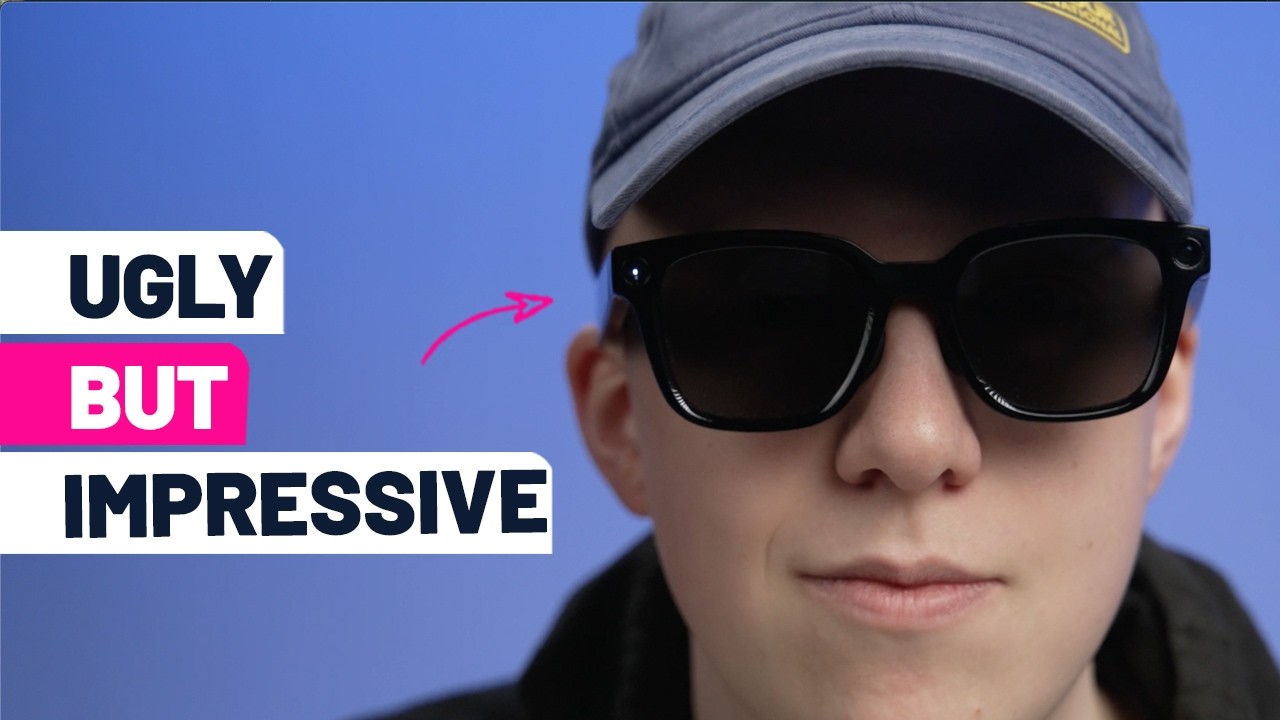
Plus, while I’m being negative, I’ll mention that Rokid’s frames also look and feel cheap. You could confuse them for the 3D specs you get given before a movie. As much a fashion accessory as a useful gadget, the design of smart glasses is crucial — something rivals like Meta has realized with Ray-Ban and Oakley designs, and Google with its Warby Parker and Gentle Monster collaborations.
All that’s to say that while Rokid’s AI Glasses Style make a strong opening impression, the feeling you’re being nickel and dimed, coupled with the lackluster look, left me disappointed.
Rokid AI Glasses Style review: price and availability
You can pick up the Rokid AI Glasses in the US (they also ship to Canada, the UK, and EU) from Rokid's own store for $379 (around £285), though they’re seemingly always on sale for $299 (around £225). This price doesn't tell you the full story however.

Firstly, lenses cost extra, and I'm not just talking about prescription lenses. Clear lenses are $59, shaded lenses are $89, while polarized options will set you back $109, and photochromic lenses that can swap between clear and shaded are $109 too.
My advice with smart glasses is always pay more for photochromic lenses. That way you can use the glasses in clear, sunny, and cloudy weather — as well as indoors. You don’t want your smart specs to only be usable sometimes.
There's additional costs for various additional coatings like anti-glare, and then you'll also need to pay more for a charging case if you want one — it sets you back $99.
Rokid is one of those brands that seems to run frequent deals, which keeps these specs from getting too out of hand financially, but what initially seem to be budget-friendly specs can still quickly spiral into the mid-range or beyond territory. At which point some of their deficiencies — especially in the design category — feel less than excusable.
- Value: 3/5

Rokid AI Glasses Style review: design
At a distance, Rokid AI Glasses Style follow the Wayfarer style that many smart specs adopt — not simply Meta’s Ray-Bans. But, ironically when you consider their name, upon closer inspection they miss the mark style-wise, while their core rival oozes cool.
The black plastic frame and flat lenses adopted by Rokid’s specs remind me of movie theatre 3D glasses, not a premium fashion accessory you’d be proud to be caught wearing in public.
I also don’t love that there isn’t a physical power off switch on the glasses’ frame. When I, say, go to the bathroom while wearing my smart glasses, knowing I have physically toggled them off puts my mind at ease that I am indeed conducting my business in private. Without this switch, I have to trust the Rokid glasses aren’t watching — and while I know Rokid will say the specs aren't spying, I still feel uncomfortable.
Rokid’s specs also get a knock points-wise when it comes to the lack of charging case. Unless you pay extra that is.
This case is super handy for recharging your smart specs on the go. On a day out, there are plenty of easy opportunities to recharge your frames with a case — say when you pause for a coffee or lunch — to make them feel like genuinely all-day companions. You could find a socket and use the USB-C charging cable, but that’s significantly less convenient.
Speaking of battery life, while Rokid promises 12 hours of use per charge, my experience using them for regularly calling people, taking photos, asking the AI questions, and playing music saw them last for around half that — about five to six hours.
That’s still not bad in fairness. And as I’ve noted with smart glasses in the past, at least when they do run out of charge, you still have a handy pair of shades.
Before talking about lenses, I will give one definitely positive design comment: the nose pads help to improve the comfort and secure fit of these specs. I wish my Ray-Bans had something similar — I have a large pair and in the summer when my face is covered in a mixture of sweat and sun cream, I constantly have to readjust where they sit on my face. With these Rokid glasses, I could leave them in place for a whole day.

They were comfortable to wear the entire time too.
Now, rounding the design section off: a comment on lenses. I was sent a shaded pair of Rokid AI Glasses Style to test, and in the UK Winter / early Spring these things are next to useless. It’s too dark outside to wear sunglasses, and you can’t really wear them indoors either — unless you’re in the minority of folks who wear sunglasses all-year round.
If you’re getting a pair, get completely clear or — ideally — photochromic lenses that morph between clear and shaded in harsh sunlight. That'll mean you have specs you can use in any conditions.
- Design: 2.5/5
Rokid AI Glasses Style review: Performance
If the Rokid AI Glasses struggle in terms of design and price, performance is where they solidly hit the mark.
Rokid’s AI assistant is powered by ChatGPT 5, which I found meant the specs were able to provide useful, insightful info on a range of topics — they even helped me find a new restaurant to try in Brighton’s Lanes after I asked for food recommendations. As someone who regularly uses my smart glasses as a tourist, they were more than capable of being your personal guide in both familiar and unfamiliar places.
I can’t speak for the full quality of their translation abilities, though tests at trade shows have proven they have a solid grasp of Chinese, and the 12-long list of supported languages — which includes English, as well as essential European and Asian languages — does put them ahead of some key rivals (read: Meta’s specs).
The microphones pick up clear audio and AI commands even in windier conditions, making voice notes is super easy, and navigation through the Rokid App is handy when it works properly — it sometimes misheard me and wanted to send me to Nottingham train station rather than my nearest one.
All of these tools can be activated hands-free using voice commands, but you can find recordings, photos, and additional information like a route map in the Hi Rokid app.

Speaking of photos, the Rokid AI glasses’ camera is, in a word, fine. The 12MP snapper is a little better for video, but it can be handy for snapping a quick first-person shot — especially if you haven’t got the hands to take your phone out of your pocket.
The audio is also fine. The bass lacks oomph, tracks feel noticeably emptier than they would with headphones and, at medium to louder volumes, there’s noticeable sound leakage if people are near you. But for casual tunes while you explore a city, these specs will serve you fine with open-ear audio that won’t take you out of the moment you’re in.
- Performance: 4.5/5
Should I buy the Rokid AI Glasses Style?
Attribute |
Comment |
Score |
Design |
Comfortable for longer stretches with a decent battery life, these shades are let down by an ugly design and lack of a physical power switch. |
2.5/5 |
Performance |
The camera and audio could be better, but the AI tools were all super handy. I could seriously see these as being an essential travel companion on my next vacation, given ChatGPT’s knowledge and the specs’ useful translation tools. |
4.5/5 |
Value |
While they initially seem relatively affordable, these smart glasses can quickly have their price rack-up, with lens and charging case costs making them mid-range rather than budget champions. |
3/5 |
Buy them if…
Don’t buy them if…
How I tested the Rokid AI Glasses Style
I used the Rokid AI Glasses Style for a month, wearing them on days it was bright enough to use sunglasses and not look too odd in late Winter / early Spring. I also did some at-home testing where I didn’t mind how silly I looked.
I made sure to try all of their features, and took them on a couple of day trips to test their abilities over longer stretches of time to judge their comfort and battery life.
I ran the Hi Rokid app from my trusty Samsung Galaxy Z Fold 7.
- First reviewed: April 2026
