





TechRadar Verdict
The Sony 1000X The Collexion may be expensive, but their luxurious build, detailed sound, and top-tier comfortability help to justify their price tag. Their battery life is on the low side, and the ANC is a step down from what we saw on the Sony WH-1000XM6, but if you want headphones with the kind of spacious sound that made Apple’s AirPods Max a hit, but without being locked to Apple, then these are a strong choice.
Pros
- +
Detailed, expansive sound
- +
Premium build quality and sleek look
- +
DSEE Ultimate upscaling and lossless audio
- +
Class-leading touch controls
- +
Incredibly comfortable
Cons
- -
Underwhelming 360 Upmix modes
- -
Battery life is on the lower side
- -
Noise cancellation is a step down from WH-1000XM6
- -
Can be beaten for value
Why you can trust TechRadar We spend hours testing every product or service we review, so you can be sure you're buying the best. Find out more about how we test.
Sony 1000X The Collexion: Two-minute review
The Sony 1000X The Collexion headphones arrive 10 years since Sony released the first set of headphones in its 1000X series, and to mark the occasion the Japanese tech giant has delivered its most expensive pair of wireless headphones ever. These are an ultra-premium pair of over-ears that are aimed squarely to be a rival to Apple’s AirPods Max 2.
And the Sony 1000X the Collexion really do feel like Sony’s attempt at going for the AirPods Max's popularity without the restrictive nature of that model’s iOS-centric feature-set. Everything from the sound signature through to the flatter design feels like a challenge to Apple, and, on a number of fronts, I’d argue that Sony has risen to said challenge.
Let’s start where it matters most and discuss sound quality. The Collexion (as I will call them) have an incredibly expansive, spacious soundstage, which provides plenty of room for individual instruments to express themselves.
Vocals and instruments are expertly separated, and there’s a fantastic degree of balance across the frequency range, resulting in nuanced, articulate sound. Combine that with using LDAC or lossless wired audio, and you’re in for a very detail-oriented listen.
The broad, roomy sound will certainly appeal to fans of the AirPods Max and their successor, although on a personal level, I did prefer the tighter and punchier sound signature of the Sony WH-1000XM6.
In terms of features, The Collexion riff heavily on what the XM6 had to offer, with impeccable touch controls, a 10-band custom equalizer, and third-party integrations like Spotify Tap and YouTube Music Quick Access. But there are some notable differences.
Here, users can access DSEE Ultimate for upscaling lower-quality files to 96kHz and 32-bit. This is enabled by a new V3 chip, which also powers some 360 Upmix audio modes for Music, Cinema, and Gaming, although these are unfortunately pretty poor, meaning I barely ever touched them. This is a shame, especially as the headphones have a dedicated button for such modes.
Noise cancelling is very good on The Collexion, and a 12-microphone system provides a solid barrier against traffic noise, surrounding chatter, and the like. Sony has been clear that the XM6 are more ANC-focused, and this came across in my testing, with a few more sounds seeping in with The Collexion — but what’s here still competes well against models like the AirPods Max 2 and bests the Bowers & Wilkins Px8 S2.
Something that has taken a substantial step down, however, is battery life. You’re only getting 24 hours now (with ANC on), which is a fair bit less than most of the competition. 30 hours is essentially a standard for premium wireless headphones now (in no small part thanks to it being Sony's usual benchmark), although The Collexion can still outlast the AirPods Max 2, which only manage about 20 hours of playtime.
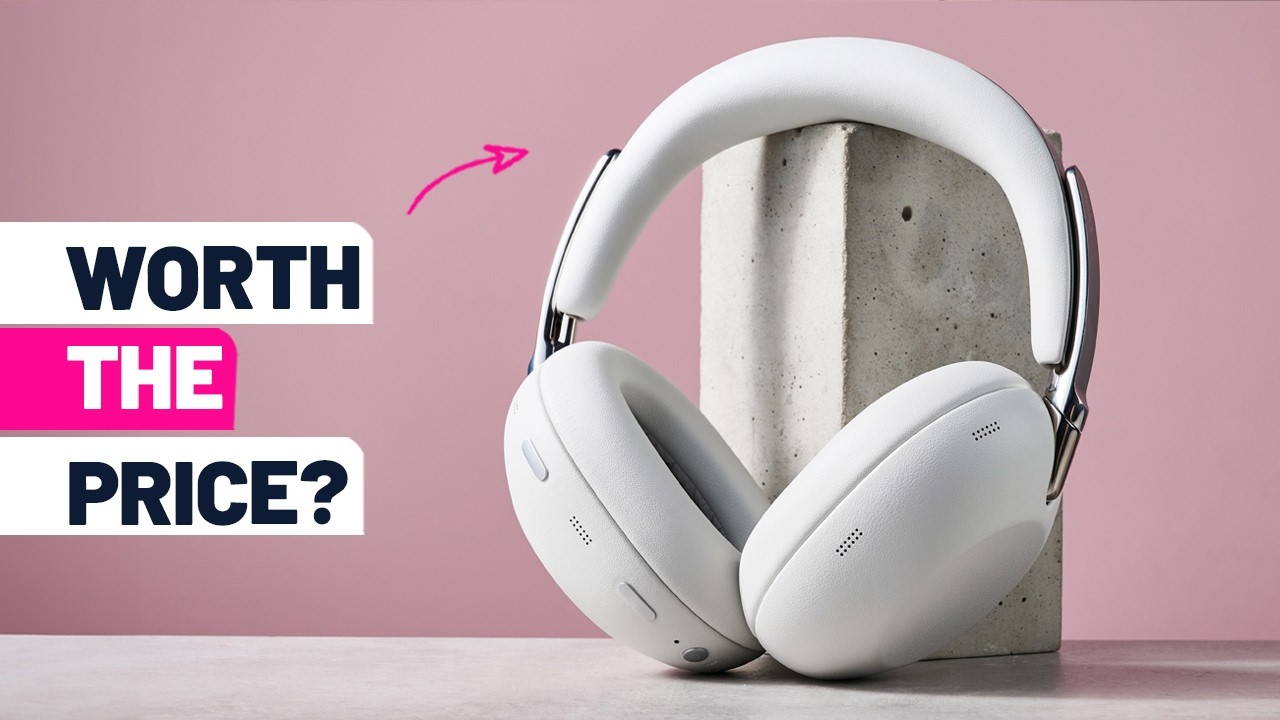
I think these headphones largely nail their more luxurious design, though. They have a gorgeous faux-leather headband and earcups which both look and feel amazing, while titanium details also offer a nice contrast to that material, and make The Collexion stand out clearly over the more unified look of other models in the 1000X line, such as the Sony WH-1000XM5.
Generally, the headphones also feel very sturdy, and although they have a fair bit of weight to them, they’re less hefty than the AirPods Max 2. The Collexion are also exceedingly comfortable, and I felt happy using them for hours on end without ever feeling the need to adjust them.
All in all, then, the Sony 1000X The Collexion are a great pair of headphones that, on the whole, justify their asking price. Factors like their luxurious build, spacious sound, and solid feature-set mean they fare well against competitors in this price range.
There are some downsides, such as lower battery life and ANC power compared to the Sony WH-1000XM6, as well as the underwhelming 360 Upmix modes, but all in all, these headphones are worth considering for any who loves the feel of Sony headphones but wishes for a more revealing sound profile.
Sony 1000X The Collexion review: Price and availability

- List price of $649 / £550 / AU$999.95
- Released in May 2026
The Collexion were officially unveiled in May 2026, about 10 years after Sony released the first set of headphones in its 1000X series. They’re the most premium wireless headphones on Sony’s roster, and have a list price of $649 / £550 / AU$999.95, meaning they’re $200 / £200 / AU$300 more expensive than the Sony WH-1000XM6.
This puts them close to the AirPods Max 2 — though Apple has them undercut by a good $100 in the US, and £50 in the UK (they cost the same in Australia). Other notable competitors include the Dali IO-8 for £499 in the UK and AU$899 in Australia, though these cost a hefty $899 in the US. There's also the Bowers & Wilkins PX8 S2 for $799 / £629 / AU$1,299.
Sony 1000X The Collexion review: specs
Drivers |
30mm dynamic |
Active noise cancellation |
Yes |
Battery life |
24 hours |
Weight |
0.7lbs / 320g |
Connectivity |
Bluetooth 6.0, 3.5mm |
Frequency range |
20Hz-20kHz |
Drivers |
30mm dynamic |

Sony 1000X The Collexion review: Features
- ANC and battery life can’t match the XM6
- Best-in-class touch controls
- DSEE Ultimate for upscaling, plus LDAC and wired lossless available
Perhaps unsurprisingly, the Sony 1000X The Collexion have a very similar featureset to the Sony WH-100XM6 — although there are some things that are exclusive to this pricier model, and some things they don’t do quite so well.
Let’s start with the new stuff. One brilliant addition is DSEE Ultimate. This technology is enabled by a new Integrated Processor V3 chip, and has never featured in a pair of Sony headphones until now (only in its music players).
DSEE Ultimate uses AI tech to upscale the sample rate of a lower-quality audio file (including stuff that's being compressed down for Bluetooth transmission) to 96kHz / 24-bit resolution. When using this on Spotify, a lot of the tracks I listen to regularly sounded a touch more detailed, and I highly recommend keeping this setting on.
On top of this, The Collexion bring high-resolution to the table via both wireless and wired means. First of all, these headphones feature LDAC for higher-res Bluetooth listening. This tech is still inherently lossy, but if you want to take a step up, you can connect the headphones to your listening device via a 3.5mm connection for wired lossless audio.
Something else enabled by the V3 chip is The Collexion’s 360 Upmix spatial audio modes. Although there’s no Dolby Atmos support, there are Music, Cinema, and Game modes, all of which take a standard audio signal and convert it into a more expansive format.
Unfortunately, I found that these upmixed modes produced poor audio quality, so even though the feature is enticing in theory, I barely made use of it — more on that later.
Still, there are plenty of great features on board, such as The Collexion’s top-tier touch controls. These are the same as on the XM6 — you can swipe to skip tracks and adjust volume, cover the right earcup to enable transparency mode on the fly, and double tap to play or pause your music.
The touch controls are incredibly responsive, and the decision to use a double tap to pause means I never accidentally triggered a command.
Call quality is also strong once again, with four feedback mics on the inside of the headphones. There’s also a 10-band equalizer and presets for personalized audio, multi-point connectivity, voice assistant compatibility, and third-party software integrations like Spotify Tap and YouTube Music Quick Access.
A lot of these settings are available in Sony’s Sound Connect app, which is relatively easy to use, but some settings are buried deep in numerous sub-menus, which can be a irritating at times.
Anyway, let’s talk about the most important feature of all: active noise cancellation. Again, you get the choice to use full ANC, a transparent ambient sound mode, or no noise cancelling at all. There’s also adaptive sound control, which switches settings depending on your environment and behaviour.
Just how good is the ANC here, though? Well, Sony was clear with us that The Collexion are less centered around ANC than the WH-1000XM6 — despite also containing the QN3 processor and 12-microphone system, just like those headphones.
And although noise cancelling is still very good on The Collexion headphones, with surrounding chatter and traffic noise kept quiet even at medium listening volumes, I could certainly tell the difference compared to the XM6. While listening to music, some higher-pitched sounds, like typing and taps running, as well as louder sounds like doors closing, could still be heard.
If you want best-in-class ANC, I’d stick with the XM6 — or the Bose QuietComfort Ultra Headphones Gen 2 — but otherwise, you’ll likely be satisfied with the noise cancelling available here.
One other feature that’s received a downgrade from the XM6 is battery life. You only get 24 hours here, which Sony says is a result of The Collexion’s flatter design in the earcups compared to the XM6, which offer 30 hours of playtime.
But let’s be honest: 24 hours just isn’t very good. It’s enough to last you through a long flight, and will likely get you through a few days at the office, but avid listeners will still have to charge their cans fairly regularly.
Ultimately, the standard in this bracket is 30 hours, although Sony still outdoes Apple here, with the AirPods Max 2 only able to manage 20 hours.
- Features score: 4 / 5

Sony 1000X The Collexion review: Sound quality
- Expansive, open sound is striking
- Sensational attention to detail using LDAC and wired lossless
- 360 Upmix modes are best avoided
If you’re looking for a pair of headphones that offer the sort of expansiveness that Apple’s AirPods Max 2 can, with all mod-cons available to you, but you don’t want the restrictions those impose on non-Apple devices, then I’d argue that The Collexion are the closest thing available.
These headphones conjure up an incredibly wide, spacious soundstage — using them, it feels as if you’re listening to music inside a large virtual room. They use a new 30mm driver, which has been redeveloped with soft edges and a harder center for enhanced detail and balance.
Listening to Voyager by Daft Punk, the airy synths sounded pleasantly forward, while the percussion occupied its own individual pocket, with plenty of room to express itself. Bass then entered the fray with tremendous impact, and came through with an almost three-dimensional quality. Spacey synths also carried a tremendous sense of space, while guitar licks danced away in the backdrop.
The headphones performed very well, no matter what genre I threw at them. With a deep house track like Planet 34 by Jesse Maas, the bass came through with admirable depth and agility, meaning the low-end sounded full and energetic rather than lethargic and ‘boomy’. Higher-pitched percussion in the treble range also maintained tight control, but never sounded blunt or underpowered.
Generally, there’s a pleasant balance right across the frequency range, and instrument separation is incredibly refined. Pair that with the headphones’ great attention to detail, and you’re in for a pleasantly nuanced listening experience.
I should be clear, however, that these headphones are at their best with some form of higher-res mode of listening. For instance, when I listened to Felini by Venerus and Marco Castello, I found that using LDAC over standard Bluetooth made a noticeable difference.
Vocals came through more naturally and articulately, while soft acoustic guitars sounded a little more expressive — the tune just had a more open, nuanced sound to it overall. This was also the case when using a wired connection, so if you want to experience The Collexion at their most intricate, make sure to use one of these options.
But how do The Collexion compare to the Sony WH-1000XM6? Well, The Collexion go for a more expansive and spacious sound, while the XM6 offer a tighter, punchier interpretation.
In Sadao Watanabe’s jazz-funk fusion record, Down East, I could detect a huge difference in the way that the headphones handled the smooth, funky bass. On the XM6, it was by no means overwhelming, but certainly impactful and slightly forward. There was still a solid amount of low-end weight on The Collexion, but the bass had a more spacious quality.
The Collexion’s more dispersed sound and almost distant low-end meant the track lost a bit of its bite, and I actually preferred the more direct approach of the XM6. There’s no doubt that The Collexion are capable of offering more space for individual instrumental elements to work their magic than the XM6, but some may actually prefer the tighter approach of the latter.
Ultimately, which you prefer is largely down to personal preference — I already preferred the sound signature of the WH-1000XM6 over the airy, broad approach of the AirPods Max 2, for instance, but I’m confident that both sound fantastic in unique ways.
One thing that did disappoint me, however, was the quality of the 360 Upmix modes. When using the Music mode, tracks sounded glaringly worse — vocals lost clarity, drums had a tinny edge, and keys in the mid-range lost their tonal accuracy. The Cinema mode was a bit better, but I still found speech to be less clear and defined, making for a weaker overall viewing experience.
This is a shame, given that the 360 Upmix modes are pitched as a major feature, and even have a dedicated button. But at the time of writing, they’re just not good enough.
- Sound quality score: 4.5 / 5

Sony 1000X The Collexion review: Design
- Stunning faux-leather casing with titanium details
- Super-comfortable fit with plush earcups
- Slightly odd-looking case
Sony’s The Collexion headphones look strikingly different from models like the Sony WH-1000XM6 and XM5, combining a beautiful faux-leather exterior with metal details.
The look of the outer casing is top-class, and is a clear indicator that these headphones are a premium product. Even when I used touch controls, the textured feel of the faux-leather was incredibly satisfying — and these small touches go a long way when you’re spending north of $500 / £500 on headphones.
Dual-textured metal links the earcups to the headband, and the metal is used for the various buttons and ports, and I can see people being divided on how enticing this looks.
Where the XM6 went for an ultra-fluid, homogenous design, The Collexion go for more of a contrasting look, and overall, I’m a fan. When we attended the product launch, Sony told us it was aiming to create a “timeless design,” and although I’d argue that headphones like the Marshall Monitor III ANC — which have a gorgeous retro look — do this slightly better, I still like The Collexion’s aesthetic.
Although the Sony WH-1000XM6 are my go-to headphones, there’s always been one thing I’ve disliked about their design: the bulky-looking earcups. The Collexion have done away with this, in favor of flatter and slimmer earcups — similar to those of the Sonos Ace. They look fantastic, and although Sony told us that the more compact form was a large reason for the reduced battery life, I’m a big fan of this choice style-wise.
Despite their flatter earcups, the Collexion are actually quite a bit heavier than the XM6. Sony’s new cans come in at 0.7lbs / 320g, compared to the 0.6lbs / 254g of their cheaper cousin. This is likely a result of the more premium materials being used, but I never felt that the headphones were too hefty in-use, and they’re still considerably lighter than the 0.9lbs / 386g AirPods Max 2.
In fact, I’d argue that these headphones are some of the most comfortable I’ve ever used. Their plush earcups, cushioned headband, and low-pressure feel is sensational, and makes for incredibly comfortable listening sessions, no matter how long.
There’s a wider headband on this model than on the XM6, which means these headphones won’t clamp too hard if you place them around your neck.
There are a few physical buttons on board, for altering noise cancelling levels and turning the power on or off, and for when (or rather if) you want to sift through the 360-degree audio modes. The rest is down to the touch controls, which are best-in-class.
Although I’ve been full of praise up to this point, The Collexion do have a few potential drawbacks worth pointing to, design-wise.
The first is that they're not foldable. This is a shame, as I love the XM6’s foldability, especially if I’ve forgotten the case and want to place them in a small bag or larger-sized pocket.
Another thing I'm not super-keen on is the case. Like the XM6, the Collexion have a magnet-lock case, which is incredibly practical and good to see. However, the look of the case is… not the best. It almost looks like a mini handbag, and not an especially attractive one. You can see it just below.
This is a minor issue in the grand scheme of things, but personally I preferred the more simple look of the XM6’s case.
- Design score: 4.5 / 5

Sony 1000X The Collexion review: Value
- Very high asking price
- Justified in most areas, but less so in others
- Overall they still compete well against the likes of the AirPods Max 2
So, do the Sony 1000X The Collexion earn their high asking price? Well overall, I’d say they do — but the picture isn’t entirely black and white (unlike their color options).
At $649 / £550 (about AU$900), these are Sony’s priciest wireless headphones, coming it at around $200 / £200 more than the WH-1000XM6. That value is realized in many respects, with more spacious and detailed sound, better upscaling, and a considerably more premium build.
However, these headphones lag behind the XM6 when it comes to ANC and battery life. They still compete well in terms of noise cancelling, sound quality, and design against similarly priced rivals like the Bowers & Wilkins Px8 S2 and the Apple AirPods Max 2, but if you want a true pair of all-rounders with top bang-for-buck, then the XM6 would still be my top recommendation.
- Value score: 4 / 5

Sony 1000X The Collexion review: Should you buy them?
Attributes |
Notes |
Rating |
|---|---|---|
Features |
Excellent touch controls, DSEE Ultimate upscaling, ANC still very solid, although battery life disappoints. |
4 / 5 |
Sound quality |
Expansive sound with impeccable detail, but 360 Upmix audio is a let-down. |
4.5 / 5 |
Design |
High build quality, phenomenal comfort, but the case isn’t my favorite. |
4.5 / 5 |
Value |
Competitive against ultra-premium rivals, but the cheaper XM6 are better all-rounders. |
4 / 5 |
Buy them if...
Don't buy them if...
Sony 1000X The Collexion review: Also consider
| Header Cell - Column 0 | Sony 1000X The Collexion |
Apple AirPods Max 2 |
Dali IO-8 |
|---|---|---|---|
Price |
$649 / £550 (about AU$1,000) |
$549 / £499 / AU$999 |
$899 / £599 (about AU$1,100) |
Drivers |
30mm dynamic |
40mm dynamic |
50mm dynamic |
Active noise cancellation |
Yes |
Yes |
Yes |
Battery life |
24 hours |
20 hours |
30 hours |
Weight |
0.7lbs / 320g |
0.9lbs / 386g |
0.7lbs / 325g |
Connectivity |
Bluetooth 6.0, 3.5mm |
Bluetooth 5.3, USB-C |
Bluetooth 5.2, USB-C |
Frequency range |
20Hz-20kHz |
20Hz-20kHz |
10Hz-43kHz |
Sony 1000X The Collexion review: How I tested

- I tested them for just under two weeks
- I predominantly tested them using Tidal
- Tested in real-world conditions
I spent more than a week testing the Sony 1000X The Collexion headphones, during which time I tested them in as many real-world situations as I could, to test the active noise cancellation.
Although I dipped into apps like Spotify, I predominantly used Tidal to test their performance, due to its support of higher-resolution files. I began my testing by sifting through the TechRadar testing playlist, which features tracks from a wide variety of genres, but I also listened to hours' worth of tunes from my personal library.
I’ve spent years testing all sorts of audio gear here at TechRadar, ranging from party speakers to audiophile-friendly wired and wireless headphones. I also reviewed the Sony WH-1000XM6 and compared them to rivals from Bose, Apple, Bowers & Wilkins and more — I've been using the XM6 headphones for more than a year now, so I had a deep understanding of how The Collexion differed from their counterpart.
- Read more about how we test
- First reviewed: May 2026
