





Sponsored by

Are VPNs worth having in 2026?

When some of the best VPNs made their way into the world just over a decade ago, the question of whether they were tools worth having came with a very different answer than it does in 2026.
Then, VPNs were a niche piece of software for the particularly privacy-conscious, and those travelling to different countries frequently who wanted to maintain access to certain services and sites while abroad.
Now, the online landscape is a lot more complicated. It's no longer a case of simply hiding your IP address, but of navigating an increasingly fragmented, regulated, and in some instances, fragile internet.
AI allows for more sophisticated scammers – and VPNs are rising to defeat them

We’re all busy asking ourselves: “Is AI going to steal my job?”. But the reality is that AI is already being utilized to steal our data.
As we've reported in the past, there's a growing concern among cybersecurity experts of large language models (LLMs) being exploited or used in large-scale cyberattacks. They're are being leveraged for their rich information sets to create more sophisticated impersonations of brands, employees, or customers that will catch users out.
In fact, in its predictions for 2026, AI-powered cybersecurity platform Sentinel One found that 53% of the security leaders it spoke to said that AI-powered attacks will be their biggest challenge and that "agentic phishing attacks will exceed 42% of all global breaches in 2026”.
Thankfully, VPNs are rising to meet these new challenges and make an increasingly hostile online landscape a touch less scary to navigate. Now, they’re more than just a tool to create a more secure channel for your information to travel through – they’re offering comprehensive security suites, in some cases antivirus software, ad-blockers, and more…
VPNs are only continuing to expand their expertise
Again, VPNs are expanding to meet the demand for more comprehensive security coverage in one convenient package.
As with streaming services (more on that later), consumers don’t want to be subscribing to multiple pieces of software that all sit within the umbrella of cybersecurity, but target different things.
Many VPNs are now a one-stop-shop for a wide variety of cybersecurity needs – from antivirus to ad- and tracker-blockers and even secure browsers.

NordVPN has its Threat Protection packages, for example, which include a 'lightweight antivirus' and dark web monitoring. While IPVanish offers its Threat Protection Pro tool, which will scan files for malware and viruses, as well as hosting its ad blocker and its network tracking protection.
Internet shutdowns and censorship aren’t going away
In 2025 there wasn't a single day that went by without an internet shutdown happening somewhere in the world. That's a quite astonishing stat and a worrying trend for advocates of a free and easy-to-access internet.
There were 313 shutdowns across 52 countries in 2025, more often than not related to ongoing conflicts in the world. And organizations like Access Now, who are constantly monitoring these blackouts, are seeing a shift in how governmental bodies are implementing them.
Rather than a blanket shutdown, governing bodies are beginning to target and block specific apps and services. And – while a VPN was a great tool to circumvent these – it seems like obstructing VPNs might be next on the list.
In this sense, then, if part of the reason you want and need a VPN in 2026 is because you're in a situation where these internet shutdowns are happening, it may not be long until such a tool is severely restricted. Or, at least, you run the risk of being prosecuted for using one if you're in countries where this is the case.
That said, where they are still working, they currently remain a lifeline to many in getting word out there to the rest of the world and sharing their voice.
A VPN could help to navigate a fragmented streaming landscape
The reality is the conflicts going on around the world aren’t just affecting internet access, it’s also having a global impact on the cost of living, including fuel and food items. That makes the sheer volume of streaming services and the way in which TV shows and film licenses, as well as sports coverage rights, are sliced up an ever growing expense that feels more and more difficult to justify.
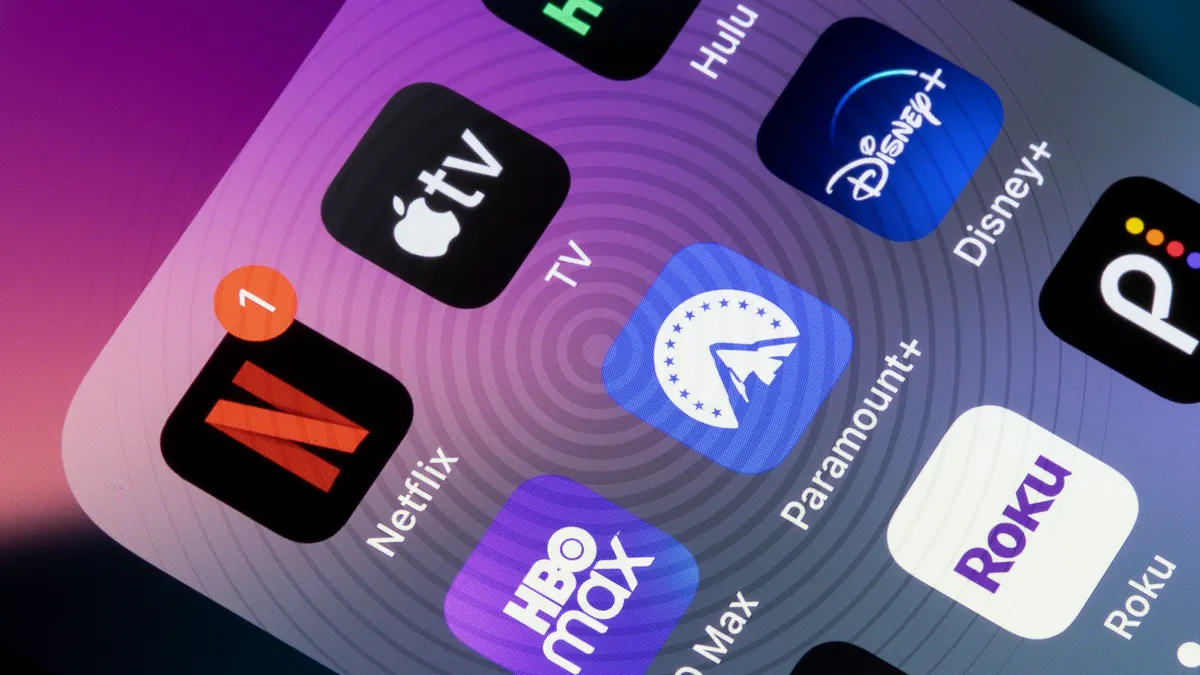
Sure, it’s not a necessity, but I think we can all collectively agree some escapism wouldn’t go amiss from doom scrolling through the horrifying headlines. Having a VPN in 2026 can certainly help with some of that fragmentation.
You won’t need to subscribe to as many streaming services, because you’ll be able to bypass geo-restrictions and get more with a decent Netflix VPN able to unblock libraries in different countries, or rinsing through free-to-use platforms in the UK like BBC iPlayer and 9Now in Australia.
But... the internet is on the verge of changing
I can practically hear people asking incredulously: "What do you mean 'changing'? Again!?" Because hasn't the web been in a constant flux of transformation since, well, Tim Berners-Lee created the World Wide Web in 1989?
Well, hold onto your hats, because quantum computing is coming – maybe sooner than originally thought – and it could change everything.
In simple terms, quantum computing will be faster and able to solve numerous complex calculations at a time, rather than one by one.
What does this mean for cybersecurity? Well, current levels of encryption won't be good enough. And while it might not be in the mainstream just yet, a 'harvest now, decrypt later' mentality could still see your data at risk.
Of course, though, VPN providers are already working hard, with some of our favorite VPNs to recommend already working towards the implementation of post-quantum encryption (PQE).

So, are VPNs worth having in 2026?
Admittedly, a lot of this all sounds very scary: hackers are getting more sophisticated, computers are getting smarter, meanwhile governments are likely to want to store your ID on their servers until the end of time. It's all very dark and gloomy out here.
The reality, though, is that most average people aren't all that concerned about their privacy. Should we be a bit more aware and bothered about it? Probably. Do we all fully comprehend why? Unlikely.
VPNs are definitely useful. I mostly use mine for the sake of unblocking streaming services, which is decidedly not their most integral use case. But I'm fortunate enough to live in a safe, relatively free country, and I'm not under the age of 16, so I can access TikTok if I really want to.
That said, I also like that it feels like I somewhat have a handle on my online anonymity. And with some of the top VPNs offering other security and antivirus features in one package, I feel reassured that my phone is looked after, too.
That alone makes a VPN feel worth having. And if you are carrying out more data sensitive tasks, it's likely a no brainer.
