





Not a single day of 2025 passed without at least one internet shutdown. That's the striking opening to the latest annual report from digital rights group Access Now and the #KeepItOn coalition.
It has been 10 years since the coalition began tracking global communication blackouts, and the toll continues to rise. In 2025, a record 313 internet shutdowns were documented across 52 countries, with seven nations appearing on the list of offenders for the first time.
Felicia Anthonio, #KeepItOn Global Campaign Manager, told TechRadar that while conflict remains the primary trigger for these blackouts — accounting for 125 shutdowns in 14 countries — her team has identified a sophisticated new trend. There is a clear shift from total internet blackouts to more "targeted" restrictions.
Make no mistake — this shift is not a victory for digital rights. Instead, it represents a tightening of the screw. Censors are increasingly targeting VPN services and satellite internet connections, systematically closing the alternative routes that people rely on during a crisis. These vital lifelines are becoming harder to access exactly when they are needed most.
We sat down with Anthonio to discuss how the face of internet censorship is evolving and the challenges that lie ahead for 2026.
A rise in platform-level shutdowns
Shutting down the internet entirely carries massive repercussions for a nation’s economy, as businesses are paralyzed and unable to conduct day-to-day operations. In 2025, the total global economic loss resulting from these blackouts is estimated to be a staggering $19.7 billion.
This economic fallout is why experts are seeing a strategic shift: instead of pulling the plug on the whole web, censors are increasingly opting to block specific social media and messaging platforms.
According to Access Now, this approach is becoming the preferred choice for many governments. The group recorded 94 shutdowns specifically targeting platforms like WhatsApp, Facebook, Instagram, TikTok, and Telegram across 40 countries in 2025. This is a significant jump from the 77 incidents recorded in 2024.
Anthonio explains that governments often view this as a more "acceptable" middle ground compared to a total blackout. "But people rely on these platforms to run businesses and communicate, so it still acts as a total shutdown for them," Antonio explains.
Virtual private network (VPN) apps and other circumvention tools offer easy workarounds to these types of blocks. By spoofing a user’s IP address, these tools allow individuals to appear as if they are connecting from a different country with just a few clicks, granting them a "free pass" to reach blocked services.
Sudden surges in VPN adoption are now a reliable indicator of government-imposed restrictions. In 2025, a popular free VPN provider, Proton VPN, recorded a surge in sign-ups as high as 35,000% across 62 countries.
Targeted attacks on alternative connections
As more citizens turn to circumvention tools to bypass platform blocks, governments are finding increasingly aggressive ways to obstruct them. From physical crackdowns and sophisticated digital filtering to new legislation and heavy fines, the campaign against these digital lifelines has never been more widespread.
In Indian-administered Jammu and Kashmir, authorities enacted a two-month ban on unauthorized VPNs. This wasn't just a digital block; reports emerged of police conducting physical phone searches and initiating security proceedings against hundreds of users found with VPN applications on their devices.
Venezuela was particularly harsh against VPN usage last year, too, blocking over 20 VPN websites in January 2025 alone. Despite the change of regime, local digital rights advocates confirmed that there are "no meaningful changes" in the country's censorship landscape.
While VPN censorship is nothing new, though, 2025 was also marked by a newish attack on alternative connections — the targeting of Low Earth Orbit (LEO) satellite internet like Starlink.
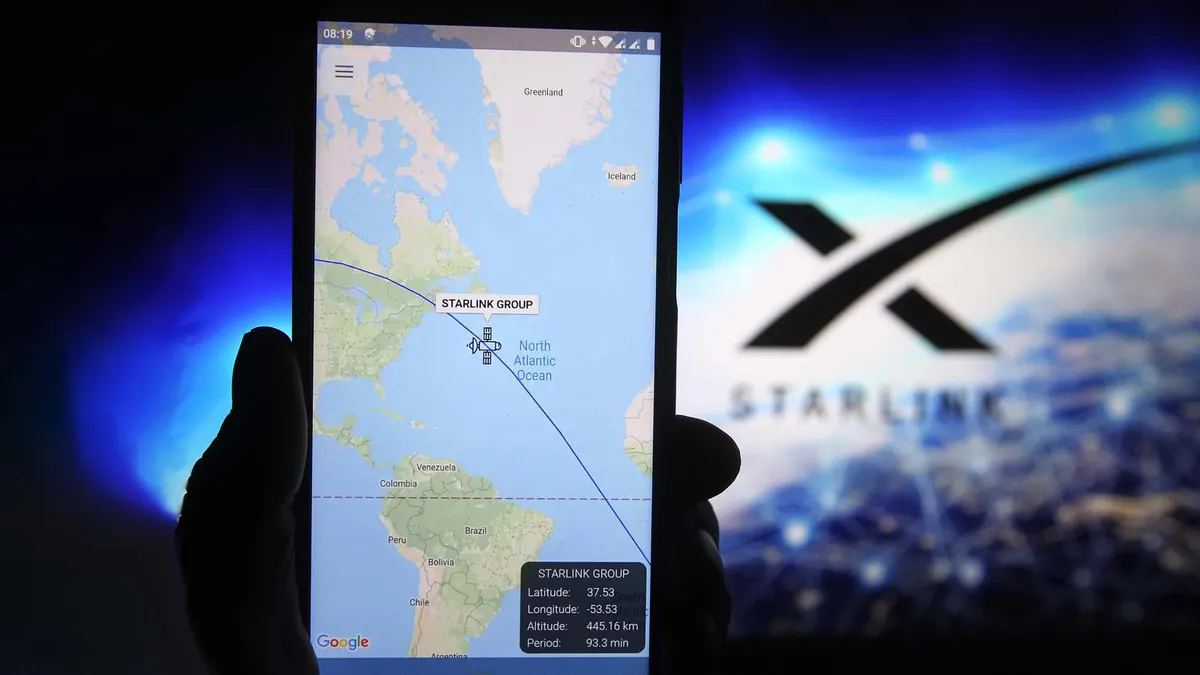
Anthonio explains that governments "are going an extra mile" to shut down Starlink and similar tools.
In June 2025, Iran adopted legislation that criminalizes the import, sale, and use of unauthorized internet tools. Under this law, citizens caught using satellite internet services risk severe legal consequences, including long-term imprisonment.
In Myanmar, the crackdown is even more physical, with reports of authorities confiscating hardware and arresting local service providers.
"Last year, we saw 14 incidents across seven countries where alternative connections were targeted, compared to just four incidents in 2024," Anthonio told Techradar.
The first few months of 2026 have already shown that the trend is accelerating. In Iran, authorities have begun jamming Starlink connections, rendering them almost useless. Meanwhile, in Uganda, the government ordered Starlink to disable all terminals and services in January 2026 — citing a lack of local licensing — just days before imposing a nationwide internet blackout during the general election.
This escalation reveals a clear pattern of digital enclosure. "Previously, VPNs were common for bypassing shutdowns, so governments went after them. Now that satellite connection is becoming a lifeline, they have started disrupting access to that," Anthonio added.
Whitelisting: The next frontier for digital control?
If 2025 was a record year for the erosion of global digital freedom, 2026 is already on track to surpass it, with Iran and Russia leading the charge.
Iranians have already lived through two near-total communication blackouts. The second wave — which is still ongoing — has now surpassed the 50-day mark. An infamous achievement that, Anthonio explains, makes it the "longest nationwide shutdown in history."
Russia has also kicked off what observers have deemed the "great internet crackdown." Internet access has been disrupted in some cities, Telegram has been blocked, and new systems to detect and block VPN use have been implemented.
Crucially, both nations are now pivoting toward a more sophisticated censorship regime: whitelisting. Unlike traditional "blacklisting," where specific sites are blocked, a whitelisting system flips the script. Censors block the entire internet by default, allowing only a handful of government-approved, "socially significant" services to function.
"It is just a clear way for the government to control what is happening and decide who gets access, which defeats the purpose of advocating for a global internet for everyone," said Anthnio. "We should draw as much attention to this as we do to complete population cutoffs."
🗓️ Exactly five weeks ago on Saturday 28 February, #Iran cut off access to the global internet.The measure remains in place, entering day 36 after 840 hours, isolating the general public as authorities explore ways to give chosen users access via a tiered whitelisting system. pic.twitter.com/ZUiFas6CI2April 4, 2026
While the challenges are mounting, the global resistance remains formidable — and 2025 delivered several landmark victories for digital rights.
On the International level, the International Criminal Court (ICC) has formally recognized the link between internet shutdowns and crimes against humanity. Last June, the Freedom Online Coalition also released a statement urging governments to stop targeting internet infrastructure during conflicts.
However, the most significant pushback comes from those living under the shadow of censorship. Every day, civilians risk their safety to smuggle Starlink terminals into restricted zones and to develop new ways of evading digital blocks.
Their persistence in sharing information and documenting human rights violations remains the primary defense against state control. In a year defined by digital darkness, these individuals continue to find ways to turn on the light, ensuring the rest of the world can see the truth.
Follow TechRadar on Google News and add us as a preferred source to get our expert news, reviews, and opinion in your feeds. Make sure to click the Follow button!
