





Choosing an Android smartwatch isn't as simple as picking the newest model from Google or Samsung. Some watches are better suited to fitness fanatics, others offer a more complete everyday smartwatch experience, and a few make a strong case for themselves on battery life alone. The trick is finding one that does what you need without charging you for features you'll never use.
We've tested Android smartwatches from Google, Samsung, OnePlus, Amazfit and more, wearing them day to day and putting their key features through their paces. That means tracking workouts, checking GPS accuracy, wearing them overnight and seeing how long they last between charges, as well as getting to grips with their apps, notifications and phone compatibility.
Our recommendations cover different budgets and priorities, from fully fledged smartwatches to fitness-focused alternatives with battery life measured in weeks. We regularly revisit our picks as new models arrive and prices change, so an older watch can still earn its place if it's now a particularly good buy. Every recommendation links to our full review if you want to dig deeper into our testing.
Black Friday lands on Friday 27 November, with Cyber Monday following on Monday 30 November. This guide will help you find the right Android smartwatch for your needs, with live retailer prices for every pick so you can spot a deal all year round. Our writers and editors will also cover the biggest discounts separately during the sales.
The best Android smartwatch 2026
Why you can trust TechRadar We spend hours testing every product or service we review, so you can be sure you're buying the best. Find out more about how we test.
In our guide below, you'll find full write-ups for each of the best Android smartwatches. We've tested each of these devices extensively, which means our recommendations can be trusted.
The best Android smartwatch overall

The Google Pixel Watch 5 is the Android smartwatch to get if you want something that feels equally at home tracking a run, displaying your WhatsApp messages and sitting on your wrist at dinner. It’s small, light and properly smartwatch-y rather than looking like a rugged fitness computer, but there’s much more going on underneath that polished design than its jewellery-like appearance suggests.
The curved 1.2-inch or 1.4-inch AMOLED display is bright enough to hit 3,000 nits, while the 41mm and 45mm sizes make it easy to find a comfortable fit. We also like that the Pixel Watch 5 is repairable, allowing the battery and display to be replaced rather than treating the whole watch as disposable. Wear OS 7 is slick and intuitive, with a huge selection of third-party apps for everything from music and maps to messaging.
Fitness tracking is one of its strongest suits. We compared its heart-rate readings against a Polar H10 chest strap and found only minor differences, while its dual-frequency GPS performed impressively when tested on the sections of the London Marathon course around Canary Wharf that are notorious for poor GPS reception. It tracked the route particularly well against an Apple Watch Ultra 3 and Garmin Fenix 8 Pro, although pacing accuracy wasn't perfect. New health features include Breathing Emergency Detection and Insulin Resistance Trends, alongside the usual workout, sleep and heart-health tracking.
There are two things to think about before buying. Battery life still means charging daily or every couple of days, and a 2.5-hour hike used around 25% of the battery in our testing. Google is also putting more of its health experience behind Google Health Premium, which costs $9.99 / £7.99 a month. Gemini can be handy for quick questions and hands-free tasks, but our testing found it can still confidently get things wrong.
Read our full Google Pixel Watch 5 review
The best value Android smartwatch

The Samsung Galaxy Watch 8 is a brilliant buy now that its successor has arrived, offering a surprisingly big upgrade over its predecessor without the newer model's price tag.
The Galaxy Watch 8 has a lot going for it, even with the Galaxy Watch 9 now on shelves. Its slimmer, more comfortable design, bright 3,000-nit AMOLED display and speedy performance make it a lovely everyday smartwatch, while Wear OS 6 brings Google Gemini to your wrist alongside a healthy selection of third-party apps. There's plenty here for fitness fans, too, including Samsung's Running Coach with 160 training plans, advanced sleep tracking and detailed health metrics.
We were particularly impressed by its running accuracy during testing, with its GPS and workout metrics comparing favourably with the Garmin Venu X1. It's also comfortable enough to wear overnight, which is handy if you want to make the most of its sleep-tracking features.
Battery life is the biggest compromise. We managed around 25 hours with the always-on display enabled, so you'll still be reaching for the charger most days. The Dynamic Lug strap system can also be fiddly to change. However, with the Galaxy Watch 9 now taking over as Samsung's latest mainline model, the Watch 8 is a much more tempting purchase at its reduced price. If you want a fully featured Wear OS smartwatch without paying for the newest generation, it's a cracking buy.
Read our full Samsung Galaxy Watch 8 review
The best Android smartwatch for battery life
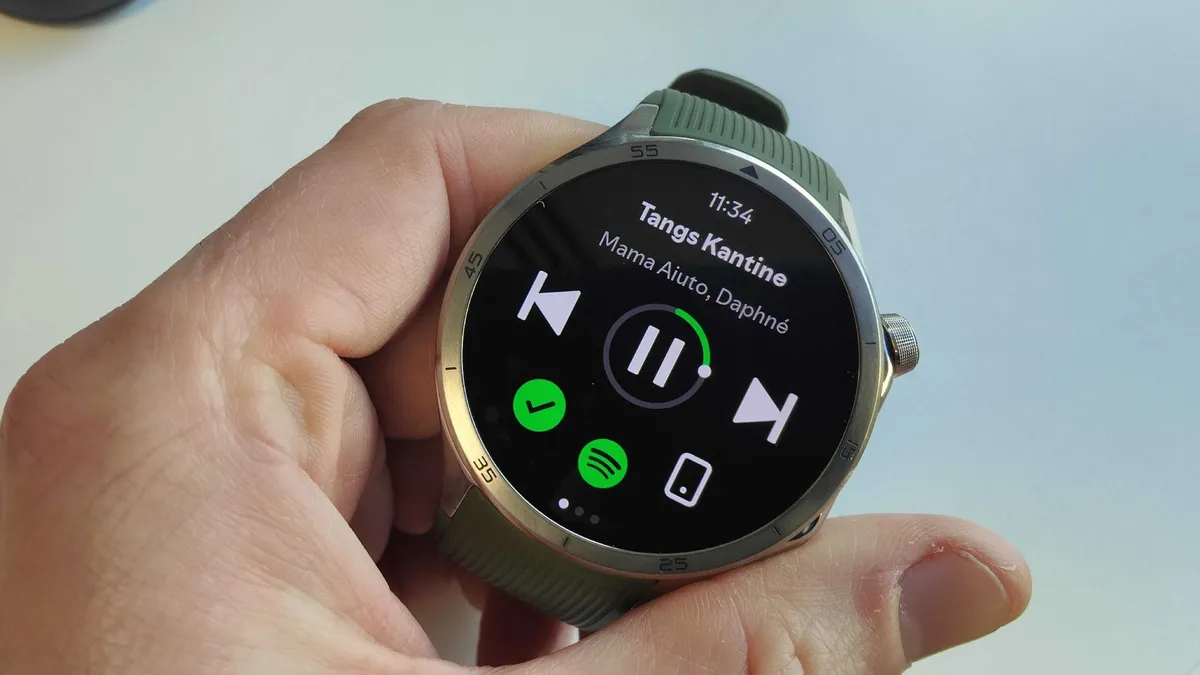
After arriving into the scene in 2025, the OnePlus Watch 3 is the best Android smartwatch for battery life out there. It can't match Garmin options, but you do get the best usage of any fully-fledged smartwatch with up to 120 hours of use.
The performance is delivered by a unique dual-processor and OS configuration that switches seamlessly between the low and high-powered options depending on usage.
Fantastic battery life aside, the AMOLED display is big, bold, vibrant, and easy to look at. We loved the new rotating crown and overall classic look in our review, but it's a very chunky watch that will prove too big for some. Luckily, a smaller version is on the way later this year.
There are lots of great health features, including a new ECG function,a 60-second heart health check-in, and dual-frequency GPS.
Performance-wise, there are a couple of health tracking quirks, but battery life is very solid in line with expectations.
Read our full OnePlus Watch 3 review
The best Samsung Android smartwatch

The Samsung Galaxy Watch 9 is a slick, lightweight smartwatch with a lot to offer, from its polished Wear OS experience to some clever new health features.
The Galaxy Watch 9 runs Wear OS, giving you access to Google's Play Store, Spotify, Google Maps and a healthy selection of third-party apps. You can manage music, check notifications, set vibration-only alarms and customise Tiles to keep your favourite apps and information just a swipe away. The interface has a few navigation quirks, but there's plenty here to make it a handy companion throughout the day.
Samsung has also made its health tracking more useful by turning activity, sleep and other measurements into scores and suggestions, rather than leaving you to decipher a wall of graphs. Our reviewer found the Fitness Index particularly helpful, although the Energy Score didn't always reflect how they felt. GPS and heart rate tracking also proved reliable during testing.
The slim, lightweight design makes the Watch 9 comfortable to wear day and night, and its bright 3,000-nit AMOLED display is easy to read outdoors. Battery life is less impressive. With regular workouts and sleep tracking, our reviewer struggled to get more than a day from a charge. It's also worth checking compatibility before buying, as features such as ECG and blood pressure monitoring are restricted to Samsung phones.
Read our full Samsung Galaxy Watch 9 review
The best rugged Android smartwatch

The Samsung Galaxy Watch Ultra 2 is Samsung’s big, rugged smartwatch for people who want their wearable to do a lot more than count steps. It’s particularly well suited to runners, hikers and other outdoor types, but it also makes a strong case for anyone with a Samsung phone who wants the fullest smartwatch experience in the Galaxy ecosystem. And unlike the original Ultra, it’s actually a little easier to live with.
Samsung has shaved 12% off the thickness of the titanium case and made the bundled band 25% lighter, which makes a noticeable difference. At 61g, the Ultra 2 is still a chunky watch, but we found it more comfortable and secure on the wrist during strenuous exercise, and even surprisingly wearable overnight. The 1.5-inch AMOLED display is bright and crisp, while the WR100 rating makes it suitable for serious water-based adventures.
Fitness features are a major draw, with ECG, heart-rate tracking, sleep tracking, body composition, Running Coach and a host of new health metrics. Trail runners get GPX route support, while divers can make use of the watch's new diving capabilities. You also get Samsung's excellent smartwatch features, including LTE, Google Gemini and third-party apps, so this isn't a rugged watch that sacrifices everyday convenience for outdoor credentials.
Battery life is another improvement. We got around 60 hours with the always-on display enabled. Heart-rate tracking wasn't flawless, with some initial drift during workouts before settling down after around 10-15 minutes. Still, if you want a rugged Android smartwatch that can handle everything from your morning run to a weekend adventure without giving up the bells and whistles of a full smartwatch, the Ultra 2 packs an awful lot into one hefty package.
Read our full Samsung Galaxy Watch Ultra 2 review
Best value Android smartwatch for fitness

The Amazfit Balance 2 is proof that you don't need to spend a fortune or charge your smartwatch every night to get seriously good fitness tracking.
Twenty-one days of battery life. Let that sink in for a moment, especially if you're used to plugging your smartwatch in before bed every night. The Balance 2 lasted the full three weeks in our reviewer's testing with typical use, and even with GPS tracking and the always-on display switched on, it managed around seven days. That's an enormous advantage if you're heading off on a hiking trip, training for an event or simply can't be bothered with another nightly charging ritual.
Battery life isn't its only trick, either. The dual-band GPS impressed us with its accuracy across built-up streets, woodland and rural routes. Its BioTracker 6.0 sensor also delivered reliable heart rate readings. Add a bright sapphire-protected AMOLED display, 10ATM water resistance and 32GB of storage, and you're getting a lot of hardware for the money.
The compromise is that the Balance 2 is a much better fitness watch than it is a smartwatch. Its maps can be frustratingly slow to load, and Zepp OS lacks the third-party app support you'll find on Wear OS rivals. There's no Spotify or Strava integration, either. If you want a wrist full of apps, look elsewhere. But if your priorities are dependable activity tracking, outdoor adventures and a battery that just keeps going, the Balance 2 makes a very persuasive case for itself.
Read our full Amazfit Balance 2 review
How to choose the best Android smartwatch
When you’re choosing the best Android smartwatch for you, it’s important to consider compatibility. Almost all of the best Android smartwatches use some version of Wear OS, and this works well with Google’s apps and services. However, some features on Pixel or Galaxy watches will be locked away unless you own a phone from the same company.
Next, you’ll need to think about the features you need. For example, do you want an Android smartwatch that’s primarily going to track your fitness? In this case, you’ll need solid heart rate tracking and GPS functionality. Some watches focus more on notifications, music control, and payments. You’ll need to figure out which features you want to use daily.
We’d also recommend considering battery life. This is a significant factor for most people. Some of the best smartwatches that are packed with features (like always-on displays) may have a shorter battery life than you’d expect. You’ll need to decide whether you’re happy to charge a device every day or need one that lasts several days on a single charge.
Because most people wear their smartwatches every day, you’ll want to be sure you like the design and how comfortable it is. Choose one that has an aesthetic and a size that’ll suit you. There is a wide range of options, from sleeker and more minimal designs to chunky, rugged models, and it's worth trying one on and looking into replaceable bands for different looks.
Finally, think about your budget, from the more budget-friendly options to premium watches packed with high-end features. We recommend setting a budget based on how many of the features we’ve outlined above are important to you – remember that more expensive doesn’t always mean the best.
Do Android smartwatches also work with an iPhone?
Some of the best Android smartwatches will work with an iPhone. However, those that do will often work with very limited functionality compared to one of the best Android phones.
It'll depend on which smartwatch you choose, but you'll generally still be able to receive notifications, track fitness data, and use some apps. However, features like replying to messages, accessing some apps, or using voice assistants may not work as seamlessly as they would with an Android phone.
This means that if you’re an iPhone user, an Apple Watch is generally going to be the best option for you, giving you full compatibility. However, if you do prefer an Android smartwatch for whatever reason, it'll probably work; you'll just need to expect far fewer features when it's used with iOS. There's really no reason to pick it over an Apple Watch.
How we test the best Android smartwatches
When testing a smartwatch, we pair it to our phones (either any old Android handset, or proprietary ones in the case of Google or Samsung) and use it for at least a week. This testing process includes testing its true battery life so it's drained completely, seeing how it handles notifications, and loading third-party apps onto the watch.
We also wear it while exercising and working out so we can see if it's accurate at measuring distances and time, comparing it with a market leader such as the Garmin Fenix 8.
To create our ranking, we considered our review score, the specs, features, performance, price, and how they stack up to alternatives.
