


The best TVs are constantly evolving: think higher resolutions, better picture and sound quality, and smarter Smart TVs. However, with so many specs to sift through and so many TVs on the market, narrowing down your choices can be a daunting task.
That's why we've rounded up today's best TVs – and the TechRadar team has tested each and every model in this guide, from the OLEDs to the mini-LEDs. The LG C6 is the best TV overall in our rankings, thanks to its awesome color and contrast, and it's a solid upgrade from the LG C5 (which you'll also find in our guide). If you're looking for a more budget-friendly pick, then you can't go wrong with the sub-$500 Roku Plus Series, a QLED with a rich picture and nifty smart TV features.
Keep scrolling to check out our reviews, based on our real-world testing where we put each TV's brightness, color accuracy, input lag, and sound quality to the test. So, regardless of what you plan to watch on your TV, you're bound to find one that suits your setup and budget.
2026 Black Friday sales
While we're still in October, it's never too early to look ahead to this year's Black Friday sales events – where you can expect big TV discounts on models of all sizes.
We'll report on the best of these savings as we get closer to Black Friday (November 27) and Cyber Monday (November 30), and we recommend keeping an eye on the widgets below to get the best prices on TVs.
Why you can trust TechRadar
At TechRadar, TVs are tested on-site by our TV review team led by an ISF-trained video calibrator with 20-plus years of AV product-testing experience.
Our staff reviewers, including James Davidson and Matt Bolton, have been trained to use industry-standard testing equipment to measure parameters such as TV brightness and color accuracy, and to balance them with subjective aspects of picture and sound quality. That's because measurements can only take you so far in determining a TV’s overall performance.
Our evaluation process goes beyond just picture quality to encompass features, audio, gaming performance, and overall value. Ratings are provided for various sections in our tests, and measurement graphs that also feature comparable TVs, so you can see how well – or not – a TV fares against its competition to aid your decision-making.
TechRadar has been conducting product tests for 17 years and reviews more than 1,300 products per year. Our team alone reviews an average of 35 TVs each year, including everything from budget 32-inch models to 100-inch-plus TVs.
The best TVs, listed
Why you can trust TechRadar We spend hours testing every product or service we review, so you can be sure you're buying the best. Find out more about how we test.
The best overall TV


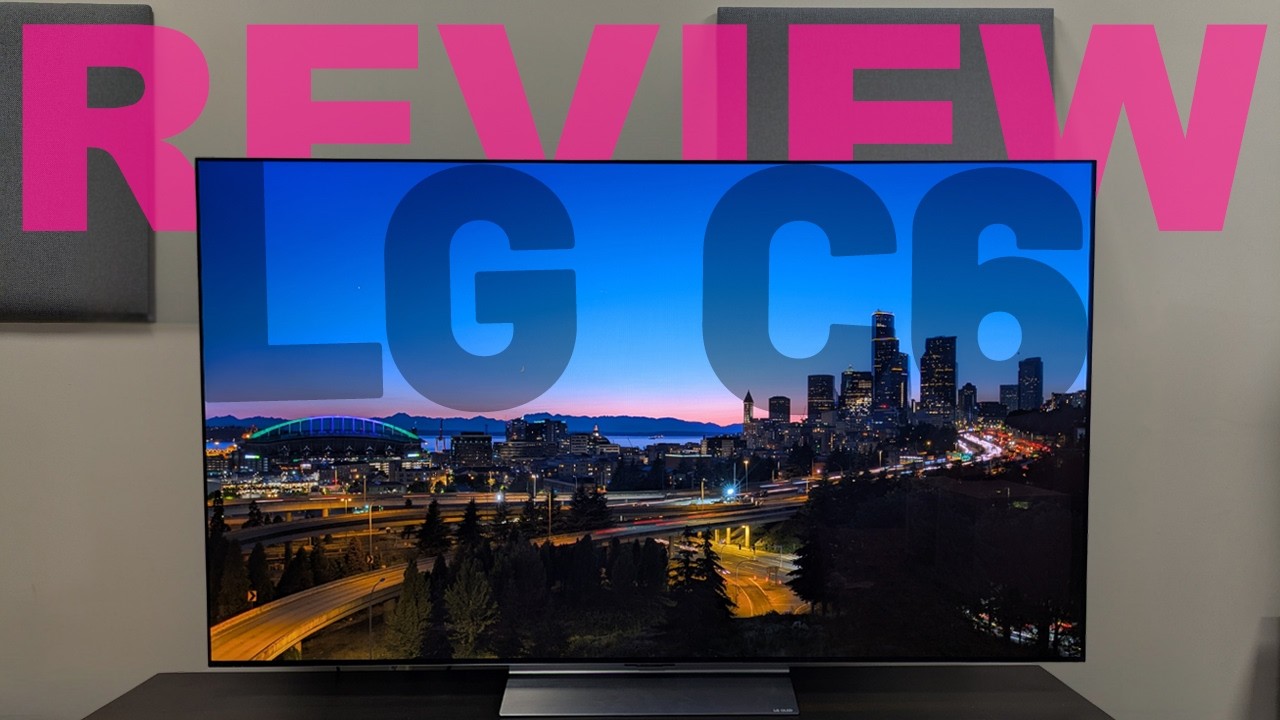
✅ You want outstanding picture quality: The C6 knocks it out of the park when it comes to its display, with vivid colors, strong contrast, and responsive motion.
✅ You're looking for a gaming OLED: With four HDMI 2.1 ports and a full suite of features, the C6 is a great gaming TV.
❌ You watch TV in a bright room: The C6's glossy screen means that you'll see mirror-like reflections in bright rooms and on sunny days.
❌ You need the best built-in sound: We think that the C6's sound is decent, but you'll need to add a soundbar if you want the audio to match the stellar picture.
The LG C6 ticks every box for everyday viewing, live sports, movies, and more. It's the total package. That's doubly impressive when you consider that the C6's predecessor, the LG C5, was our #1 pick for a long time – but we can confidently say that the C6 measures up to (and even eclipses) the C5. It's pricier than the C5 right now, but the improved brightness and awesome picture quality are undeniable.
We're big fans of the C6's OLED display. The quality is just awesome, and we put it to the test by queueing up all sorts of content, including animated films and live sports. Color reproduction is bright and punchy, contrast is crisp, and white tones in particular get a nice boost from the upgraded processor. Plus, the C6's motion handling is smooth, with no pesky artifacts cropping up when we tuned into live sports and fast-paced games.
In terms of features, the new processor is the star of the show. The Alpha 11 AI Gen 3 is also featured in the flagship LG G6 TV, delivering a brightness boost and more refined picture quality across the board. In fact, according to our in-house tests (in 10% window, Filmmaker mode), the C6 is about 250 nits brighter than the C5. The built-in sound delivered by LG's tried-and-tested 2.2-channel speaker system is decent, but as with most TVs, we found it benefits from a soundbar.
There are a few downsides to keep in mind, most notably that we encountered mirror-like reflections on the glossy screen when watching in a bright room. If you do most of your viewing in the day, it's something to keep in mind.
Finally, the C6 is an outstanding gaming TV. Our testing recorded input lag of just 9.2ms – which translates to razor-sharp performance that keeps up with the action. Plus, four HDMI 2.1 ports mean you won't have to keep switching out cables for different consoles.
Read our full LG C6 review
LG C6 test results
Show full test results ▼
Brightness measurements
Taken using a colorimeter and test pattern generator.
| Product | 10% window (nits) | Fullscreen (nits) |
|---|---|---|
| LG C6 | 1438 | 245 |
| LG C5 | 1180 | 195 |
| LG G6 | 2475 | 456 |

HDR color gamut
Closer to 100% is better. Taken using a colorimeter and test pattern generator.
| Product | UHDA-P3 (% of gamut covered) | BT.2020 (% of gamut covered) |
|---|---|---|
| LG C6 | 99.7 | 75.8 |
| LG C5 | 99.4 | 75.8 |
| LG G6 | 99.3 | 83 |
Picture accuracy
A lower score is better. Taken using a colorimeter and test pattern generator.
SDR
| Product | Value |
|---|---|
| LG C6 | 1.3 |
| LG C5 | 1.03 |
| LG G6 | 1.4 |
Input lag
Lower is better. Taken using a Leo Bodnar 4K HDMI Video Signal Lag Tester.
Latency in ms
| Product | Value |
|---|---|
| LG C6 | 9.2 |
| LG C5 | 9.2 |
| LG G6 | 12.8 |
The best OLED TV for bright rooms


✅ You want a punchy, colourful picture: The S99H is wickedly vivid, with colors and 3D-like textures that dazzle regardless of what you're watching.
✅ You watch in a bright room: Thanks to the anti-reflection screen, you won't have to worry about reflections spoiling the view, even on sunny days.
❌ You're looking for a sleek design: The S99H's new silver frame is, in a word, divisive and might not suit every setup.
❌ You've got a strict budget: It's a flagship OLED, and that means the S99H commands a hefty price – especially compared to other mid-range OLEDs.
The Samsung S99H is the standout of Samsung's 2026 TV line-up and a flagship OLED that impressed us during our hands-on testing. It's hard to find a brighter, clearer picture, and its gaming features are second to none. So, while the S99H is an undeniably pricey pick, it's one of the best OLEDs on the market this year.
Our tests showed that the Samsung S99H is the brightest TV we've reviewed to date, with a 15% higher brightness score than the LG G6 in HDR standard mode. The colors were deliciously bright, whether we were tuned in to animated movies, sports, or games. The contrast is nice and powerful, too, and textures felt lifelike and crisp. It's also worth noting the roster of AI tools included with the NQ4 AI Gen 3 Processor that can help enhance picture quality further, including AI Motion Enhancer Pro and AI 4K Upscaling Pro, which come in handy if you're tuning in to older SD content.
One of our favorite aspects of the S99H is its anti-reflection screen. It neutralized reflections effectively, even in our bright testing setup, and we found that the Movie mode setting is the best and brightest if you really want to take advantage of the OLED tech. In terms of HDR support, you've got HDR10+, HDR10, and HLG, though it's disappointing to see that Dolby Vision is still left out. Pivoting to sound, we found that the built-in audio was impressively accurate and precise, with a rich bass that makes impacts on the soundstage nice and heavy. However, we still think that a soundbar brings the S99H's audio in line with its picture.
We picked up on a couple of downsides when testing the S99H, including a little black crush during some movies. The design is sure to be the biggest sticking point, though. There's a new silver frame encasing the TV (called FloatLayer Design) that's intended for wall-mounting, but we found that it became a distraction. Plus, the extra width (and two plastic feet that have replaced the central pedestal) might be a problem for folks with a tighter setup.
On the brighter side, the S99H is an outstanding gaming TV with four HDMI 2.1 ports that support 4K 165Hz, full VRR, and 9.5ms input lag as per our most recent tests. The picture is great, response times are snappy, and the Game Hub is a nice extra where Xbox and Luna are accessible.
Read our full Samsung S99H review
Samsung S99H test results
Show full test results ▼
Brightness measurements
Taken using a colorimeter and test pattern generator. Click the test name for measurements and select the chosen test from the dropdown menu.
| Product | HDR Filmmaker Mode (10% window) (10% window) | HDR Filmmaker Mode (Fullscreen) (10% window) |
|---|---|---|
| Samsung S99H | 2739 | 449 |
| LG G6 | 3004 | 451 |
| Samsung S95F | 2132 | 390 |
The best TV under $500


✅ You're looking for a bargain: If you want a TV that offers very good picture quality at a budget-friendly price, the Plus Series is worth checking out.
✅ You want a truly smart Smart TV: We really enjoyed the Roku TV smart interface and how easy it is to navigate. Plus, there's a massive selection of apps to sift through and some free TV channel streaming.
❌ You want to watch in a bright room: The Plus Series' brightness is average, and while that'll be enough for most environments, we found that it struggled to keep reflections at bay in brighter conditions.
❌ You want an excellent gaming TV: While the Plus Series has an automatic Game mode that detects console connection, reducing lag, the lack of a 120Hz refresh rate means there are better options for avid gamers.
The Roku Plus Series is our go-to recommendation for anyone looking for the best budget-friendly TV. The Plus Series is Roku's mid-range line, offering a decent balance of performance and value.
The mini-LED backlight drives that performance and, at this price point, the quality is hard to find elsewhere. Combined with the QLED display panel, the Plus Series delivers crisp pictures with strong contrast, rich dark tones, and vibrant colors. And sure, other TVs offer those same factors, but the 55-inch Plus Series model does it for less than $500.
There are some compromises to be made with the Plus Series. It's a budget-friendly pick, sure, but we found it decidedly average in some of our tests. The brightness, for example, is generally good, but it struggled in our testing room when pitted against reflections and other sources of glare. The Plus Series' audio is middle-of-the-road, too, and we noticed that some finer details were washed out during volume peaks in movie soundtracks. Adding a soundbar will help, but it's an added expense.
With a standard 60Hz refresh rate instead of the 120Hz rate preferred by Xbox Series X and PlayStation 5 gamers, the Plus Series provides just average gaming specs. However, an Auto Game Mode kicks in when a gaming console input is selected, and we recorded 11.5ms of input lag, which is impressively low for a TV at this price point.
Read our full Roku Plus Series review
Roku Plus Series test results
The best TV under $1,000


✅ You need a TV that can handle bright conditions: The U8QG is incredibly bright and boasts an effective anti-reflective screen, making it a great pick for daytime viewing.
✅ You want a solid gaming TV: Gamers will particularly enjoy the three HDMI 2.1 ports that support 4K 165Hz, as well as Dolby Vision and HDR10+ gaming.
❌ You often watch in big groups: The U8QG struggles with off-axis picture uniformity, and you'll notice a loss of contrast and color saturation if you're sat off-centre.
❌ You watch a lot of broadcast TV: While the ATSC 3.0 tuner (US only) is a nice perk, it's a shame that the Google TV grid guide doesn't list info for tuned channels.
Hisense TVs typically deliver outstanding picture quality for the price, and the Hisense U8QG is no exception. We were thoroughly impressed with the picture quality when we reviewed the U8QG, but also awarded it a rare five-star rating for its overall value. If you want a fantastic TV but want to keep to a budget of less than $1,000 (the 55-inch model currently sells for that amount, and the 65-inch regularly drops below $1,000 during sales events), the Hisense U8QG is one we’d easily recommend.
The U8QG's screen brightness is dazzling, rivalling (and perhaps even beating) TVs that cost significantly more. For instance, in our testing, we compared the U8QG's brightness (10%, Filmmaker mode) to the QN90F, and found that it was 1,251 nits brighter – that's a significant gap. Its mini-LED backlight’s precise local dimming control works well for high dynamic range images – both the Dolby Vision and HDR10+ formats are supported – making shadows look deep and bringing out fine detail in picture highlights. Colors also looked rich on the U8QG when we tested it, and its anti-reflection screen, along with its high brightness, makes it a good choice for daytime sports viewing.
When we tested the U8QG, we were less impressed with its 4.1.2-channel, 72W speaker array, which doesn't match up to its excellent picture. It delivered clear dialogue and good immersion with movie soundtracks, but we found issues with the TV’s built-in subwoofer.
Gaming support includes 4K 165Hz, along with FreeSync Premium Pro, Dolby Vision, and HDR10+ gaming across the TV’s three HDMI 2.1 ports.
Read our full Hisense U8QG review
Hisense U8QG test results
The best TV under $1,500


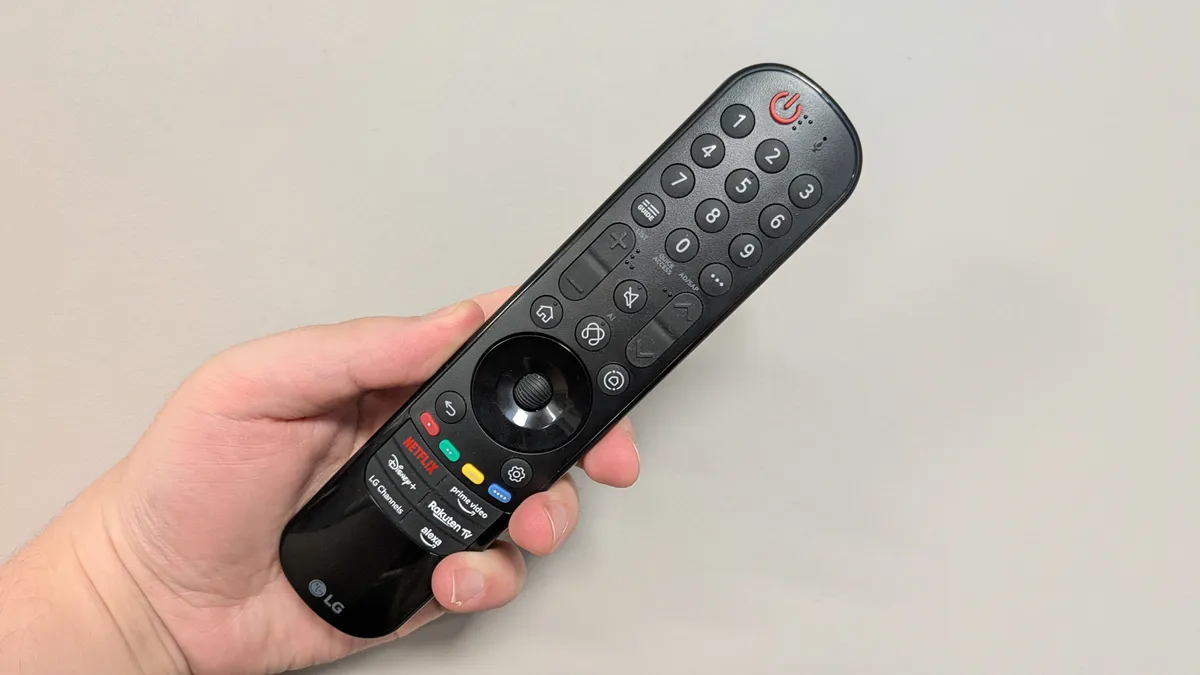


✅ You want affordable and awesome picture quality: The C5 is a powerhouse, with bright colors, bold contrast, and plenty of realistic detail at a mid-range price.
✅ You need a gaming OLED: Gamers will appreciate that the C5's performance matches its picture, as well as its roster of gaming features.
❌ You already have an LG C4: We found that the C5 is only a minor improvement over its predecessor, the C4, meaning you may not need to upgrade.
❌ HDR10+ support is a must-have: Unfortunately, while the C5 is compatible with Dolby Vision, it lacks the more widely used HDR format.
If we had to choose a single TV that fits most viewing needs, from movies to sports and gaming, it'd be the LG C5. The C5 is the ultimate all-rounder, offering superb picture quality and the kind of features we'd typically expect from more premium models at an affordable, mid-range price point.
The main benefit of the LG C5 is its OLED display panel. During our hands-on testing, we queued up a variety of content, from vibrant animated films to fast-paced live sports. The C5 delivered on all fronts. Color reproduction was totally accurate and punchy, black levels were deep without swallowing up details, and rapid motion was handled without distracting artifacts.
On the features front, LG’s new Alpha 9 Gen 8 AI Processor in the C5 brings a modest picture brightness boost over its LG C4 predecessor. In terms of raw numbers, our testing found that the C5 was about 100 nits brighter than the C4 (10%, Filmmaker mode). The C5 also features a 2.2-channel, 40W Dolby Atmos speaker array, and it can be counted on to deliver reasonably punchy sound, though the overall audio quality didn't blow us away.
It's also disappointing to see that the C5 lacks support for HDR10+ – one of the more widely used HDR formats used by streaming services and games.
On that note, the C5 does stand out as a gaming TV. Input lag is an impressively low 9.2ms, and all four of its HDMI ports support 4K 144Hz, Dolby Vision gaming, FreeSync Premium, and Nvidia G-Sync.
Read our full LG C5 review

LG C5 test results
The best cheap big-screen TV


✅ You want a TV that beats reflections: The QM8L boasts a bright and vibrant screen that outperforms other mid-range TVs while eliminating glare.
✅ You want hands-free control: Google Gemini support lets you control the QM8L with voice commands, as well as pull up content on demand.
❌ You need the most accurate picture possible: The QM8L looks stunning, though we found that the colors could be more accurate out of the box in Standard Mode.
❌ You're looking to save money: While the QM8L isn't a wallet buster, it's not the cheapest option on the market, and you can get more bang for your buck by looking at last year's models.
The TCL QM8L delivers a flagship-level experience for a price that won't break the bank. We were impressed by the brightness of its big-screen models and, as an extra bonus, how the mini-LED didn't skimp on details in the overall picture.
Delving deeper into the QM8L's display, we really enjoyed our time putting it to the test – it's dazzlingly bright. Over 2,000 local dimming zones ensure that there's crisp separation between light and dark areas, too. Colors pop, and we were glad to see that there were no instances of bleed, no matter whether we were watching movies, sports, or plugged into a console. And, if you do most of your viewing in a bright room during sunny hours, you'll be glad to learn that the QM8L's backlight did a great job of highlighting details and maintaining a clear image, even in our bright setup.
The QM8L comes packed with HDR, Dolby Vision, Dolby Atmos, and DTS support – something that LG, Sony, and Samsung competitors can't match entirely. Another noteworthy feature is the ‘Enhanced Halo Control System’ in the LED backlight. It claims to minimize blooming and, after spending some time playing with HDR content, we're happy to confirm that we didn't notice all that much blooming in real-world use. In terms of audio, the QM8L is comparable to our other ranked picks, and we'd still recommend adding a soundbar for a home-theatre experience.
One of the more notable snags we ran into was the proprietary tool used to boost picture quality and color range to 100% – the TCL Deep Color System. It's a bold promise, but our measurements didn't record corresponding results. Still, we saw boosted, bold colors, pushed beyond what's typical for most mini-LEDs.
Finally, we really like the QM8L as a gaming TV. It's got four HDMI 2.1 ports that support 4K at 120Hz or 144Hz – though you'll need to enable faster refresh rates in the menu. We hooked up a PS5 to the TV and booted up games at 120fps, and weren't interrupted by any pesky judder.
Read our full TCL QM8L review
TCL QM8L test results
The best TV for sports viewing


✅ You need a screen for bright rooms: The QN90F combines Glare-Free screen tech and a fantastically bright picture to eliminate reflections during the daytime.
✅ You're a massive movie fan: Powerful local dimming means that the QN90F delivers deep black tones and refined shadows, enhancing the mood of any movie.
❌ You have a limited budget: The QN90F commands a hefty price tag, and you'll save money by opting for a Hisense or TCL if you're happy to take a slight dip in performance.
❌ You need Dolby Vision HDR: Like other Samsung TVs, you won't find support for Dolby Vision high dynamic range, though the QN90F is compatible with the HDR10+ format.
When we reviewed the QN90F, we were impressed with how good its picture looked when viewing sports in both bright and dim viewing conditions. Much of that had to do with this flagship Samsung mini-LED TV’s high brightness, but another aspect was its Glare Free screen, which virtually eliminated any reflections from our room’s overhead lights and lamps.
High brightness and glare reduction aren’t the only things that contribute to the QN90F’s excellent picture. A Wide Viewing Angle feature makes pictures look uniformly good from any seat in the house. And there’s also Samsung’s excellent AI-enhanced motion processing, which, in combination with its high refresh rate screen, makes fast action plays look solid and blur-free.
Other features that add to the QN90F’s appeal are a 4.2.2-channel Dolby Atmos speaker that delivers clean, well-defined sound and a built-in ATSC 3.0 tuner to receive NextGen digital TV broadcasts in the US.
You’ll pay more for the Samsung QN90F than you would for many competing mini-LED TVs, and it is a shame that there's no support for Dolby Vision HDR (although we are glad to see HDR10+ compatibility in its place).
Samsung TVs are among the best for gaming, and the QN90F features four HDMI ports that support 4K 165Hz, FreeSync Premium Pro, ALLM, and HDR10+ gaming. And don’t worry if you don’t have a gaming console, because the TV’s Gaming Hub houses Xbox, Nvidia GeForce Now, and many other cloud-gaming apps.
Read our full Samsung QN90F review
Samsung QN90F test results
Comparison charts for the best TVs
Measuring the objective performance of the TVs in our shortlist is an important part of our testing process. We use the results to inform our rankings, compare products, and make a judgment on the picture quality. The following measurements were all taken by our labs or testers, using professional-level equipment and software.
Specs and stats aren't the be-all and end-all, though. These numbers can help you make quick comparisons between TVs, which is handy if you're weighing up your options, and it's why we've included the results for all of the TVs we tested below.
The first metric we test is brightness, measured using both HDR and SDR video, in small areas and full screen (which makes a big difference).
Brightness measurements
Taken using a colorimeter and test pattern generator.
| Product | 10% window (nits) | Fullscreen (nits) |
|---|---|---|
| LG C6 | 1438 | 245 |
| Samsung S99H | 2739 | 449 |
| Roku Plus Series | 458 | 357 |
| Hisense U8QG | 2888 | 733 |
| LG C5 | 1180 | 195 |
| Samsung QN90F | 2086 | 667 |
Next, we test how close the TVs come to supporting 100% of the P3 color range. This is the gold standard for HDR content, ensuring that the shows and movies you tune into appear as vibrant as intended on your screen. The BT.2020 range is used in pro video work, but is less important to day-to-day viewing.
HDR color gamut
Closer to 100% is better. Taken using a colorimeter and test pattern generator.
| Product | UHDA-P3 (% of gamut covered) | BT.2020 (% of gamut covered) |
|---|---|---|
| LG C6 | 99.7 | 75.8 |
| Samsung S99H | 99.97 | 89.2 |
| Roku Plus Series | 95.55 | 81.2 |
| Hisense U8QG | 97.8 | 82.8 |
| LG C5 | 99.4 | 75.8 |
| Samsung QN90F | 93.6 | 76.5 |
Input lag is the delay that occurs between an image entering the TV's HDMI port and that image appearing on-screen. It's a particularly important consideration for gamers, who'll want to see an action play out on screen as soon as they press a button or move their mouse, and not have to sit through frustrating delays. Minimal input lag ensures a smooth, frustration-free experience.
We measure input lag using a piece of specialist equipment that rapidly fires a blinking image on the screen and detects the delay.
Input lag
Lower is better. Taken using a Leo Bodnar 4K HDMI Video Signal Lag Tester.
Latency in ms
| Product | Value |
|---|---|
| LG C6 | 9.2 |
| Samsung S99H | 9.5 |
| Roku Plus Series | 11.5 |
| Hisense U8QG | 9.9 |
| LG C5 | 9.2 |
| Samsung QN90F | 9.5 |
More TVs to consider
We couldn't fit all of the TVs we've tested into this shortlist of today's best options – but there are several other sets that are worth checking out.
These are the TVs we tried ourselves and enjoyed, including a quick rundown of what we liked and why they didn't make the cut.

New TVs to look for in 2026

A range of new TVs was announced at the CES 2026 show held in January, with higher-end models that showcase new technologies taking center stage, as usual. Here are the new models that were announced at the show.
Along with the G6 series, LG will release a new LG W6 ‘Wallpaper TV’ series in 77- and 83-inch screen sizes. This ultra-thin TV will use the same Primary RGB Tandem 2.0 OLED panel as in the G6 series, along with LG’s new Zero Connect Box, a 35% smaller version of the company’s wireless connection box that supports streaming at up to 4K 165Hz.
LG also announced two new C-series TVs for 2026, the LG C6H and LG C6. The C6H will be available in 77-inch and 83-inch sizes and uses the same Primary RGB Tandem 2.0 display panel found in the G6 and W6. A key difference between it and the C6H and W6 series is a lower-grade anti-reflection screen coating on the C6. The C6 series also features the same display panel used in last year’s LG C5 and will be sold in 42-65-inch screen sizes.
All of the new OLED TVs that LG announced will use the same Alpha 11 Gen 3 AI processor.
Samsung’s new OLED TV launches at CES include the Samsung S95H and Samsung S90H. The first will be available in a 48-83-inch screen size and features an enhanced QD-OLED display panel that Samsung says has 35% higher peak brightness than last year’s Samsung S95F.
The S95H features a metallic ‘art frame’ for wall-mounting and supports the same Art Mode found in the company’s The Frame TVs. Notably, Samsung opted to include built-in ports on its new flagship TV, though the One Connect Box, its predecessor used for external source hookups, is an optional add-on.
Samsung’s S90H series will also be sold in 43-83-inch screen sizes and features improved brightness over last year’s Samsung S90F, and it will be upgraded with the same Anti-Glare screen found in Samsung’s 2025 and 2026 flagship TVs.
The company’s Neo QLED mini-LED TV lineup for 2026 will be led by the Samsung QN90H series, which will now be available in screen sizes up to 115 inches, with new processing used to improve the look of upscaled pictures on the larger screen sizes.
Samsung’s Micro RGB series TVs, which were announced before CES, will see an expansion to smaller screen sizes in 2026, with the current Samsung 115-inch Micro RGB model joined by 55-100-inch options. Like other RGB mini-LED TVs introduced at the show, these will provide 100% BT.2020 color space coverage, and they will also feature the Glare Free screen tech used in its OLED and Neo QLED TVs.

At CES, TCL was showing its TCL X11L SQD mini-LED TVs, which use a “Super Quantum Dot” formulation that enables the set to deliver 100% BT.2020 color. These new flagship mini-LED models have a specified peak brightness of 10,000 nits and feature up to 20,000 local dimming zones to deliver near-perfect blacks.
The X11L series will be the first TCL TVs to feature four HDMI 2.1 ports for gaming, with support for a 4K 144Hz refresh rate. They will also support the new Dolby Vision 2 HDR format via an upgrade anticipated to arrive sometime in late 2026.
In 2026, TCL also plans to release its RM9L series RGB mini-LED TVs, along with the QM6L series, a budget mini-LED TV successor to last year’s TCL QM6K.
Like Samsung, Hisense plans to bring its RGB mini-LED tech, currently featured in the 116-inch Hisense 116UX, down to more mainstream sizes. The forthcoming Hisense UR9 and UR8 series will be sold in 55-100-inch screen sizes. Hisense also announced its new RGB mini-LED Evo tech, which introduces a fourth color, cyan, to the TV’s RGB backlight to boost BT.2020 color space coverage to 110%.
Hisense was displaying a 116-inch RGB mini-LED Evo TV at CES, but we expect this, too, will eventually be ported to smaller screen sizes.
The best TV brands to buy today

The best TV brand landscape has shifted somewhat over the past few years, with top brands shifting places to a degree on the power rankings chart, and upstart brands such as Hisense and TCL gaining traction. Along with these, we saw the reintroduction of Panasonic to the US TV market, along with new TV brands like Roku and Amazon putting out increasingly higher-quality sets. What follows is a summary of the various TV brands ordered according to their performance in TechRadar’s TV tests.

Judged by its overall performance in TechRadar’s recent TV reviews, Samsung is the leading TV brand. We rate Samsung TVs highly for their picture quality, though we regularly cite the lack of Dolby Vision HDR support as a downside. Samsung TVs are also the strongest when it comes to gaming performance and features, and each yearly iteration introduces new cutting-edge design innovations.
LG TVs earn strong praise for picture quality and features in our reviews, and they also provide one of the best smart TV platforms in webOS. Gaming performance and features are also regularly cited in our LG TV reviews, though the company lags far behind competitors when it comes to mini-LED TVs, leaning instead on OLED for its top TV brand status, which means it doesn't offer strong, cheaper options.

Sony shifted its focus from OLED to mini-LED tech for its flagship TVs last year. The company’s flagship TVs are the ones that provide the best picture quality, though they are generally pricier than equivalent flagship models from Samsung and LG. Sony TVs also provide excellent built-in sound quality, though they lag behind the competition when it comes to gaming features and performance, despite providing PS5-centric settings.
Hisense and TCL fit into the middle of our overall TV brand rankings. Both brands provide a range of high-value TVs, with the top models providing excellent overall picture quality and sound quality. Performance tends to drop as you move down the range for each respective brand, however, and the gaming features on their TVs aren’t quite as extensive as what you’ll get from Samsung and LG – but when it comes to good-quality large-screen sets that are affordable, these two are arguably the leaders right now.
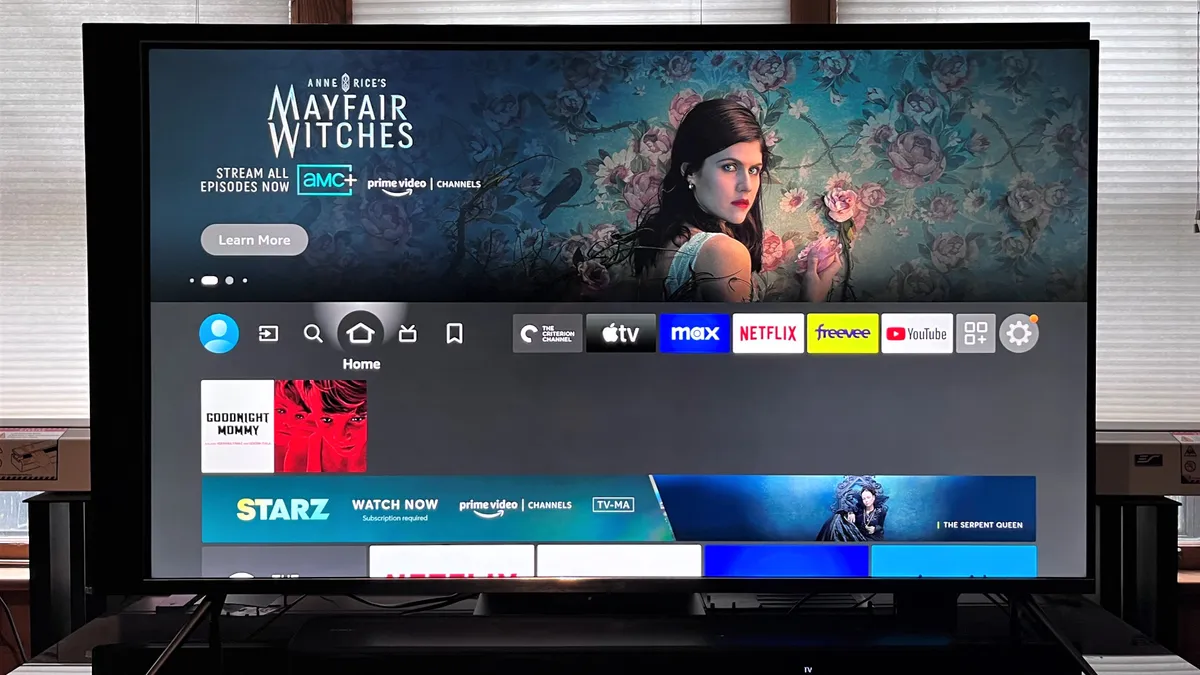
Last but not least, Roku and Amazon both made good showings in our recent reviews. These were for the company’s mini-LED TVs, which offer impressive picture quality at a budget price. We generally praise Roku TVs for their excellent smart TV interface, which is easy on the eyes and intuitive to navigate, while Amazon Fire TVs earn marks for good overall performance and high value.
How do I choose the best TV?
There are tons of things you could consider when buying a new TV, but not everyone needs to get stuck in the technological weeds. Here's the advice our editors tend to give the (many) people who ask this of them in real life.
First, set your budget and your size. Choose a maximum amount you're willing to spend, and the size of TV you want, and then narrow your search to only models that fit both of those criteria. You will find that already you're down to looking at only a handful of options, making it much easier to get a grip on things. If you have quite a high budget, set yourself a minimum budget too to help narrow things – maybe 30% below your maximum budget.
When considering the size of the TV, think about where you'll be installing it; it can make all the difference if you're using one of the best TV wall mounts to mount your TV, or just placing it on a stand, as the same TV can look different in both these places.

So now you'll need to make a few further decisions. If you're looking at the mid-range or premium end of things, do you want an OLED TV or an LED/mini-LED TV? In sizes 55 inches and up, LED TVs tend to be brighter than OLEDs, and so are great for watching sports or TV during the day in bright rooms. But for movie nights, OLED TVs are the best, thanks to their unrivaled contrast – they just don't go as bright as LED TVs unless you get the most expensive models.
If you're buying a mid-range set, you'll need to decide if you need a 120Hz screen or not. This is great for gamers (especially those with a PS5 or Xbox Series X), and also good for movies because it can show more natural motion. But if you want to save cash, getting a 60Hz TV might be a better idea, because 120Hz TVs always cost more.
And then, spare a thought for sound. Most of today's thin TVs have weak built-in sound. If you don't mind buying one of the best soundbars too (or if you already have one), then don't worry about this. But if you don't want extra boxes in your setup, then focus on the TVs we've recommended where we mention the audio is stronger. Sadly, it tends to be higher-end sets that do this better – but even then, not all are created equal. Sony and Samsung are usually strong for audio, though, so they are a good place to start.
Which TV is the best quality?
That depends on how you define quality. We define it as the ultimate mix of picture quality, features, design, and price – when recommending the TV that's best for most people at any given price, that's what we're looking for. And that's why the LG C6 is at the top of our list – some TVs do individual things better, but nothing else does so much stuff so well, for the same kind of price.
The best premium OLED on the market for us is the Samsung S99H, which is an extremely high-end option, but is worth every penny when you see the results from its super-bright screen combined with its amazing anti-reflection panel.
Which brand is best for TVs in 2026?
No one brand does TVs better than the others, but there are definitely some TV makers that excel in certain areas more than their rivals.
Some of the best brands on our list are Hisense, LG, Samsung, Sony, and TCL. They all tend to be the top-performing brands at the premium end, though all bring out a wide range of models each year.
LG also makes excellent OLED TVs – in fact, LG Display makes the OLED panels for most other brands. We like that LG offers a wide range of TVs, including different budgets and sizes – the LG C6 goes from 42 inches all the way up to 65 inches and delivers on every front, and that's why it's at the top of this list. LG's webOS is one of our favorite smart TV platforms and is an easy-to-use operating system that feels intuitive. LG's LED TVs aren't great value, though, again compared to Hisense and TCL.
With steps into the QD-OLED world, Samsung has established itself as a real contender for the best OLED TVs, with the impressive Samsung S99H offering incredible picture quality and performance. There are also Samsung's dynamic mini-LED models available that will suit most people with bright environments, though Hisense and TCL have these models beaten for sheer value in 2026.

Sony is another major player in the TV space. Its screens boast stunning picture quality and build quality. However, like other brands in this list, there's a wide range across the board. Sony's TVs tend to cost a premium compared to the other brands here for the same kind of features, except Sony's TVs contain some of the best built-in sound in the business, so you do get something extra for that price.
Hisense and TCL are the two makers who've really crashed the party, producing mini-LED TVs for unbelievably good prices that deliver astounding brightness and impressive contrast, with good features. They both use Google TV as their smart platform, which makes them fairly easy to use and ensures all the key streaming services are supported.
Which is better OLED or QLED?
This is one of the biggest and most contentious TV tech questions of the moment. Luckily, we've covered all of the details in our OLED vs QLED guide.
However, if you're looking for a summary, we'd say that QLED is a great option for brightness if you'll watch in bright, sunlit conditions, whereas OLED TVs offer better viewing angles and superior contrast for gorgeous movie-like images, as long as you can control the room lighting with most models.
Is 4K better than OLED?
Luckily, you don't need to decide whether to go with OLED or 4K – you can have both! 4K refers to the resolution (ie, the number of pixels on the screen), while OLED refers to the panel technology (ie, what the pixels are made from).
So you can have 4K OLED screens (almost all of them are, apart from some pricey 8K OLED TVs), and you can have 4K screens that are QLED, mini-LED, or other tech.
Is LG better than Samsung?
Both LG and Samsung are excellent TV brands, and you can't really go wrong with either when it comes to OLED, but it's a different matter outside of that.
LG's LED TVs are notably a weaker proposition than Samsung's, so if you're thinking of going for a budget TV or a mini-LED model, Samsung is the better bet of these two.
When it comes to OLED TVs, we rate Samsung's S95F marginally ahead of the LG G5 equivalent thanks to its superior anti-reflection screen, but if you mostly watch in controlled lighting, the LG G5 is just as good.
We love the LG C5's versatility, coming in many different sizes and with every gaming feature you could want – it's a great mid-range model. The Samsung S90F is also a great OLED TV choice at a similar price, though Samsung has only confirmed that the 65-inch screen size uses the company's QD-OLED display panel.
How we test the best TVs
Each TechRadar TV review involves a series of objective tests made using specialized test equipment. These are combined with extensive subjective evaluation using both test patterns and real-world sources such as 4K Blu-ray, streamed content, and broadcast TV.
For objective tests, we measure a TV’s peak and full-screen brightness levels, along with its HDR color gamut coverage. We also measure color and grayscale accuracy, as well as input lag for gaming.
After determining a TV’s most accurate picture preset using objective tests, we perform a subjective evaluation with that preset active to make a general assessment of picture quality, taking into account factors such as contrast, black level, screen uniformity, color, detail, and more. We also assess sound quality, features, design, smart TV and menus, gaming features and performance, and value, with individual scores for each section contributing to an overall rating.
You can get a fully detailed overview of our process in How we test TVs at TechRadar, but here's a summary of the key tests that get performed:

Brightness
Brightness is an important factor to consider when shopping for a TV, for two main reasons. The first is that movies and TV shows with high dynamic range (HDR) can contain super-bright highlights. A TV with a high brightness capability will be better able to reproduce those highlights, which give pictures an enhanced sense of depth and realism. The second reason is that brighter TVs can look better in a bright viewing environment, which is typically the case when watching sports or gaming.
Color gamut coverage

We measure color gamut coverage to get an indication of the range of colors a TV can display. These results are recorded as a percentage, with a 100% score confirming the TV can display the full range of colors that video content with HDR can include.
Color gamut coverage tests include two measurements: UHDA-P3 and BT.2020. The first is to see how well the TV tracks the UHDA-P3 color space used for mastering 4K Blu-ray and digital cinema releases. The second, BT.2020, is a more future-oriented standard, though some new displays, such as RGB laser projectors and RGB mini-LED TVs, are capable of displaying the full BT.2020 color spectrum.
Color and grayscale accuracy
We run grayscale and color accuracy tests to evaluate how well a TV can match the visual intent of the director when a movie was mastered during post-production. These measurements are run with the TV in its most accurate picture preset – typically Filmmaker Mode, Movie, or Cinema – and provide Delta-E values (the margin of error between the test pattern source and what’s shown on-screen) that indicate the TV’s level of accuracy. Any result under 3 is regarded as indistinguishable to the human eye from the source and can be considered excellent.
Input lag
Input lag refers to the time elapsed between a source sending a signal to a display and the display showing it on screen. A low input lag time is a crucial factor for competitive gaming, with a result of 13ms or lower generally considered to be an acceptable result.
To test input lag, we set the TV to its Game picture preset and use a special meter that outputs a test signal to the TV’s HDMI input. The meter is placed on the TV’s screen and measures the time it takes to detect the signal, with the result displayed in milliseconds.
TV glossary
There are lots of complicated terms you'll see when buying a new TV, including in this guide – so to start our generalized buying advice, here's a glossary of the big terms you'll see often.
120Hz/144Hz/165Hz: This is the ‘refresh rate’ of the TV, meaning how many image frames it can show each second. 120Hz means 120 frames per second maximum. Classified as high frame rate (HFR), 120Hz is ideal for next-gen gaming consoles such as PS5 and Xbox Series X, and can also benefit sports viewing. While consoles are capped at 120Hz, some TVs can support 144Hz or 165Hz for PC gaming.
4K: Also known as Ultra HD (UHD), a 4K image consists of roughly 4,000 horizontal pixels – 3,840 in the UHD standard specs used by streamers and 4K Blu-ray, to be precise – by 2,160 vertical pixels, which is four times the amount found in Full HD TVs. Most streaming services now support 4K, as do most 43-inch and larger TVs.
ALLM (auto low latency mode): A feature primarily used for gaming, where a TV will switch to the optimal game picture mode/settings when it detects a connected gaming console.
ATSC 3.0: Also known as “NextGen TV,” it is a broadcast TV standard created by the Advanced Television Systems Committee (ATSC) that supports 4K resolution, high dynamic range, and immersive audio formats such as Dolby Atmos. ATSC is used by broadcast TV stations in the US, and it requires a TV with an ATSC 3.0-compatible tuner.
ARC: Audio Return Channel. This feature allows for audio signals to be sent from a TV to an HDMI ARC-supported device, such as a soundbar or AV receiver, via an HDMI connection.
Read more key TV tech terms
Backlight: The light source that sits behind the display panel in an LED-based TV. Various backlight types include edge-lit, direct, and full-array.
Color gamut: The range of colors that can be displayed by a device within a particular color space, such as REC.709, BT.2020, and UHDA-P3. Supporting a wider color gamut means the TV should be able to show images closer to the original material.
Direct backlight: A type of backlight that sits directly behind a TV’s panel. Direct backlights can offer better dimming control and black uniformity (the ability to display black tones evenly across a screen) than edge-lit backlights
Dolby Vision: A High Dynamic Range (HDR) format that’s used to dynamically optimize image contrast on a scene-by-scene or frame-by-frame basis. Dolby Vision is widely used in movie theaters, 4K Blu-ray releases, streaming services, and video games.
Dolby Atmos: A 3D sound format that incorporates height channels to create a dome-like immersive effect. Dedicated speakers produce the most authentic Atmos sound, though some soundbars and built-in TV speakers can produce good ‘virtual’ Atmos sound as well.
eARC: Enhanced Audio Return Channel. An improved version of HDMI ARC that allows for transmission of higher-quality, uncompressed Dolby and DTS audio formats over HDMI from a TV.
Full Array Backlight: An advanced backlight design that improves local dimming by partitioning the backlight into small zones, each of which can have its light levels controlled individually. This results in better contrast, higher brightness, and reduced backlight blooming effects.
HDMI: A cable standard used to transmit audio and video from a source to a display device. It stands for High Definition Multimedia Interface, and is the standard connector for TVs now.
HDMI 2.1: The latest HDMI version, and one that allows for transmission of higher-quality, uncompressed Dolby and DTS audio formats, 8K video, and higher video frame rates such as 4K at 120Hz or higher for gaming.
HDR: High Dynamic Range. A video format that allows for images with improved brightness, contrast, and color detail. Most newer TVs support some format of HDR, which is used for video games, 4K Blu-ray discs, and streaming services.
HDR10: A common, widely used HDR format on 4K Blu-ray players, game consoles, TVs, and streaming services. Basically, any TV device with HDR will support this.
HDR10+: A less commonly supported HDR format with similar capabilities to Dolby Vision. HDR10+ is supported by TVs from Samsung, Panasonic, TCL, and Hisense, and is used by streaming services such as Prime Video.
HLG: Hybrid-Log Gamma. An HDR format developed by the BBC and NHK broadcasting services that was designed to simultaneously transmit both SDR and HDR signals. It is used for live HDR broadcasting and is supported on almost every TV.
Input lag: The time delay between a video or audio signal being sent and being actioned by a relevant device. In the case of TVs, it refers to the time between when the TV receives an image from, say, a games console, and when that image is shown on-screen. Input lag is measured in milliseconds (ms), with the lower the number, the better. This specification is particularly useful in gaming, where a measurement below 15ms is considered optimal.
Local Dimming: LED and mini-LED TVs with full array backlights may dim darker areas on the screen and accentuate brighter areas, resulting in better contrast by using this ‘localized’ dimming.
Mini-LED: A backlight tech that uses small, almost microscopic LEDs for more efficient and improved dimming and lighting performance over regular LED backlights.
Nits (brightness): A unit of measurement used to evaluate brightness. The peak brightness of LED TVs is typically around 500 nits, QLED TVs roughly 1,000 nits, OLED TVs between 600 and 2,000 nits, and mini-LED TVs may hit 3,000-plus nits.
Neo QLED: Samsung’s name for its range of mini-LED TVs, which combine a QLED display panel with a mini-LED backlight.
OLED: Organic Light Emitting Diode. A type of display panel that contains self-emitting pixels that generate their own light, eliminating the need for a backlight. OLED TVs typically have deeper, more accurate black levels than other TV types, because they can dim the light from each pixel individually
QLED: Quantum Light Emitting Diode. An LED display panel with a coating of ‘nanocrystals’ that can achieve higher brightness and brighter, more vivid colors than the ones used in standard LED TVs.
SDR: Standard Dynamic Range. A video production and display standard with more limited brightness, contrast, and color gamut coverage compared to HDR. Anything from before the HDR era can be considered SDR.
VRR (variable refresh rate): A tech used primarily in gaming where the display will adjust its frame rate to match the rate of the source device, such as a console or PC, to avoid judder and screen-tearing effects. VRR is particularly useful during high frame rate gaming.
Latest updates to our guide to the best TVs
October 8, 2026
Added information about upcoming Black Friday sales.
September 9, 2026
Made several adjustments to the page's structure, refreshed our TV terms glossary, and updated product entries with more information about who, in our talented team of testers, reviewed each model and what they thought.
July 30, 2026
We've given this guide a top-to-bottom revamp! In addition to sprucing up our reviews and FAQs with the latest testing data, the LG C6 has taken the top spot as the best TV overall, while the LG C5 remains the best option for under $1,500. We've also added the Samsung S99H as the best TV for bright rooms and the TCL QM8L as the best low-cost big screen.
June 9, 2026
Added our top recommendations for the upcoming 2026 FIFA World Cup.
May 27, 2026
Moved the Samsung S95F to the #2 spot, and refreshed product entries based on most recent testing data.
May 14, 2026
Added the LG C6 to the 'Also consider' section.
April 15, 2026
Refreshed the FAQs to give you more context around what to think about when considering buying a TV.
January 13, 2026
Added 'New TVs to look for in 2026' section detailing new models announced by major TV brands at CES 2026.
November 6, 2025
Rewrote this guide from scratch to focus on a smaller number of TVs, to make it easier to choose a new model easily.
August 27, 2025
Replaced the Panasonic Z95A with the newer Panasonic Z95B as our 'Best for sound' top choice based on our recent testing.
