





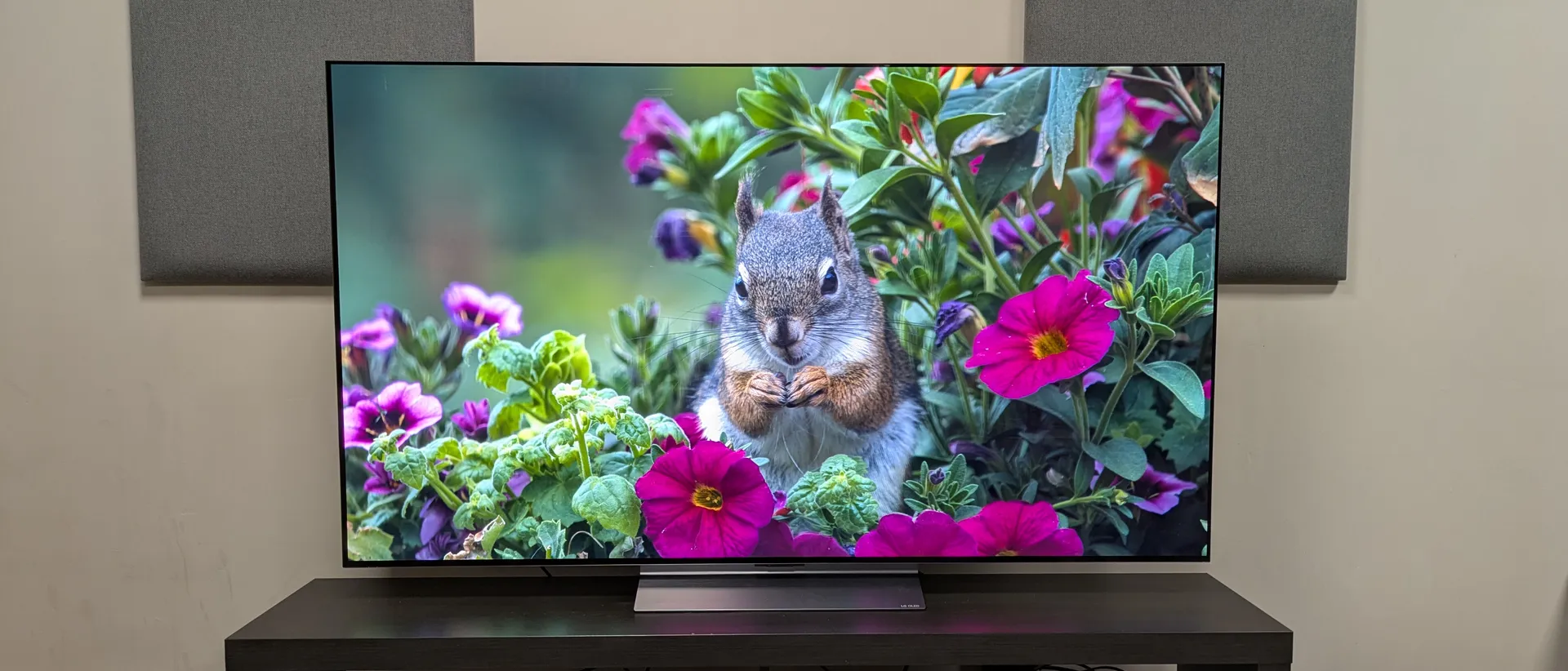
TechRadar Verdict
The LG C6 is yet another excellent entry in LG's C-series OLED lineup, and it's a appreciable upgrade. It's more color-accurate, brighter and delivers even more powerful contrast than the C5, it comes with a new, faster processor, and like its predecessor it delivers a full suite of gaming features and an intuitive smart TV platform. It does suffer from reflections, and there is the odd picture issue, such as banding, but make no mistake: the C6 is a superb step up over the C5, and will easily be one of 2026's best OLEDs.
Pros
- +
Brilliant picture quality
- +
A gaming powerhouse
- +
New faster processor
Cons
- -
Reflective screen
- -
No HDR10+ or DTS support
- -
Occasional pictures issue such as banding
Why you can trust TechRadar We spend hours testing every product or service we review, so you can be sure you're buying the best. Find out more about how we test.
LG C6 OLED TV: Two-minute review
The LG C6 has a tough act to follow, because the LG C5 was one of the best TVs I tested in 2025. So I'm happy to report that not only does the LG C6 do everything the C5 can do, but its Alpha 11 AI Gen 3 image processor — the same one you’ll find in the flagship LG G6 TV — delivers a significant brightness boost and more refined picture quality overall, making the C6 a solid upgrade over its predecessor.
The 65-inch LG C6 I tested is priced at $2,699 / £2,599 / AU$3,995 at launch, which is the same launch price as the C5 in the US and Australia, but is cheaper in the UK, despite the upgrades.
It’s worth noting that the larger 77-inch and 83-inch models now fall under a new designation as the LG C6H, and use the upgraded Primary RGB Tandem 2.0 OLED panel found in the flagship LG G6 and LG W6 models. As a result, they’ll likely perform somewhat differently to the model I tested, and we’re not including them as part of this review — we plan to review the C6H separately.
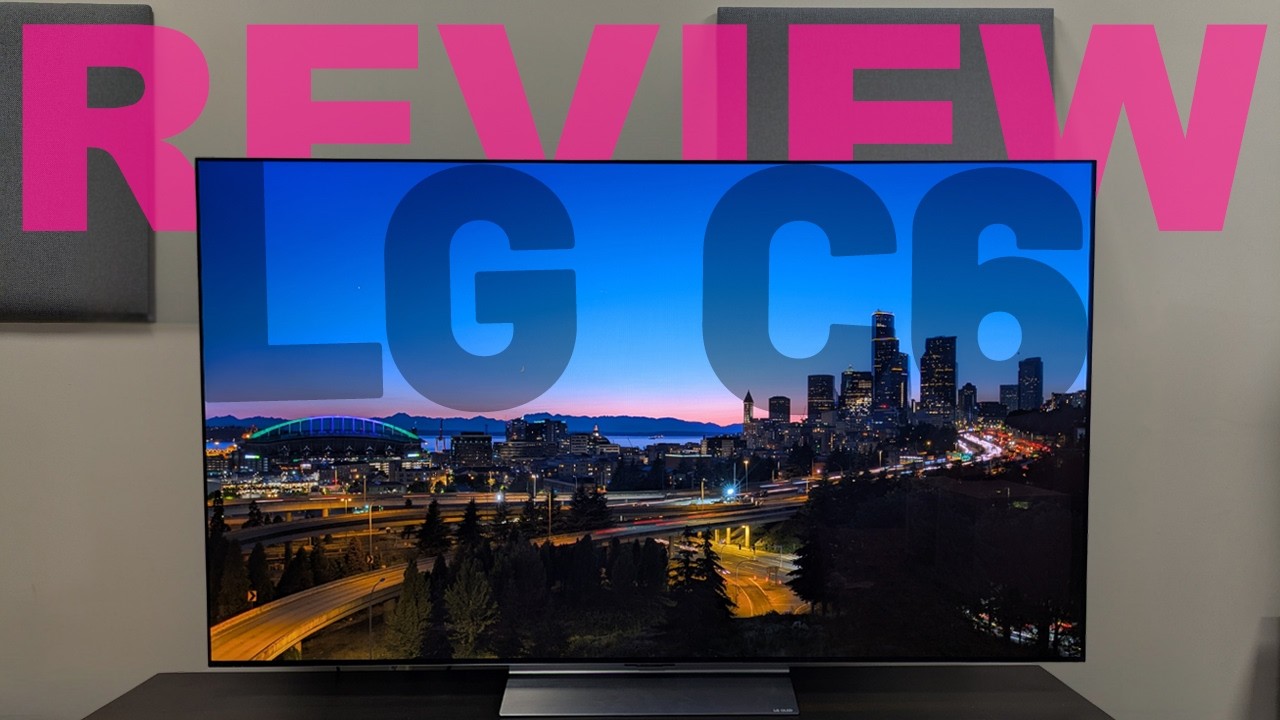
The C6’s picture quality is fantastic. Colors are punchy, vibrant and natural all at the same time, looking more accurate than the picture on last year’s C5 in my side-by-side testing. Its contrast is superb, with deep blacks, punchy highlights and refined shadow detail.
Textures are crisp, motion is smooth and natural, and it upscales non-4K HDR sources well. It does suffer from reflections in bright rooms, and I did notice some banding in gray areas, but this isn’t enough to detract from its overall quality, which is up there with that of the best OLED TVs.
Its built-in sound is solid overall. The AI Sound Pro mode delivers refined bass, great accuracy and clear dialogue. Dolby Atmos effects aren’t as pronounced as I’d like, and the soundstage can feel narrow at times, so while its sound is decent, I’d still connect one of the best soundbars to the LG C6 for a more cinematic experience.
The C6 is a phenomenal gaming TV. It delivers a full list of gaming features, including 4K 165Hz in the C-series for the first time, and its razor-sharp performance will make gamers very happy. Pair this with its awesome picture quality, and the C6 sets the bar as a best-in-class gaming display.
LG’s webOS continues to be one of the top smart TV platforms around, and while there are no big upgrades this year other than more generative AI options, the settings menus have been streamline to make navigation easier, and thanks to its new processor, performance is smoother than ever.
Ads at the top of the home page and on the screensaver are still an issue, but it’s nothing you won’t find on other smart TVs. Ultimately, webOS 26 is still great.
The C6 is a nice step up over the LG C5, and is very good value for what it delivers. However, the C5 is significantly cheaper, and still available at the start of 2026, so if you don’t want to wait for C6 prices to drop, the C5 is a much cheaper option right now.
For UK users looking for a 65-inch TV, I would also recommend the Philips OLED910 — it’s effectively a flagship OLED at a mid-range price. As the C6’s prices drop later in the year, though, it’ll become better value.
LG C6 review: Prices & release date

- Released in May 2026
- 42-inch: $1,399 / £1,299 / AU$1,995
- 48-inch: $1,599 / £1,399 / AU$2,395
- 55-inch: $1,999 / £1,799 / AU$2,995
- 65-inch: $2,699 / £2,599 / AU$3,995
The LG C6 is available in 42-65-inch models, with the 77-inch and 83-inch models now listed as a new model called the LG C6H, which uses the upgraded Primary RGB Tandem 2.0 OLED panel, as seen in the LG G6. I haven’t included the C6H’s pricing here, as we plan to review it later.
The 65-inch C6 I tested is launching at $2,699 / £2,599 / AU$3,995, which is the same price the C5 launched at in the US and Australia in 2025, but is cheaper than the C5’s launch price in the UK.
LG C6 review: Specs
Screen type: |
W-OLED |
Refresh rate: |
165Hz |
HDR support: |
Dolby Vision, HDR10, HLG |
Audio support: |
Dolby Atmos |
Smart TV: |
webOS 26 |
HDMI ports: |
4x HDMI 2.1 |
Built-in tuner: |
ATSC 1.0 (US) |
LG C6 review: Benchmark results


LG C6 review: Features

- Alpha 11 AI Gen 3 processor is flagship-class with better color handling
- Gaming features are as good as it gets right now
- Dolby Vision and Atmos, but not HDR10+, DTS or Dolby Vision 2
The LG C6 is the mid-range OLED in LG’s 2026 TV lineup, sitting above the entry-level LG B6, and below the flagship LG G6 and the revived super-thin LG Wallpaper TV, known as the W6.
As mentioned, there are two LG C6 models this year: the standard C6 and the C6H. The former is available in sizes 42-65-inch, and uses what LG Display officially calls a "Tandem WOLED" panel, while the latter is available in 77-inch and 83-inch sizes only, and uses the "Primary RGB Tandem 2.0" OLED panel that’s also used in the flagship LG G6.
The C6 does, however, come equipped with a new processor across all its sizes: the Alpha 11 AI Gen 3, which is the same processor that's used in the step-up G6 and W6 OLEDs. This supports an upgraded Brightness Booster, more refined upscaling, and picture enhancements such as 13-bit image processing (12-bit color plus one bit of brightness). It also supports 11.1.2-channel audio upmixing with its AI Sound Pro mode.
Dolby Vision and Dolby Atmos are supported, but once again there’s no support for HDR10+ or DTS, and LG has no plans to support Dolby Vision 2 on this TV in the future.
For sound, the C6 comes with LG's usual 2.2-channel speaker system included. In terms of sound profiles, LG has trimmed back the options from eight to four, opting for AI sound modes over traditional sound modes such as Cinema or Sports.

The C6 is fully equipped for gaming, with four HDMI 2.1 ports that support 4K 165Hz (a step up from the 4K 144Hz supported in the C5), full variable refresh rate compatibility including AMD FreeSync and Nvidia G-Sync, HGiG HDR, Dolby Vision Gaming, and auto low latency mode.
It comes with LG’s Game Optimizer dashboard, where gaming settings can be instantly accessed and adjusted for optimum performance.
The C6 uses webOS 26 as its smart TV platform, the latest version of LG’s own smart TV software. While there aren’t as many new, headline-grabbing features this time around, AI features such as AI Search and AI Concierge have been refined, menus have been streamlined, with the removal of some picture and sound modes, and some new Quick Card categories have been added.
The C6 also supports all major streaming apps including Netflix, Disney+, Apple TV and Prime Video.
- Features score: 5 / 5
LG C6 review: Picture quality

- More accurate colors and refined contrast
- Excellent detail and boosted brightness
- Reflective screen can be an issue in bright conditions
Starting with brightness measurements, the C6 hit 1,438 nits peak HDR brightness (measured on a 10% white window pattern) in Filmmaker Mode. This is a sizable boost over last year’s C5, which clocked in at 1,180 nits in the same test. Standard mode receives a smaller boost, hitting 1,291 nits peak HDR in a 10% window, compared to the C5’s 1,191 nits.
Fullscreen HDR brightness has also received a healthy boost, with the C6 hitting 245 nits in Filmmaker Mode, up 25% from the C5, which registered 195 nits in the same test. In Standard mode, the C6 measured 232 nits compared to the C5’s 200 nits, so again a smaller change, but still positive.
In practice, this not only adds more brightness to SDR sources, but creates stronger contrast between dark and light tones in high-contrast scenes. Whites in particular, such as scenes of snow or white clouds, and any scenes with high peak brightness with the sun as a central feature, get a solid boost to make its picture more impactful over last year’s C5.
The C6 also does a good job with lower-resolution and SDR sources. An HD stream of Fight Club on Disney+ benefitted from upscaled textures and refined contrast, with darker scenes in particular looking great.
A DVD of The Amazing Spider-Man doesn’t quite look like it’s had the full 4K treatment, but textures are very neatly cleaned up, and there’s an injection of brightness to make it much more appealing overall.
I tried out Precision Master HDR Pro, a setting aimed to upscale SDR to HDR quality. While it did add more brightness and sharpened up textures, I found it to be too aggressive, as it created harsh edges around people and objects in The Amazing Spider-Man so I preferred to leave it turned off.

Color reproduction is superb on the LG C6, especially with Dolby Vision sources. In Elemental, streamed on Disney+, the oranges, pinks and purples of the vase as Ember fixes it are vibrant and punchy, with the C6’s new extra brightness adding even more shine to the picture.
In Wicked, as Elphaba stands under a tree in the Wizard & I scene, the pink flowers really pop on screen, but also appear more natural when compared to viewing the same scene on last year’s C5. The green of Elphaba’s skin also looks natural (allowing for the fact that it's green), with colors looking less saturated than on the C5, and for the better here.
It’s no wonder the C6’s colors pop, because it measured 99.7% and 75.8% coverage of the DCI-P3 and BT.2020 color spaces respectively. These are excellent results for a WOLED screen, and the C6 basically matches flagship OLEDs in DCI-P3, which is the most important space for HDR viewing.
It also registered a color accuracy score of Delta-E 1.2, which is fantastic for out-of-the-box settings, and means it’s essentially impossible to tell it apart from ‘perfect’ colors. All these measurements were taken in Filmmaker Mode.

Contrast is excellent on the C6. Watching The Batman, as Batman walks down a hallway, the balance between the dark tones of the wood-paneled walls and the light tones from the lamps are well separated, with each having their own nuances, creating strong contrast.
The same is true in Dark City — as John speaks to the desk clerk, black tones are rich, and contrast nicely with the bright and punchy desk lamp.
The C6 also displays superb shadow detail. Throughout The Batman, objects in dark backgrounds are still visible, such as the back wall of the subway platform or the portraits in Mitchell’s office. Comparing it to the C5, shadowed areas look more accurate, and true to how you’d expect the eye to see them.
Watching dark scenes in a pitch-black room, I did notice that black tones were raised in places. But by changing a few settings, dark areas on screen improved to the point where I was happy with them, without any in-depth calibration needed if you want to follow suit.
I dropped the ‘Near Black Detail’ option to -1 (it's 0 by default), dropped ‘Adjust Contrast’ from 100 to 95, and finally dropped ‘Black Level’ by 1, from the default 50 to 49. This didn’t dim the picture much at all, but improved black levels and contrast overall.
While watching a dimly-lit scene from The Green Knight, I did notice some vertical banding in a gray area of the scene. This was the first and only time I noted it in my test — I tested similarly difficult scenes in other movies — so it’s not enough to affect my score, but it’s something to note, as vertical banding has been a criticism of LG’s OLEDs in the past.
I compared the LG C6 to the LG C5, and the C6 demonstrates a more accurate color temperature, which is clearest when watching black-and-white movies. In Sunset Boulevard, the C6 delivers deep blacks, bright whites and a range of accurate gray tones.
Playing the same scenes on the C5, there's a green tint that affects the accuracy of the picture, and the C6 doesn’t have this issue. The green tint on the C5 isn’t noticeable in scenes full of color (and the TV scored excellent in color accuracy tests), but the starkness of monochrome really highlights it.

The C6 also delivered refined detail across content, with crisp textures that looked 3D-like but also natural and true-to-life. A close-up shot of Batman shows every bit of his stubble and other facial marks with real accuracy.
The C6 has excellent motion handling. I found Standard mode with the Natural motion setting to be perfect for sports (I tested soccer and baseball) and I used the Cinematic Movement motion setting for movies, which has been my go-to for LG for the last couple of years.
Without any processing on, there can be some judder in slow-moving movie shots, but Cinematic Motion worked well for delivering a panning shot of a cliffside cemetery from No Time To Die with natural-looking motion and much-reduced judder.
It’s not all plain sailing for the C6. I found that its reflection handling was merely average, noting some strong mirror-like reflections when watching darker scenes in brightly lit rooms.
While this was expected, I was impressed by the step-up LG G6’s anti-glare coating when I tested it, so I know that LG’s glossy OLEDs can crush reflections when given the tools; it's a shame the C6 didn’t receive the same treatment.
- Picture quality score: 4.5 / 5
LG C6 review: Sound quality

- 2.2-channel speaker system
- Good overall sound quality
- Some sound modes removed
The C6 has a built-in, 2.2-channel speaker array that supports Dolby Atmos, but like last year, there’s no support for DTS. LG has removed some of the traditional sound modes, such as Cinema and Sports, in favor of AI sound modes such as the returning AI Sound Pro and the new Precision Sound Master Pro.
Using the AI Sound Pro mode in my go-to Dolby Atmos scene — the Batmobile chase from The Batman — the C6 delivered great accuracy and detail, with a strong link between the action on screen and the sound. Mapping was very good, as the screech of swerving car tyres and blaring horns passing by off-screen sounded authentic.
The AI Sound Pro profile focuses more on the mid-range this year, which I personally prefer. The changes also meant the bass felt more solid than it did on the LG C5, and while it doesn’t beat the likes of Sony and Panasonic TVs, it was still meaty in places.
Trying out the Precision Sound Master Pro setting, the soundstage did feel wider, and there was more overall volume, but it was personally too bright for my tastes.
I always used the Cinema sound setting for my testing in previous models, so I’m disappointed that this is no longer an option, but AI Sound Pro is a solid alternative.
Still, despite the C6’s solid sound, I’d hook up a soundbar if you want the sound quality to match the picture, as Dolby Atmos effects can get lost and the soundstage can at times feel narrow.
- Sound quality score: 4 / 5
LG C6 review: Design


- Premium design with bezel-less screen looks great
- Metal stand and trim feel high-quality
- UK remote still feels cheap
The C6’s design carries over from last year’s C5. It feels premium but more lightweight than the hefty G6. Its silver metal trim and base makes the TV feel premium. The screen has a near bezel-less design with no real border, giving the picture the full real estate.
The rear panel has a marbled design that adds a nice touch, and the ports of the TV are easily accessible on the rear-side panel, with all four HDMI ports in plain view.
LG’s Magic Remote in the UK does, however, continue to feel cheap compared to other OLED remotes. While it has a useful pointer, its overall build still feels plasticky and light, a far cry from the black, metal rechargeable remote that Philips supplies with its OLEDs. Fingers crossed this changes next year.
- Design score: 4 / 5
LG C6 review: Smart TV & menus

- AI features are becoming smarter
- Streamlined settings menus is very welcome
- Snappy navigation is also an improvement
The LG C6 uses webOS 26 as its smart TV platform, and it’s again one of the best on the market. Quick Cards are a useful tool where relevant apps can be organized by category, such as Music and Game, and new options have been introduced, such as Office and Learning.
The Quick Menu continues to be one of the most useful tools for adjusting popular settings such as picture mode with no fuss — just hit a button and it pops up at the side of the screen, with instant access to common settings, without totally interrupting what you’re watching.
LG has streamlined some settings menus, moving options such as Network and Energy Saving higher up in their category for easier access. Couple this with the new faster Alpha 11 processor and navigation feels easier overall, with better visibility and nice, snappy performance.
AI features such as AI Concierge are more refined, with better recommendations, and new features such as Generative AI can be used to plan activities or create images.
webOS 26 does still have large banner ads at the top of the screen that take up just over a third of the home page, and I did note that whenever the C6 went into screensaver mode it wouldn’t take long before sponsored ads appeared.
Still, these are the only negatives I had with what has consistently been a brilliant smart TV platform, and ads are becoming increasingly common on all platforms.
- Smart TV & menus score: 5 / 5
LG C6 review: Gaming

- 4K 165Hz and full VRR support on all four HDMI ports
- 9.2ms 60Hz / 4.2ms 120Hz input lag time is as good as usual
- Superb performance and picture in gaming modes
The C6 maintains the LG C-series OLED’s reputation for best-in-class gaming performance and features. It supports 4K at 165Hz, variable refresh rate (HDMI spec, FreeSync, and G-Sync), auto low-latency mode, and Dolby Vision Gaming across all four HDMI 2.1 ports.
Activating its Boost mode in the Game Optimizer menu yields a measured 9.2ms (4K 60Hz) and 4.6ms (1080p 120Hz) input delay, a phenomenal result that gamers will be delighted with.
Playing Battlefield V, performance not only felt incredibly smooth as I targeted enemies while running, but looked excellent as well. The desert mission I played was bright and vibrant, and environments were incredibly detailed, with intricate textures in rocks and buildings.
Not much more needs to be said: the C6 is a gaming powerhouse.
- Gaming score: 5 / 5
LG C6 review: Value

- Cheaper launch prices than the LG C5 in the UK
- Excellent picture and features for the price
- But the C5 is a lot cheaper in 2026, and may offer better bang-for-buck
The LG C6 is great value for the performance and features it delivers. It carries across all the elements that made the C5 one of last year’s best TVs, but offers higher brightness, more refined contrast and color, and has an upgraded processor for faster performance.
The 65-inch model I tested costs $2,699 / £2,599 / AU$3,995, which means it’s launching for the same price in the US and Australia as the C5, which is impressive enough, but it’s actually £100 cheaper than the C5’s launch price in the UK, even with all the upgrades.
If you’re looking to buy at the time of writing, however — May 2026 — the C5 remains the best option, with the same 65-inch costing $1,399 / £1,399 / AU$2,599 on average.
If you’re based in the UK and looking for a 65-inch, I’d also strongly recommend the Philips OLED910, which costs £2,199 at 65-inch (£500 cheaper than the C6) and boasts flagship-level brightness and colors, plus a superb built-in Bowers & Wilkins sound system. In smaller 42-55-inch sizes, though, the C5 is still the best option.
The C6 is still a premium TV in the grand scheme of the TV market, but those launch prices are likely to drop quickly. If you want to buy right now, the C5 is still your best value option overall, but as C6 prices drop it will become even better value.
As far as new 2026-released TVs go, I don’t expect many to match it on the combination of features and image quality for the price.
- Value score: 4.5 / 5
Should I buy the LG C6 OLED TV?

Attributes |
Notes |
Rating |
|---|---|---|
Features |
An upgraded processor for more picture features and faster performance. |
5/5 |
Picture quality |
Superb picture quality, with great color temperature accuracy and a boost in brightness over the C5. It's quite reflective, however. |
4.5/5 |
Sound quality |
Good sound quality with solid accuracy that's decent overall, but could benefit from a soundbar. |
4/5 |
Design |
Solid build quality that feels premium, but remote still feels cheap compared to some others. |
4.5/5 |
Smart TV and menus |
webOS 26 feels more streamlined and introduces more AI tools. Easy to use and navigate. |
5/5 |
Gaming |
Full suite of gaming features including 4K 165Hz support and four HDMI 2.1 ports. Razor-sharp performance. |
5/5 |
Value |
Delivers on nearly all fronts, and launching for cheaper than the C5. C5 is still the better-value option while it's still around, however. |
4.5/5 |
Buy it if...
Don't buy it if...
Also Consider
| Header Cell - Column 0 | LG C6 |
LG C5 |
LG G6 |
|---|---|---|---|
Price (65-inch) |
$2,699 / £2,599 / AU$3,995 |
$1,399 / £1,399 / AU$2,599 |
$3,399 / £2,999 / AU$4,999 |
Screen type |
OLED |
OLED |
OLED (Primary RGB Tandem 2.0) |
Refresh rate |
165Hz |
144Hz |
165Hz |
HDR support |
Dolby Vision, HDR10, HLG |
Dolby Vision, HDR10, HLG |
Dolby Vision, HDR10, HLG |
Smart TV |
webOS 26 |
webOS 25 |
webOS 26 |
HDMI ports |
4 x HDMI 2.1 |
4 x HDMI 2.1 |
4 x HDMI 2.1 |
How I tested the LG C6 OLED TV

- Tested over two weeks using HDR and SDR sources
- Tested in variable lighting conditions
- Measurements taken using Portrait Displays' Calman color calibration software
My first steps in testing the LG C6 involved establishing its most accurate picture modes through casual viewing. I landed on Filmmaker Mode for most movies, as well as Cinema Home, and finally Standard for sports and broadcast TV.
I then moved on to critical viewing, using both HDR (4K Blu-ray and 4K streaming) as well as SDR (DVD, Blu-ray and broadcast TV) sources to test the C6's picture. I used these sources to analyze upscaling (of SDR), color, brightness, contrast, textures, detail and motion.
I used a Panasonic DP-UB820 4K Blu-ray player when playing discs including 4K Blu-ray. I also used an Xbox Series X to test the TV's gaming features and performance.
Aside from subjective testing, I also took measurements on the C6 using a Klein K-10A colorimeter (profiled with a Jeti Spectral 15VA Spectroradiometer) and a Murideo Six G 8K Metal test pattern generator, and used Portrait Displays' Calman color-calibration software to record measurements.
To measure the C6's brightness, I used both HDR and SDR white window patterns ranging in size from 1-100%, taking readings in both Filmmaker Mode and Standard picture modes.
I also tested the C6's grayscale and color accuracy, taking an average of the Delta-E values (the margin of error between the test pattern source and what's shown on screen), looking for a result below 3. Anything below this is considered indistinguishable to the human eye.
I measured the coverage of the UHDA-P3 and BT.2020 color spaces, hoping for a result of over 95% for the former.
I also tested the C6's HDR EOTF in 1,000, 4,000 and 10,000 nits. This test shows the C6's accuracy at both light and dark levels. I also measured the C6's Spectral Power Distribution, which demonstrates its color performance, using the Jeti spectroradiometer.
Finally, I used a Leo Bodnar 4K HDMI Input lag Tester to test the C6's input lag in milliseconds.
Read our in-depth overview of how we test TVs at TechRadar.
- First reviewed: May 2026
- Read TechRadar's reviews guarantee
