





OLED is a term that you see everywhere in tech. Whether you've been hunting for a new TV, eyeing up the latest laptops or reading about the Nintendo Switch OLED. But what is OLED tech? And, importantly, do you need to upgrade to an OLED TV and an OLED laptop?
Let's begin with what OLED stands for: Organic Light Emitting Diode. It’s this panel tech that makes OLED TVs stand out in comparison to other types of displays. OLED TVs can turn their pixels off, in turn allowing them to deliver perfect blacks.
OLED TVs bring you better image quality, faster response times and reduced power consumption. So if you’re looking to buy one of the best TVs, you need to learn more about OLED to help you decide whether it’s a better fit for your viewing needs than the likes of Samsung’s QLED TVs.
This guide is an OLED TV explainer, helping you to figure out how OLED works, what sets an OLED TV apart from other panel types, and most importantly, if this TV tech is right for you.
OLED explained
What is OLED?
OLED stands for Organic Light-Emitting Diode, with the 'organic' part referring to the carbon film that sits inside the panel before the glass screen.
OLED panels emit their own light when an electric current is passed through, whereas cells in a LCD-LED display require an external light source, like a giant backlight, for brightness.
This backlight is what separated LCD screens from their LED variants. A traditional LCD screen has a backlight (called a cold-cathode fluorescent light, or CCFL) which is uniform across the entire back of the screen.
In an OLED TV display, the pixels themselves are the things producing the light, and so when they need to be black they are able to turn off completely, rather than relying on a backlight to turn off on their behalf.
Is OLED worth it?

Is OLED worth the cost?
If you watch an OLED and compare it to your experience with another kind of TV panel, you'll notice blacks are just that: actually black. Compared to the soupy greys of most LEDs, there’s no comparison. If you regularly watch content in a dark room, OLED is king. Combine these inky blacks with the bright whites OLED panels also produce, and you're left with a fantastically vibrant image.
LG and Panasonic, the most consistent producers of OLED televisions on the market, like to use the term "infinite contrast" to describe how the self-lighting pixels switch off completely when reproducing black; giving it an "absolute" black color instead of a "relative" black that only describes how dark one pixel can get compared to the brightest pixel on the screen.
The advantages of OLED go beyond simple static image quality. OLED panels are hugely responsive, meaning PS5 and Xbox Series X gamers and home cinema aficionados are going to absolutely love OLED TVs.
OLED panels are capable of a refresh rate of as low as 0.001ms, which for reference, is around 1,000 times faster than a standard LED-backlit LCD panel, while also being superior to the now-discontinued plasma tech.
And, because the lighting source they use is so tiny, the depth of screen sizes has shrunk at the same rate. That means OLED TVs have awesomely deep blacks and bright, peak whites, improved color accuracy, as well as responsive motion - and all from a form factor that's just a few millimeters in depth and lighter than many LED TVs.
Nintendo Switch OLED
What about the Nintendo Switch OLED?
What about the Nintendo Switch OLED?
OLED isn't just a TV technology. It's found in countless premium smartphones, as well as the Nintendo Switch OLED – an updated twist on the beloved gaming console that packs an OLED screen rather than the LCD display used on the existing Switch and Switch Lite.
Nintendo's decision to utilize OLED speaks to the tech's ability to deliver premium image quality, and the Switch OLED delivers more vibrant colors and improved contrast over the original model.
Metroid Dread, which launched with the Switch OLED, is one of the best examples of just how good games can look on the handheld’s 7-inch 720p screen. Few games make better use of OLED’s deep blacks than Samus Aran’s exceptional side-scrolling adventure.
What OLED TVs are there?

Who makes OLED TVs?
OLED TVs have been on the market since 2012, and a range of manufacturers have tackled the technology over the years. LG has always been the main manufacturer of OLEDs, and its sister company LG Display is currently the only manufacturer that produces OLED panels.
In recent years, Samsung, Sony and Panasonic have put out a number of quality OLED TVs to compete with the best LG has to offer. The best OLED TVs in 2023 are the LG C2 OLED, the budget-friendly LG A2 OLED, the Sony XR-A95K, and the Samsung S95B.
The best 8K TVs also have an OLED in their ranks, with the awesome but hugely expensive LG Z2 OLED, which comes in either 77-inch or 83-inch sizes.
For smaller and slightly more affordable choices, there's the 42-inch LG C2 OLED; the first 42-inch OLED panel to ever hit the market.
Panasonic is also making waves with its OLED output, and the upcoming, envelope-pushing Panasonic MZ2000 was one of the best TVs at CES 2023.
For more of the latest and greatest OLED TVs, head to our best OLED TVs guide to see the top models we've had the pleasure of reviewing on the site – or our OLED TV deals page for the cheapest sets going right now.
OLED prices
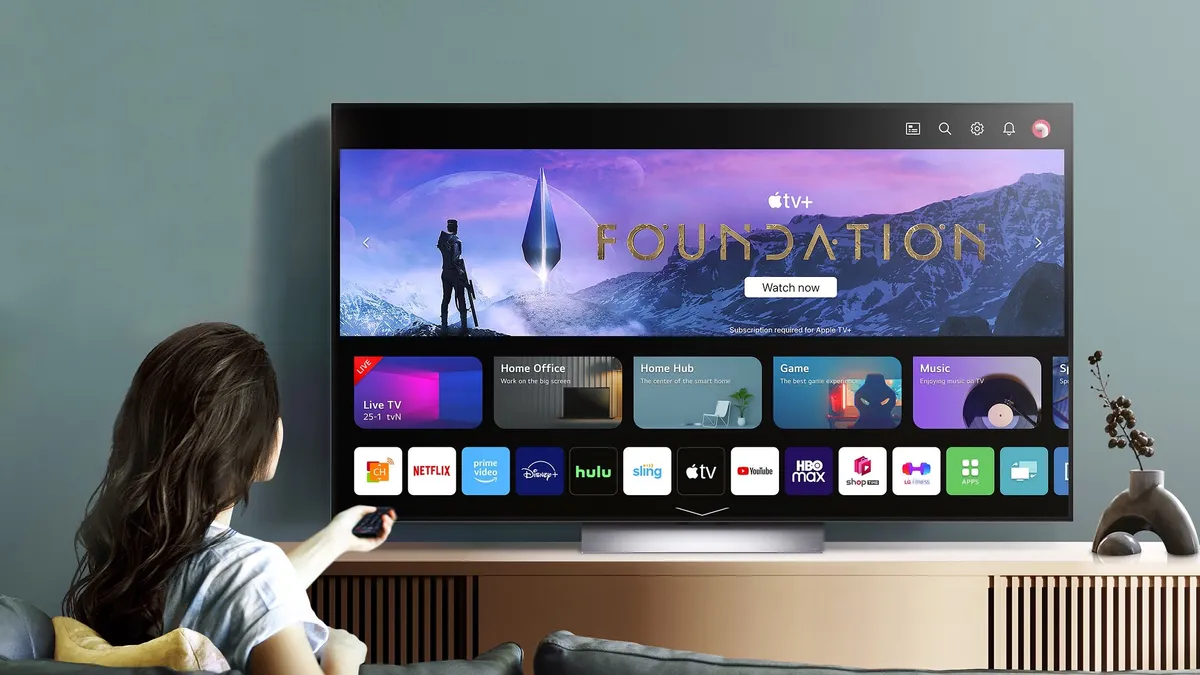
Why are OLED TVs so expensive?
OLED TVs are definitely getting cheaper, but they're still not exactly affordable. We don't have all the latest pricing details of upcoming 2023 OLED TVs, but the 55-inch LG C3 OLED (which is likely to be the firm’s most popular OLED) will retail for $1,799 / £1,999 (around (AU$2,600).
OLED panels sold by Panasonic and Sony are usually even more expensive. The Sony XR-A95K is one of the best OLED TVs in 2023, but the 55-inch model will set you back an eye-watering $2,799 / £2,199.
Thankfully, OLED TVs are finally getting smaller, which means certain, more bedroom-friendly panels are finally retailing for less than $1,000 /£1,000. At time of writing, the brilliant LG C2 OLED 42-inch model is being sold in the UK for around £850.
It's definitely worth keeping an eye out for end-of-year sales. Black Friday and Cyber Monday usually have numerous good TV deals on OLED displays – and given their normally high starting price, you can often get hundreds discounted at the right time. Cheaper OLED TV deals can also see notable price cuts that bring them more within reach of mid-range buyers.
- Check out the latest OLED TV prices and deals for more details
OLED burn-in
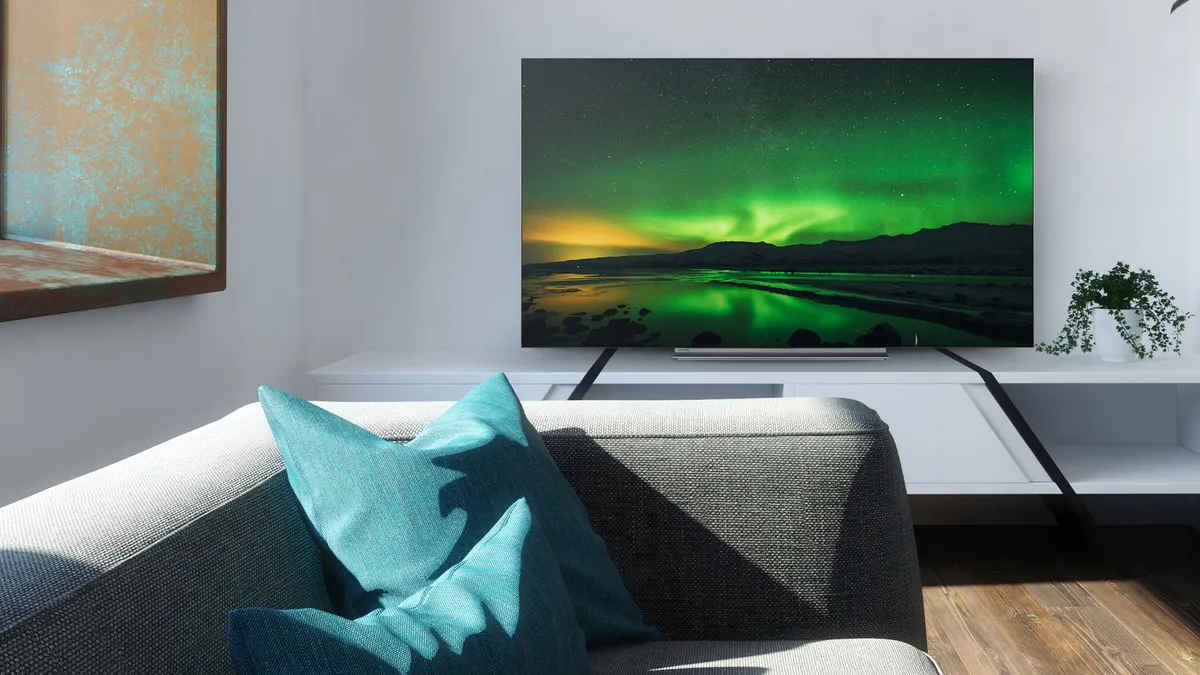
Do I need to worry about burn-in with OLED?
Burn in, or image retention, is when an image or sequence is played so often and continuously on a television set that it leaves a permanent mark on the panel – obviously not ideal for a home television.
You don't particularly need to worry, as it largely happens only when displaying a static image or sequence on repeat, as with a display unit in a showroom or retail store. You should get several years warranty, anyhow, and we don't see many home cinema fans using their OLED TV in this way.
TV makers like LG are also working to limit the risk of this for a while, with screen saver features, a Screen Shift function that "moves the screen slightly at regular intervals to preserve image quality", and "Logo Luminance Adjustment, which can detect static logos on the screen and reduce brightness to help decrease permanent image retention" (via LG.com).
But if you're planning on leaving your TV for countless hours at a time – say, to parent the children in your absence, or to play the same looping video over and over – then OLED may not be the right panel technology for you. Compared to earlier models though, OLED TVs in 2023 are much less susceptible to burn-in than they have been in the past.
What's next?
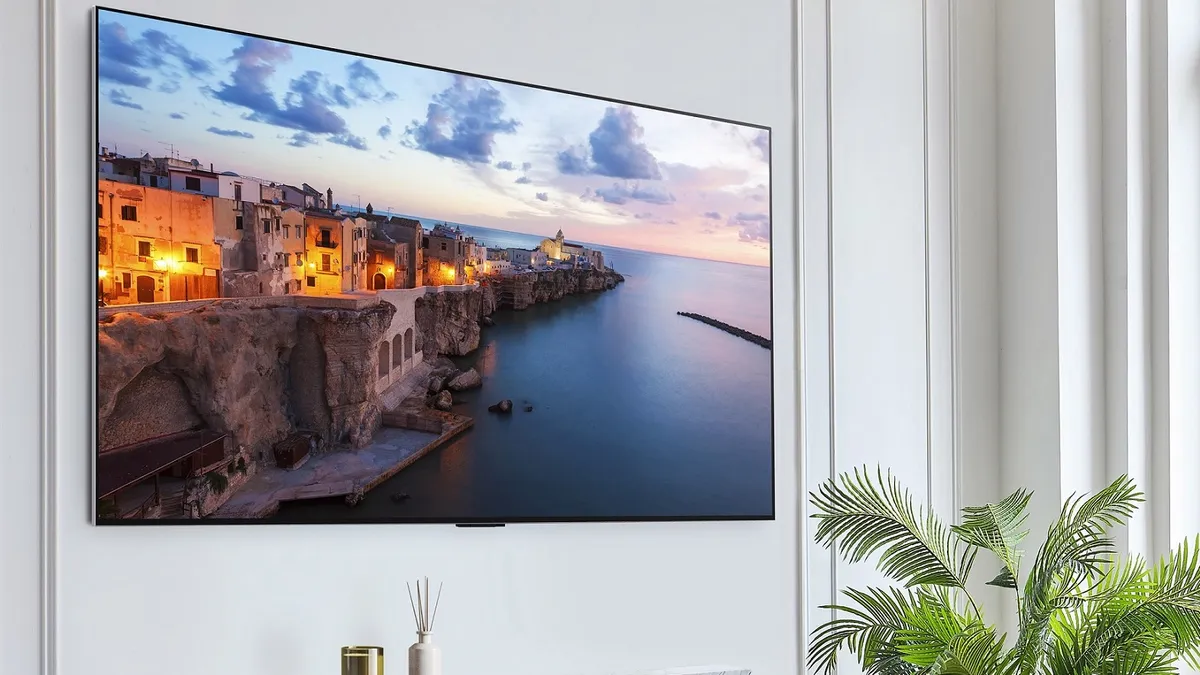
What's the future for OLED?
OLED is an expensive panel technology that has finally managed to gain real market traction over the past few years. As for what the future holds? Better break out the shades: OLED is about to get a whole lot brighter.
Over the last year or so, Samsung has made a splash with its QD-OLED TVs. Using quantum dots to boost brightness, QD-OLED tech combines the perfect blacks of OLED with the brightness and startling color range of Samsung’s existing QLED panels. The results are both brighter and brilliant – the Samsung S95B is one of the best OLED TVs we’ve ever reviewed.
Samsung isn’t the only company chasing brighter OLED panels, though. The upcoming Panasonic MZ2000 deploys a technology called Micro Lens Array to boost brightness by 150% over previous models. This is achieved by the presence of billions of tiny convex lenses, which are placed above an OLED panel’s pixels.
The upcoming LG G3 OLED will utilize a similar technique to Micro Lens Array in order to deliver brighter pictures. Called ‘META’, this is a solution that combines a form of MLA with a brightness-boosting algorithm.
The future of OLED technology is also going to be wireless. The LG Displace OLED was unveiled at CES 2023, and thanks to its wireless charging station, it can remarkably operate without a single cable for hours at a time. We don’t know how prevalent wireless OLED TVs are going to be going forward, but it’s still an incredibly exciting tech development.
