


If you’re thinking about getting a new phone this Black Friday weekend, you’re in the right place. I’ve tested over 40 handsets this year, and a several definitely stand out — for both the right and wrong reasons.
Phone manufacturers have taken some massive swings in 2026 — we've seen everything from DSLR-rivaling flagships to robot phones with built-in gimbals (yes, really). Between Apple’s first foldable (the iPhone Duo) and the first phone with three 200MP cameras (the Oppo Find X10 Pro Max), it’s been a banner year for mobile tech.
Having tested all of those devices (and many more), here are the six models I recommend buying this Black Friday weekend, and two I’d avoid.
Buy for the form factor: Apple iPhone Duo

Apple waited years to enter the foldable arena, and the iPhone Duo proved worth the wait. Rather than copying rivals' tall-and-narrow designs, Apple nailed the wider passport form factor and let third-party developers do the rest. The Duo has transformed how I code on the go and changed how I approach mobile design — and beyond work, it’s simply the folding iPad I’ve always wanted.
I’ve used Android foldables since the first Galaxy Fold, and while every new entrant inevitably has some shine to it, the Duo's release has already led to hundreds of thousands of newly optimized apps. Android foldables are reaping the halo effect too, though the Duo undoubtedly has the best experiences, as long as you don’t mind its occasionally awkward cover screen software.
Yes, at $1,999 / £1,999 / AU$3,499, the Duo commands a steep premium despite lacking a dedicated telephoto lens, while the Xiaomi 18 Fold outguns it on raw hardware. Still, for effortless daily integration, polish, and build quality, the iPhone Duo is the foldable phone that most people should actually buy.
Buy for the camera: Oppo Find X10 Pro Max

If you want the best camera phone money can buy, look no further than the Oppo Find X10 Pro Max. It boasts an absurd, Hasselblad-tuned triple rear camera array — comprising 200MP main, ultra-wide, and 3x periscope telephoto lenses — which is further boosted by optional teleconverter kit support, LOFIC dynamic range, and excellent video recording capabilities.
What impressed me most about this phone was consistency across every focal length. Whether you're shooting low-light portraits, cropping deep past 10x, or filming open-gate video, color science and detail stay locked together in a way no rival phone can match
The Find X10 Pro Max shines even more via ColorOS, which has quickly become my favorite Android interface. There’s a lesson here for all companies: clean software is the right way to win hearts in the West.
Mix in flagship performance, phenomenal battery life, and a near-bezel-less 144Hz screen, and the Find X10 Pro Max is the smart enthusiast's camera flagship of 2026 — US buyers will, however, have to import it.
Buy for its features: Motorola Razr Fold

If you’ve been lamenting the lack of true Ultra-style foldables in the West — such as the Xiaomi 18 Fold, Oppo Find N6, or Honor Magic V6, which aren’t sold in the US — look no further than the Razr Fold. Discounted in most regions right now, it undercuts its biggest rivals on price and comes closest to those Chinese foldables we wish were available globally.
There’s a giant 8.1-inch inner OLED and a vibrant 6.6-inch 165Hz cover screen. Motorola phones have excellent displays; the Razr Fold is no different. Motorola didn't gut the internals to hit that price either. You get a 6,000mAh silicon-carbon battery with 80W wired charging, clean software, and a surprisingly capable triple 50MP camera setup complete with a 3x periscope telephoto.
At 243g, it isn't the lightest foldable around, and its IP49 rating trails top rivals on dust protection. But on pure value, nothing else in the foldable space comes close.
Buy for innovation: Xiaomi 18 Pro

The Xiaomi 18 Pro and Xiaomi 18 Pro Max have brought me endless fun over the past few weeks, in no small part thanks to their revolutionary back displays.
The Xiaomi 18 Pro has a 2.7-inch rear display, while the 18 Pro Max has a larger 2.9-inch screen. Now launching globally, this second screen finally moves past the gimmickry that doomed Xiaomi's earlier attempts at the same feature.
Thanks to the Gemini-powered GenAI apps tool, you can vibe-code custom micro-apps for the back screen in minutes — anything from a pinned shopping list to a quick dice roller — alongside built-in controls for Google Maps, Spotify, and YouTube Music. It also doubles as a full-res viewfinder for rear-camera selfies, solving one of photography's oldest headaches.
Backed by marathon battery endurance, rapid charging, and flagship Leica optics, the Xiaomi 18 Pro series isn't just another spec-bump slab — it's a glimpse at where Android hardware is heading next.
Buy for battery life: Honor Magic 9 Pro Max
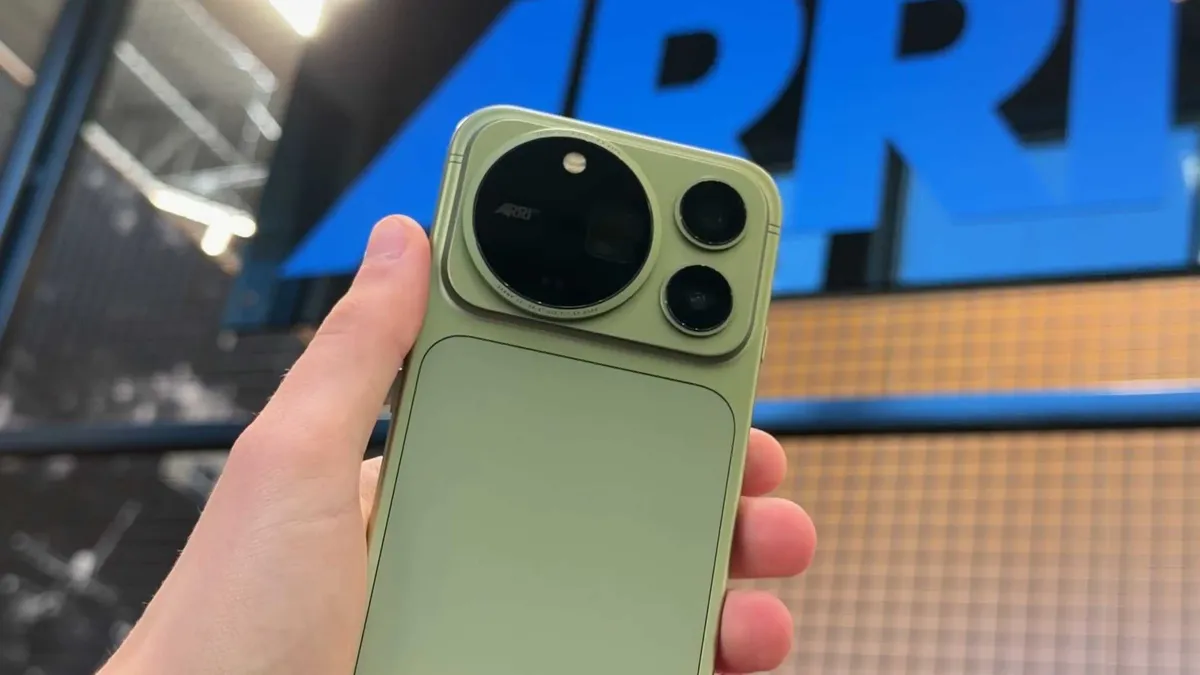
If battery anxiety is your number one complaint, the Honor Magic 9 Pro Max is built specifically for you. This is the latest in a long line of Android phones with excellent battery life; Honor was fast to adopt silicon-carbon technology and its phones are some of the longest-lasting on the market as a result.
With the newly announced Magic 9 Pro Max, Honor crammed an enormous silicon-carbon battery — 8,000mAh in the global version, 7,030mAh in the UK version — into a flagship that doesn't feel like a rugged brick.
In real-world testing, it comfortably pushes past two full days of heavy use, and when you finally do need a top-up, 100W wired and 80W wireless charging get you back on your feet in no time.
That stellar endurance is paired with a 6.8-inch vibrant LTPO OLED display with excellent 3,840Hz PWM dimming, an IP68/IP69K durability rating, and a stylish green colorway that turns heads. You also get the Snapdragon 8 Elite Extreme Gen 6 chip and stabilized 200MP main and telephoto cameras, making the Magic 9 Pro Max an easy recommendation for power users who hate carrying a power bank.
Side note: The Honor Magic 9 Pro Max isn't actually available outside of China just yet (we're anticipating a global release in January), but I've included it here in case you want to earmark it for future purchase.
Buy for stage & concert zoom: Vivo X500 Pro Max

If you’ve seen the viral concert clips shot on Vivo’s recent flagships, the Vivo X500 Pro Max takes that reputation even further. Its 200MP Zeiss APO periscope telephoto —complete with CIPA 7.0 stabilization, auto-framing stage video, and optional Zeiss telephoto extender support — is unmatched when you're shooting from the back row.
Vivo didn't stop at zoom, either. You get a gorgeous 6.85-inch 144Hz 2K LTPO display, the 2nm MediaTek Dimensity 9600 Pro chipset, and IP68/IP69 durability. There’s also a massive 7,800mAh battery with 90W charging and bypass charging for marathon gaming or 4K recording.
Unfortunately, US, UK, and Australian buyers will have to import this phone, and its Creator Kit accessories add extra bulk. Still, as a multimedia and telephoto powerhouse, it's one of 2026's most complete flagships. The only challenge is living with OriginOS 7, which is further behind Oppo's ColorOS software on its journey toward being palatable to all audiences.
Avoid: OnePlus 15R

On paper, spotting a Black Friday discount on the OnePlus 15R — with its massive 7,400mAh battery, 165Hz display, and Snapdragon 8 Gen 5 chip — seems like an easy win. Don't bite. Even before you look at its hardware compromises, buying a OnePlus phone in late 2026 comes with a massive catch.
OnePlus exited North America and Europe earlier this year and just stripped its storefront down to a bare-bones support portal. Buying leftover third-party stock over the holidays means investing in a brand that has already packed its bags in Western markets, alongside a shorter four-year OS update promise.
Factor in the phone's lack of a telephoto lens, LTPO screen, and wireless charging, and you're far better off spending your money on a brand that actually plans to stick around — or look at phones from OnePlus' parent company Oppo if you want the same software DNA.
Avoid: Motorola Razr Plus (2026)

If you're tempted by Black Friday discounts on the Motorola Razr Plus (2026) — known as the Razr 70 Plus in the UK — take a step back before hitting 'buy'. While its 4-inch cover screen, sleek titanium hinge, and 4,500mAh battery make a strong first impression, Motorola hiked the phone's launch price by $100 to $1,099 while cutting too many corners underneath.
As we highlighted in our TechRadar review, Motorola reused a 2024 Snapdragon 8s Gen 3 processor, stripped out last year's dedicated telephoto camera in favor of an ultra-wide shooter, and stuck with a disappointing three-year OS update promise.
Even on sale, paying flagship money for aging silicon and short software support doesn't add up — especially when you can get the far more capable Motorola Razr Fold for just a little more, or step down to the standard Razr (2026) and save hundreds.

Follow TechRadar on Google News and add us as a preferred source to get our expert news, reviews, and opinion in your feeds. Make sure to click the Follow button!
And of course you can also follow TechRadar on TikTok for news, reviews, unboxings in video form, and get regular updates from us on WhatsApp too.
