


The TechRadar team has been testing cameras since before the first wave of mirrorless models hit the market, which started with the 12-megapixel Panasonic Lumix G1 back in 2008. In the years since then, we've reviewed countless cameras and seen mirrorless models become the format of choice over DSLRs for most photographers, including beginners.
We think that the Canon EOS R100 is the best beginner mirrorless camera. It's a significant upgrade from the R10, handles exceptionally well, and is a camera you can really grow with.
That being said, you might want something more feature-rich or better suited to shooting video. We've picked recommendations for all use cases, and you can be sure our picks are trustworthy thanks to the thorough hands-on testing we've put the mirrorless cameras listed below through. Keep reading to check out our real-world experience with each model, as well as other, older options we've included in our 'Also Consider' section.

I'm TechRadar’s Cameras Editor. I've worked as a freelance photographer and tech journalist for more than 15 years. In that time, I've been lucky enough to shoot with a whole range of mirrorless cameras. As a result, I've developed an in-depth experience of what makes an excellent mirrorless camera for beginners. Naturally, most beginners start with a limited budget, which is why I've included a number of more affordable mirrorless cameras here. However, I think that overall value is important, too, which is why my guide also features pricier, well-equipped models with the right features for novices to learn and grow with.
Why you can trust TechRadar
Every single beginner mirrorless camera in this guide has been tested by our expert team of reviewers in real scenarios.
We test all types of mirrorless cameras, from beginner-level snappers to pricier enthusiast and pro models, and have tailored these reviews for newbies. That means we assess how easy each model is to get started with and its staying power, looking at performance, handling, and ease of use, all with beginners in mind.
The results of these reviews are distilled into this guide. Naturally, there's no one-size-fits-all, and so I have included a range of styles and types to cover most use cases. For more information about how we test cameras, scroll to the last section in this guide.
Meet the team
Our team of reviewers has accumulated countless years of camera experience and testing, covering all of the entry-level cameras for beginners from leading camera brands since the advent of mirrorless cameras. A phone might still be most people's first choice of camera, but there are plenty of reasons to opt for a dedicated mirrorless camera instead.

Jon Devo is a seasoned professional with 20 years of experience in photography and videography. After studying Journalism and Psychology at City University London in 2009, he transitioned into presenting and journalism. Jon is the founder of Devoted Creatives, a photo and video studio based in West London.

Mark is TechRadar's Senior news editor and has been a technology journalist since 2004. Formerly Trusted Reviews and TechRadar's cameras editor, Mark has tested cameras over many years from all of the leading brands.

Amy has been writing about cameras, photography and associated tech since 2009. Amy was once part of the photography testing team for Future Publishing working across TechRadar, Digital Camera, PhotoPlus, N Photo and Photography Week.

Rod is an independent photographer and photography journalist with more than 30 years' experience. He's previously worked as Head of Testing for Future’s photography magazines, including Digital Camera, N-Photo, PhotoPlus, Professional Photography, Photography Week and Practical Photoshop, and as Reviews Editor on Digital Camera World.
The best beginner mirrorless cameras
Why you can trust TechRadar We spend hours testing every product or service we review, so you can be sure you're buying the best. Find out more about how we test.
The best beginner mirrorless camera overall


✅ You're a brand-new photographer: With its user-friendly design and helpful learning aids, the R100 is a great option for anyone looking to build their shooting skills.
✅ You don't want to pay a fortune: The R100 offers one of the best entry points into mirrorless photography without skimping on the essentials.
❌ You need extensive video recording options: The R100’s video capabilities are basic, lacking IBIS and offering a limited selection of recording options, which may frustrate aspiring videographers.
❌ You shoot on the go: The lack of in-body image stabilization makes handheld shooting less steady, especially for video or in dim conditions, compared to some rivals.
The Canon EOS R100 is a supremely approachable entry-level camera – especially for anyone taking their first steps into the world of photography. We found that the dual-pixel CMOS autofocus system was reliable during stills shooting, and it locked onto subjects confidently even in casual, everyday settings. This consistency, combined with a straightforward interface and helpful learning aids, means the R100 builds user confidence quickly and seamlessly. During our hands-on testing, we liked using the R100 to capture family snaps and travel scenes, thanks to its 4MP APS-C sensor.
Affordability is another major plus. The R100 stands out as one of the best-value mirrorless options in its class. The grip and control layout feel comfortable, particularly for small hands or younger users, which suits its family-friendly design. As with most things in life, however, the R100 isn't perfect, and we noted that the lack of in-body image stabilization could be a problem for run-and-gun photographers or vloggers, and it's especially noticeable in low-light conditions. On the subject of video, the R100 isn't the best option for videographers, as its video specs are pretty modest. If that's a deal breaker, you'll want to check out our top hybrid option: the Fujifilm X-M5.
Read our in-depth Canon EOS R100 review
The best budget beginner mirrorless camera


✅ You want a small, powerful stills camera: Compact proportions belie the class-leading stills capabilities of the E-M10 Mark IV.
✅ You often shoot handheld: In-body image stabilization gives the Mark IV an edge over rivals, keeping handheld shots sharp.
❌ You record a lot of video: The E-M10 Mark IV can shoot decent footage, but no mic input and a 4K/30p cap limit its blogging potential.
❌ You own the E-M10 Mark III: Upgrades include a new sensor and flip-down screen, but these don’t justify swapping from the Mark III.
It isn't radically cheaper than its Canon EOS R10 and Fujifilm X-T30 II rivals, but the OM-D E-M10 Mark IV is a little more affordable for beginners. And because it has a smaller Four Thirds sensor than those APS-C cameras, it's an even more compact package to shoot with. Videographers should look elsewhere, because it lacks both a microphone port and a USB-C connection. But for budding photographers, it offers a lot: we found its ergonomic grip comfortable in testing, paired with an approachable button layout and handy flip-down touchscreen. We also found it to be the most photo-centric camera at its price point, delivering great stills during our review.
Olympus cameras have long gone big on beginner-friendly software modes, pioneering some of the computational techniques that would later be built on by smartphones. It's the same here, with an 'Advanced Photo' mode that steers novices through techniques like long exposures. The in-body image stabilization system – borrowed from the flagship E-M1 – also proved superb. It might not grab headlines, but the Mark IV is still a great first camera for beginners. That said, if your budget stretches a little further, we also highly recommend the travel-friendly OM System OM-5 as a powerhouse alternative.
Read our in-depth Olympus OM-D E-M10 Mark IV review
The best beginner mirrorless camera for features
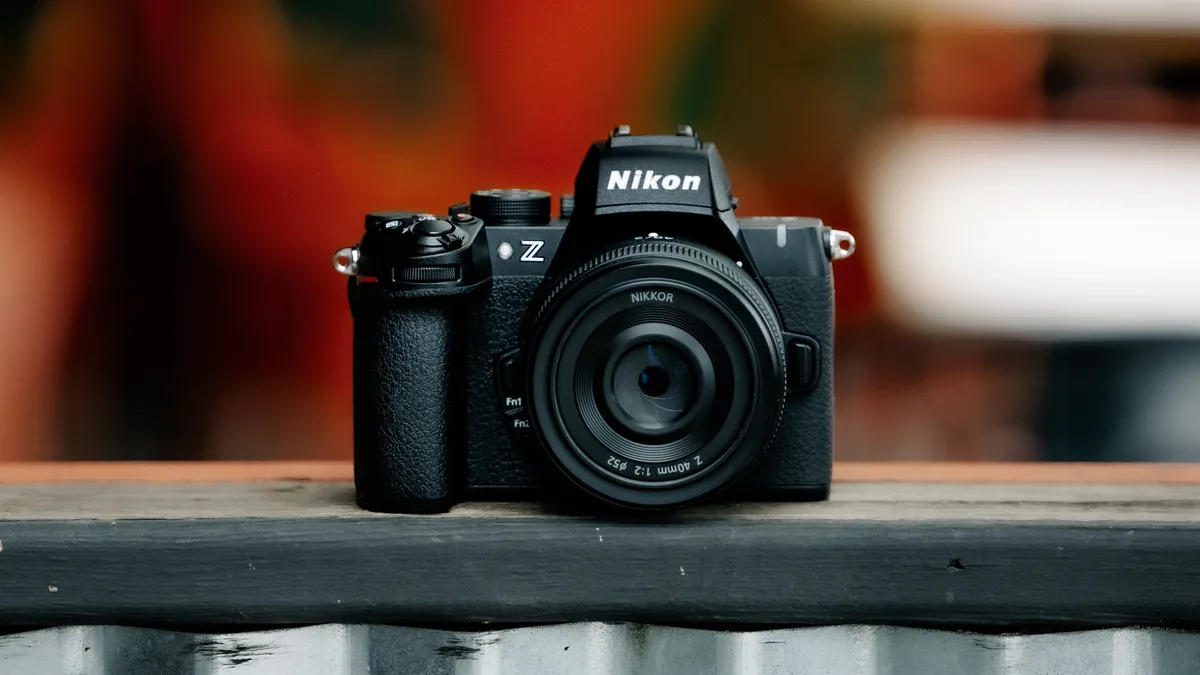


Nikon Z50 II sample images


✅ You want excellent autofocus performance: Despite being an entry-level model, the Z50 II boasts flagship autofocus performance, with subject detection modes for people, animals, and more.
✅ You shoot a mix of stills and video: 20.9MP stills and 4K video, which might not sound impressive, but footage is oversampled from 5.6K and has support for N-Log 10-bit recording and vlogging modes.
❌ You want detailed stills with cropping potential: A 20.9MP resolution is at the lower end for detail in this group, with most rival cameras packing more pixels.
❌ You'd rather start with full-frame: If you'd prefer a bigger-sensor camera and don't mind a performance compromise, then the much older Z5 can be had for a similar price.
For the money, the Nikon Z50 II is probably the most well-rounded mirrorless hybrid in this guide. At first, it looks like a modest upgrade of the original Z50, with the same 20.9MP APS-C sensor, but it didn't take long during our in-depth test to appreciate the bump in performance that Nikon's latest Expeed 7 processor delivers.
Yes, the Z50 II is an altogether more powerful and feature-packed camera than the Z50, particularly its autofocus performance with the same people, animal, and subject detection modes offered by Nikon's flagship Z9, which costs 5x the price, plus a nifty vlogging autofocus mode akin to Sony's Product Showcase mode
Video-based improvements abound, including crisp 4K 60p video oversampled from 5.6K with 10-bit color depth and N-Log color profiles. Design has been improved too, and the Z50 II is a pleasure to use, thanks to its larger-than-average 3.2-inch vari-angle touchscreen, bright viewfinder, and deep grip.
The Z50 II feels like a polished all-rounder, very much so, even if its modest 20.9MP resolution is bettered by rivals and matched by its predecessor, which now costs less. You'll need to spend extra for in-body image stabilization, too, but that's true of any brand. Overall, the Z50 II represents excellent value and is my top pick of the best Nikon cameras for beginners. Now, we just need a few more native lenses to go with it.
Read our in-depth Nikon Z50 II review
The best hybrid beginner mirrorless camera


Fujifilm X-M5 sample video
✅ You want 6K video: There's no better video bang for your buck than the X-M5 right now – 6K video is the tip of the iceberg in this tiny, sub $1,000 / £1,000 winner.
✅ You'd like an everyday camera: The X-M5 is positively tiny and discreet, and you can find compatible compact X-series lenses to boot.
❌ You're primarily into photography over video: As capable as the X-M5 is for photography, its video features make it truly stand out for the money.
❌ You want a viewfinder: The X-M5 lacks a viewfinder, a feature that can be supremely helpful for composing photos, especially in bright light.
As Fujifilm's video-focused entry-level mirrorless camera, the X-M5 is ideal for filmmaking newcomers who will discover a wealth of powerful features at their fingertips, including 6K open-gate 10-bit video, which is versatile for mixing between horizontal and vertical formats. But where the X-M5 really shines is through its well-thought-out design and compact form factor.
It might be a video-first camera, but the X-M5 is an adept and discreet everyday walkaround camera that shoots attractive 26MP stills with Fujifilm's stunning Film Simulations directly accessible through a dial, with a wealth of compatible X-mount lenses to choose from. What's more, most rival brands simply aren't making mirrorless cameras at such a cheap price point anymore, and so the X-M5 really stands out for beginners. In fact, the TechRadar team has even picked one up to take product photos and videos for some of our content – that's a high recommendation.
The X-M5 isn't perfect – its lack of in-body image stabilization might be the reason to upgrade further down the line, but as a starting point, the X-M5 will see you through many days. For the money, there's nothing better.
Read our in-depth Fujifilm X-M5 review
The best beginner mirrorless camera for wildlife
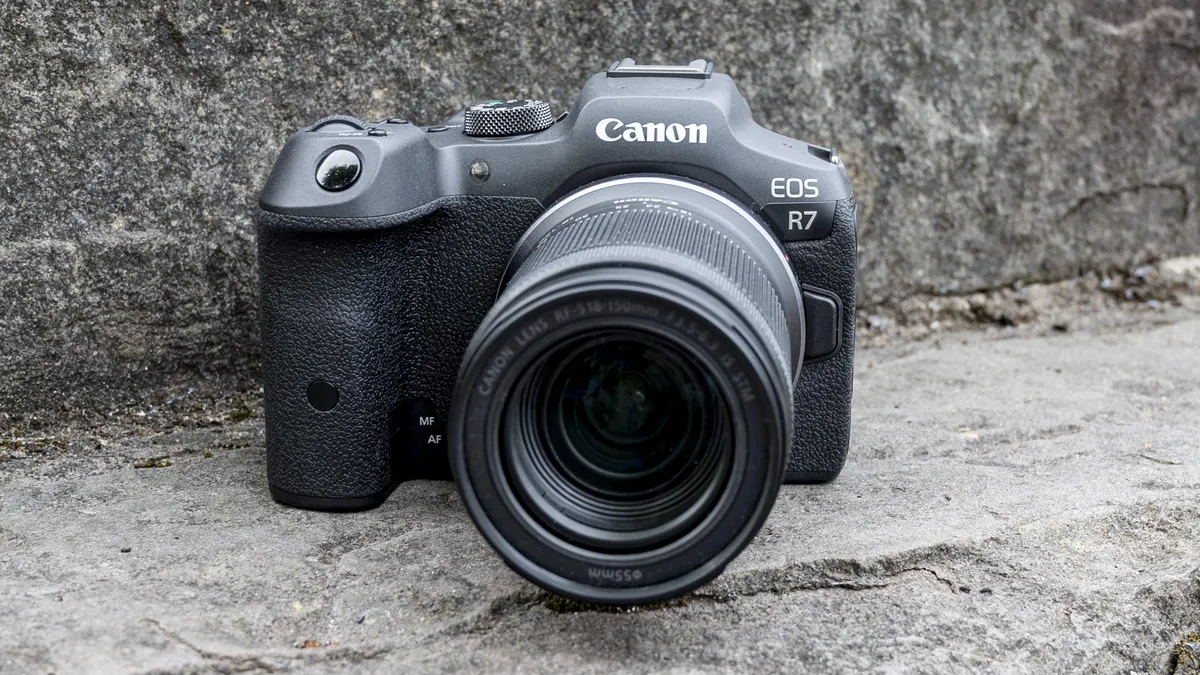


✅ You're on a budget and like action photography: With excellent subject-tracking and eye-recognition AF, the EOS R7 is a game-changer for Canon enthusiasts shooting action.
✅ You want a small, travel-friendly all-rounder: The EOS R7 with the 18-150mm kit lens is a compact package ideal for travelling.
❌ You’re frustrated by the lack of native RF-S lenses: Sports and wildlife shooters are better served by Sony and Fujifilm APS-C systems with a superior selection of lenses.
❌ You crave full-frame or low-light excellence: There are lots of advantages to APS-C sensors, but some beginners will simply want to jump in with a full-frame camera.
The EOS R7 is a little pricier than its beginner-friendly stablemate, the EOS R10 (see no.1 above). But it also brings a lengthy list of improvements that'll give you more room to grow into, including in-body image stabilization, a better viewfinder, a larger buffer for burst shooting, weather-sealing, and uncropped 4K/60p video. If you like to shoot moving subjects or video, it's likely the better choice – as long as you can justify its slightly more mid-range price tag.
While you can't expect full-frame performance from the EOS R7, we found that its smaller APS-C sensor was capable of producing excellent images in a range of conditions. Importantly for beginners and solo filmmakers, its Dual Pixel CMOS AF II autofocus was particularly impressive during our time with the camera: besides intelligent subject tracking, face and eye detection were capable of locking onto animals rapidly, reliably, and with impressive accuracy.
Action shooters will also appreciate its speedy continuous frame rates for capturing action – up to 15fps with the mechanical shutter, or 30fps if you switch to electronic. The only real downside? A lack of native RF-S lenses. Only two are currently available, and safari photographers may find the 18-150mm telephoto doesn’t quite get them close enough.
To save some money on Canon products, check out our Canon discount codes.
Read our in-depth Canon EOS R7 review
The best retro beginner mirrorless camera


✅ You want a stylish camera: The Nikon Z fc features a particularly attractive retro design.
✅ You're looking for a mix of old and new: The vari-angle touchscreen transforms the Z fc from old to new; tucked away, you can pretend there's no screen at all.
❌ You want bulletproof build quality: It may look like the Nikon FM2 analog camera, but the casual Z fc is a different prospect concerning build quality.
❌ You need a wide choice of lenses: Nikon has yet to fill out the lens range for its APS-C mirrorless cameras, although there is at least the 24mm f/1.7 prime lens now.
It's a close call between the Nikon Z fc and the Nikon Z50 for a place in this list, but we think this gloriously retro model just edges it. Both cameras are based on the same photographic engine, and fans of DSLR-style deep grips will likely prefer the Z50, but we found the Z fc's style and useful dials to be better for beginners who have just picked up the hobby or are just starting to expand their photography skills.
The Z fc is a fine all-rounder thanks to its 20.9MP APS-C sensor and hybrid autofocus system. It can also shoot 4K/30p video and has a vari-angle touchscreen to help you shoot from different angles, including front-on to the camera. The only real downsides we found are a lack of weather-sealing and a relatively limited collection of native lenses. That said, there are now an increasing number of third-party lenses from the likes of Viltrox, and those physical controls are ideal for anyone who wants to get up to speed with the exposure triangle.
Read our in-depth Nikon Z fc review
Also consider
Our team has reviewed a whole range of entry-level mirrorless cameras, which means there are plenty of alternative options for beginners that almost made it into this list. Here are a few honorable mentions to consider.
Best value Sony – Sony A6100: Launched in 2019, the Sony A6100 is far from the newest APS-C camera you can buy. Even so, its spec sheet still stacks up well today, with excellent autofocus and plenty of features for learners to grow with. We think it’s a great beginner buy at a great price.
Best cheap full-frame – Canon EOS RP: One of the cheapest full-frame cameras you can buy, the EOS RP is a great option for ambitious learners. You don’t get luxuries such as in-body image stabilization, and video specs are limited, but with lovely handling, reliable autofocus, and a responsive interface, it’s a good value for beginners. Nikon fans can check out the Z5 instead.
Best video under $1,000 – Sony ZV-E10 II: Succeeding the ZV-E10, the ZV-E10 II addressed virtually all of our niggles, with superb 4K video up to 60fps and autofocus skills, together with handling improvements such as a more versatile touchscreen. However, you'll save a packet by opting for the older ZV-E10 instead, and most people won't feel the difference.
Best retro for photographers – Fujifilm X-T30 III: If you don't need the video prowess of the Fujifilm X-M5 and would rather have a little extra photography-focused features for your money instead, we recommend the X-T30 II with its retro styling and built-in viewfinder. If you can stretch a little further, then the X-T50 is an even better pick.
Best leveling-up hybrid – Fujifilm X-S10 / Fujifilm X-S20: Fujifilm's mid-range all-rounders, X-S series of cameras, feature a small body, with a viewfinder, a proven APS-C sensor, and useful in-body image stabilization. We think the X-S10 makes a fantastic first mirrorless camera, while the newer X-S20 has stronger video specs, but if you want an affordable hybrid, we recommend the X-S10.
Best 'entry-level' mirrorless – Nikon Z5 II: OK, so this model is the priciest of the lot, but it redefines entry-level performance. In fact, it's probably better than the previous generation Z6 II, which is supposedly the next model up in Nikon's Z-mount range. If you like the sound of the Z5 II but don't need the speed upgrades, the older Z5 costs a lot less.
Best cheap rangefinder – Panasonic Lumix GX9: With its compact proportions and neat rangefinder style, the GX9 is actually a superb everyday carry. However, you'll now need to search hard to find one new.
How to choose the best beginner mirrorless camera

Just because something is 'cheap', that doesn't necessarily mean it represents value for money. If you find you quickly outgrow it and need to upgrade very soon, then you'll end up spending even more money. Some of the cameras here might seem expensive to somebody buying their first camera, but we will recommend them as something that should last you for many years to come.
If you view your photography hobby as an investment, it will pay huge dividends if you can invest as much as you possibly can when you first get started. Inexpensive cameras can still do a good job, but cutting back on price inevitably means that features and controls are missing – so ask yourself if the saving is worth missing out on something you think you'll need.
For example, the cheapest mirrorless cameras don’t usually have a viewfinder – such as the vlogging-style Nikon Z30 – but this can be invaluable for shooting in bright light, when the screen on the back can easily suffer from glare and reflections, so we’d always recommend stretching to a camera with a viewfinder if you can.
Mirrorless cameras usually ship with either a full-frame, APS-C, or a slightly smaller Micro Four Thirds sensor. These formats represent a significant step up in resolution and image quality when compared to the small sensors found in a smartphone or compact camera, and the larger size means they also serve up superior low-light performance.
The importance of other features will depend on your shooting style. Those looking to try out vlogging will welcome the excellent video specs of several cameras above, while in-body image stabilization will be a useful addition for those looking to shoot hand-held.
You might want a camera that can shoot 4K, and not all of them can. Although it's becoming more common, it's still a somewhat new area for entry-level mirrorless cameras, and they don’t all do it (though they do all offer regular 1920 x 1080 Full HD).
Check out the specs of the rear screens, too. The size and resolution are not so important since they’re all quite similar these days, but a touchscreen display will make the camera feel more like a phone, making the transition to using a "proper" camera a little easier since you'll already be used to tapping, swiping, and so on.
All the mirrorless cameras we’ve chosen for this list are well suited to beginners because of their price, size, ease of use, features, or all of those things. You can also take a look at our other buying guides below if you're still undecided. Otherwise, read on to see the 10 best entry-level mirrorless cameras you can buy right now.
FAQs
Should I buy the latest beginner mirrorless camera or an older model?
Beginners don't typically need the latest and greatest camera, and that's why the models we've shortlisted above are older versions. This also means that they're cheaper – so you can invest in a better second lens.
The latest models deliver performance upgrades that could make all the difference to your shooting experience. Think improved autofocus, video tools, handling, etc. You'll pay a premium for these upgrades, however.
Our advice is to save some cash with a slightly older model – all the cameras in this list are still available new – and use those savings to buy a second, better lens to the kit lens that comes with the camera. In general, a previous-generation camera with a decent prime lens will deliver better quality than the latest model with a kit lens.

If you need... |
Pick this camera |
Launch price |
The best range of lenses |
Fujifilm X-M5 |
$899 / £799 / AU$1,499 |
The best autofocus system |
Canon EOS R100 |
$479 / £559 / AU$1,099 |
The best video features |
Nikon Z50 II |
$899 / £799 / AU$1,499 |
A full-frame camera |
Canon EOS RP |
Around $850 / £950/ AU$1,600 (with kit lens) |
Classic, retro looks |
Nikon Z fc |
$959 / £899 / AU$1,499 |
A small, affordable camera |
Panasonic Lumix GX9 |
$999 (with kit lens) / £699 / AU$1,399 (with kit lens) |
What camera should a beginner start with?
That really depends on what you'd like to do. We recommend picking up a mirrorless camera that's easy to use, fits your budget, and leaves room to develop your skills. The Canon EOS R100 will fit the bill for most people.
Alternatively, if you've got more specialized priorities, a different model might suit you better. If video is your main focus, for example, the Fujifilm X-M5 is a better choice.
The beauty of most beginner mirrorless cameras is that they come bundled with a 'kit' lens that'll cover most common shooting scenarios. It's enough to get started with and provides plenty of flexibility to experiment with depth of field.

Is DSLR or mirrorless better for entry level photographers?
The answer to whether DSLR or mirrorless cameras are better is the subject of much debate. In fact, we’ve dedicated an in-depth guide to the topic. The question is no less divisive for beginner photographers: both formats have plenty to offer for novices. Which is right for you will often come down to a range of factors, with the final decision usually determined by personal preference.
On paper, mirrorless and DSLR cameras share many of the same benefits for beginners. Both formats give learners the option to change lenses, which means you can upgrade to different glass as your creativity grows. Mirrorless and DSLR cameras also come in a range of sizes and styles, with entry-level models to suit different budgets. And the best of both genres can produce fantastic stills.
That said, mirrorless and DSLR cameras also differ in several important ways. The main one is that mirrorless cameras don’t use a mirror to direct light onto their sensor. This means they can usually shoot at faster frame rates, which is useful if you’d like to try action photography. It also means they can be made smaller, which allows learners to carry them more readily.
The best beginner DSLR cameras are renowned for their fantastic handling and manual controls, which make them accessible for novices to operate. Then again, some of the best beginner mirrorless camera options in our list above imitate this DSLR styling with ergonomic grips and dials.
DSLR cameras also benefit from optical viewfinders, which give an analogue view of a given scene – something many beginners find intuitive. Mirrorless cameras generally rely on electronic equivalents, the best of which are sharp and basically lag-free. Touchscreens feature on both formats, streamlining the jump up from a smartphone – although they’re more common on entry-level mirrorless models.
Only a few DSLR cameras are available new now. But the secondhand market is thriving, plus there's a wide choice of lenses for Canon and Nikon models.
Which beginner mirrorless camera is best for video and vlogging?
If you're on the hunt for a video and vlogging camera, you'll want to prioritize a microphone input, autofocus, and image stabilization.
The Fujifilm X-M5 is our top pick for beginner-level video and vlogging. It's thanks to its compact body and video-first feature set, including 6K open-gate, 10-bit recording. It can also shoot 26MP stills and supports Fujifilm’s compact X-mount lenses, making it a practical hybrid camera that can handle still photography, too, should the mood strike.
There are trade-offs: the X-M5 has no viewfinder and no in-body image stabilisation. That could be an issue if you're filming handheld footage in bright outdoor conditions. The Nikon Z50 II is another strong hybrid alternative, with subject-detection autofocus, 4K video oversampled from 5.6K, and useful vlogging modes.
How we test beginner mirrorless cameras
☑️ 100s of cameras reviewed
☑️ 15 years of product testing
☑️ Over 16,000 products reviewed in total
☑️ Nearly 200,000 hours testing tech
Buying a camera these days is a big investment, so every camera in this guide has been tested extensively by us. These days, real-world tests are the most revealing way to understand a camera's performance and character, so we focus heavily on those, along with standardized tests for factors like ISO performance.
To start with, we look at the camera's design, handling, and controls to get a sense of what kind of photographer it's aimed at and who would most enjoy shooting with it. When we take it out on a shoot, we'll use it both handheld and on a tripod to get a sense of where its strengths lie and test its startup speed.
When it comes to performance, we use a formatted UHS-1 card and shoot in both raw and JPEG (if available). For burst shooting tests, we dial in our regular test settings (1/250 sec, ISO 200, continuous AF) and shoot a series of frames in front of a stopwatch to see if it lives up to its claimed speeds. We'll also look at how quickly the buffers clear and repeat the test for both raw and JPEG files.

In various lighting conditions, we also test the camera's different autofocus modes (including Face and Eye AF) in single point, area, and continuous modes. We also shoot a range of photos of different styles (portrait, landscape, low light, macro/close-up) in raw and JPEG to get a sense of metering and the sensor's ability to handle noise and resolve fine detail.
If the camera's raw files are supported by Adobe Camera Raw, we'll also process some test images to see how we can push areas like shadow recovery. And we'll also test its ISO performance across the whole range to get a sense of the levels we'd be happy to push the camera to.
Battery life is tested in a real-world fashion, as we use the camera over the course of the day with the screen set to the default settings. Once the battery has reached zero, we'll then count the number of shots to see how it compares to the camera's CIPA rating. Finally, we test the camera's video skills by shooting some test footage at different frame rates and resolutions, along with its companion app.
We then take everything we've learned about the camera and factor in its price to get a sense of the value-for-money it offers, before reaching our final verdict.
- Best cameras for photography
- Best camera for beginners
- Best beginner DSLR cameras
- Best DSLR
- Best 4K camera
- Best full-frame camera
- Best compact camera
- What camera should I buy?
- Mirrorless vs DSLR: 10 key differences
- Camera rumors