





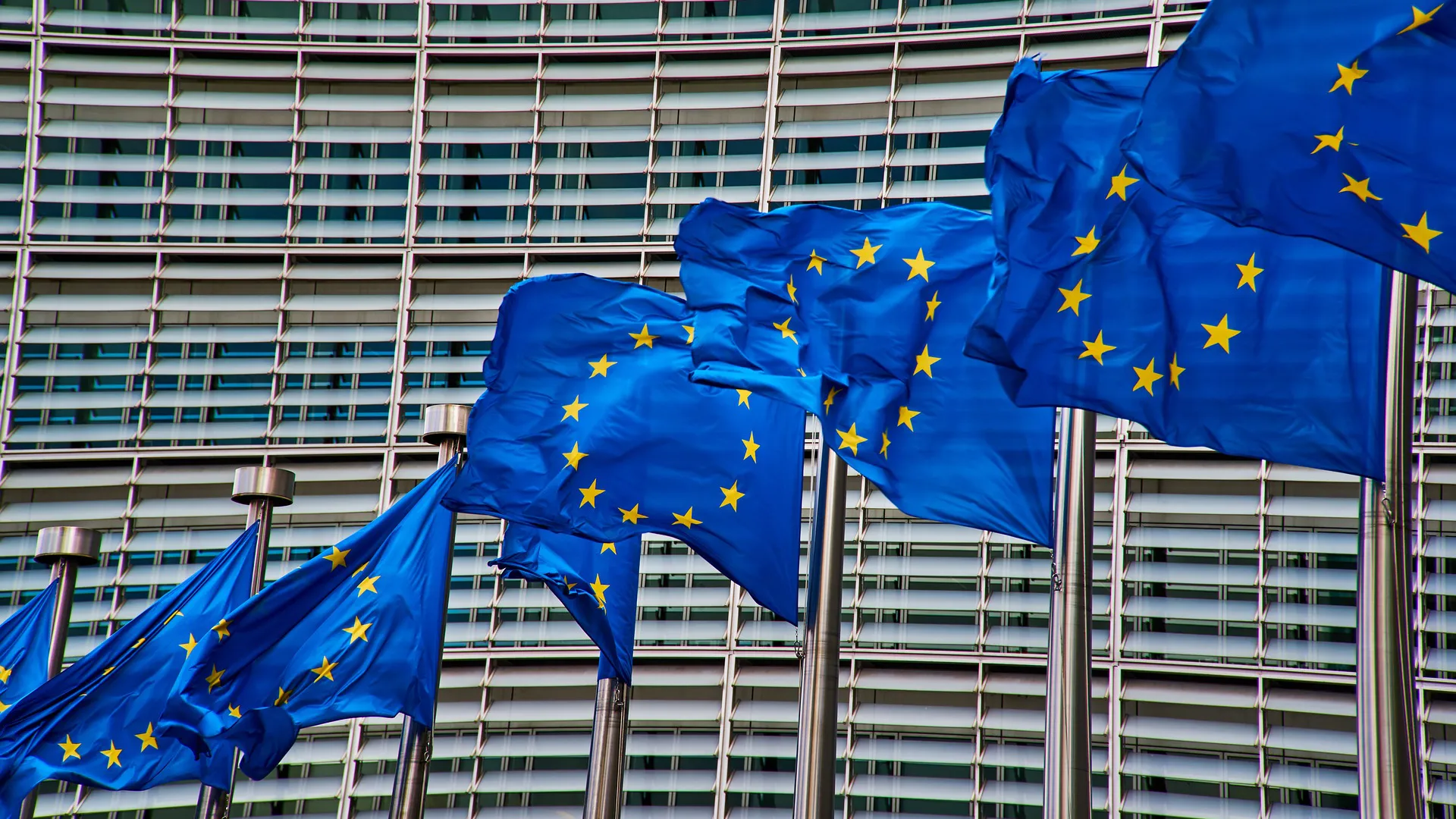
Google and the European Union are at war over your search data — and the outcome will have major repercussions on browsing privacy.
The legal battlefield is the Digital Markets Act (DMA), an EU regulation enforced in 2024 with the goal of ending Big Tech's monopoly in favor of fairer competition.
The EU's intention is clear: to end Google's market dominance.
In January 2026, the EU Commission opened a proceeding under Article 6(11) of the DMA to "grant third-party providers of online search engines access to anonymised ranking, query, click and view data held by Google Search on fair, reasonable and non-discriminatory terms".
On April 16, 2026, the Commission sent its preliminary findings to Google outlining the proposed measures to meet EU requests, while opening a two-week-long consultation to allow interested parties "to submit their views."
For Teresa Ribera, the EU Executive Vice-President for Clean, Just and Competitive Transition, these measures are simply non-negotiable if the playing field on search is to be levelled. She said:
"Data is a key input for online search and for developing new services, including AI. Access to this data should not be restricted in ways that could harm competition."
Predictably, Google has a very different take on the matter. Talking with Reuters, Clare Kelly, Google's Senior Competition Counsel, argued that the proposal was a regulatory overreach that "would jeopardise users' privacy".
So, is this data sharing set to be the latest privacy nightmare, as Kelly warns, or are these the desperate throes of protectionism? It looks like the truth lies somewhere in the middle.
Does a privacy-first search ecosystem really need Google’s data?
Not to be confused with your web browser (Chrome, Firefox, Edge, etc), a search engine (Google, Yahoo, Bing) is the system that responds to your questions by crawling billions of web pages, indexing their content, and ranking them via algorithms to return the most relevant results in milliseconds.
Google is the biggest and, arguably, the best out there. According to Lead Public Policy Manager at DuckDuckGo (a rival search engine), Aurélien Mähl, that's because of the company's scale — a market share of over 90%.
"We are building our own index step by step, and we face a huge barrier in catching up, given Google's scale,” he told TechRadar.
“It’s something that is simply not feasible given how the market is constructed, and intervention is necessary."
Mähl argues that liberating Google’s search data would not only generate market growth but also improve accuracy for rare queries, given the maturity and market share of the Google Search product.
We face a huge barrier in catching up, given Google's scale
Aurélien Mähl, DuckDuckGo
Unsurprisingly, perhaps, it’s a belief shared by Wolfgang Oels, Managing Director at Ecosia, a search engine which combines the results of Google, Bing, and Yahoo and uses its profits to fund environmental goals.
“We need to go from answering two-thirds of queries to 100%," he said, describing data sharing as "essential" for European digital sovereignty and democracy pluralism.
Together with French search engine, Qwant, the Germany-based Ecosia has even launched the European Search Perspective, which is a foundation with a mission to create a truly European search ranking algorithm, independent from US influences.
Both DuckDuckGo and Ecosia stressed the EU Commission’s demands to Google could finally offer privacy-first search engine alternatives a real chance in a genuinely competitive market. It would, they said, for the first time, offer on-par alternatives to Google Search to whomever wants to cut ties with Big Tech.
Surprisingly, though, not all rival search engines agree. Brave Search, a privacy-first alternative to Google, that could directly benefit from the EU’s anti-monopoly demands, thinks that legislators are looking in the wrong place.
Brave's Chief of Search, Dr. Josep M. Pujol, told TechRadar that Brave Search has already proved that it's possible to build a fully independent and competitive search engine that competes with Google in terms of quality and coverage. He said:
"Google's advantage lies in distribution and monetization to pay for it. None of those levers are touched by this proposed regulatory framework, and the Commission should look into this."
Is anonymization enough to protect shared user search data?
Despite working for the company in question, veteran Google scientist Sergei Vassilvitskii is perhaps the most authoritative countervoice to the proposed data sharing, considering his extensive knowledge in differential privacy — a field concerned with frameworks for sharing datasets.
Vassilvitskii has sent a warning to regulators, arguing that the proposed method of anonymising the data to be shared may not be strong enough to prevent powerful AI-powered tools from identifying the people behind those queries.
"Our Red Team managed to re-identify users in less than two hours," Vassilvitskii told Reuters. (Red Team is the company’s dedicated group that acts as ethical hackers by simulating real-world cyberattacks against Google’s products and systems.)
Vassilvitskii's alarm comes days after independent security researcher Lukasz Olejnik also raised similar concerns. In a lengthy blog post, Olejnik brutally slammed the EU plan as no less than "one of the biggest risks in Europe this year".
A European Commission proposal could create one of Europe’s largest privacy and national-security risks in decades. https://t.co/m8NdDC6ysaThrough DMA enforcement, it may compel Google to hand over sensitive search data about millions of Europeans to third parties, including… pic.twitter.com/4QuCZuU3pyApril 26, 2026
Talking to TechRadar, Brave’s Pujol also agreed that, as currently proposed, the anonymization framework does not protect EU end users from re-identification. He said:
"The data this proposal would put into circulation is not, in our view, provably anonymous, and its release would impose severe privacy risk on hundreds of millions of European citizens that we do not believe is justifiable. There should be no sharing of the Search dataset in its current form."
TechRadar contacted the European Commission about these allegations, but we are still waiting for a response at the time of publication.
Genuine concern or data sharing sabotage?
DuckDuckGo and Ecosia are not blind to the potential hazards, however.
Both underlined the importance of anonymization, stating that data sharing "needs to be done right" by removing all potential identifiers.
That said they both see Google's rebuttals over security and privacy as a political tactic rather than a genuine concern. Mähl from DuckDuckGo said:
"The big gap here is that Google is not collaborative and not in the spirit of complying with this regulation. It's in the spirit of sabotaging it."
It’s a view also shared by Mozilla's Director of EU Public Policy, Tasos Stampelos, who argues that Google has repeatedly used this binary argument to try escaping its obligations under the DMA.
"But it's not a black and white situation where either you have competition, or you have privacy," he told TechRadar.
Google is not collaborative and not in the spirit of complying with this regulation. It's in the spirit of sabotaging it.
Aurélien Mähl, DuckDuckGo
Stampelos suggests that what's needed now is to find the right balance — something that he believes will be possible with the right cooperation.
"I'm not saying that we should trust the Commission because they say 'it's good for privacy and security," Stampeolos told TechRadar, "but at least they are open to feedback and changes."
It’s then a positive turn that, as reported by Reuters, Google's scientist Vassilvitskii may have met with EU officials on Wednesday (May 6) to talk about "a broader approach with better guardrails".
The decision deadline is set for July 27, 2026. That still leaves 11 weeks for all the parties involved to find a workable solution.
In the end, it’s Brussels that will have the final say and not the search or privacy experts. Whichever way it’s looked at, we hope that the privacy of European citizens' data is at the top of the agenda.
Follow TechRadar on Google News and add us as a preferred source to get our expert news, reviews, and opinion in your feeds. Make sure to click the Follow button!
