





The best smart speakers make controlling your smart home devices a piece of cake, with simple voice commands putting you in charge. These speakers are for far more than music, with many including smart voice assistants that can help you keep organized.
Included below are a variety of smart speakers across different platforms, from Apple HomeKit to Google Assistant and Amazon Alexa, all of which are Matter-compatible, meaning your home will be much easier to set up; still, we'd recommend checking out compatibility with your devices before buying. It's worth noting that Matter isn't an audio standard, but instead a communication standard for smart home devices, so it doesn't affect speakers' abilities to play music or deliver features like multi-room streaming audio.
We've tried and tested all of the smart speakers below to see how responsive they are, the quality of the sound, the value for money, and how easy they are to incorporate into your home. Whether you want to control whatever smart home devices you have set up or just have more simple needs, there's something in here for you. Just say the word and turn your favorite smart lights on. These are all voice-controlled speakers, but some of the best smart displays offer a visual alternative you might prefer if you want a live feed from your home security cameras, or one of the best video doorbells.
If you're considering an Amazon Echo smart speaker, it's worth considering whether you'll want to use it with Alexa+. The new AI-enhanced assistant will be available to owners of the latest Amazon Echo Show devices first, but will be rolling out to the company's smart speakers before long, with the exception of older models like the first-generation Echo Dot and Echo Spot. For more details, see our guide to which Echo devices will work with Alexa+.
We've added the new Amazon Echo Dot Max and Echo Studio to this guide, and we're currently testing the new Google Home Speaker.
Meet the experts

An award-winning journalist, Josephine oversees TechRadar's coverage of smart home tech and is a huge advocate for internet safety, making her the perfect person to recommend smart speakers that you can rely on to put you in control while maintaining your privacy.

Becky is an expert in all things audio and hi-fi, and has put her knowledge and experience to good use testing the sound quality of these smart speakers. She spent three years testing products for our sister publication What Hi-Fi? so you can trust her experienced ear.
The best smart speakers 2026
Why you can trust TechRadar We spend hours testing every product or service we review, so you can be sure you're buying the best. Find out more about how we test.
The best smart speaker for Alexa


✅ You want a responsive Alexa speaker: Alexa is quick to respond to commands, making the Dot Max well suited to everyday questions, timers and smart-home controls.
✅ You want more control over your smart home: Temperature, ultrasound motion and Wi-Fi sensing give you more options for setting up automated routines.
✅ You want room-filling sound without a big speaker: The Dot Max can produce decent, room-filling audio from a relatively compact design.
❌ You want the best value Alexa speaker: The Dot Max costs considerably more than the standard Echo Dot, and its improvements don't always translate into better sound.
❌ You want premium audio: It's a capable smart speaker, but the Echo Studio and Sonos Era 100 are better suited to anyone who puts music quality first.
❌ You need a 3.5mm audio connection: The Dot Max drops the 3.5mm jack found on some older Echo speakers.
The Echo Dot Max is Amazon’s best Alexa speaker for most people. It’s quick to respond, and its built-in sensors give Alexa more ways to interact with your home. You can set routines that react to movement or temperature, for example, so your smart speaker can do a little more than answer questions, set timers and play your morning playlist. Support for Matter, Thread and Zigbee also makes it a useful starting point for a more connected smart home.
It sounds pretty good for such a small speaker, too. The two-way speaker system produces decent, room-filling audio, although this isn't the Echo to buy if you're particularly fussy about your music. Our testing found that the cheaper 5th-gen Echo Dot isn't completely outclassed by the Max, and the older Echo 4th Gen can still deliver better all-round sound. For bigger, more detailed audio, you'd be better off stepping up to the Echo Studio.
At $119.99 in the US and £99.99 in the UK, the Echo Dot Max isn't exactly a bargain. The regular Echo Dot is cheaper if all you need is a simple Alexa speaker. The Max makes more sense if you're going to use Alexa to run your smart home, rather than simply asking it to set a timer when your hands are covered in cooking ingredients. It's small enough to tuck onto a bedside table or kitchen counter, but has enough smart-home know-how to become a useful part of your daily routine.
Read our full Echo Dot Max review
Attribute |
Notes |
Score |
|---|---|---|
Value |
More expensive than the standard Echo Dot, and its improvements don't quite justify the higher price. |
3.5/5 |
Design |
A compact, polished design, although the new control interface is a little awkward. |
5/5 |
Performance |
Decent room-filling audio and speedy Alexa responses, although it's not the best-sounding Echo in the range. |
4.5/5 |
The best smart speaker for Siri
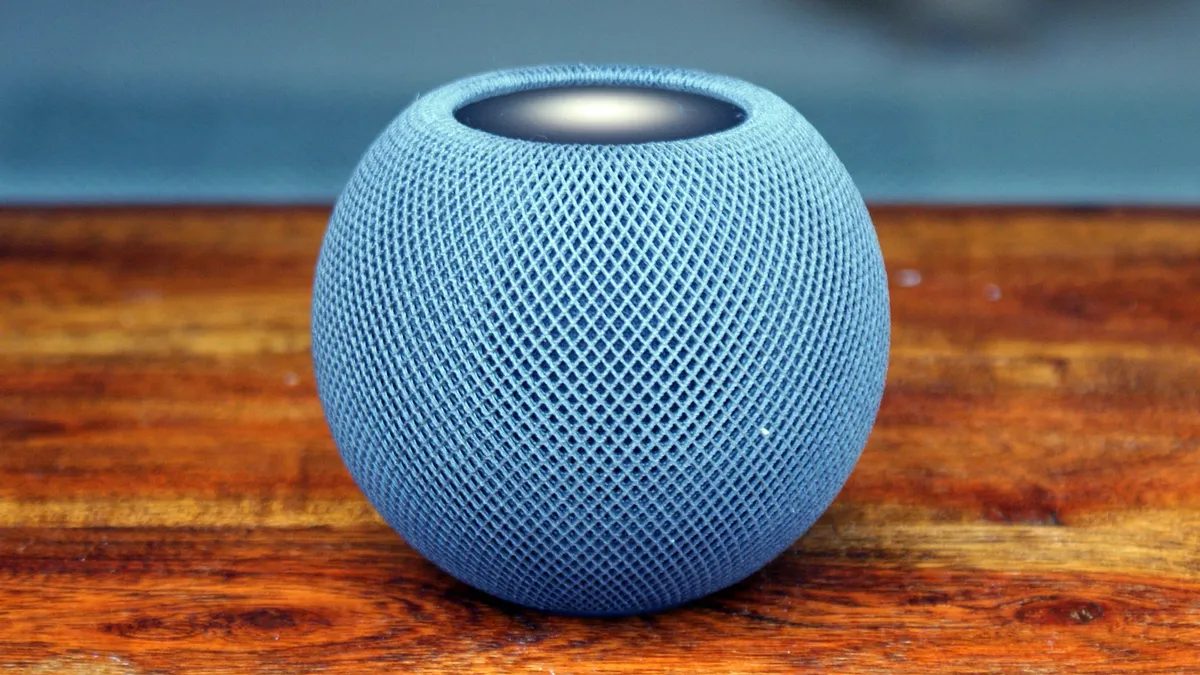
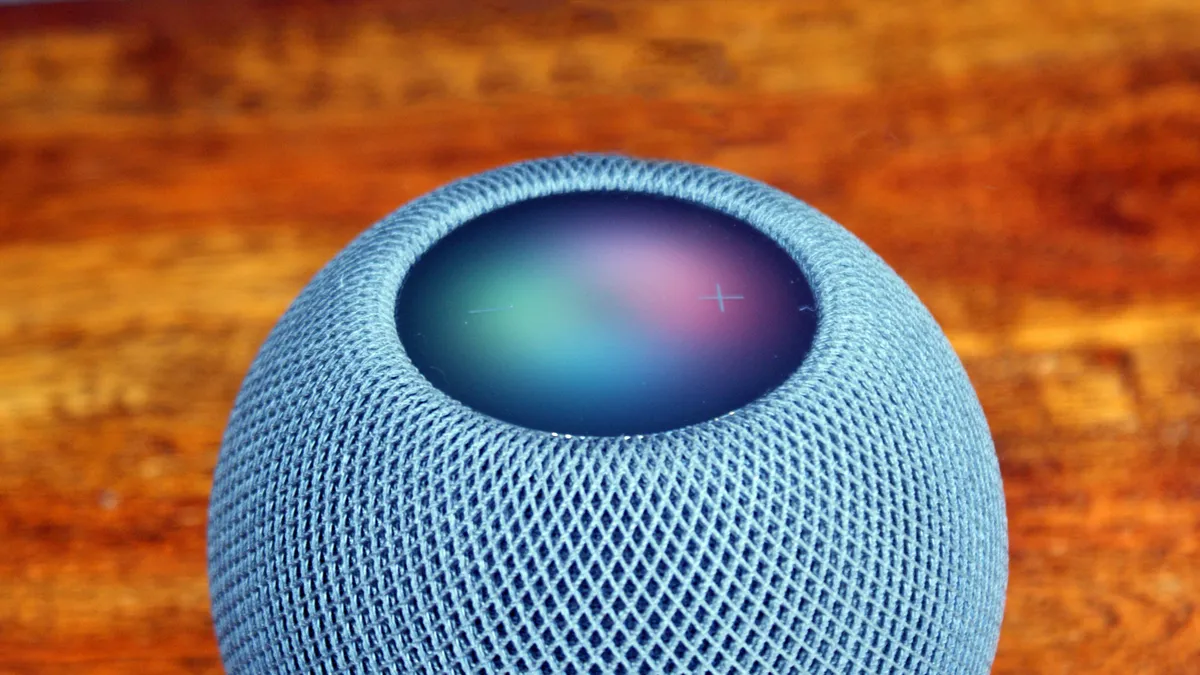

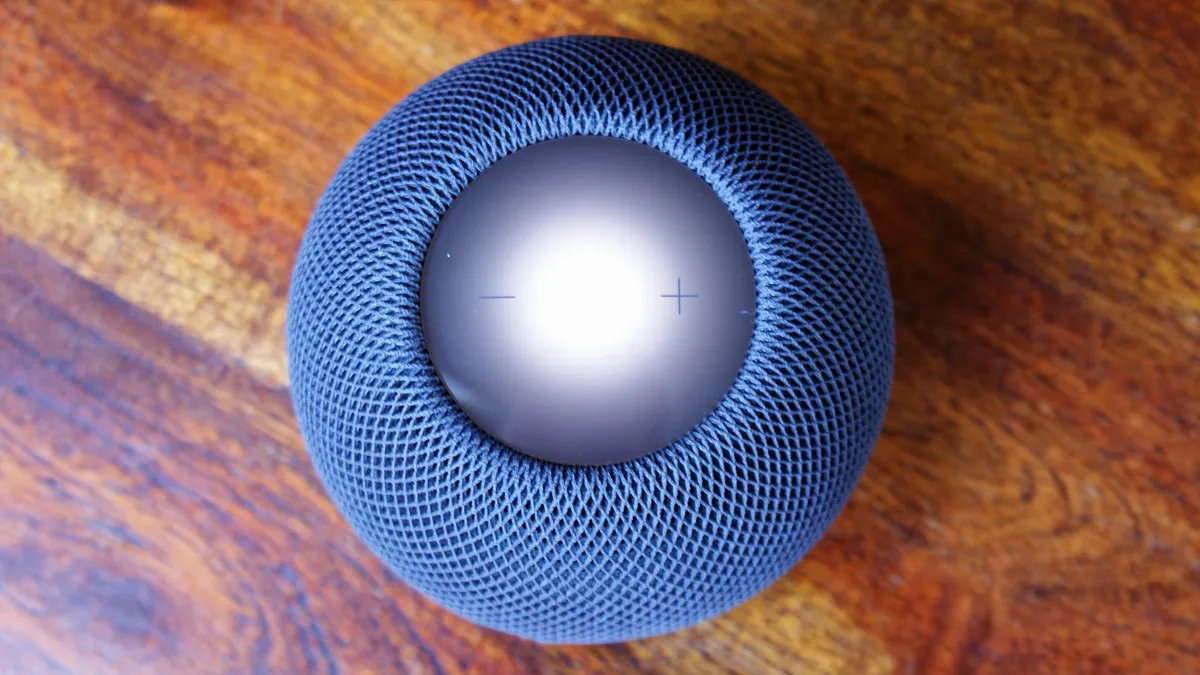


✅ Your family uses iPhones: The HomePod mini can handle multiple users, and pairing is a piece of cake.
✅ You have an Apple Music subscription: You'll need Apple Music to control tracks with your voice.
❌ You're an Android user: This is a speaker for people embedded in the Apple ecosystem.
❌ You live with light sleepers: The HomePod mini needs to work on its indoor voice.
Since Apple discontinued its original, amazing and rather expensive HomePods, this smaller version is the only Apple-made smart speaker in town – or at least it is for now, as we're hearing rumours of a larger version coming soon. Despite their small size these smart speakers pack a powerful punch: if you're committed to Apple's ecosystem and services such as Apple Music, you'll love the way these speakers sound – and their comparatively low price.
We've tested these speakers over a very long time and while we love their sound, we don't love everything. Siri isn't as good as other digital assistants and seems rather buggy too: we've slept late a few times because alarms we asked Siri to set, and which Siri confirmed setting, didn't go off. Siri also seems to struggle with accents. And if you don't have Apple Music, you're quite limited in what you can listen to. You can't ask the HomePod mini to play anything through Spotify – that can only be enabled through AirPlay, and requires using your phone rather than the simpler method of asking Siri to play tunes with your voice. There's also a much smaller number of compatible smart home devices that work with the smart speaker, compared to the range available for Alexa and Google Assistant-enabled smart speakers. But HomePods and HomePods mini are now Matter compatible, which means they're compatible with a growing number of Matter devices.
For us, the audio performance is the key reason to buy the HomePod mini. It's excellent for a speaker that's so small, and it really feels like the right mix of price and sound quality. The bass isn't too heavy, vocals aren't lost in the mix, and when you pair two minis the stereo experience is really immersive. It's just a shame that Siri feels like it's lagging behind rival assistants.
Read our full Apple HomePod mini review
Attribute |
Notes |
Score |
|---|---|---|
Value |
It's not like Apple to price its products at the more affordable end of the spectrum like this, so perhaps the company is anticipating that people will buy more than one unit. |
4.5/5 |
Design |
The HomePod mini design is – and we hate to describe it in this way – so very Apple. It's understated, minimal, and attractive without being overbearing. |
5/5 |
Performance |
The audio performance is the key reason to buy the HomePod mini; Siri and the smart home experience still need some work. |
4/5 |
The best smart speaker for Google Home


✅ You want a smart speaker for the kitchen or bedroom: The Nest Audio doesn't offer room-filling sound, but is unobtrusive.
✅ You value simplicity: This smart speaker is particularly easy to use, especially with voice controls.
❌ You're picky about sound quality: It's fine for background music, but this isn't a smart speaker for audiophiles.
❌ You want an interesting design: This little gray rectangle isn't going to set the world on fire.
If you're looking for a smart speaker with Google Assistant built-in, the Google Nest Audio is currently the best Google-manufactured smart speaker you can buy; we liked the Google Home Max speaker, but Google has stopped making it.
We found that the Nest audio picked up our commands with ease, and Google Assistant is quick to respond as well as loud and clear. The subtle and unassuming design should blend in well with any home decor, and in addition to its audio skills it's also a surprisingly intelligent smart home hub. It hooks into some of the largest platforms now available by including Nest, Philips, and Samsung’s SmartThings – although while the device is Matter compatible there's no built-in Zigbee hub as with the latest Amazon Echo.
The smart bit of this smart speaker is very smart, but the speaker itself is a little disappointing: the sound quality didn't live up to our expectations. It sounds just fine with uncomplicated pop music, but other genres reveal a lack of detail in the treble and mids that makes tracks lack sparkle and sound a little muffled.
Read our full Google Nest Audio review
Attribute |
Notes |
Score |
|---|---|---|
Value |
Very affordable, but If, sound quality is important to you, it might be worth paying a bit more for something like the Sonos One. |
4.5/5 |
Design |
The Nest Audio is a space-saving and unassuming smart speaker that will fit anywhere. |
4/5 |
Performance |
While the sound quality when listening to music isn't the best, the Nest Audio works very well as a smart speaker with clear voice output and good microphones. |
4.5/5 |
The best budget smart speaker


✅ You want to extend Alexa's reach: The Dot is a good way to extend Alexa's hearing range if you already have an Echo speaker.
✅ It's on sale: You can pick up the Dot extremely cheaply during Amazon Prime Day or Black Friday.
❌ You want a smart speaker that really rocks: The Echo Dot is a reasonable desk speaker, but it's not our top pick for getting the most out of your music.
❌ You can find the Amazon Echo (3rd Gen) even cheaper: Yes, it's an older model, but the third-generation Echo is a more feature-rich speaker than the Dot.
The Amazon Echo Dot has always been the best option for those who aren’t sure about smart home tech and want to take the first step. It provides a place for Alexa to live inside your home and is loud enough to fill a room. And with discounting often taking it below its already low $50 / £50 / AU$80 price, it’s easy to see why it’s long been one of the most popular smart speakers on the market.
The Dot has the same space-age aesthetic as its bigger brother, the Amazon Echo (2020), so it looks stylish and once again is quite a change from the previous Echo Dot design. In our tests we found it extremely easy to set up and use, although its small speaker means the sound lacks the depth and punch of its larger siblings. There's no Zigbee hub here, but the device is Matter compatible. It's a great way to add Alexa to your home but if you're like us you'll probably want to upgrade to something more powerful for regular music listening.
Read our full Amazon Echo Dot (2020) review
Attribute |
Notes |
Score |
|---|---|---|
Value |
Its super low price makes it easy to see why the Dot has been one of the most popular Alexa speakers around. |
4.5/5 |
Design |
Plain but effective, this palm-sized sphere's features include 3.5mm aux jack and a tiny but powerful speaker. |
4/5 |
Performance |
Lacks a built-in Zigbee hub to make it the heart of a smart home, but is easy to use and offers decent directional audio. |
3.5/5 |
The best premium smart speaker
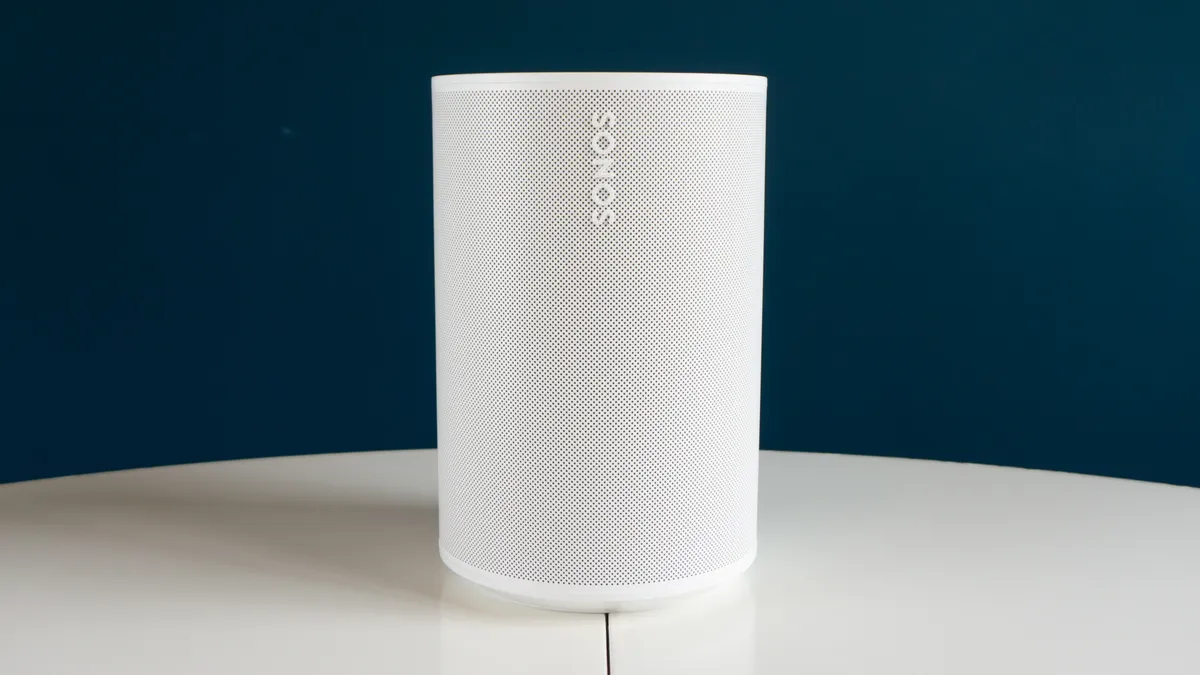
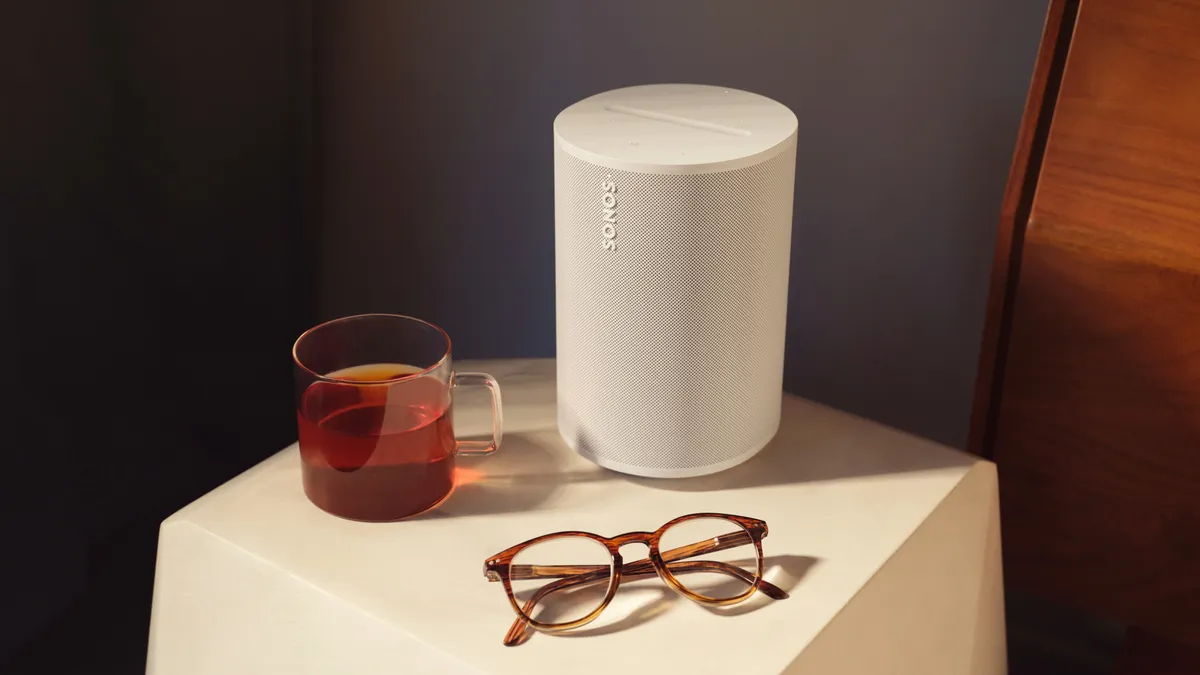


✅ You want a small speaker with big sound: Despite its compact size, the Sonos Era 100 really packs a punch.
✅ You want connectivity options: Multiple streaming services, Airplay 2, Bluetooth, and even line-in - this speaker does it all.
❌ You expect real stereo sound Despite the angled tweeters, you're only getting a hint of stereo here.
❌ You're not a bass fan The Era 100 isn't overly bassy, but it will stand out to those who are focused on more delicate listening.
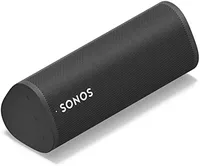
The Sonos Era 100 is a replacement for the superb Sonos One, with improvements including a wider soundstage for room-filling sound, plus the option to choose between Wi-Fi, Bluetooth, and 3.5mm line-in connections so you can play music from just about any source. Audio is clear and detailed, and bass has received a boost as well, though in our tests we found it could be a little heavy-handed at times.
The unit itself is compact and unobtrusive, with touch controls on the top for controlling music playback, and switches on the rear for Bluetooth playback and muting the speaker's microphone. Unfortunately Sonos has chosen to drop support for Google Assistant this time around, so the Era 100 only supports Alexa and Sonos's own voice control system.
It's definitely one of the most expensive speakers we've tested, costing more than the Sonos One before it, but if you value sound quality and your budget can take the hit then you won't be disappointed.
Read our full Sonos Era 100 review
Visit our Sonos coupon page for our latest deals and discounts.
Attribute |
Notes |
Score |
|---|---|---|
Value |
It's a good buy, the price is just a little higher than we're totally happy with. |
3.5/5 |
Design |
Fairly compact, with a classily simple and well-made finish. |
4/5 |
Performance |
Clear and detailed, with good range, though bass can be a little clumsy. Adding Bluetooth and optional line-in support to the package makes this super-flexible. |
4.5/5 |
The best smart speaker for home cinema


✅ You want an Alexa-powered home cinema: The Echo Studio can pair with compatible Fire TV devices and other Echo speakers to create a more immersive TV audio setup.
✅ You want to build your system over time: You can start with one Studio and add more compatible Echo speakers and an optional subwoofer later.
✅ You want big sound without a huge speaker: The second-gen Studio is 40% smaller than the original, while Automatic Room Adaptation helps it fill a room with sound.
❌ You're an audio purist: The first-generation Studio has stronger bass and volume, and the new model's mono playback and compression at higher volumes limit its appeal for serious listening.
❌ You don't use Fire TV or Amazon's ecosystem: Many of this speaker's home-cinema advantages come from its integration with compatible Fire TV devices and other Amazon hardware.
The Amazon Echo Studio (2nd gen) is the Echo to buy if you want to build a home cinema around your Amazon devices. It works with compatible Fire TV devices through Amazon's Home Theatre feature, letting you use one or multiple Echo Studio speakers as your TV audio system. You can pair up to five Echo Studio or Echo Dot Max speakers with a compatible Fire TV device, plus an optional Echo subwoofer, and there's support for Dolby Atmos on compatible content. Even with a single Studio, our testing found movies and TV shows had plenty of depth and clarity, with its Automatic Room Adaptation helping to spread sound around the room.
It's worth knowing that this isn't the best Echo for pure audio quality. TechRadar's Josephine Watson found that the first-generation Echo Studio has more powerful bass and volume, and the new model can compress the mix at higher volumes and downmix stereo content to mono. But for home cinema, the second-gen model's Fire TV integration, multi-speaker support and room-filling sound make it particularly well suited to creating an Alexa-powered TV audio setup, especially if you're already invested in Amazon's ecosystem.
It's also 40% smaller than the original, making it easier to fit into a living room, and doubles as a capable Alexa smart-home speaker. At $219.99 in the US and £219.99 in the UK, it's expensive, so we'd look for a discount before buying.
Read our full Amazon Echo Studio (2nd gen) review
Attribute |
Notes |
Score |
|---|---|---|
Value |
A premium price, and the audio improvements don't quite justify the cost over the first-gen model. |
3.5/5 |
Design |
A much smaller, more attractive redesign that's easier to fit into your home, although some audio-focused features have been sacrificed. |
4/5 |
Performance |
Clear, room-filling sound with speedy Alexa responses and useful smart-home features, but the older Studio has stronger bass and volume. |
3.5/5 |
The best smart speaker for music


✅ You want room-filling sound: This speaker really delivers on the audio front with warm, analog-style sound.
✅ You can get it at a discount: Our Bose discount codes can make the Smart Speaker 500 more affordable.
❌ You want hassle-free setup: Connecting the speaker to our Wi-Fi network wasn't entirely straightforward.
❌ You're on a budget: At nearly $400, this is one of the pricier smart speakers we've tested.
If you’re searching for the best-sounding smart speaker, this is it. And with Google Assistant and Amazon Alexa built-in, the sleek anodized aluminum Smart Speaker 500 has the smarts to match its room-filling sound and an elegant design.
We found that the eight microphone array, designed for near and far-field listening, enabled us to talk to Alexa or Google Assistant even when our music was playing loud. And we loved the preset buttons that offer one-touch access to your favorite playlists, radio stations or albums.
But in our tests we found that setting the speaker up on a Wi-Fi network using the Bose Music app is harder than it should be. We also can't ignore the fact that it's one of the most expensive smart speakers on the market. If you're an audiophile, though, we think you'll find it worth every penny. However, if you're looking to save a bit of money, check out our Bose voucher codes.
Read our full Bose Smart Speaker 500 review
Attribute |
Notes |
Score |
|---|---|---|
Value |
Very expensive, and you can find speakers of similar quality for less. It's more expensive than the Sonos One and Google Home combined. |
3/5 |
Design |
Looks very impressive, with a seamless elliptical shape, anodized aluminum casing, and color screen. |
5/5 |
Performance |
Its room-filling sound will likely impress audiophiles and casual listeners alike, although we don’t think it quite delivers true stereo separation like Bose claims it does. |
4/5 |
The best smart speaker for powerful bass

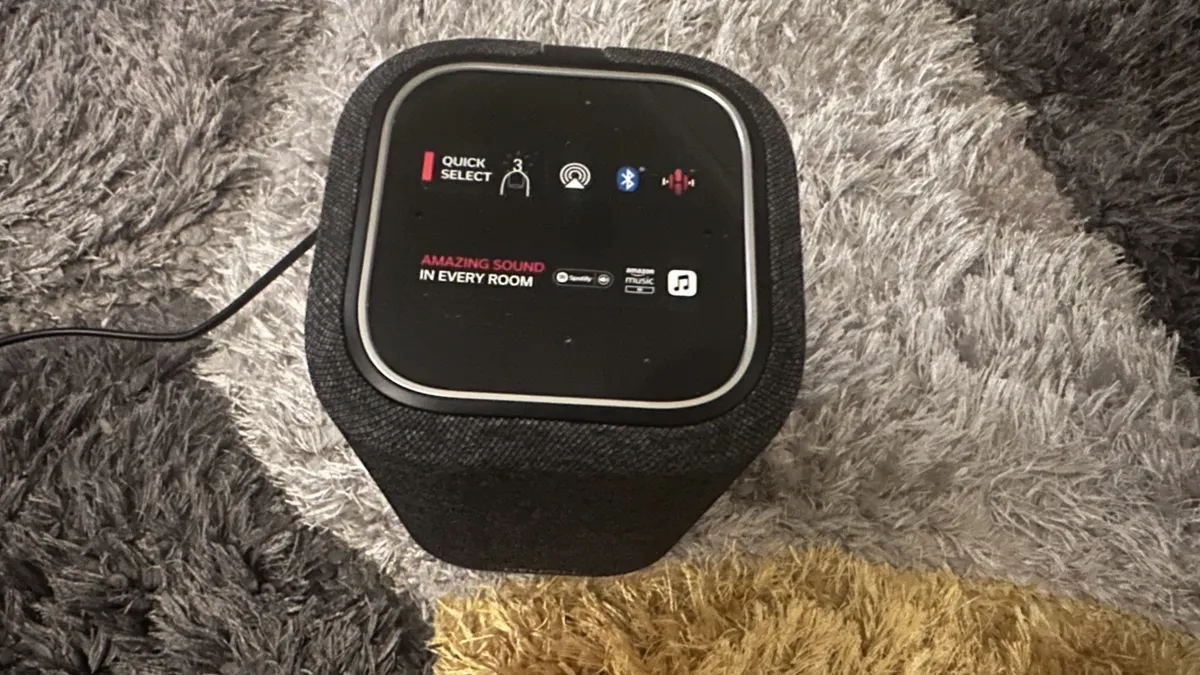


✅ You want a living room speaker: The Denon Home 150 can fill a room with sound without its looks grabbing attention.
✅ You don't have space for a subwoofer: This speaker delivers serious bass, despite its compact size.
❌ You dislike multi-room setups: The Denon Home 150 designed to encourage you to hook other speakers up to it.
❌ You're on a budget This speaker is pretty expensive, and the price could be hard to justify if you don't use all of its many features.
The Denon Home 150 is a capable smart speaker that might look a bit boring but offers a bunch of smart listening options all packed into a compact design—perfect if you're tight on space. It keeps things varied and useful, making it easy to listen to streaming services right down to the collection on your network drive. Via the HEOS app, you can connect quickly to Spotify, TuneIn Radio, Amazon Music, Deezer, Napster, Soundcloud, Tidal and other services, with the app adjusting according to your location.
Neat touches come from the ability to set up playlists across all sources, as well as to use Google Assistant or Alexa to control things using your voice. The app is a little simplistic looks-wise, but it has all the essentials and its aesthetic makes its features more easily accessible – including EQ settings and other customization tools.
It's not the best-sounding device on this list - take a look at the Bose Smart Speaker 500 for top audio quality - but the Denon Home 150 offers more bass than you'd expect for its size. This means it’ll delight those who don’t have room in their home for a subwoofer - if you’re all about that bass, but you live in a small place. For a tech fan, slightly weaker sound quality in exchange for so much tweaking and app potential means the Denon Home 150 is a great alternative.
Read our full Denon Home 150 review
Attribute |
Notes |
Score |
|---|---|---|
Value |
More a jack of all trades than a master of one, but that's not necessarily a bad thing. |
4/5 |
Design |
A lot of perks for the money in a petite package. |
4/5 |
Performance |
Not afraid to go low – because it won't distort easily. |
4/5 |
Other smart speakers we've tested
Not all the smart speakers we've tested have made their way into this guide, but are still worth consideration if you can't see exactly what you're looking for in the main list.
How to choose the best smart speaker for you
1. Choose a voice assistant
Start by working out which voice assistant you want your smart speaker to offer access to. If you already use a voice assistant on your smartphone or tablet, or have existing smart speakers or smart displays in your home, it makes sense to plump for a smart speaker that has the same assistant baked in. However, if you’ve yet to settle on the voice assistant for you, we've compared Alexa vs Google Assistant to help you decide.
2. Pick a place
Next, consider where you intend to locate the smart speaker; smaller, more compact smart speakers are best suited to bedrooms and kitchens, for setting timers when cooking, while larger smart speakers work in rooms with bigger footprints such as a living or dining room.
3. Think about numbers
If you intend to use the smart speaker as your main listening device, make sure you consider the number of speakers and the sound output and quality they offer. Those with smaller speakers are best suited to background music, while larger smart speakers will offer a louder, more room-filling sound. Also, look for models that can be paired together to create stereo sound if you’re planning to use a smart speaker as part of your home cinema set-up.
4. Consider AirPlay
If you have an iPhone or an iPad, it might also be worth checking out the best AirPlay speakers, which allow you to stream music from your devices to your speaker. Many of these also come with your favorite smart assistant on board.
How we tested these smart speakers
1. Check sound quality
Our team of audio experts test smart speakers in the same way as any other speaker, listening to them on their own and comparing them against the best wireless speakers around to see how they fare. We test them in different listening environments, and with a wide variety of different music, and spoken-word content like audiobooks and podcasts.
2. Test playback features
To make sure we're recommending only the best smart speakers, we also check how effective the built-in voice assistant is at controlling playback for you; from selecting specific playlists, albums and tracks to adjusting the volume, skipping tracks and even the number of streaming service its compatible with.
3. Examine smart functions and privacy
We also evaluate each model on its ability to pick up your voice when issuing commands to the voice assistant, privacy features that help ensure the smart speaker isn’t constantly watching and listening, and the smart home devices it's compatible with.
4. Assess design
Finally, we check how compact and durable the design is, and how easy its physical controls are to use. We'll also let you know which inputs the speaker has, and whether it can be linked to others for a wider soundstage. For more details,. check out how we test, review, and rate products at TechRadar.
Frequently asked questions about smart speakers
What is a smart speaker used for?
As we’ve already mentioned, a smart speaker can do more than just offer a way to listen to your favorite music streaming service, or the albums and tracks stored on your smartphone. The built-in voice assistant can control the playback of your music for you; adjusting the volume, skipping tracks and even selecting a specific song, album or playlist for you completely hands-free.
It can also provide a weather report, offer an audible summary of the day's headlines, and answer your burning questions; whether that’s ‘what is the tallest mountain in the world’ or simply ‘Who is the Queen of England’.
Smart speakers can even be used for light entertainment in the form of jokes and games and also allow you to stay in touch with friends and family by making audio calls through the device.
If that wasn’t enough, a smart speaker can also control compatible smart home devices; for example, it can dim or brighten any smart lights you have in your home, turn the temperature up or down if you have a smart thermostat and let you converse with anyone at your doorstep by connecting to your video doorbell.
Which voice assistant is best?
On the whole that's subjective. Some people have always liked Apple products the best and stay loyal to Siri. Others really like Alexa after snapping up an Echo as soon as the smart speaker was first launched.
The general consensus seems to be that Google Assistant is, largely, the most accurate voice assistant. If you've got a lot of Apple products, of course, Siri is the best, and for overall compatibility, you're best opting for Alexa. But they're not hard and fast rules.
Is Alexa better than Google?
For starters, the choice might depend on which speaker you like the look of the most. Sure Amazon's Echo range is very similar to the Google Home, but the Show, Spot, and Dot look quite different – check out our guide to the best Alexa speakers for more information.
When it comes to the smart assistants within the speakers, they're both extremely capable. Amazon's Alexa has many, many Skills, which set it apart from the rest. But Google has been a leader in the AI game for a long time now, well before the smart speaker market emerged. It's a lot harder to change Alexa's voice, too.
