
Though some phone users still imagine Android phones as less powerful or less user-friendly than the best iPhones, that couldn't be further from the truth. The best Android phones are some of the best phones, period, with powerful processors, beautiful displays, great gaming performance, and unique software customizations. 2026 is looking like another big year for Android phones, and we're expecting to see major releases from Samsung, Google, and other smaller brands.
Our list of the best Android phones is made up of some of the most powerful handsets you can buy right now, all reviewed by our in-house smartphone experts. There's something for everyone here, from the power user to the budget buyer, and you'll find key specs and experiential notes for each model.
Quick List

The OnePlus 15 is as close to perfect as any currently available Android phone gets – the latest flagship from the performance-focused phone maker scored a full five stars in our review, and looking at the spec sheet it's no wonder why. A Snapdragon 8 Elite Gen 5 chipset, triple-camera system, and huge 7,300mAh battery make the OnePlus 15 the Android phone to beat.
Read more below

The Google Pixel 10 Pro and Pixel 10 Pro XL may not look much different from last year's Pixel 9 Pro and Pixel 9 Pro XL, but the tech giant has added some exclusive features and made a few key improvements under the hood that mean these pro-grade flagships are still the best Android phones for AI.
Read more below

A titanium design, a new 50MP ultra-wide camera, rounded corners and a whole lot of AI make the Samsung Galaxy S25 Ultra one of the very best Android phones money can buy right now.
Read more below

The Samsung Galaxy S25 Plus is the best premium Android phone, with great features stolen from the S25 Ultra, and nothing extraneous. You can spend more, but the Galaxy S25 Plus gives you everything you need (except a pen).
Read more below

The Google Pixel 10 is the best entry point into the world of Android phones, and the best choice for everyday users. It simply embodies everything Android does well: a sleek UI and customizable software, enough hardware power for flexible daily use, a triple-camera setup with a 5x telephoto lens, and helpful user-focused AI.
Read more below

The Pixel 9a is the latest mid-range Pixel, and even though it's priced to move off the shelves, it still gets seven years of Android updates. It may not be a looker, but it still takes great photos, like you expect from Pixel.
Read more below

The Samsung Galaxy Z Fold 7 is our pick for the best folding phone, and as every folding phone on the market runs Android it's here on our list of the best Android phones to represent for its class. With the Snapdragon 8 Elite chipset and Android 16 pre-installed, this is the best folding phone for Android fans.
The best Android phone in 2025
Why you can trust TechRadar We spend hours testing every product or service we review, so you can be sure you're buying the best. Find out more about how we test.
Below, you'll find full write-ups for each of the best Android phones in our list. We've tested each model extensively, so you can be sure that our recommendations can be trusted.
The best Android phone


The OnePlus 15 is a truly excellent smartphone. It's the first phone to earn a perfect five-star score from TechRadar in years, thanks to its combination of class-leading hardware and a silky-smooth user experience. It's got the Snapdragon 8 Elite Gen 5 chipset – the fastest processor you'll find in an Android phone – as well as 12GB of RAM, and an enormous 7,300mAh battery. Those are some game-changing specs, especially when it comes to battery life.
Usually, our in-depth phone reviews note a handful of standout features and use cases for each handset – but the OnePlus 15 is so powerful that it knocks most everything out of the park. Its display? Bright and beautiful, with a refresh rate of up to 165Hz – perfect for gaming. Multitasking? Not a problem, thanks to those high-powered internals. Photography? A trio of solid 50MP cameras have got you covered. And that battery life warrants another mention – our Senior Editor for Mobile Reviews and Buying Guides Philip Berne got 3 days of use on a single charge.
Put simply, the OnePlus 15 is true to its brand name – while most of the best phones push far ahead of expectation, the OnePlus 15 simply goes one step further. It's a brilliant synthesis of design, performance, and imagination, and the best ambassador for Android's mobile experience.
Though the OnePlus 15 does take a small hit to display resolution compared to the previous generation OnePlus 13 and come with a squarer, simpler design that could split opinions, the positives on offer here simply eclipse any potential issues. The OnePlus 15 is the phone to beat for Android lovers, and a likely temptation for even the most ardent iPhone fans.
Read our full OnePlus 15 review
Value | Priced less than competitors’ Pro and Ultra models, with features that blow those flagships out of the water. I wish it were available on a payment plan, but it’s a fantastic value nonetheless. | 5/5 |
Design | A more refined design gives up flashy colors and a ginormous camera bump for extreme durability and classy looks. It’s astonishing OnePlus got so much tech into this phone, especially the huge battery. | 5/5 |
Display | Excellent display is bright and colorful, and capable of extreme gaming performance with the right titles. It can refresh up to 120Hz, or up to 165Hz on select games, and you can really see the difference when you play. | 5/5 |
Software | Smooth and polished version of Android 16 in Oxygen OS, with plenty of useful customization options and features, and just the right touch of AI (that you can also ignore). This phone also has 4 years of updates on the way. | 5/5 |
Cameras | Excellent camera quality beats anything at this price range and aims to be one of the best camera phones you can buy. For action shots and detailed zoom photos, the OnePlus might be the best choice, but all of my pics looked good and there are camera modes I still want to try. | 5/5 |
Performance | Top notch performance makes this phone a benchmark champ, and OnePlus puts all of that power to use in fantastic gaming. Max out the graphics on your favorite title, this phone can defeat whatever monsters you throw its way. | 5/5 |
Battery | Unbelievable battery life thanks to a massive cell hidden inside the svelte design. This phone beats everything by hours and hours - it lasted almost three days in my real world testing. Also it charges super fast, if you ever need to charge it. | 5/5 |
The best Android AI phone


The Google Pixel 10 Pro and Pixel 10 Pro are the best Android phones for AI. As Google's first-party handsets, Pixel phones get new AI and Android features before any other smartphones, and the Pro models are the faster option over the standard Pixel 10. Furthermore, the Pixel 10 Pro and Pixel 10 Pro XL get some exclusive AI features that the regular Pixel 10 doesn't have.
These exclusive features include Call Screening, which automatically checks unknown numbers for spam or scam callers, and Call Notes, which summarises phone calls so you don't forget crucial details. The Pixel 10 Pro and Pixel 10 Pro XL also have Magic Cue, which locally scans your Google-connected apps for information to keep important names, dates, and other points of interest within reach (the base Pixel 10 gets Magic Cue too, though.)
Additionally, the latest Pro Pixels get 16GB of RAM as standard. That should be welcome news for fans of Google Gemini, which is integrated throughout the phone and offers text-based and conversational AI computing.
The Pixel 10 Pro and Pixel 10 Pro XL aren't just great AI phones, they're some of the best phones you can buy. The 6.3-inch (Pro) and 6.8-inch (Pro XL) Super Actua Displays are sharp, bright, and beautiful to look at, while the triple camera system with 5x telephoto camera offers clarity and flexibility while shooting photos and videos.
Read our full Google Pixel 10 Pro review and Google Pixel 10 Pro XL review
Value | A more refined and interesting phone than similar flagships like the iPhone 16 Pro or Galaxy S25 Plus, but there is plenty of scope for Google to offer more (or drop the price for the holidays). | 4/5 |
Design | Excellent design refines the Pixel look even further, with great materials and color options that are classy and durable. No need to change anything here; the Pixel was already a great-looking phone. | 4/5 |
Display | The Pixel 10 Pro’s standout feature. Google’s phone displays are always a knockout, and this screen is brighter and more sharp than any other display I’ve seen (and I’ve seen them all). | 5/5 |
Software | A mix of useful new tools and questionable AI additions. The Pro model is worth the upgrade, thanks to AI features you won’t find on cheaper Pixel phones, but some new features like Magic Cue didn’t work the way Google promised. | 5/5 |
Cameras | Some of the best camera you can buy on a smartphone, with unique AI tools and helpers. The AI goes too far sometimes, but the end results are more impressive than what your friends are shooting. | 5/5 |
Performance | Lackluster performance from the Tensor G5 chip. Most features run fast enough, but I found lag in the camera between shots, and the chipset wasn’t as fast or efficient as any other recent Android flagships. | 3/5 |
Battery | Battery life was fine, but every other Android phone saw major gains with faster chips inside, while the Tensor-powered Pixel was left behind. Pixelsnap and magnetic charging help bridge the gap, and keep the phone charged enough to last you a day. | 3/5 |
The best Android camera


You won't find a phone that does more than the Galaxy S25 Ultra, but where this phone really pulls away from the pack is in its camera capabilities. If it only had the big 200MP sensor and maybe a single zoom lens, that would be a great camera phone, but the Ultra does more. So. Much. More.
In addition to the big sensor, the S25 Ultra offers a 5X optical zoom, as well as a new and improved 50MP sensor for the ultra-wide camera, which should make for great detail on macro shots. Whether you're shooting for the moon or just taking shots of your kids on the field, the Galaxy S24 Ultra is up to the task.
In fact, it's up to every task, because it has such an extensive array of lenses. The 5X zoom uses a 50MP sensor, but there is also a 3X zoom lens that uses its own 10MP sensor. Then there's that 50MP sensor for ultra wide shots and super steady videos.
Samsung isn't letting Google have all the fun with AI editing features, but Samsung also builds AI directly into the camera app. The camera will try to recognize the scene and optimize accordingly. It isn't just the moon that looks better, you'll notice that food shots, monuments, portraits, and tons of other scenes look great when you shoot them with the Galaxy S25 Ultra.
Read our full Samsung Galaxy S25 Ultra review
Value | Samsung held fast on the Galaxy S25 Ultra price. it's not a cheap phone, but design updates, integrated AI and inclusion of the S Pen make it good value. | 4.5/5 |
Design | The Galaxy S25 Ultra is now fully part of the Galaxy S-series design family and that generally improves it. We have a bigger screen, thinner and lighter body, and we still have all the things that make an Ultra special, including the titanium, the S-Pen and a big-enough battery. | 4/5 |
Display | The biggest Ultra screen ever. It doesn't break any new ground on technology, but is still an excellent screen for all kinds of content and uses. | 5/5 |
Cameras | There are a lot of lenses here and they're backed by high-pixel counts that will result in extremely detailed photos. Samsung only updated one lens since the last Ultra, but choosing the ultra-wide was the right move, as it improves both ultra-wide and macro images. | 4.5 |
Software and AI | Samsung's and its partners' commitment to deep AI integration is laudable, and it makes for the most frictionless AI experience I've found on any smartphone. It's also backed by a solid and even more useful One UI update. And the AI experience will likely get richer over time | 4.5/5 |
Performance | The S25 Ultra's Qualcomm Snapdragon Gen 8 Elite for Galaxy is one impressive chip. It's a near-perfect mix of performance and efficiency. | 5/5 |
Battery | Best battery life I've seen on a smartphone. Days of use is within reach. | 5/5 |
The best premium Android


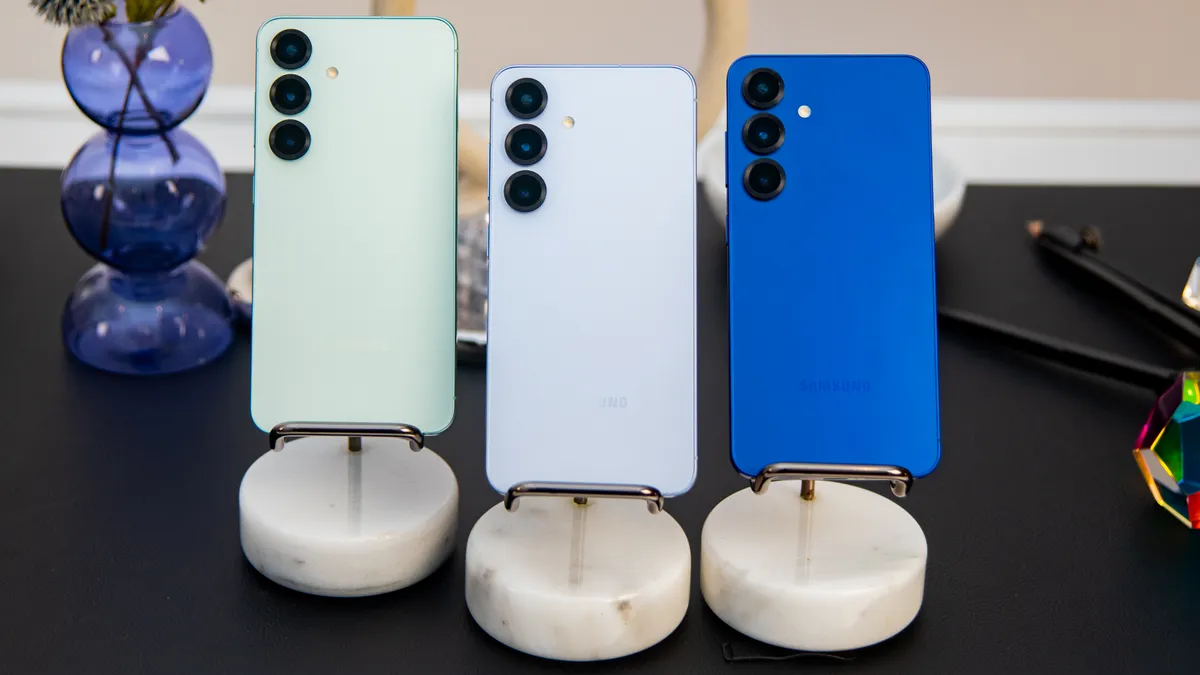

The Galaxy S25 Plus is the upstart middle child of the Galaxy S family. It's a big step up from the Galaxy S25 in all the right ways. Plus, it has all the top performance of the Galaxy S25 Ultra, without all the features you don't need. It's the top Samsung phone for battery life, and one of the longest-lasting phones I've every tested.
Do you really need a pen with your phone? The Galaxy S25 Ultra is undoubtedly feature-packed, but most people don't need that much. The Ultra is a bigger, heavier, and more expensive phone than the Galaxy S25 Plus, without much added benefit.
The Galaxy S25 Plus has the same sharp display resolution as the S25 Ultra, and the screen is only a hair smaller. It has the same processor and RAM, and it starts with 256GB, twice the storage of the Galaxy S25.
The camera specs come close to matching the iPhone 16 Pro, but fall a bit short of the Ultra. That's fine, because it's Samsung's shooting modes and Galaxy AI software that make its camera great, not the specs. The Galaxy S25 Plus is a winner any way you look at it, and if you really need more, the Ultra is next on the list.
Looking to save money on a Samsung product? Check out our Samsung coupon codes for the latest deals on top-rated tech and gadgets.
Value | Worth the premium over the Galaxy S25, with a display and battery life that beat the more expensive Ultra. Still expensive, but worth the high price. | 4/5 |
Design | A solid, refined look that hasn’t changed much over the years, and strongly resembles its biggest rival. I’m ready for something new, but this design is a classic, with good color options this year. | 3/5 |
Display | A fantastic display that’s bright and colorful, making it easy to use in any situation, even taking photos in bright sunshine. I only wish the fingerprint scanner were more responsive, but it’s still a great screen with minimal bezels. | 5/5 |
Software | Samsung has improved One UI with a refreshed look and brighter colors. The bloatware problem is growing, though, and many of the Galaxy AI features mentioned at launch don’t show up on the phone. | 3/5 |
Cameras | Takes good photos, but you can find much better cameras on competing phones, with bigger sensors and more pixels. It’s time for an Ultra-fied camera upgrade for the rest of the Galaxy S25 lineup. | 4/5 |
Performance | You won’t find a faster phone than the Galaxy S25 Plus, but what will you do with all that power? This Snapdragon wins benchmark tests, but in real-world performance it’s less apparent. Still, it’s the fastest phone around, even if you can’t see it. | 5/5 |
Battery | Excellent battery life, topping even the Galaxy S25 Ultra, but the OnePlus 13 is far more impressive, with longer battery life and much faster charging. It’s time for Samsung to catch up if it wants to remain at the top. | 4/5 |
The best Android for everybody


The Google Pixel 10 is the easiest Android phone to recommend to everyday users or newcomers to the Android operating system. It's got a high-resolution 6.3-inch display, a sleek but distinctive design, plenty of helpful AI tools, and a camera system that offers plenty of flexibility with its 5x telephoto lens. It embodies everything good about Android at a reasonable starting price point.
Though the Google Pixel 10 might look nearly identical to last year's Google Pixel 9, the tech giant has made some crucial improvements under the hood. The Google Tensor G5 chipset is the most powerful the company has ever made, and while it's still not quite as blazing-fast as rival chipsets from Qualcomm and Apple, it's more than capable of handling multitasking, gaming, and the various AI tools the phone ships with, such as Google Gemini.
The Pixel 10 is also the first standard Google Pixel phone to come with an telephoto zoom lens, complimenting the main and ultra-wide camera with a 5x optical zoom option. That means the Pixel 10 has more flexibility with its camera system than the iPhone 17 and a longer zoom range than the Samsung Galaxy S25, and as with last year's model, photos and videos look great on the Pixel 10's excellent display.
The Google Pixel 10 ships with Android 16, with 7 years of pledged OS updates. As well as Android 16, the phone comes with a few Pixel-specific features, like Magic Cue, which collects data from your Google-linked apps to put important info at your fingertips.
Read our full Google Pixel 10 review
Value | The Pixel 10 isn’t bad value, but Google has a strong history of discounting its Pixel phone around the US holidays, so maybe wait for the best deal. The Pixel 9 was discounted for half of its first year. | 3/5 |
Design | Not much has changed since the Pixel 9, and that’s a good thing because the Pixel design is stellar. The brighter Indigo and Lemongrass colors are especially appealing. Hidden magnets add weight but not thickness. | 5/5 |
Display | One of the best smartphone displays you’ll see (until you see the Pixel 10 Pro). This screen is very bright and sharp, and a joy to use. Google should brag more about its screens. | 5/5 |
Software | The interface design is crisp and colorful without looking silly, and many of the latest AI features are actually useful without being annoying. Watch out, Apple – Google is delivering on software promises the iPhone couldn’t keep. | 5/5 |
Cameras | The Pixel 10 isn’t the best Pixel camera, but it takes photos that could have come from a Pro model (if you don’t zoom in too close). Camera Coach offers a unique and helpful tool, but I worry it’s putting experts out of work. | 4/5 |
Performance | Not a top performer, though the Pixel 10 does all the Pixel stuff very quickly. The interface and features are super-snappy, but don’t expect to dominate mobile games that require a heavy graphics load. | 3/5 |
Battery | Battery life should be much better – there’s no improvement over the Pixel 9. Thankfully, Pixelsnap (and MagSafe) charging make a big difference and will help you keep this phone powered up all day and then some. | 3/5 |
The best budget Android


The Pixel 9a is the clear value leader among Android phones. It's an easy recommendation if you want a dependable, uncomplicated Android phone that handles the basics very well. If you need an affordable device that will last for years and, the Pixel 9a is a strong contender.
I wasn't the biggest fan of the new Pixel 9a design, but there's no denying this is a new Pixel phone, through and through. Helpful features such as AI call screening and superior voice recording transcription proved extremely convenient during my in-depth review time with the Pixel 9a.
Google commits to providing seven full years of significant Android OS and security updates. This offers exceptional software support and ensures longevity rarely seen at this price level. Apple and Samsung won't match that commitment with phones this cheap.
The Pixel 9a camera performs particularly well. Colors are accurate. Its most impressive aspect is the highly capable new macro photography feature. The resulting close-up detail truly rivals more expensive phone cameras, and maybe even DSLR cameras.
Ultimately, if you want excellent value, a great camera (with standout macro), useful AI, and lengthy software support, and you can accept owning what might be the least visually appealing Pixel design to date, the Pixel 9a stands out as the best budget choice for Android phones.
Read our full Google Pixel 9a review
Attributes | Notes | Rating |
|---|---|---|
Value | A great phone at this price, with incredible longevity thanks to seven years of updates. The cameras are among the best in this price range, even if the look isn’t so premium. | 5 / 5 |
Design | It’s durable, and the colors are real nice. Otherwise, it’s ugly as sin. Seriously, Google had a winning A-series formula that it ruined when it created this phone. But the design doesn’t get in the way, at least. | 3 / 5 |
Display | Excellent display that's bright and colorful, better than most phones at this price. Some trouble with Adaptive mode was easily fixed. If only the phone’s performance could keep up with the fast screen. | 4 / 5 |
Software | A polished version of Android that's easier to use, with plenty of features. Some useful AI tools, but also some AI imagery slop that resorts to bigotry and should be removed from this phone. | 2 / 5 |
Camera | Solid cameras take photos that look like they could have come from the Pro model, if you don’t look too close. Astonishing macro capabilities rival my DSLR camera and make this phone a winner. Too bad about the low resolution and lack of detail, and some zoom would have been nice. | 3 / 5 |
Performance | Performance is adequate for Pixel fans, though it won’t win any races. No problems with my favorite apps and games, but things slowed down when I engaged the AI as it sent requests to and from the cloud. | 3 / 5 |
Battery | A larger battery somehow doesn’t equal more battery life, but the Pixel 9a still lasts a full day with no trouble, and has wireless charging, a rarity at this price. | 3 / 5 |
The best Android folding phone


The Samsung Galaxy Z Fold 7 is one of the best folding phones, which means it's also the best Android folding phone. In fact, every folding phone you can buy is also an Android phone, and all of them make use of Google's mobile operating system in unique ways. The Galaxy Z Fold 7 comes loaded with One UI 8, based on Android 16, which means its a great choice for those who want access to the latest and greatest software features.
Of course, the headline feature isn't the operating system, it's that 8-inch folding display. Samsung has made the folding display on the Galaxy Z Fold 7 larger than ever, and with nearly as much screen real estate as an iPad mini there's plenty of room for browsing, productivity, gaming, and whatever else you need to get done. Samsung has jammed the Galaxy Z Fold 7 full of AI tools and software settings, making this a phone that can adapt to the way you do things.
The Galaxy Z Fold 7 has the powerful Snapdragon 8 Elite for Galaxy chipset and either 12GB and 16GB of RAM depending on configuration, giving the phone plenty of power. Our testing found the phone to be an adaptable daily companion with enough battery life to get through a full day's use, which with a battery capacity of just 4,400mAh is pretty impressive.
And when it comes to camera quality, no other folding phone comes close. The Galaxy Z Fold 7 sports a 200MP main camera, 10MP telephoto with 3x optical zoom, and a 12MP ultra-wide. It's the best camera system on any folding phone, and in some situations can hold its own against the dedicated camera phones on this list.
The only real downside to the Galaxy Z Fold 7 is its price. At a starting price of $1,999 / £1,899 / AU$2,899, it's the most expensive phone on the market, period. With the new Samsung Galaxy Trifold – which we estimate will be even more expensive – on the way, some users may want to save for Samsung's new model instead.
Read our full Samsung Galaxy Z Fold 7 review
Attributes | Notes | Rating |
|---|---|---|
Value | The most expensive foldable out there, but it might also be worth it | 4 / 5 |
Design | Excellent, slim and light design that still feels elegant and solid. | 5 / 5 |
Display | Two fantastic and now larger screens. The crease is almost gone, but so is support for an S Pen. | 4.5 / 5 |
Performance | Better than the best Qualcomm chip on other Androids, and the performance knocked our socks off. | 5 / 5 |
Software | Android 16! One UI 8! So much AI. It may sound like a lot, but it's a winning combination. | 4.5 / 5 |
Cameras | The 200MP sensor is a major upgrade, and overall photography is excellent. We would have liked a 5x optical zoom. | 4.5 / 5 |
Battery | Really good battery life | 4.5 / 5 |
FAQs
What is the best Android phone?
• The Google Pixel 9 is best Android phone for most people
• It has the best AI features at an affordable price
• The OnePlus 13 is the best premium Android phone
Our pick for the best Android phone for most people is the Pixel 9, because it's an affordable way to get all of Google's best new AI features and Google's refined Pixel interface and software. However, this could soon change as the Pixel 10 is now available, and we're currently testing it for review.
The best premium Android phone is the OnePlus 13, because it offers the best battery life, the most refined interface, and the most durable design with IP69 certification.
Which Android phone is the best value for money?
• The Google Pixel 9a offers the best value for money
• It's regularly discounted on Amazon, so look out for deals
• The Samsung Galaxy A series is also worth considering
The best Android phone for people on a budget is the Pixel 9a, which costs $499 / £499 / AU$849. The Pixel A-series phones are a popular discount item when Amazon puts smartphones on sale, so keep an eye on TechRadar for the latest deals.
If you want to spend less than that, Samsung's Galaxy A devices are great value. They gives you a great display and Samsung's feature-packed Android software, plus fast networking and good performance for the price.
Is Android or iOS better?
• Android is more open and customizable than iOS
• iOS has more curated apps and high-end games
• Android offers more options, tools and AI features
Android and Apple's iOS each have their fans, and there is very little that iOS can do that Android cannot. There are many more options, features, and oddities available on Android devices than iOS has ever seen, so Android has a reputation for being more complicated and experimental, while also allowing for more customization and more powerful overall features.
How we test
- Our reviewers thoroughly test new phones, from their day-to-day experience to trying the cameras and all the new features
- We use Future Labs in-house test data and our own experience to assess performance and battery life
- All our reviewers follow reviewing guidelines and processes overseen by experoinced technology journalists
I've only included phones on this list that have been thoroughly tested in Future Labs and in the real world by our expert review editors. I test every feature on a phone, then we dive deeper to discover all of the hidden goodies.
I test phones rigorously for battery life and charging times, processor speed and performance, and especially for camera and video recording capabilities. I make sure that phones deliver on the promises and claims they make. If Samsung says a phone charges in 30 minutes, I time it to make sure.
I've seen every phone you can buy, so I know how each model stacks up against one another. I use both iPhone and Android phones all the time, so I know what I'm saying about the phones you buy, no matter what you pay. I make sure the phones deliver what I'd expect for the price.
Once I'm done, I never stop. I update our reviews as the phones are updated. Our reviews are always fresh, so check again before you buy to make sure you're getting the latest review on the best phones you'll find.
- You've reached the end of the page. Jump back up to the top ^
