


- Cowork grants Claude access to local folders, meaning it can complete work on your behalf
- You can line up several instructions, such as sorting files, summarizing notes, drafting a document
- Cowork foregrounds the user’s role as supervisor, offering approval prompts
Anthropic has introduced its new Claude Cowork feature as a way of making its chatbot more of a colleague.
Currently available as a research preview for Claude Max users on macOS, Cowork grants Claude access to local folders, meaning it can complete work on your behalf, pushing the idea of AI productivity.
It's a shift from the cloud-centric approach of many AI assistants. Cowork brings Claude into the local, file-level world and lets the AI read, edit, and create files inside a designated folder.
The implication is that AI will do things, not just say things. Claude Cowork could push AI innovation forward in all kinds of ways if widely adopted, and might shape expectations around the future of agentic AI.
Work done while you wait
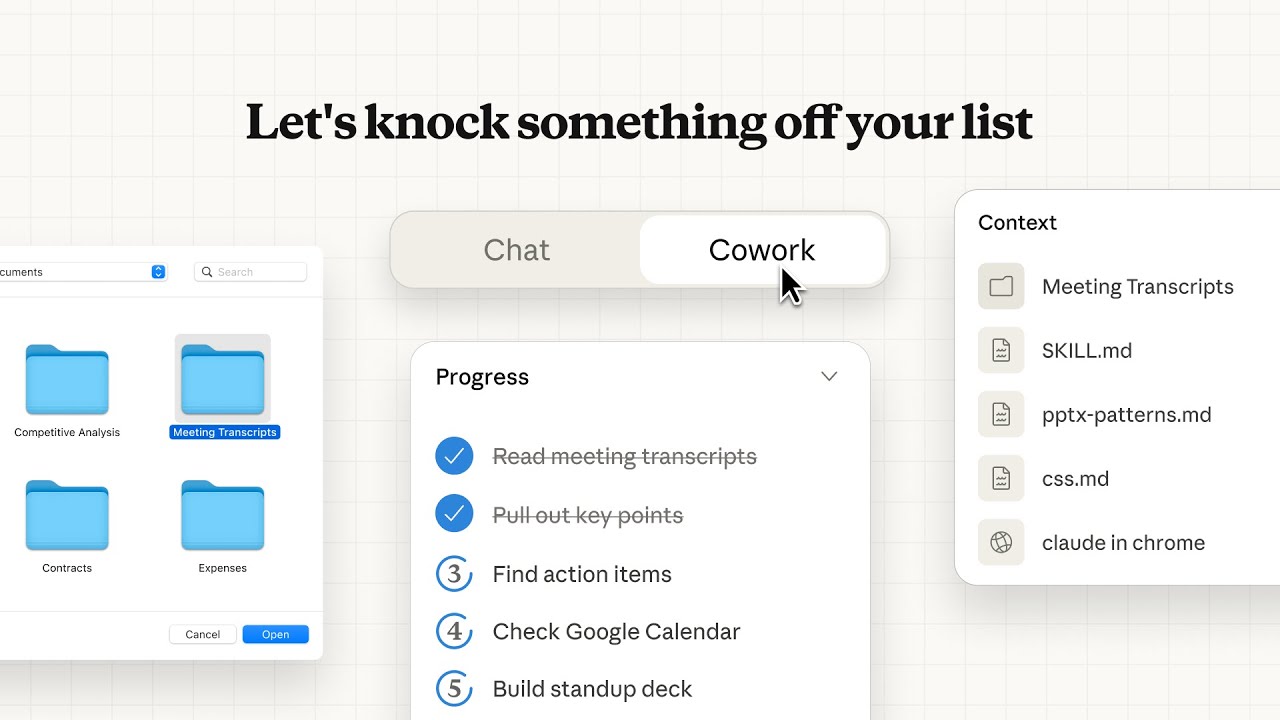
Cowork offers a way of getting things done on your computer without being tethered to the machine as you wait for things to render, copy, extract, or convert.
What Claude proposes with Cowork is a model in which you can line up several instructions, such as sorting files, summarizing notes, drafting a document, and making presentations, and let those actions unfold while you do other things. It's like assigning a task list to a competent coworker who reports back with updates.
This approach has the potential to change the rhythm of work, relegating the necessary micromanaging of working on a computer to broader planning. If this kind of semi-autonomous labor on a computer becomes the norm, work might become both faster and quieter.
Folder as interface
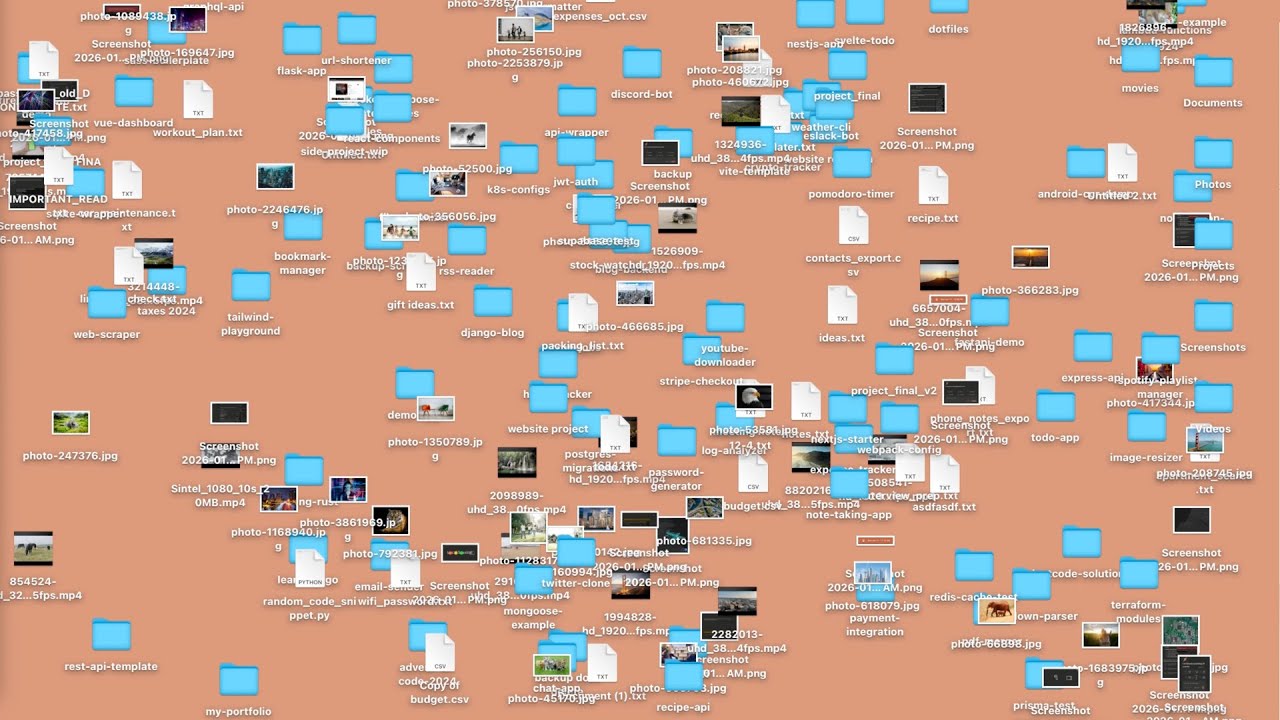
Productivity tools have long revolved around apps and software like word processors, spreadsheets, and so on, but Claude Cowork revamps the idea of folders by making them the operating system.
Users assign a folder and a task to Claude, sidestepping any complex front-end interactions. The Downloads folder full of PDFs and screenshots becomes a raw data source for invoice summaries. A messy desktop becomes a draft blog post. No need to click and drag, just describe a goal and let the AI handle the rest.
This reframing could signal a gradual erasure of traditional application boundaries if Cowork succeeds. Treating file systems as canvases, not containers, means rethinking your computer as a tub of ingredients rather than the organized cabinet people usually consider it. But while this wouldn't eliminate the software, it might reimagine where in a computer things get done.
Personal computers becoming personal again
Cowork arrives in the wake of a broader shift toward server-side computation and cloud-based assistants. For many users, personal devices have become portals to remote processing farms.
But Cowork is a local agent. Claude can read and manipulate files stored directly on a user’s computer. Nothing is shared unless permission is explicitly given, and users control what folders are visible.
The idea that one’s machine is a private space used to be common, but feels almost quaint now. This could be a return to that way of thinking of the boundaries of a computer's files.
Cowork's model might inspire a new class of AI assistants designed to be local-first by default, reasserting the computer as a tool you own, not just a door to a platform in the cloud.
Accessible AI agents
One of Cowork’s most promising implications is its accessibility. Claude Code, which led to Cowork, has been useful for programmers trying to automate software, but it is still not for those without some technical training. But Cowork offers the same underlying capabilities of file access, plan execution, and task chaining in a much more easily understood wrapper.
Cowork doesn't need scripting or command-line gymnastics. Just a folder and a request. What was once the domain of power users now becomes available to anyone who can describe what they want, whether that's turning a set of PDFs into a searchable summary, reformatting files in batches, or turning receipts into reports.
Cautious AI
Despite Cowork's utility, Anthropic did give the tool a clear warning label. There's risk in letting Claude edit or delete files. Anthropic has been unusually candid in this respect, emphasizing the dangers of prompt injections and unintended behavior.
The release comes not as a confident finished product, but as an experiment in how users might steer or missteer a tool with agency.
This positioning could be more than good faith transparency; it might be foundational to how the next wave of agentic AI is received. Trust in automation often erodes when products overpromise or conceal complexity.
Cowork, by contrast, foregrounds the user’s role as supervisor, offering approval prompts before high-impact changes and confining activity to explicitly granted domains.
Desktop AI future
Claude Cowork represents a fundamental rethink of how people interact with their computers. Whether it's what people want is up for debate, but the aim of making users "managers" rather than "operators" is certainly appealing when it comes to dealing with a lot of data on a computer for work.
If this model proves reliable, then Cowork might encourage new ways of engaging with your computer, albeit with the risk of trusting the AI. In 2026, the real AI innovation might not be that AI can talk, but that it can listen and act locally.
Follow TechRadar on Google News and add us as a preferred source to get our expert news, reviews, and opinion in your feeds. Make sure to click the Follow button!
And of course you can also follow TechRadar on TikTok for news, reviews, unboxings in video form, and get regular updates from us on WhatsApp too.

➡️ Read our full guide to the best business laptops
1. Best overall:
Dell Precision 5690
2. Best on a budget:
Acer Aspire 5
3. Best MacBook:
Apple MacBook Pro 14-inch (M4)
