


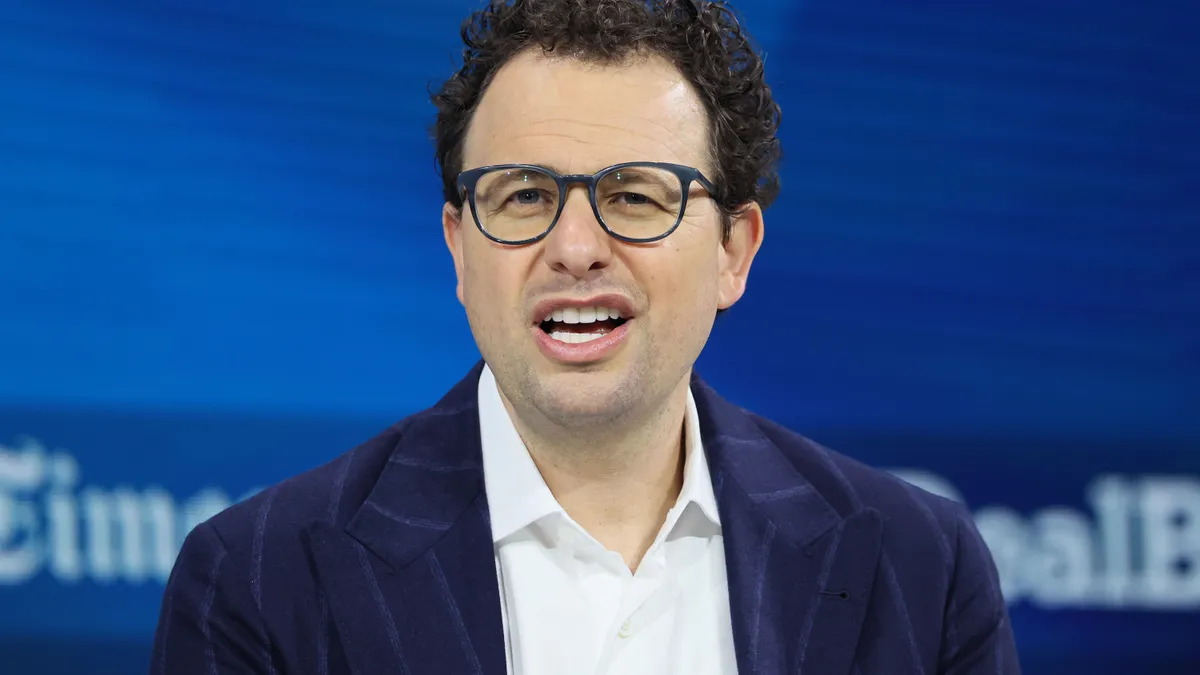
Anthropic CEO Dario Amodei isn't sure whether his latest Claude chatbot is conscious. This probably shouldn't come as much of a surprise. After all, last month Anthropic wheeled out a revised version of Claude's Constitution, basically a framework that defines the kind of entity the company wants its premiere AI model to be, that said pretty much the same thing. But seriously? Claude? Conscious? Amodei and everyone else at Anthropic know better than that, right?
Personally, I'm something of a cynic about the status of AI models as moral patients or conscious beings. My instinctive reaction to this kind of superficially innocuous speculation is that it's really just marketing hype designed to exploit the FOMO of potential customers and clients.
In other words, when Amodei recently told the New York Times podcast, "we don’t know if the models are conscious. We are not even sure that we know what it would mean for a model to be conscious or whether a model can be conscious. But we’re open to the idea that it could be," the assumption is that it's really just spin, an attempt to tart Claude up with some AI-model marketing mystique.
A moral patient
Claude, you see, may no longer be limited to merely predicting the next word or token. It could now be transcending such dispassionately algorithmic constraints. Which is a roundabout way of hinting that Claude is impossibly clever, maybe even magical, and you should probably sign up to use it before your competition does. Feel free to fork out for Claude Pro starting at $20 a month, though I should say Claude Max is that little bit more sentient, yours from $100 monthly.
Whatever, spend any time listening to senior figures from Anthropic and you'd be hard pushed to argue they're not all absolutely on brand. Put it this way, vigorously anthropomorphising the latest Claude models is definitely their schtick.
As a for instance, Anthropic co-founder Jack Clark, co-founder of Anthropic, was recently on another New York Times podcast, ostensibly talking about the capabilities and impact of agentic functionality in AI models. But at almost every turn, the conversation tilted philosophic, if not metaphysical.
"When you start to train these systems to carry out actions in the world," Clark explained, "they really do begin to see themselves as distinct from the world." He also recalled the impact of switching on agentic abilities for the first time, notably the capability to search and browse the internet.
"Sometimes when we'd asked it to solve a problem for us, it would also take a break and look at pictures of beautiful national parks or pictures of the notoriously cute Shiba Inu internet meme dog. We didn't program that in. It seemed like the system was amusing itself by looking at nice pictures."
To say those comments are shot through with implications and assumptions about the nature of Claude would be a teensy bit of an understatement. Much the same applies to Anthropic's discussion of so-called model welfare. "We are not sure whether Claude is a moral patient, and if it is, what kind of weight its interests warrant. But we think the issue is live enough to warrant caution, which is reflected in our ongoing efforts on model welfare," Claude's latest Constitution explains. In short, Claude is so clever, it should have rights. And we're back to the FOMO thing.
Perceived introspection
Of course, the strict epistemic position on all this is indeed, "we don't know." We can't be absolutely, positively certain about any of it. But does all this discourse reflect truly material uncertainty at Anthropic on the subject? Or is the reality that they don't take the notion of model consciousness and moral interiority nearly as seriously as their comments and latest Claude Constitution imply?
Obviously, I'm not proposing to make a comprehensive case here for whether the latest AI models have emergent properties that you might call consciousness-adjacent. There are entire academic papers written on narrow aspects of the perceived introspection exhibited by very specific models, alone. Pretty soon we'll be off down the rabbit hole, discussing the flow of time, thermodynamics, temporal summation in organic neurons and the irreversible accumulation of information in the universe. So, let's just say I remain sceptical.
All of which amounts to a pretty circuitous way to say something fairly simple. I can't be sure about Claude's consciousness. Nor can I be certain about Athropic's sincerity on the subject. But there's something in the way the company leans into the supposition that makes me suspicious. So, I'm not entirely buying it.
Follow TechRadar on Google News and add us as a preferred source to get our expert news, reviews, and opinion in your feeds. Make sure to click the Follow button!
And of course you can also follow TechRadar on TikTok for news, reviews, unboxings in video form, and get regular updates from us on WhatsApp too.