
 Become a TechRadar Insider





Finding the best graphics card for you in 2026 is no easy feat. Not only is the market flooded with options, but some of those options are expensive. The rise of AI, shortly following the cryptocurrency craze, means that a high-end GPU will cost you a pretty penny.
Fortunately, there are still plenty of GPUs available for PC gamers of all budgets, from budget-friendly models like Intel’s Arc B580 to high-end 4K powerhouses such as the mighty Nvidia GeForce RTX 5090.
Here at TechRadar, we've got hundreds of hours of combined experience rigorously testing and reviewing dozens of GPUs, assessing everything from gaming performance to creative workflow efficiency and overall value for money. It's not all about raw benchmark results; we also test how these cards perform in real-world gaming and creative scenarios.
As of right now, our top recommendation remains the AMD Radeon RX 9070 XT. While it doesn’t come cheap, its 4K gaming performance justifies the price, especially in a market still grappling with inflated costs. Nvidia might be the dominant force in the GPU market, but AMD's current flagship card just edges out Team Green in terms of value for money.
For each GPU we test, we consider factors such as power consumption, thermal design, price, and benchmark results to determine which ones truly stand out. With TechRadar’s long history of over 200 graphics card reviews, our team brings a wealth of expertise to the table - ensuring that every recommendation is grounded in thorough, real-world analysis tailored to your specific needs and budget.
The Quick List

Value | ★★★★★
Features | ★★★★☆
Power | ★★★★★
AMD’s Radeon RX 9070 XT debuts the company’s new GPU generation with performance rivaling the RTX 4080 at half its original MSRP. Though not ideal for creatives or AI, it’s a gamer’s dream.

Value | ★★★★★
Features | ★★★★☆
Power | ★★★★☆
The Intel Arc B580 is a stunning GPU for it's price. More than capable of high-performance 1440p gameplay, Intel's "midrange" GPU comes in at a lower price than both AMD and Nvidia's cheapest 1080p graphics cards.

Value | ★★★★☆
Features | ★★★★★
Power | ★★★★★
The Nvidia RTX 5070 Ti is the best Nvidia graphics card of this generation overall, thanks to its outstanding performance and (relatively) reasonable price, though finding it at MSRP might be a challenge.

Value | ★★★★☆
Features | ★★★★☆
Power | ★★★★☆
While the Nvidia RTX 5080 doesn't have the same level of performance as the Nvidia RTX 5090, it's still plenty powerful as a 4K gaming GPU, managing close to RTX 4090 performance in gaming for significantly less.
Value | ★★★☆☆
Features | ★★★★☆
Power | ★★★★★
The RTX 5090 is an absolute powerhouse of a GPU when it comes to creative work, chewing through 3D modeling, video editing, and more with ease. Its high price and power consumption puts it out of reach for just about everybody, though.

Value | ★★★★☆
Features | ★★★★★
Power | ★★★★★
While the RTX 4070 Super doesn't pack the same performance as the best 4K cards, its 1440p performance is outstanding, and Nvidia's DLSS 3 is a true game-changer.
Load the next 3 products...

Value | ★★★★☆
Features | ★★★★☆
Power | ★★★☆☆
The Intel Arc B570 isn't the most powerful graphics card out there, but for 1080p performance, it's a very solid choice, especially for those on a tighter budget.

Value | ★★★★☆
Features | ★★★★★
Power | ★★★★★
The Nvidia RTX 4090 is undeniably the most powerful GPU of the last-gen, but its price makes it prohibitive for most, though its performance-per-dollar makes it among the best values going for premium GPUs, especially for creatives.

Value | ★★★★☆
Features | ★★★★★
Power | ★★★★★
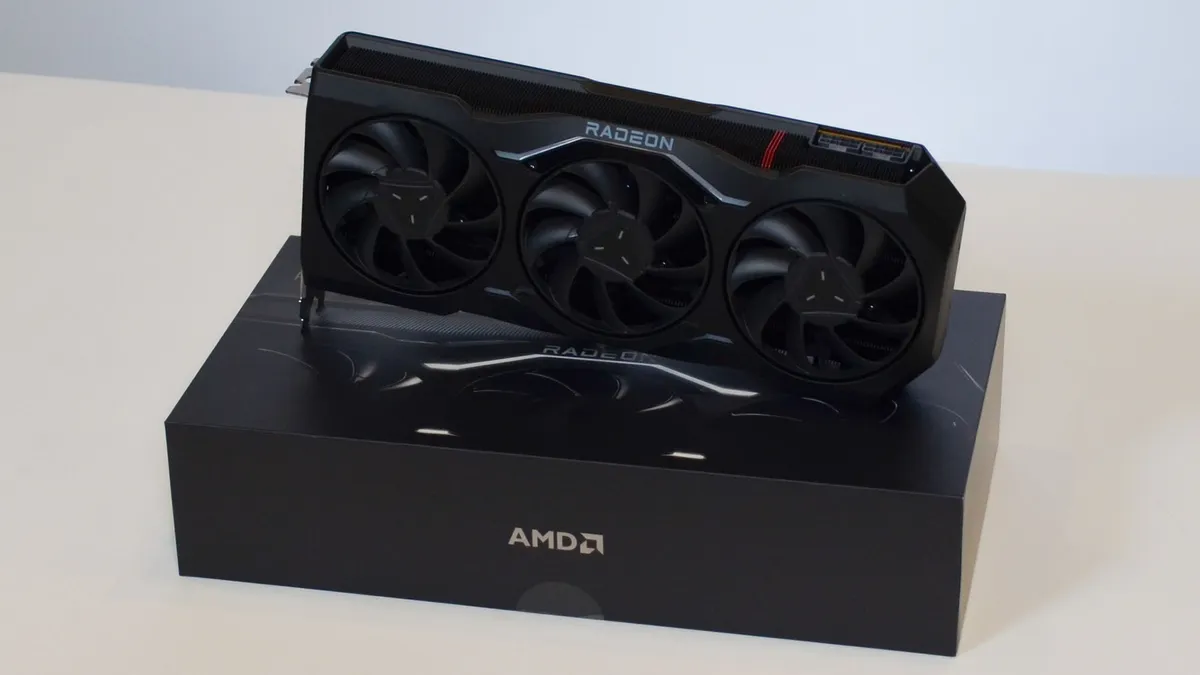
The AMD Radeon RX 7900 XTX is an absolute beast of a gaming GPU that holds its own against the best current generation graphics cards, though its price is going to be prohibitive for many and its creative performance can't compete with Nvidia's
This guide was updated on July 31, 2025, to update our FAQ section with new questions asked by our readers, along with updated benchmark data.

John has been working with computers since he was a teenager, long before he ever started writing about computer hardware or earning a Master's degree in Computer Science. Needless to say, he knows computers inside and out, and he has personally tested (and retested) all of the graphics cards on this page, having reviewed more than 35 graphics cards for TechRadar in his five years with the site. He has validated all of the results you'll find here in this guide, backed up by hundreds of hours of testing in the TechRadar computer lab over the last three years.
The best graphics card in 2025
Why you can trust TechRadar We spend hours testing every product or service we review, so you can be sure you're buying the best. Find out more about how we test.
Below, you'll find detailed write-ups for each of the best graphics card picks on this list. I've extensively tested each of them and have the gaming and other performance data you need to make the right choice for your needs and budget.
The best graphics card overall


✅ You want the best value proposition for a high-end graphics card
The AMD RX 9070 XT punches way above its price point with outstanding performance at 4K and 1440p.
✅ You don't want to pay inflated prices for an Nvidia GPU
Price inflation wrecking the market for Nvidia GPUs right now, but the RX 9070 XT offers a better value proposition than Nvidia's latest RTX offerings.
❌ You're on a tight budget
If you don't have a lot of money to spend, this card is likely more than you need.
❌ You need strong creative or AI performance
While AMD is getting better at creative and AI workloads, it still lags far behind Nvidia's competing offerings.
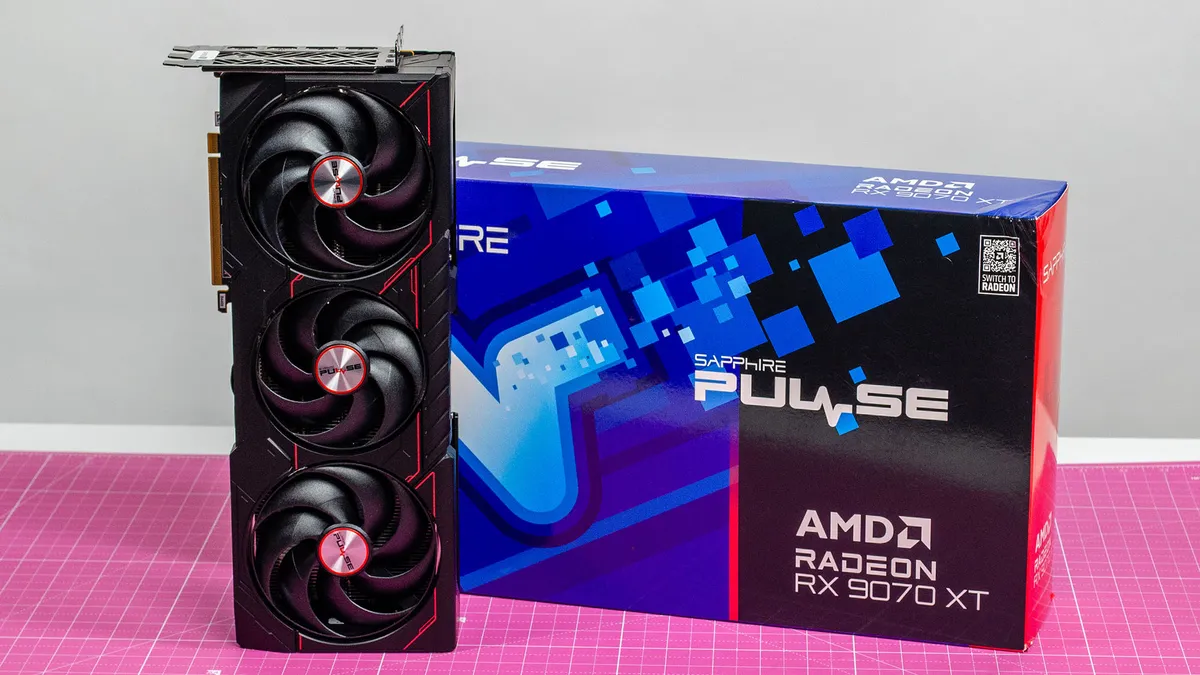
I spent about two weeks testing the AMD Radeon RX 9070 XT for my review of AMD's latest flagship GPU, and it’s without question one of the best gaming GPUs I’ve ever used.
With performance that nearly matches the Nvidia GeForce RTX 4080—at half the launch price—it’s an unbeatable deal. AMD’s always had fewer supply issues and less scalping compared to Nvidia, so I expect the RX 9070 XT to remain accessible at around its $599 MSRP, which should be a huge relief for anyone weary of overpriced, understocked cards.
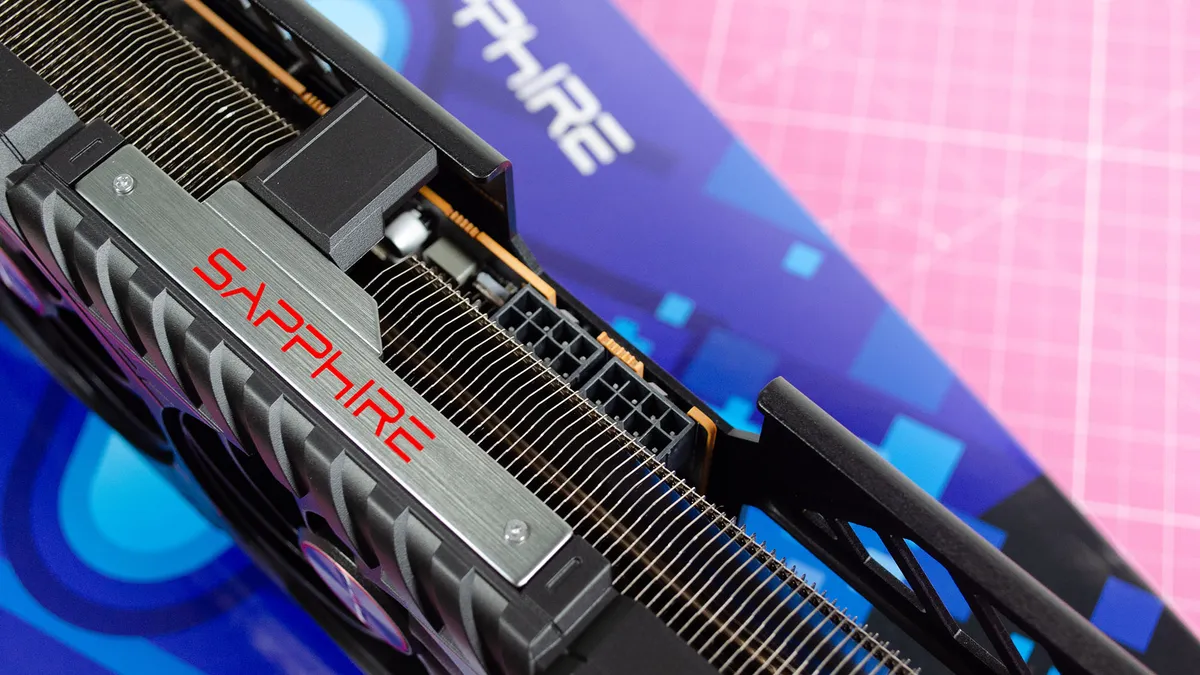
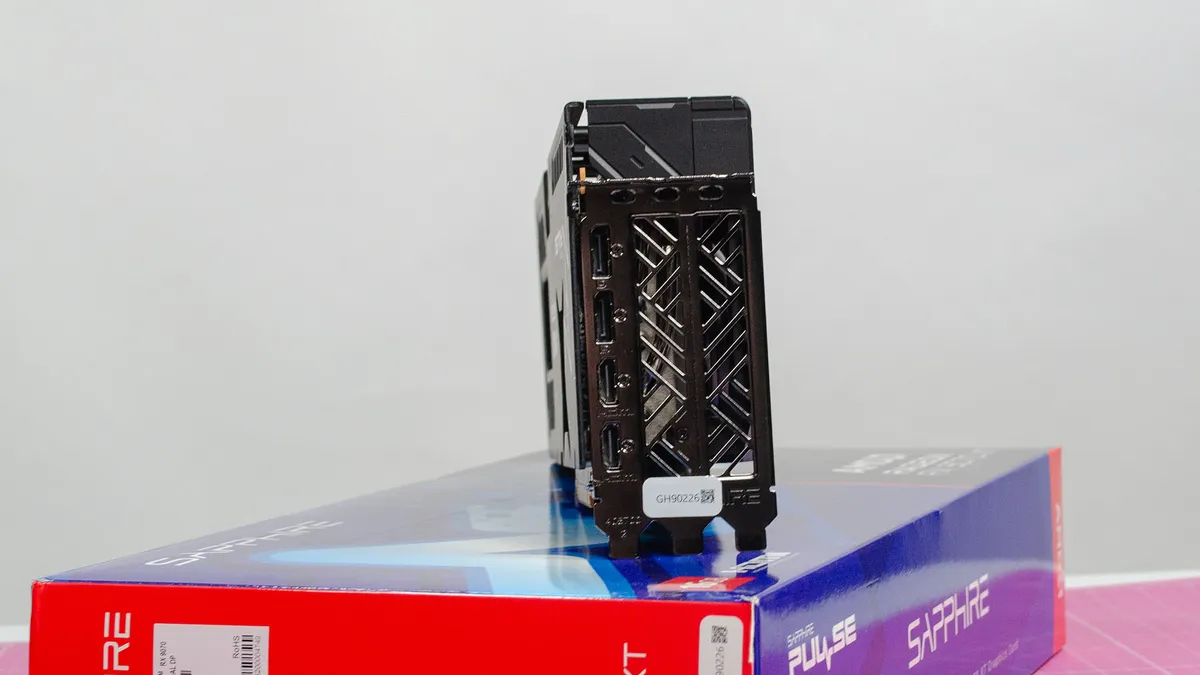
In my testing, I saw power draws of up to 309W, which is high, but given the performance level for this card, I won't say it's out of bounds. You'll need to make sure that your case can fit a triple-fan card and supply it with enough power, so it might not be ideal for small form factor builds. It also won’t blow you away with creative or AI tasks if my test results are any indication, but for pure gaming, it's fantastic.
In my testing, the RX 9070 XT got within 7% of the RTX 4080 and beat out every single last-gen AMD card, delivering high frame rates in some very demanding games, and providing a smooth gaming experience overall, even at 4K in many cases. Its fantastic value, especially in a graphics card generation that is largely lacking in excellent price-for-performance offers, makes this not only a massive breath of fresh air for the market but a new GPU offering that any PC gaming fan should be excited about.
Read the full AMD Radeon RX 9070 XT review
Also consider
The best budget graphics card
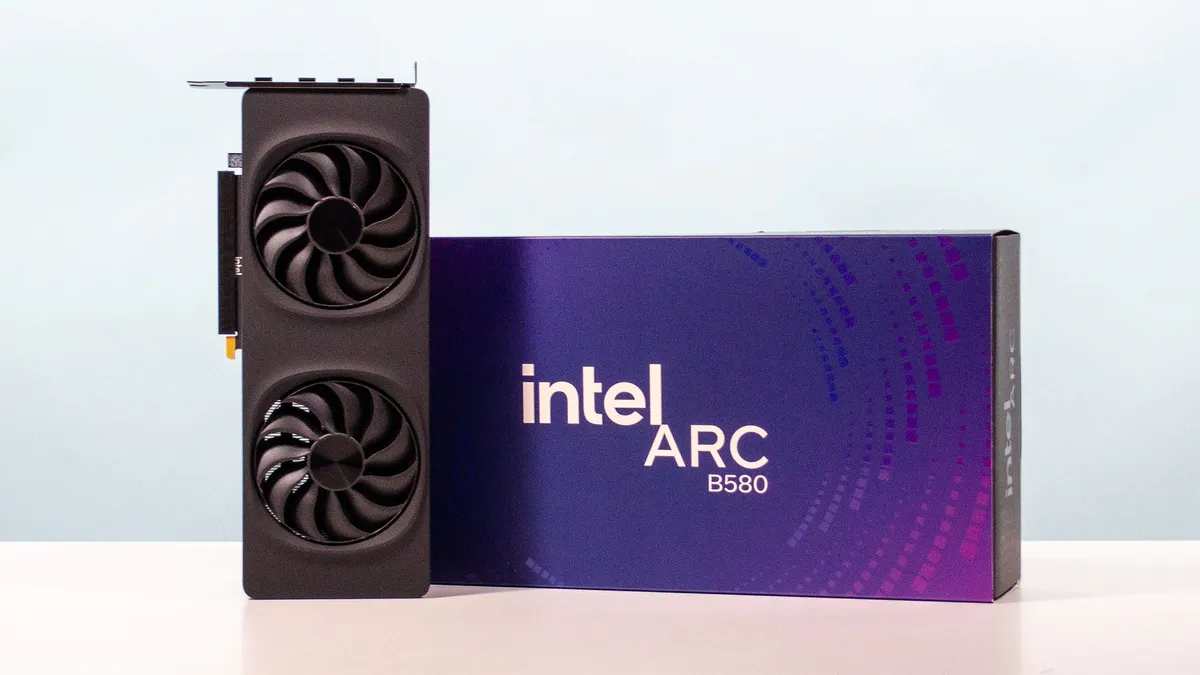

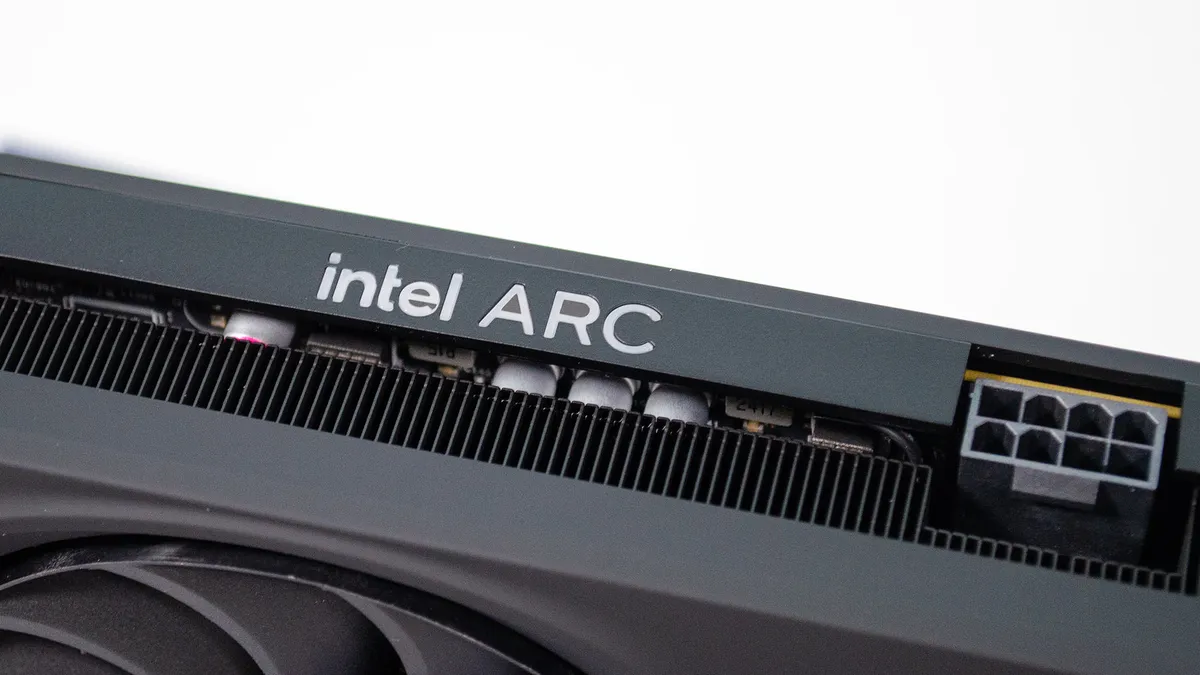


✅ You want a great graphics card on a budget. The Intel Arc B580 is a steal at MSRP. No other card at $250 is going to be this good at 1440p gaming.
✅ You're looking for great gaming performance. Speaking of performance, the gaming chops on the Arc B580 aren't just a value proposition. You won't be sacrificing performance with this card.
❌ You're looking for a budget creative GPU. While the B580 has some promise as a video editing card, if you're looking for a GPU for creative work, Nvidia cards are the better bet.
❌ You want a cheap GPU for AI workloads. Like its creative prowess, the Intel Arc B580 is decent enough for dedicated AI workloads, but can't hold a candle to competing Nvidia cards.
The Intel Arc B580 was the biggest GPU surprise of 2024 when it launched last December, greatly impressing me with its phenomenal 1440p gaming performance in my tests for under $250/£250/AU$450 at MSRP, something AMD and Nvidia have failed to do for two generations now.
What's more, any issues that Intel's previous Arc Alchemist GPUs suffered from seemed to have been ironed out with this latest release, earning a rare 5-star review from me in my review.
While the card has its drawbacks (its ray tracing performance lags behind Nvidia's and it's not the best creative GPU out there for the money, for example), this is strictly a GPU for gamers, and considering how long it's been since PC gamers have had a compelling graphics card at this price point, it's simply in a class of its own.
That said, if you want the absolute best graphics card performance at 1440p or 1080p, there are better cards for that, like the Nvidia GeForce RTX 4060 Ti. But those other cards are substantially more expensive, and they just don't offer a good enough reason to buy them when the Arc B580 is right there, offering nearly equal performance on average and costing 10%-40% less than its competition.
So if you're looking for the best budget graphics card but don't want to sacrifice performance, this card is exactly what you are looking for.
Read the full Intel Arc B580 review
Also consider


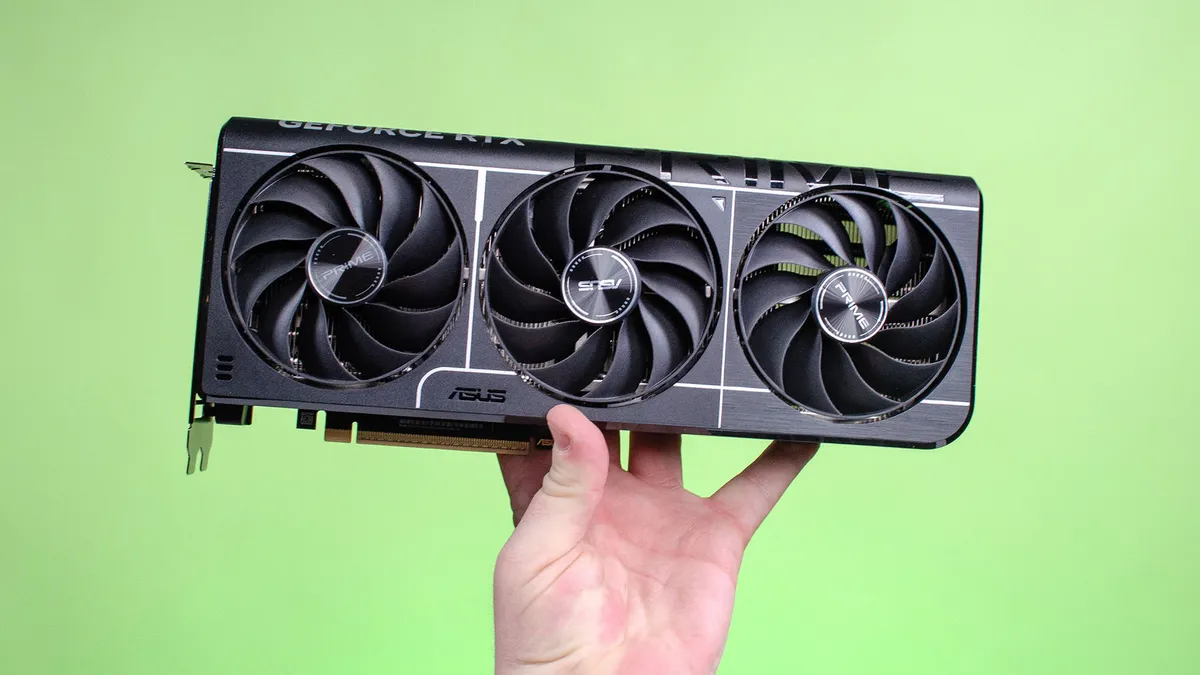
❌ You want the very best performance: While the performance of the RTX 5070 Ti is fantastic, there are better (though more expensive) graphics cards you can buy to maximum performance.
❌ You're on a tight budget: While the MSRP on this card is great for an enthusiast-grade GPU, it's still very expensive for most buyers.
❌ You don't plan on gaming at 4K: If all you're looking to do is game at 1440p, this card is likely going to be overkill, especially with more affordable 1440p GPUs on the market.
✅ You want the perfect balance of 4K performance and price: Pretty much across the board, this card delivers outstanding performance no matter the workload for less than other premium GPUs.
✅ You want fantastic creative performance on the cheap: For creative professionals, a high-quality GPU can be a very expensive proposition, but this card brings solid 3D, video, and raster performance on a budget.
✅ You want the latest Nvidia technology: DLSS 4 with Multi Frame Generation is a fantastic way to max out 4K gaming monitors.
I found the Nvidia GeForce RTX 5070 Ti to offer the best balance of performance and price across all categories that I've seen over the last two generations of Nvidia GPUs, and it's not even really close in most cases.
My test results found it gives crisp, fluid 4K gaming performance without much in the way of settings compromise in just about every game. Meanwhile, content creators or AI enthusiasts who are looking for an Nvidia GPU that can deliver top-tier performance without the kind of substantial investment normally required for a workstation GPU.
Of course, this all comes with a massive caveat, which is that you're able to find this card at MSRP. Without a Founders Edition card directly from Nvidia, pricing is ultimately in the hands of third-party partners, so there's no guarantee that you'll ever be able to find this card at the price Nvidia set for it. So depending on the price you find for this card, your value proposition may change accordingly, and other cards on this list might be better options.
Objectively speaking, however, just about every other card on this list faces the same pricing pressures that the RTX 5070 Ti does, and so on balance this card is almost certainly going to offer you the best performance for your money no matter what you're looking to use it for.
If you want it for your gaming rig, you can game at close to 90 fps on average at 4K with a fps floor of 65, which is about as good as you could want for a premium GPU, especially for its price.
Creative pros who need a dedicated GPU for 3D modeling or video editing work will especially like this card, as it comes close to matching some of the best graphics cards for creatives of the last generation, and someone upgrading from an RTX 3090 will see a big performance boost over what they have now.
If the price of Nvidia's RTX 5080 and RTX 5090 are too high for your liking but you want enthusiast-grade performance, the RTX 5070 Ti is exactly the card you're looking for.
Read the full Nvidia GeForce RTX 5070 Ti review
Also consider
The best gaming graphics card
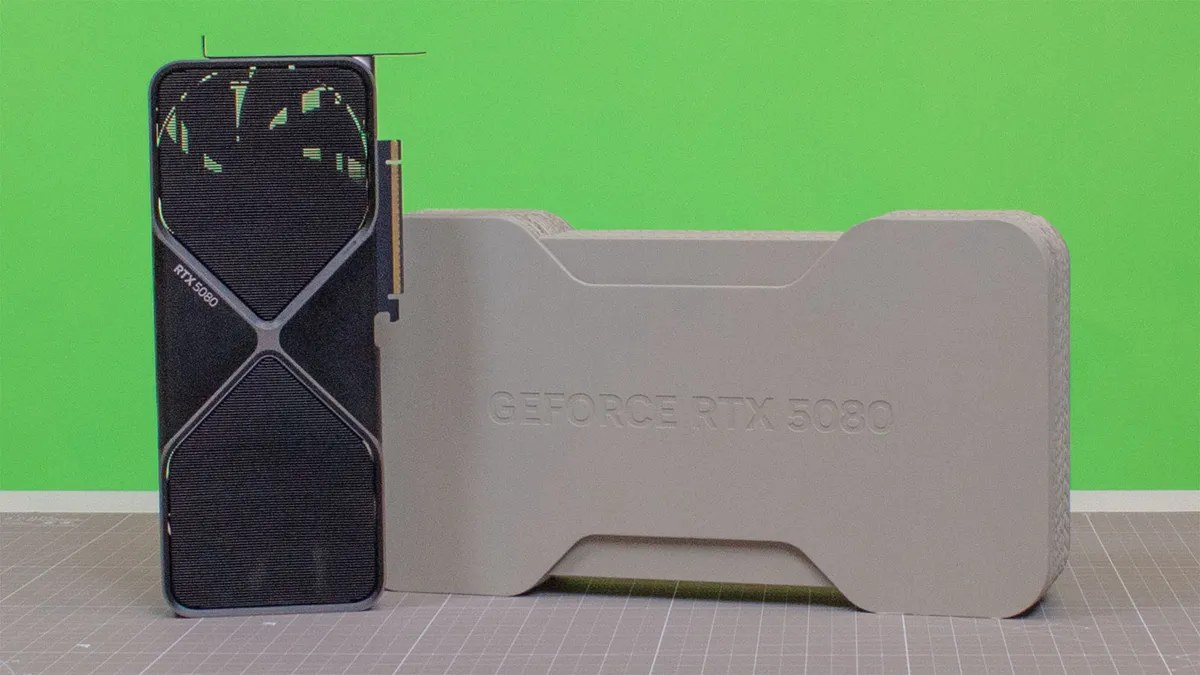
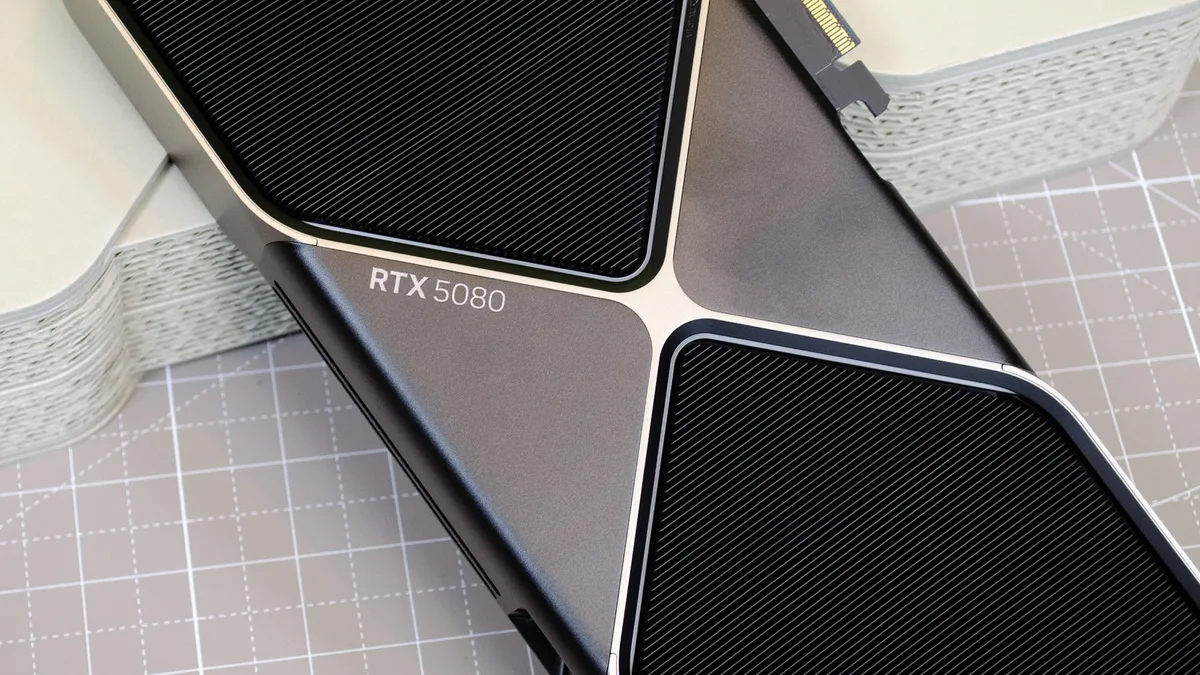
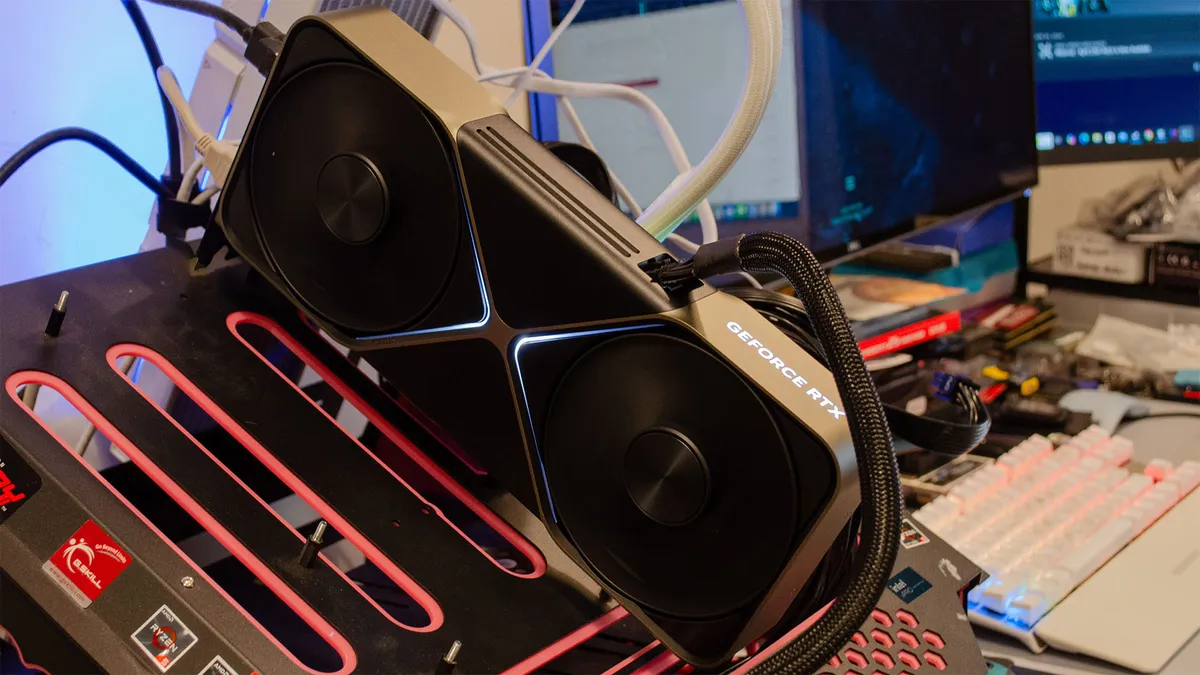


✅ You want fantastic 4K gaming performance: The RTX 5080 has some of the best 4K gaming performance you're going to find anywhere, even before factoring in DLSS 4 MFG.
✅You want very strong creative performance on the cheap: Nvidia's GPUs are miles ahead of the competition when it comes to creative workloads, and the RTX 5080 delivers fantastic performance for the price.
❌ You have anything better than an RTX 4080: The RTX 5080 isn't a huge improvement over the RTX 4080 and RTX 4080 Super, so if you have those cards, there's not much reason to upgrade.
❌ You're on a tight-ish budget: While not as pricey as the RTX 4080, RTX 4090, or RTX 5090, this is still a very expensive graphics card, even before factoring in price inflation by third-party sellers.
The Nvidia GeForce RTX 5080 is the third most powerful GPU you can buy at a price that won't force you to take out a small bank loan to buy, even though which version of the card you buy can make all the difference in terms of whether you'll be able to afford it.
This card is one of the most sought-after on the market, so it's subject to ongoing stock issues and price inflation which makes its value proposition for any given buyer a moving target.
This is especially true once you consider that the gen-on-gen uplift of this card over the RTX 4080 and RTX 4080 Super is only about 8-13% according to my testing, so if you can find the RTX 4080 and RTX 4080 Super for less than an RTX 5080, those cards might be a better value depending on their price.
It also goes without saying that anyone with an RTX 4080 or RTX 4080 Super should not get this card, as you won't see much benefit from it other than Multi-Frame Generation with DLSS 4, which is not worth spending this kind of money on.
For everyone else, though, especially those coming from the RTX 30 series or pretty much any AMD card other than the RX 7900 XTX, the RTX 5080 will blow you away—assuming you can find it in stock, that is.
Read the full Nvidia GeForce RTX 5080 review
Also Consider
The best graphics card for creatives
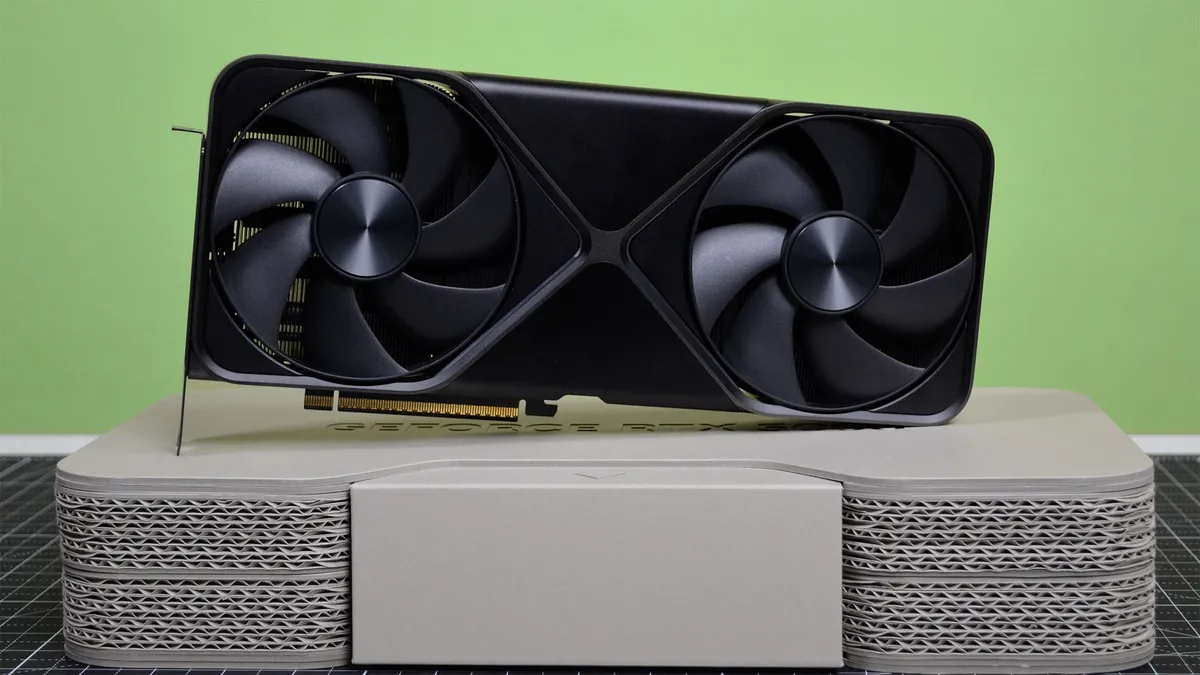
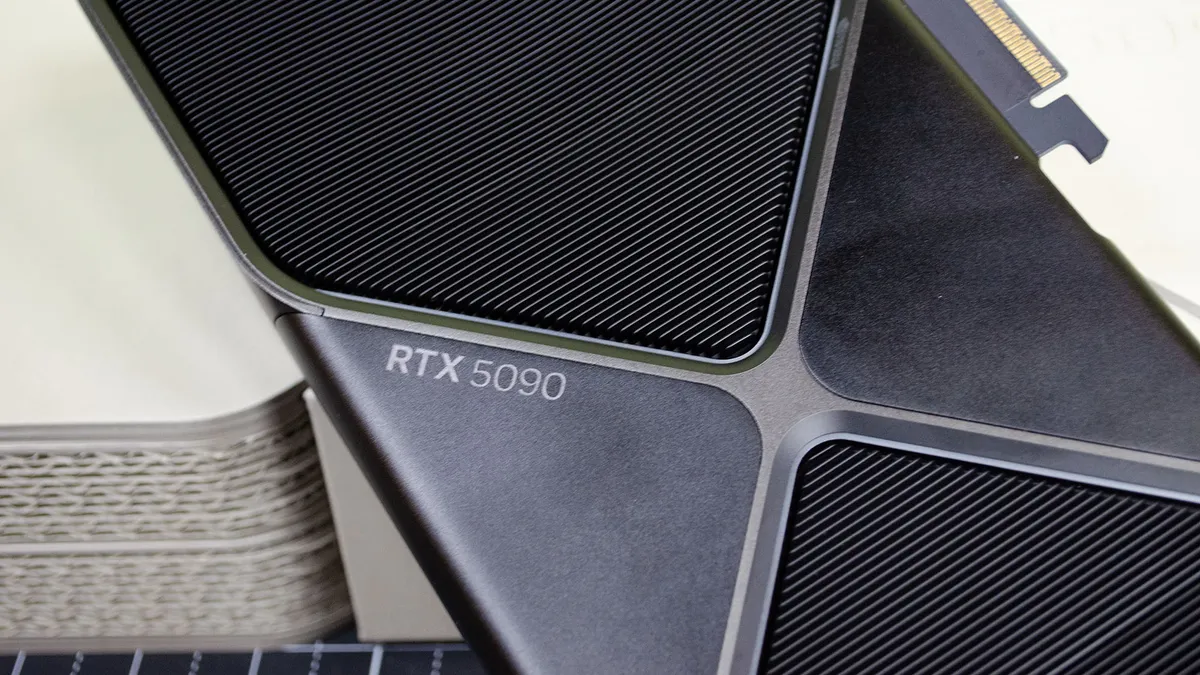
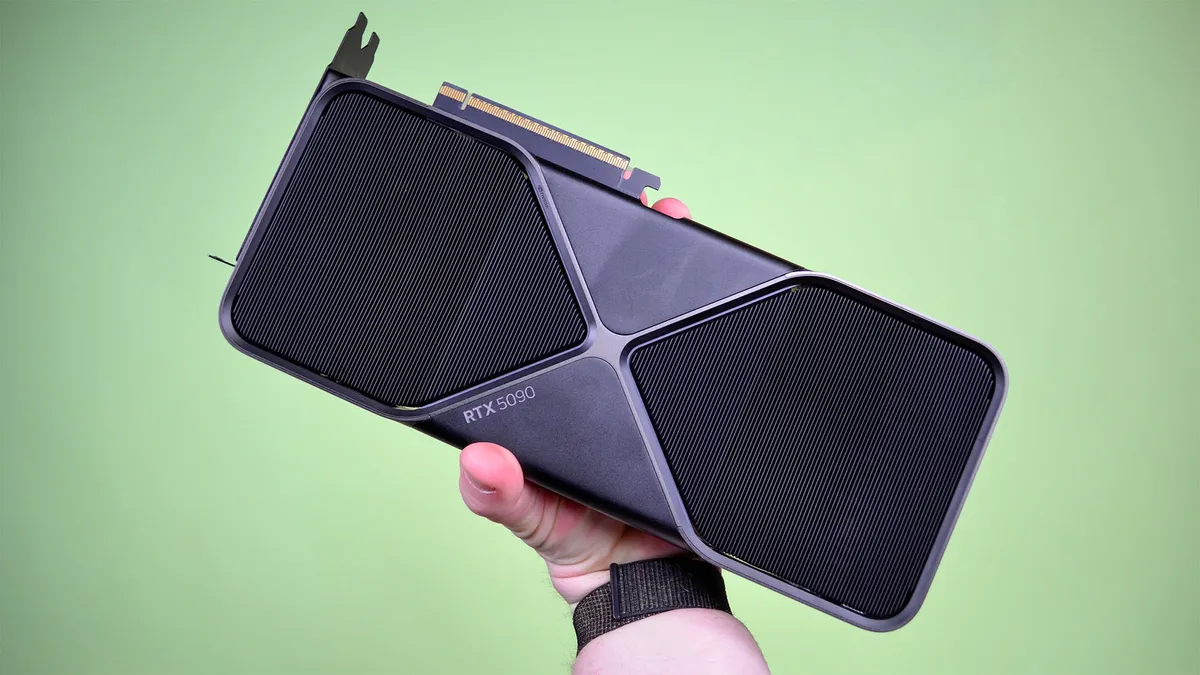


✅ You want the best of the best: The RTX 5090's performance is in a class all its own, blowing away even the vaunted RTX 4090.
✅ You do a lot of 3D modeling/rendering: The RTX 5090's 3D rendering performance is 30-40% faster than the RTX 4090, which is light years ahead of anything else, so this card is a 3D artist's dream.
✅ You're spending someone else's money: If you don't have to pay for this thing, there's no reason not to splurge on the best performance available.
❌ You're not a creative or machine-learning professional: While the gaming prowess of this card is undeniable, it's honestly extreme overkill for 99% of gamers out there.
❌ You aren't flush with cash: Honestly, unless you're loaded to bear with fat stacks of cash, there are graphics cards out there that will get you phenomenal performance at a fraction of the price.
If you're looking for the best possible performance for your creative work—and who isn't? Time is money, after all—then this is really really the holy grail for creatives (not to mention AI professionals).
Whether you're working with 3D modeling and rendering in a professional capacity, you're a video production professional, or you're an AI researcher, Nvidia's GPUs have long been the standard for commercial and academic use, but the RTX 5090 is in a whole other league.
With a massive 33% increase in multiprocessors, including industry mainstay CUDA and Tensor cores, and 32GB VRAM that is faster than the last-gen's best, the RTX 4090, which 'only' had 24GB VRAM.
For the gamers and enthusiasts out there who are determined to flex on their friends with this card, my testing found it was nothing short of overkill for every game I tested it with. It's the only graphics card that's truly capable of handling native 8K gaming, thanks to its massive VRAM pool and enormous memory interface, but it's also the only graphics card I've tested where you can get actually playable native 4K gaming with ray tracing maxed out.
Of course, all this performance isn't cheap, and you could buy a used car with a year or two of life in it for the same price as this card's MSRP, and there's no way you're ever going to find it at MSRP. What's more, its frankly scandalous power consumption tops out around 575W, so expect a hefty power bill to go along with this already super-premium GPU.
Read the full Nvidia GeForce RTX 5090 review
Also consider
The best 1440p graphics card


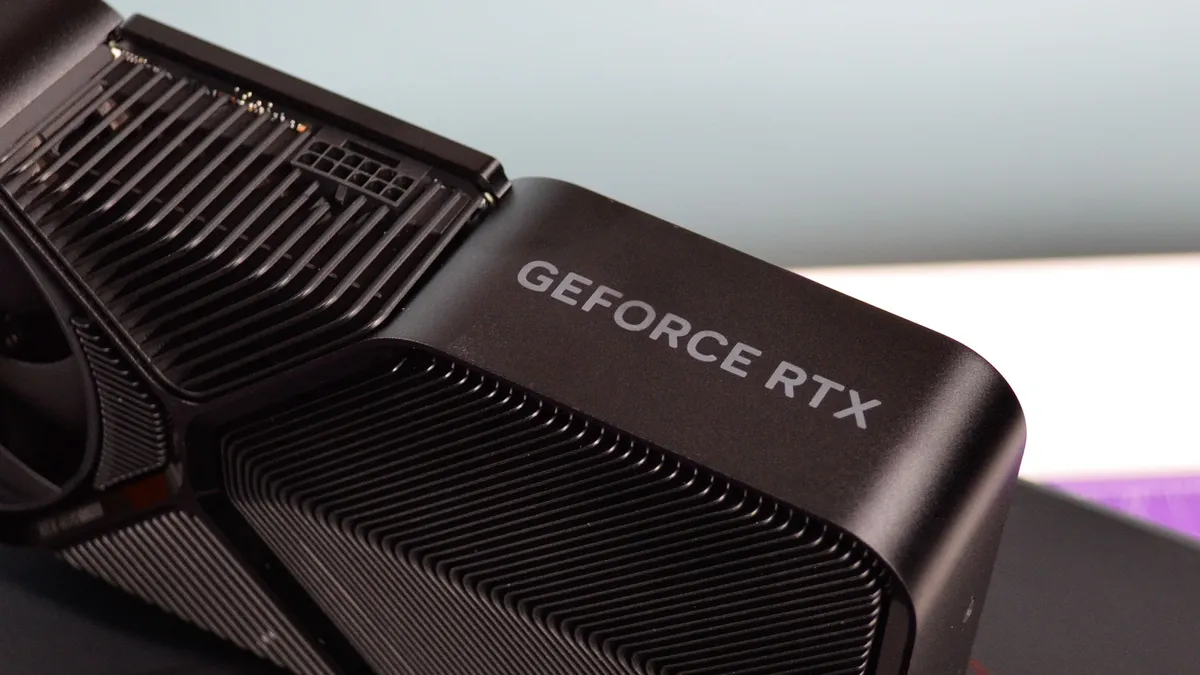


✅You want fantastic midrange performance: Given the strength of this card in all categories, on balance, it's one of the best graphics cards you're going to find in the midrange.
✅You want very strong ray tracing performance: With the maturity of its ray tracing cores, the RTX 4070 Super is the best ray tracing GPU in the midrange, for sure.
✅You want some creative performance as well: With its strong CUDA backbone, the RTX 4070 Super is a great option for those looking to get into creative content work.
❌ You don't want to spend a fortune: Given the price of the competition, there are better graphics cards for your money than the RTX 4070 Super
❌ You don't care about ray tracing or compute performance: The strongest assets this card brings to the table are its ray tracing and tensor cores, but if you don't care about ray tracing or machine learning tasks, the RX 7900 GRE will offer a better overall gaming performance.
The Nvidia GeForce RTX 4070 Super meets the high expectations I had for this card, offering compelling performance at the same price as its predecessor.
The Super outshines the base RTX 4070, offering more SMs for enhanced processing and a swifter base clock speed. However, its 12GB GDDR6X VRAM limits its 4K prowess, so for optimal 4K performance, the Nvidia RTX 5070 Ti and RTX 5080 are a better bet.
For top-tier 1440p gaming, though, the RTX 4070 Super excels thanks to its robust specs, DLSS 3 with Frame Generation, and Nvidia Reflex technology.
And while the RTX 4070 Super generally outperforms the RX 7800 XT, particularly in ray tracing, AMD holds the edge in 1440p gaming performance with the RX 9070.
Despite stiff competition, the Nvidia GeForce RTX 4070 Super still stands out as the best 1440p graphics card overall for those who want the most utility out of a midrange GPU, especially for anyone seeking a balance of gaming prowess, content creation capabilities, and sheer performance.
Read the full Nvidia GeForce RTX 4070 Super review
Also consider
The best 1080p graphics card

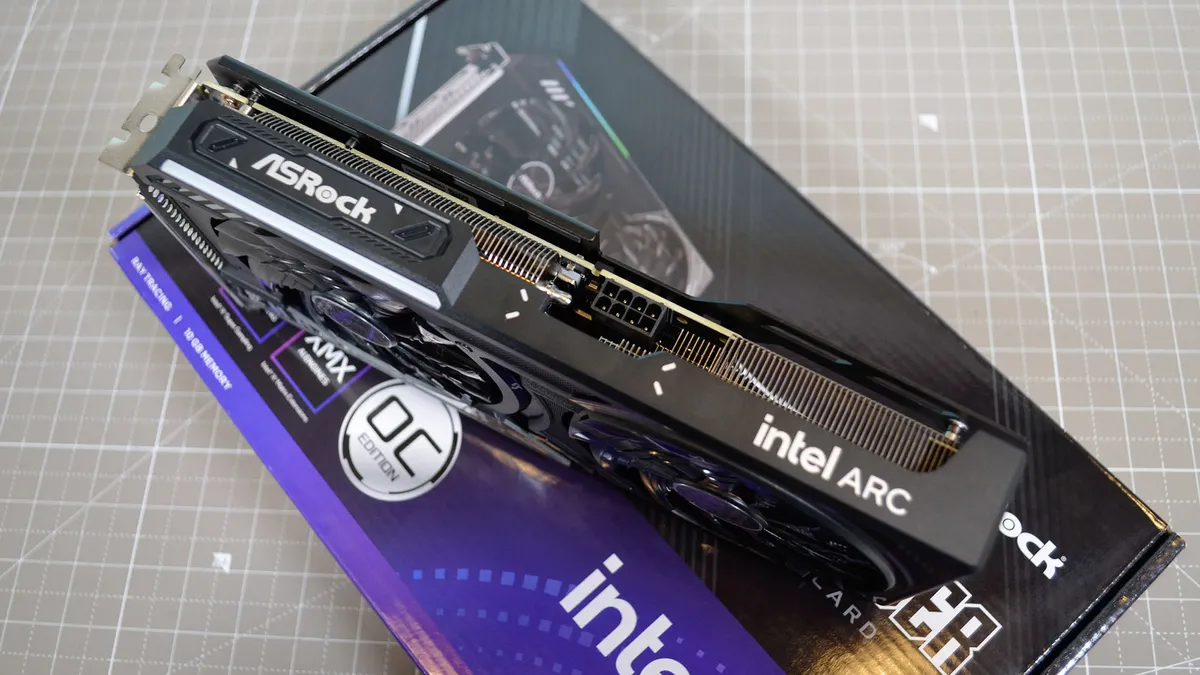


✅ You want bargain-priced 1080p gaming: This graphics card can't do a lot of things, but one thing it's great at is playing 1080p games for a fraction of the price of its nearest competitors.
✅You want good ray tracing performance for cheap: The main draw of this GPU is how dirt cheap it is relative to the market, and for that, the ray tracing on this card is better than it has any right to be at this price (though it's still not great, necessarily).
❌ You want to game at 1440p: Given the limited amount of VRAM, this GPU isn't really capable of 1440p gaming without some major compromises on visual quality.
❌ You want a budget creative card: If you're just putting your toes into the waters of creative work, whether it be 3D modeling, video editing, or the like, you should probably look at the RTX 4060 instead. This card won't give you what you need.
The Intel Arc B570 might not get as much attention as the Intel Arc B580, but if all you're looking for is dirt-cheap 1080p gameplay with some nice extras like ray tracing and hardware upscaling, you can't go wrong with the Arc B570.
For significantly less than competing 1080p cards like the AMD RX 7600 and Nvidia RTX 4060, you can get nearly the same level of performance while gaming at 1080p, and with hardware upscaling through Intel XeSS with Frame Generation, you can get frame rates we've simply never seen at this price point.
Of course, it does come with some limitations. Its 10GB GDDR6 VRAM is great, but not quite enough to really handle 1440p gaming without some major compromises. Its creative performance is also pretty much non-existent beyond being able to encode AV1 video, which you might find useful if you're a streamer and you want a cheap setup to offload some video processing into.
Otherwise, this is strictly a cheap 1080p gaming graphics card, and for what it is, it's about as good as you're going to find anywhere on the market right now.
Read the full Intel Arc B570 review
Also Consider
The best last-gen Nvidia graphics card

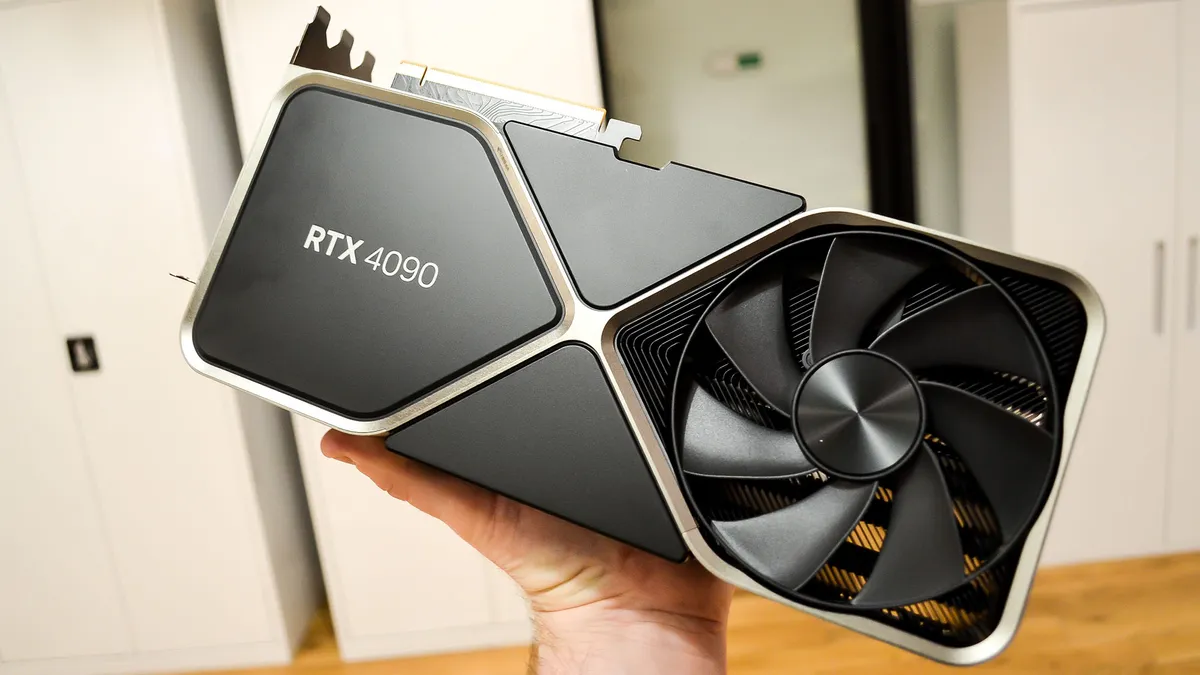


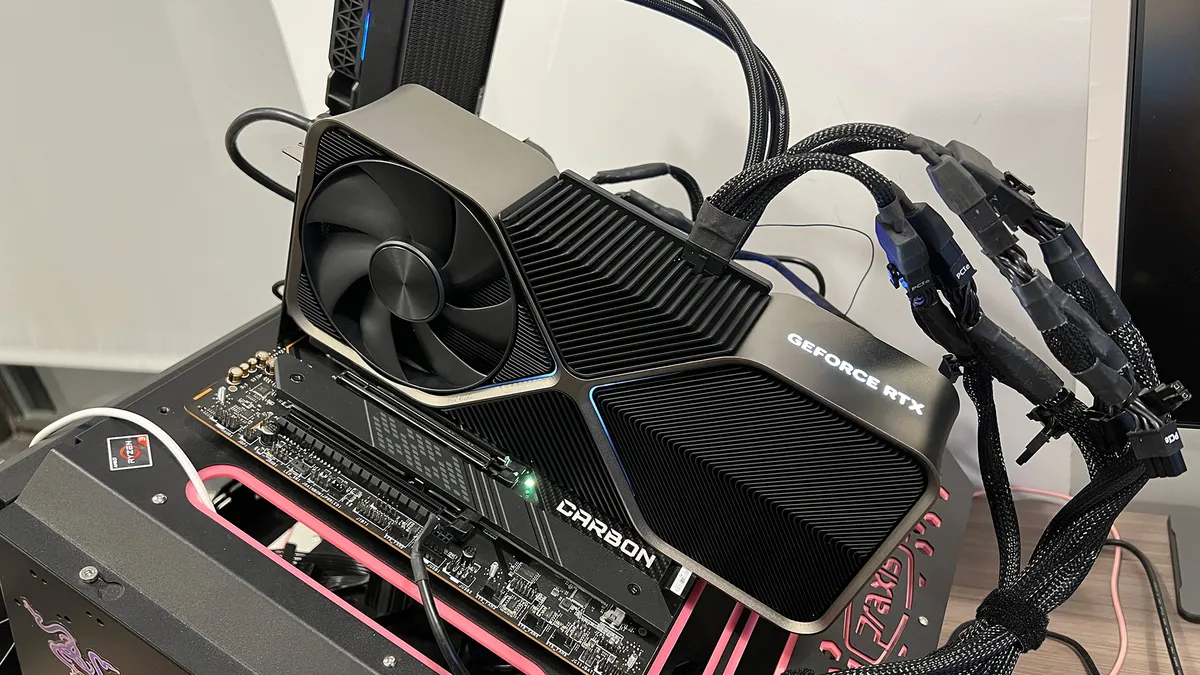
✅ You want native 4K ray-traced gaming: This is one of the few cards that can consistently run full ray tracing at native 4K resolution.
✅ You are a 3D graphics professional: If you work with major 3D rendering tools like Maya, Blender, and others, this is your graphics card.
❌ You're on a budget: This card is incredibly expensive, even on sale.
❌ You're concerned about power consumption: With a TGP of 450W, this card has a near-bottomless appetite for power.
Yes, the Nvidia GeForce RTX 4090 is expensive. It also requires a 16-pin connector or adapter that many people still don't have, and it is very, very big. But, the first release from Nvidia’s new 4000-series is an absolute powerhouse that can tackle anything you need it to, making it a worthwhile pickup from the last gen if you can find it for cheap.
In my testing, I found it performed significantly better than the Nvidia GeForce RTX 3090 with two to four times the performance in synthetic benchmarks and up to 100% improved framerates with some games. What’s more, DLSS 3 is a game-changer in terms of gaming frame rates, and in games that support it, the RTX 4090 with Frame Generation turned on will absolutely push even the best gaming monitors to the limit of what they can do. Now that DLSS 4 is rolling out to the RTX 40 series, this is an even more powerful card than it was when I reviewed it in 2022.
That said, this is far more GPU than most people will probably ever need, and you have to really, really want this card, especially at the prices it is selling for right now. That said, if you can get it for a reasonable price, it's a solid pickup that you might not want to miss.
Read the full Nvidia GeForce RTX 4090 review
Also consider
The best last-gen AMD graphics card
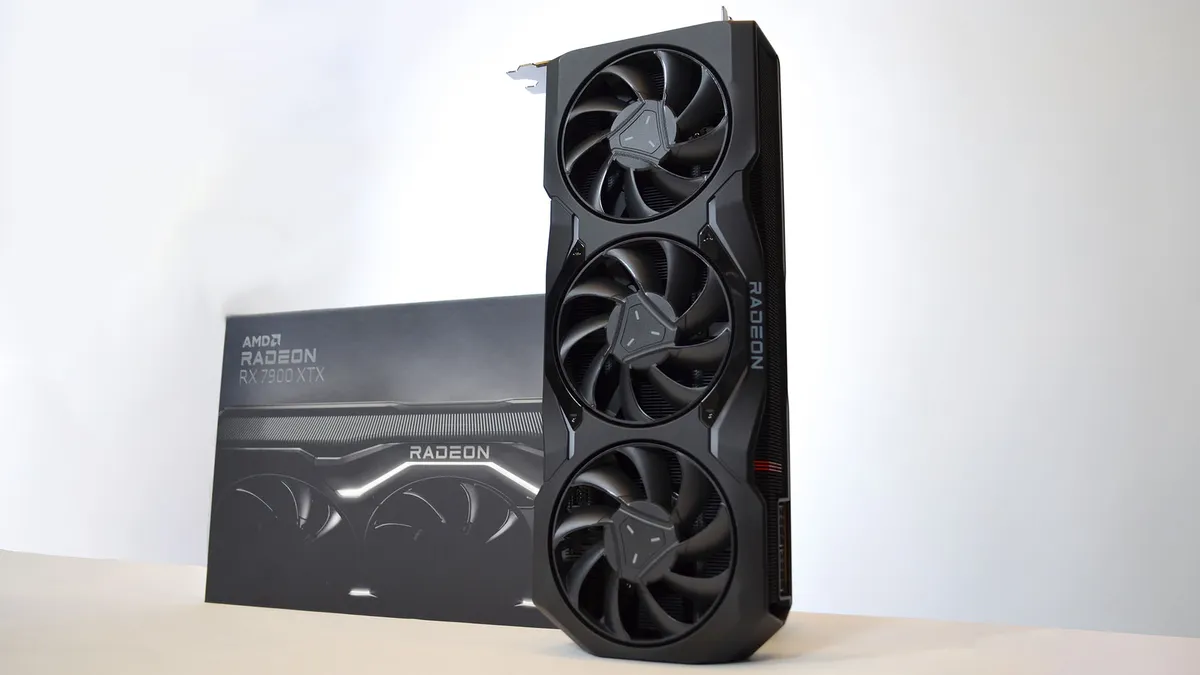

✅ You want outstanding 4K gaming performance: Few games can challenge the RX 7900 XTX at native 4K, and FSR upscaling even makes fast ray-traced 4K gaming possible.
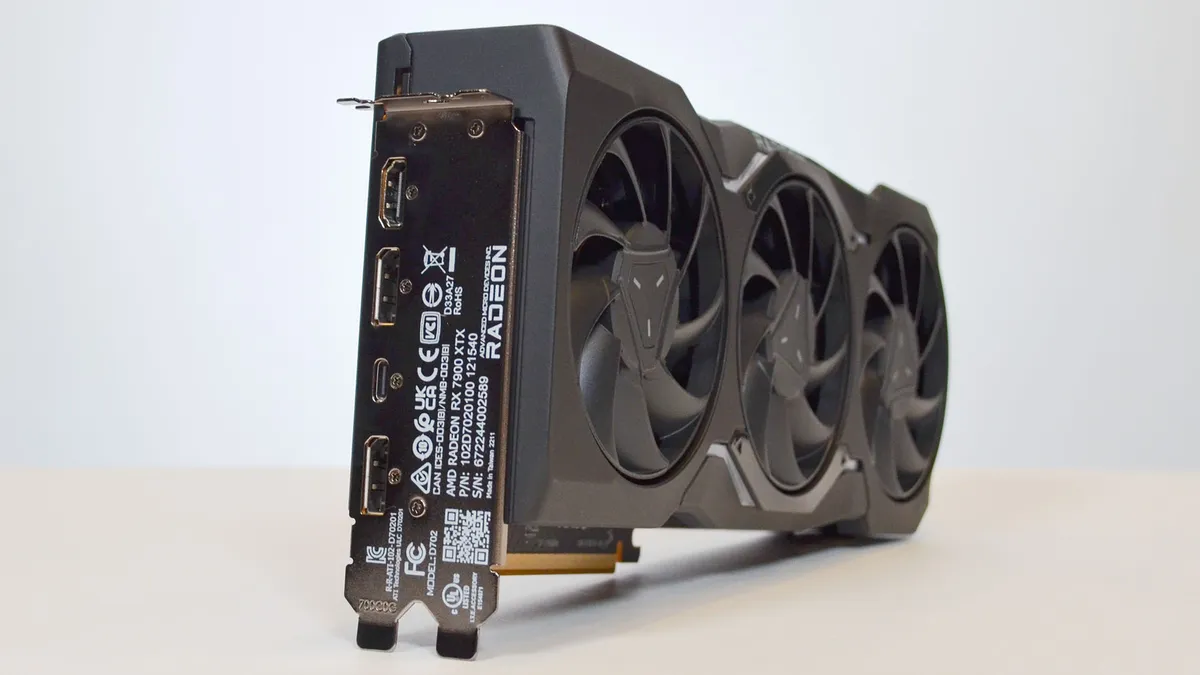
✅ You want to future-proof your rig for fast 8K gaming: Thanks to its 24GB VRAM and DisplayPort 2.1 output, when 8K gaming finally does arrive in the next few years, this card has the hardware so it won't be completely out of its league.
❌ You want something for creative work: While the price tag might lead you to think this card can do anything, it really can't keep up with even midrange Nvidia cards in creative workloads like Blender.
❌ You're on a budget: While it is well-priced for a premium GPU, this card is not for those who are on tighter budgets.
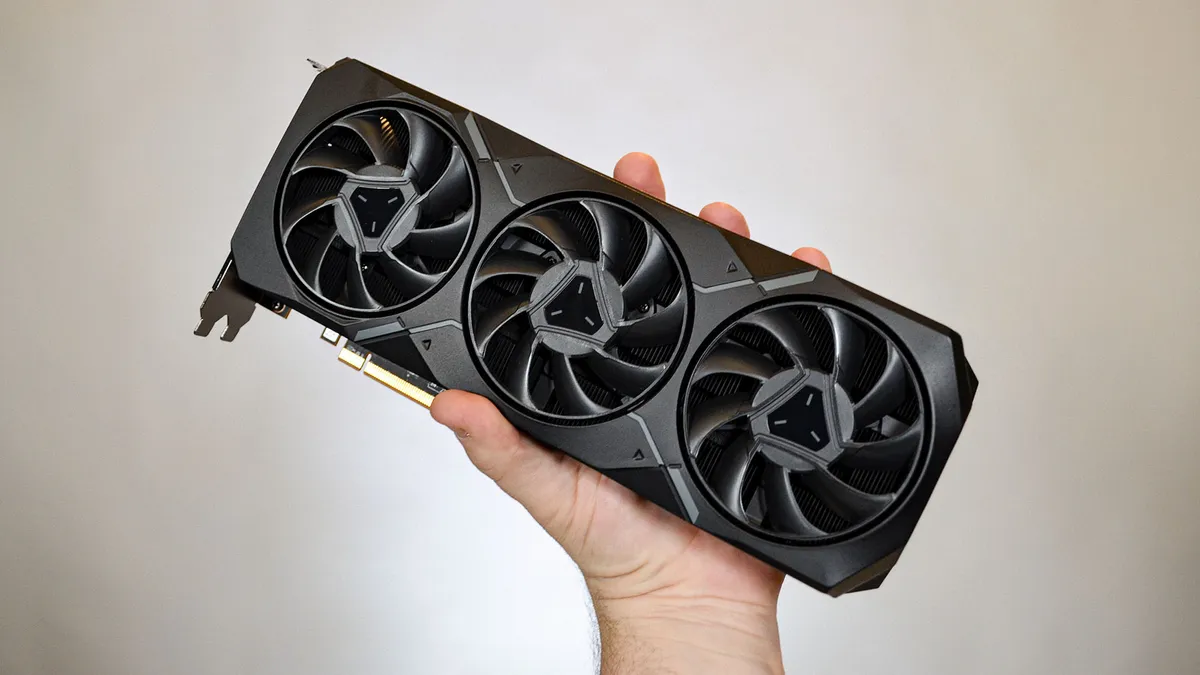
Asserting its dominance in the 4K gaming realm, the AMD Radeon RX 7900 XTX marks AMD's most exceptional offering in the premium category.
Released at the tail end of 2022, this powerhouse GPU is a couple of years old now, but it's still holding its own against current-gen cards like the RTX 5070 Ti. Especially when it comes to 4K gaming, there are few cards that can match the frame rates of the RX 7900 XTX.
Outside of gaming though, things aren't as rosy for the best AMD graphics card of the last generation. Thanks to Nvidia's proprietary lock on the CUDA instruction set powering most 3D modeling software and AI tools like Pytorch (not to mention Nvidia's advanced Tensor cores), even more budget-friendly Nvidia cards are better for these workloads than AMD's last-gen flagship.
That said, if you're looking for a gaming dynamo that's capable of blazing-fast 4K gaming, this is definitely one of the best graphics cards you can buy and might even be more available than Nvidia's latest RTX 50 series GPUs.
Read the full AMD Radeon RX 7900 XTX review
Also Consider
My top tips for buying a graphics card

When shopping for the best graphics card for your needs and budget, the first thing you need to do is consider your monitor (or the monitor you plan to buy), as the resolution you're targeting matters quite a bit.
For 1080p, I recommend looking at GPUs with at least 8GB VRAM, like the AMD Radeon RX 7600 and Nvidia RTX 4060, but getting one with 10GB VRAM like the Intel Arc B570 is ideal.
For 1440p, I recommend GPUs with at least 12GB VRAM, like the Nvidia RTX 5070, AMD RX 9070, or Intel Arc B580. This will ensure high framerates at quad HD resolution, which is considered the sweet spot for PC gaming.
For 4K gaming, my testing shows that you'll need a minimum of 16GB VRAM in your GPU, preferably with a 256-bit memory bus to make sure that UHD textures are processed quickly so you can maintain a 60 FPS baseline for your games. This means you should be looking at cards like the Nvidia RTX 4080 Super, RTX 5080, AMD, RX 7900 XTX, and AMD RX 9070 XT, all of which are great picks for 4K gaming.
For creative and AI use, you're going to want to stick to the best Nvidia graphics card you can afford, as it will give you the level of performance professionals need.
If you need more in-depth advice on how to choose a graphics card appropriate for your needs, you can read my in-depth guide to how to choose the right graphics card.
How I tested the graphics cards on this list
When it comes to the best graphics cards, it's essential that I test every GPU I review on an equal playing field. That's why I test graphics cards with a full suite of benchmark tests covering synthetic tests, creative performance, and a battery of around 7-10 games tested at different settings and across several resolutions, all on current drivers.
I am also constantly retesting graphics cards I've already reviewed so I have the most up-to-date data as drivers are updated. I make sure that all of the cards are tested on the same hardware, which means the same processor, the same memory at the same speed, the same motherboard, and the same SSD.
That way, I can be sure that I'm measuring how the graphics card itself is performing relative to other cards.
If you want to know my testing process in greater detail, you can read more about how I test graphics cards for TechRadar in-depth.
Which graphics card has the best power efficiency?
There are a few ways to measure energy efficiency for a GPU, with the two most common being which draws the most power under load, and which gets the best performance per watt.
While maximum power draw is very important (if your graphics card draws more power than your PSU can provide, your PC will crash without warning) since knowing its peak power consumption is essential to knowing whether you can effectively use the card with your PC build.
But if we're talking specifically about efficiency, there's value in knowing which graphics cards get the most performance at the lowest energy use.
For that, performance-per-watt is an excellent metric to look at, especially if you're concerned about your monthly power bill.
The best graphics card: FAQs
Which graphics card is best for gaming?
Generally speaking, the best graphics card for gaming is going to depend on several factors, but principally, your budget and monitor resolution will dictate the best card for gaming on your system.
For 4K gaming, the Nvidia RTX 5080 is as good as it gets without spending an absolute mint on the RTX 5090, while the AMD Radeon RX 9070 XT is the best gaming graphics card from AMD, with the Intel Arc B580 offering an excellent budget-friendly alternative.
For 1080p, the Nvidia RTX 4060 is the way to go, while the AMD Radeon RX 7600 and Intel Arc B570 are also great alternatives.
What is the most powerful graphics card?
The most powerful graphics card for gamers and creatives on the market right now is the RTX 5090. That's because it features a staggering 32GB GDDR7 memory pool with a 512-bit memory bus, along with a massive GPU die with more than 20,000 shader cores,
Is a GTX or RTX graphics card better?
An RTX graphics card is much better than an older GTX model. Nvidia discontinued the GTX line when brought in the RTX 20 series a handful of years ago. RTX GPUs are capable of real-time ray tracing and can utilize the company's AI upscaling tech DLSS for increased framerates in more demanding games.
What GPU can run 4K?
As a general rule, running a modern AAA game at native 4K—that is, without using upscaling technology like DLSS or FSR—your GPU will need at least 16GB VRAM.
Cards with 12GB VRAM can run games at 4K with upscaling technology and other graphics settings tweaks, but some cards will do better than others.
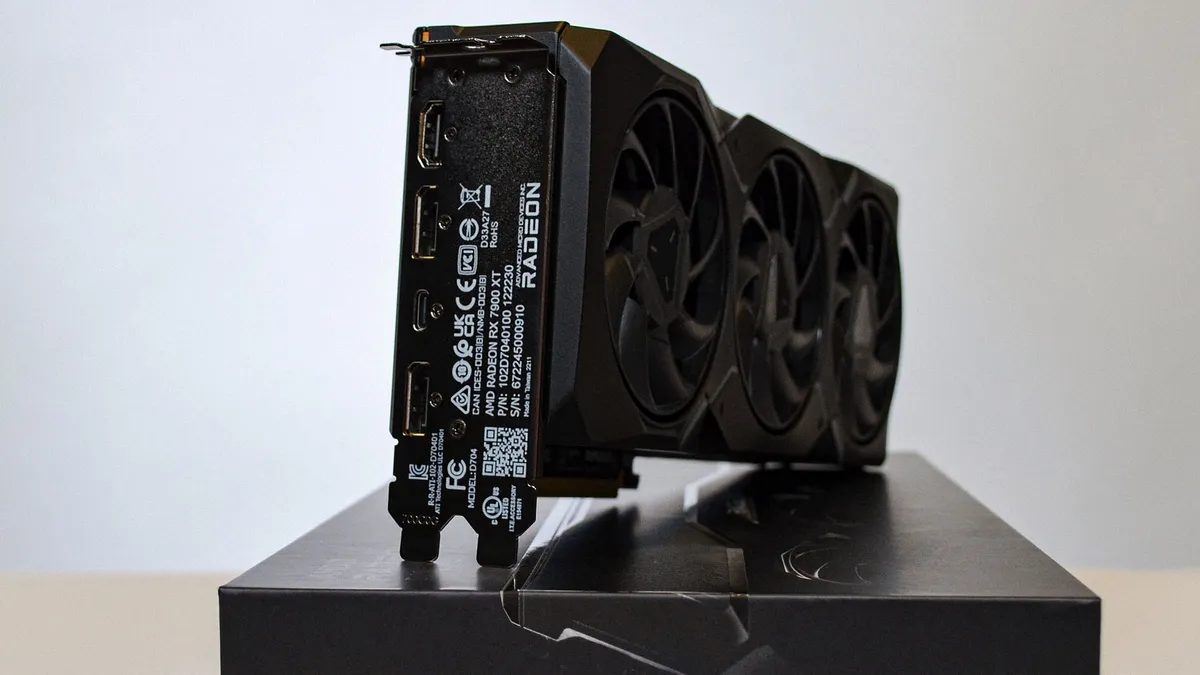
Cards with less than 12GB VRAM are not going to be able to play games at 4K reliably without considerable graphical sacrifices.
Today's best graphics card deals
