


Ring is expanding its product lineup again with the Ring Smart Lock, and it comes at a busy time for Amazon and the broader smart home sphere. But Ring founder Jamie Siminoff sees the expansion as precisely staying within the company's mission.
"For us, it's really around like making your home more secure... more manageable, and more peace of mind," he told me.
The newcomer is the Ring Smart Lock, set to launch in the United States in Q1 2027 for $249 in three finishes: black, silver, and brass. There aren't plans for an international launch as of yet, but that price converts to around £190 / AU$360.
It doesn't seek to reinvent the wheel. Instead, as Siminoff put it, it aims to solve "range anxiety" — the worry that a smart lock that loses power "becomes a brick".
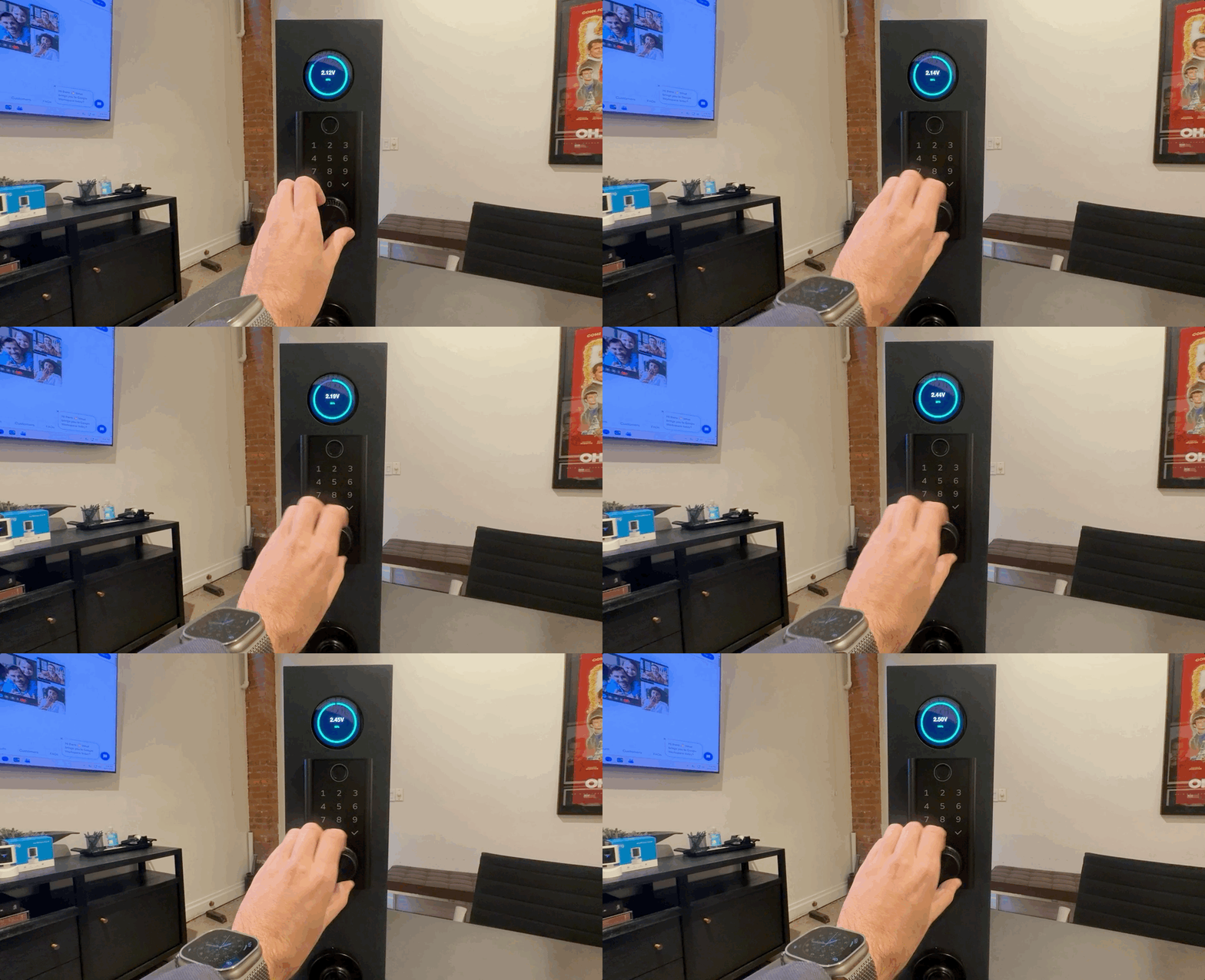
How? Alongside typing in a numeric code, scanning a fingerprint, or using the Ring app or Alexa, the Smart Lock has a decidedly manual solution for when the battery dies. What would effectively make the lock non-functional is solved with a hand crank, which Ring calls the Power Dial and which looks like a dial on the front.

After five to eight turns, depending on how quickly you crank it, the Power Dial charges a supercapacitor to give you 10 to 30 seconds of power. That's enough to punch in your code and unlock the door. It doesn't charge the main Ring quick-replace battery pack, though, which Siminoff says lasts about a year.
Rather, it's a small jumpstarter of sorts, and he says there's a reason for that. Putting a little hand-cranked energy into the battery would be like "a garden hose in an Olympic-sized swimming pool." But the feature is ultimately designed to help in the moment where the battery dies.
That's the real differentiator here, and one Siminoff hopes will strike a chord with potential buyers. "I think all of the things to fix the problem of the battery dying have not been great until now," he said. The usual fallback is a metal key stashed somewhere around the house, a solution he called medieval.
Siminoff says the idea occurred to him while he was building a house he expected to use less often when the builder asked which lock he wanted. That sent him shopping for a smart lock, and he wasn't impressed by what he found. So he started wondering whether a smart lock could power itself, and this is where AI comes in.
Siminoff turned to Amazon Q, Amazon's internal AI assistant, to see if a hand crank could generate enough power. "At first I thought that hand-cranking must not work to give enough power... because no one's done it," he said.
But as he kept going through it, he realized that with a small enough motor, a supercapacitor would be enough, and it wouldn't add much cost. It does work, he said, and "I don't know why no one else has done it."
That's the real payoff, he says. Before, an idea like this would have meant pulling a team off other work for months, "not even knowing if it could work." Now, "I can sort of synthetically do all of that by myself," he said. It also spares his engineers a dead end. It's very possible, he noted, that a team would have come back with a design where "the lock would be like this big... hand-cranked, like you have to get on a bicycle and power it," he said, laughing. "That just wouldn't work."
By the time he took the idea to his team, he was handing them a "here's what I want built," because, as he put it, "Okay, it is worth taking 10 people to build this, because I actually know it's going to get built."
And he gives AI credit for a lot more than this one lock. Asked about the team's work on new 4K cameras and the Smart Lock, he said, "AI has been a huge... super, or super intelligence has been a huge tailwind... to like really pushing us, you know, just faster."
Of the lock itself, he added, "It's still hard to build this... and it's hard to do it, but it's a thousand times easier, and I don't think without AI we would have been able to get there." It certainly shows the potential AI can have for creating products as well.
So we'll kind of let Alexa sort of lead the way on that
Jamie Siminoff
There's also the subject of connectivity beyond the rest of the features for the Smart Lock. As expected, it plays nicely with the Ring app and Alexa. It also has Amazon Sidewalk built in, so it can stay online if your home Wi-Fi flakes out. If you're not a fan of the shared network, though, that's worth a closer look before you buy, as Ring confirms final specs.
Ring didn't announce support for Apple Home or Matter with the Smart Lock, and Siminoff sees it more as Ring leaving those connectivity arms to Alexa. "We probably won't do anything directly as Ring, because it's more the Alexa integrations, because Alexa already has a lot of lock integrations and other stuff, so we'll kind of let Alexa sort of lead the way on that."
The Ring app will be where you can grant access, check if it's locked or unlocked, and set schedules as well.

Even so, I think there will be a lot of people in the market for smart locks looking for that extra connectivity, or even support for Apple's Home Key standard. You can still unlock the door from your phone through the Ring app as you walk up, but it might not be a one-for-one match. Also, if you're not a fan of Sidewalk, this might not be the best fit for you.
The Smart Lock will launch in Q1 2027 in the United States, although aspects of the product could change as we approach launch, as it has not yet been authorized by the FCC.
It's also arriving just days before a rumored entry from Apple back into the smart home space, and in an already crowded smart lock market.
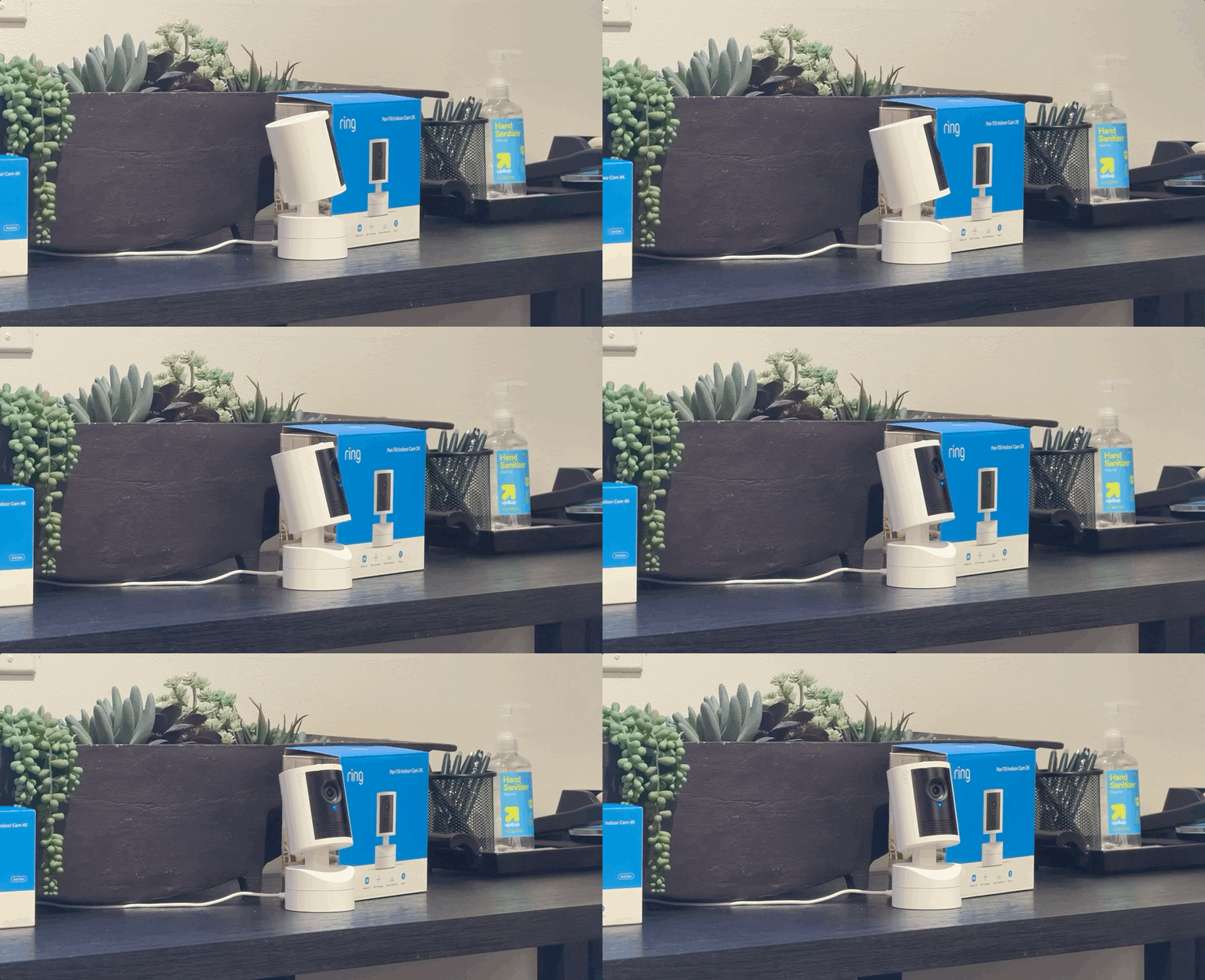
Ring isn't just announcing the Smart Lock today, either. It's also announcing a slew of cameras, including a new Pan and Tilt offering that can track motion on both the horizontal and vertical axes and has a built-in privacy shutter. It's also expanding its higher-resolution Retinal 4K to more cameras.

Follow TechRadar on Google News and add us as a preferred source to get our expert news, reviews, and opinion in your feeds. Make sure to click the Follow button!
