


Sponsored by

Do I really need the WireGuard protocol with my VPN?

In terms protocols used by VPNs, WireGuard is a relative newcomer. Yet it's shaken up the VPN world since first appearing in 2016 and reaching wider adoption around 2020.
Having been designed to be faster, simpler, and more secure than older VPN protocols, it’s quickly become the go-to choice for many top VPN providers.
But does that actually matter for you as a day-to-day VPN user? We explore that question in this article, comparing WireGuard to other common protocols and considering its future.
What is WireGuard?
VPN protocols are a set of rules that determine how your data is encrypted and transmitted between your device and a VPN server.
WireGuard – which we look at in even greater detail in our dedicated guide – is a modern VPN protocol and stands out thanks to its stripped-back design.
Traditional, even more established, protocols, like OpenVPN, can take up hundreds of thousands of lines of code, while WireGuard uses just a few thousand. That simplicity makes the protocol faster, easier to audit for security flaws, and more efficient on everything from laptops to smartphones.
It also uses cutting-edge cryptography by default, rather than relying on configurable, and sometimes misconfigured, options. So it’s built for speed and security without the legacy baggage.
WireGuard pros: why you should use it
- Faster speeds: WireGuard is one of the fastest VPN protocols available. Its lean codebase and efficient encryption mean less lag, which means better streaming, gaming, and browsing performance.
- Quick connection times: WireGuard connects almost instantly, compared to older protocols, which can take a few seconds to establish a secure tunnel.
- Strong, modern security: WireGuard uses state-of-the-art cryptography, reducing the risk of weak configurations.
- Better battery life: Its efficiency should mean less strain on your device, which is doubly useful on smartphones, laptops and tablets.
- Easier to audit: The smaller codebase makes it easier for security experts to inspect and verify, increasing trust in its design.

WireGuard cons: disadvantages to be aware of
- Privacy concerns (mostly historical): Early versions required storing IP address data on servers, which raised concerns for strict no-logs policies. Most major VPN providers, such as IPVanish, have since addressed this with custom implementations.
- Less configurable: While simplicity is a strength, it can be a limitation for advanced users who want granular control over encryption settings.
- Not always the best for bypassing restrictions: In some restrictive networks or countries, WireGuard's lack of in-built obfuscation means older protocols like OpenVPN may still perform better at evading VPN blocks.
- Still evolving: Compared to legacy protocols, WireGuard is newer and continues to develop, though this is less of a concern now than it was a few years ago.
What other protocols are there other than WireGuard?
WireGuard is far from your only option when it comes to VPN protocols and, depending on your needs, alternatives can appeal:
OpenVPN
The long-time industry standard. Highly configurable and extremely secure, but slower and more resource-intensive than WireGuard. Often preferred for reliability and compatibility.
IKEv2/IPSec
Known for its stability, especially on mobile networks. It handles switching between Wi-Fi and mobile data well, making it a solid choice for when on the move.
L2TP/IPSec
Older and largely being phased out. It’s secure but slower and less efficient than modern alternatives.
PPTP
Obsolete and a VPN protocol that isn't safe by today’s standards. Best avoided entirely.
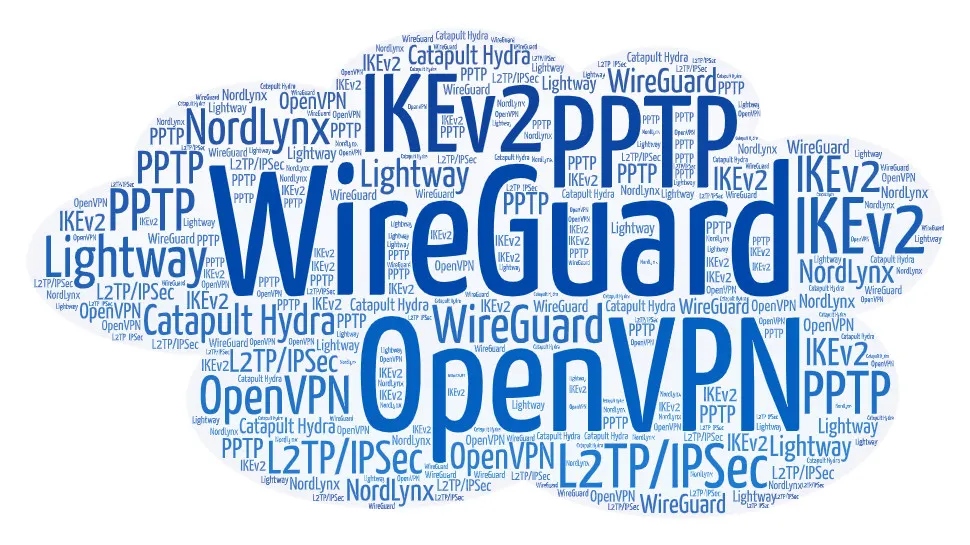
Lots of the major VPN providers have also now developed their own proprietary protocols including NordVPN’s NordLynx (based on WireGuard), ExpressVPN’s Lightway and Proton VPN’s Stealth protocol.
But why build custom protocols at all? Mostly to balance WireGuard’s speed with enhanced privacy and flexibility. For example, NordLynx modifies WireGuard to avoid storing identifiable user data, while Lightway focuses on fast reconnections and reliability.
In practice, these proprietary protocols aim to offer the best of all options for WireGuard-level performance with added layers tailored to each provider’s network.
What’s next for VPN protocols?
The next big shift in VPNs is likely to come from post-quantum cryptography.
Current encryption methods, like WireGuard's, are considered secure against today’s biggest and baddest threats to your computers. Quantum computing, however, could eventually break many of these systems. While that threat isn’t immediate, VPN providers are already exploring quantum-resistant algorithms.
Also becoming apparent are hybrid protocols that combine classical and post-quantum encryption, improved obfuscation techniques to bypass censorship and VPN blocks, plus smarter connection handling, especially for mobile and multi-device users.
WireGuard itself may evolve to incorporate these advances, or it could serve as the foundation for next-generation protocols.
Do I need the WireGuard protocol with my VPN?
In most cases yes, you probably do or, at least, you’ll benefit from having WireGuard available.

If your priority is speed, smooth streaming, gaming, or just a seamless everyday VPN experience, WireGuard is hard to beat. It’s fast, efficient, and increasingly the default choice for most users and providers.
That said, if you’re dealing with highly restrictive networks, or you value maximum configurability, you may still find yourself switching to OpenVPN or another protocol occasionally.
Ideally you'll have WireGuard alongside other options. The best VPN services give you that flexibility, letting you choose the best protocol for the situation.
We test and review VPN services in the context of legal recreational uses. For example: 1. Accessing a service from another country (subject to the terms and conditions of that service). 2. Protecting your online security and strengthening your online privacy when abroad. We do not support or condone the illegal or malicious use of VPN services. Consuming pirated content that is paid-for is neither endorsed nor approved by Future Publishing.
