


Pubs, restaurants, theatres, private clubs, and courtrooms — these are the venues where Meta’s nicknamed "pervert glasses" have already been banned across the UK. But could a wider blockade be soon to follow?
First landing on the British market in October 2023, the Ray-Ban Meta smart glasses have been facing a growing backlash across the country. The force behind it isn't tech skepticism, but a privacy crisis driven by non-consensual public recording, voyeurism, and third-party data processing.
With activist groups hacking London billboards, venue bans and calls for a complete Meta glasses sales embargo, the public is now viewing these AI spectacles as 'surveillance tech' tools rather than fun futuristic accessories. There may, eventually, be an appetite for a nationwide prohibition of these kinds of smart glasses both in public spaces as well as private ones.
But could a statutory ban on Meta AI glasses even be a legally feasible option for UK lawmakers? And is it really what’s needed to clamp down on misuse and protect the public’s privacy?
Meta AI glasses: what's the privacy problem?
The smart glasses market isn’t exclusive to Meta, nor any intelligent eyewear with a built-in camera. Zuckerberg’s wearables are, however, the best known and the most controversial — and for several reasons.
While other smart glasses are visually bulky and obvious, a pair of Ray-Ban Metas look like regular specs. That’s despite their frames coming packed with dual cameras, open-ear speakers, a microphone, and touch controls.
Meta glasses are designed for hands-free control. Users simply say "Hey Meta" to activate the built-in AI — and allow them to directly stream audio, record photos, videos, and broadcast live to social media.
This last set of skills is the one that’s of particular concern. Women have increasingly reported being secretly filmed, with the footage often ending up online without their consent.
Meta points out that the glasses come with an LED light that activates every time someone is recording or taking a photo. But the LED's small size has cast doubts as to whether it’s enough for people to realise they're being taped. Plus, some users have already found ways to deactivate it — something that prompted the company to release an emergency patch last July.
There's also the problem of how Meta may process this sensitive data. We should not forget, in fact, that Meta is the most data-hungry company there is — a record recently confirmed by the latest study from VPN service provider Surfshark.
Worse still, Meta explicitly states on its website that "all photos processed with AI are stored and used to improve Meta products, and will be used to train Meta’s AI with help from trained reviewers."
So, without even consenting, you might have been posted online for millions to view while Meta potentially profits from your image, your voice and your behaviour and, to some degree, duplicates parts of your identity.

But the final straw came this summer, when Kylie Jenner became the new face of Meta glasses. A move seen by privacy advocates as a cynical way to rehabilitate the image of the product, the campaign deliberately featured women using the wearables to make them socially acceptable.
Meta's marketing move didn't exactly pay off, though. In the UK, groups like Everyone Hates Elon have started a guerrilla-style campaign across London to raise awareness among citizens. The group even launched a legal complaint to help Brits object to being filmed with AI glasses under UK data protection legislation.
But what exactly are our rights when it comes to public ambient recording?
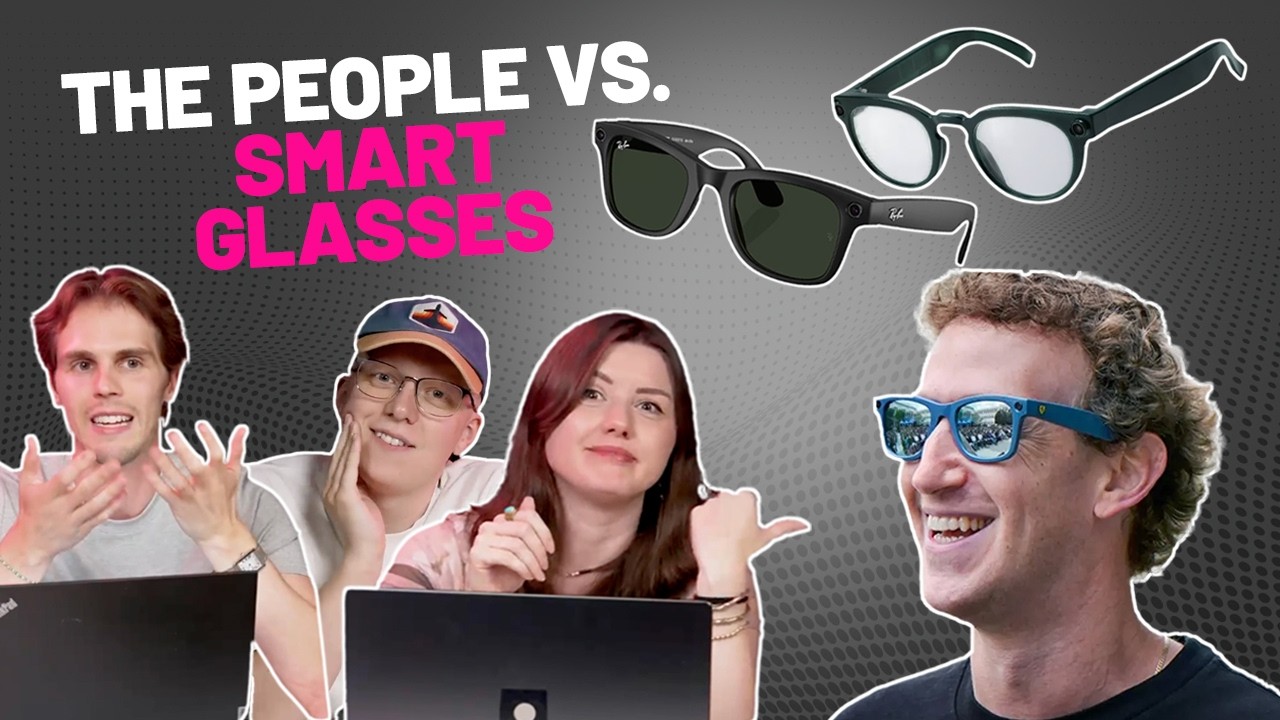
Smart glasses and the grand public privacy debate were discussed in our latest podcast episode. Check it out!
The UK regulatory gap: What the law on smart glasses actually says
Alongside Courts in England and Wales, private venues have reacted to the Meta glasses privacy backlash by banning their use within their premises. Rather than waiting for slow-moving national legislation, they decided to create their own set of rules, but these rules end at their front doors.
In public places, such as streets, squares, or city parks, the current laws are more complicated. Ambient recording falls into a large grey area. The laws can regulate more serious public offences like harassment, stalking and voyeurism but, short of that, the lines between what’s legal and what isn’t are blurry at best.
As Nick Phillips, a UK lawyer specializing in data protection and technology law, explains, public recording is not inherently unlawful. "The problem comes about in terms of what you do with that recording," he told TechRadar.

NEW: Leave No Trace — A weekly newsletter on digital privacy and online surveillance.
Leave No Trace investigates the companies and governments putting our digital freedom at risk — and the people fighting back.
📩 Subscribe now to get every edition delivered to your inbox every Friday, launching this September.
When you record strangers in public, you are de facto collecting personal data. And while data protection laws do not apply to purely domestic or social filming — creating what Phillips calls a "loophole" for casual users of smart glasses — this exemption falls away the moment recorded individuals are identifiable by their face, voice, gait, location, or background conversation.
This means any casual user filming strangers in public places can easily trigger the UK General Data Protection Regulation (GDPR), requiring them to satisfy core privacy principles such as fairness — the recorded footage must be fair to the people being recorded — and transparency — the person recording needs to be transparent about it.
If a wearer uses the glasses for commercial or business purposes (such as an influencer or a company), they are classified as 'data controllers' and have additional obligations under GDPR. This includes that they cannot use footage of strangers in public for commercial advertisements without permission, or film in places with an expectation of privacy.
And things get further complicated when it comes to exercising individual data rights. This is what data protection and human rights barrister Frederick Powell refers to as an "enforcement gap". It’s the gap between the rights recognized by law and a victim's ability to actually assert them.
Bystanders captured by smart glasses face a massive transparency issue because the device is incredibly discreet and they often don't realise they are being recorded. Plus, once a video is online, it is incredibly difficult to have it removed, or stop the footage from being downloaded and redistributed.

And with incidents of Meta glasses misuse becoming more of a hot topic in the public eye, lawmakers are now faced with the challenge of readjusting the balance between public safety and consumer rights, with a new technology now tipping the scales. So, could a statutory, nationwide ban on Meta AI glasses be the government's next step?
Theoretically, Parliament could pass a law to enact a full ban. "But that's very unlikely," Phillips told me. An outright ban would be perceived as overly restrictive. More importantly, according to Phillips, a ban would be at odds with how the UK government typically approaches tech regulation.
It’s also worth remembering that Meta and other smart glasses have plenty of positive uses — especially for visually impaired people.
What's more, the real issue isn't with the Meta AI glasses themselves, but rather with the covert nature of their use. "And that, to my mind, isn’t really something you can easily legislate for," Phillips said.
Could policymakers instead, then, extend the Online Safety Act's 'duty of care' obligations to introduce design obligations for manufacturers? Possibly, but it’s still difficult, according to Phillips.
Are Meta glasses really worse than your smartphone?
Real-time translation, assistance for low-vision users, hands-free commands, and content creation — when you view smart glasses through a different lens, it's clear that Meta AI's latest gadget is a legitimate piece of tech that can bring plenty of benefits to those wearing them.
So, why should we even want or expect governments to take legislative measures against them? After all, smartphones can also be used to secretly record strangers. Well, the matter appears to be more complex than that.
During a recent interview, a Boston University professor in privacy and technology law, Woodrow Hartzog, didn’t mince his words when he dismantled this narrative.
According to Hartzog, smart glasses are problematic because they challenge "our whole social fabric." Unlike when we see a phone pointing at us, we don't assume we’re being recorded when looking at someone wearing a pair of glasses.
Covert cameras have, of course, existed for years already, so surely Meta can’t be to blame for the issue? But Hartzog argues that these glasses in fact make privacy transgressions not only a lot easier to execute, but also even encourage it.
"If you make a really harmful — but to a certain group of people desirable — practice easier to do, they're going to do a lot more of it," Hartzog told reporters.
🕶️Meta plans to embed facial recognition into their 'pervert glasses' - newly surfaced patent documents reveal.This isn't the first time they tried to do this...🔸Earlier this year, Meta began adding facial recognition code into an app for its smart glasses which could… pic.twitter.com/AzRxPY6pBMAugust 17, 2026
The risks escalate with facial recognition. A June investigation by Wired revealed that Meta silently added a facial recognition system ("NameTag") into its platform, capable of converting captured faces into unique biometric "faceprints" to match against phone data.
Although Meta was quick to delete the code following a backlash, the concept remains active. The company has since filed a patent for a camera system designed to automatically identify people in the frame. Digital rights experts warn that if such technology is deployed, it could end public anonymity entirely.
Worse still, even if Meta abandons these features, malicious users can build them independently. In 2024, two Harvard students, AnhPhu Nguyen and Caine Ardayfio, demonstrated this real-world danger using Ray-Ban Meta glasses and publicly available tech. Simply by walking past people while wearing the glasses, they instantly accessed private details, including names, addresses, and family information.
It seems then that Meta AI glasses have not just replicated the existing privacy risks of smartphones — they’ve multiplied them.
Could social stigma be enough to end Meta glasses misuse?

We are rapidly approaching a crossroads where ambient recording slips past our legal field of view and into our daily lives. The public privacy laws in place worked fine in the days of SLRs and compact cameras and managed ok once camera phones became ubiquitous, but they’re struggling to be fit for purpose as recording devices become even further camouflaged.
If governments can’t or won’t legislate, then will it come down to social pressure to keep smart glasses in check?
It happened in the past with Google Glass. That venture lasted just nine months before the Big Tech giant was forced to halt consumer sales following heavy concern from the public.
But it isn't 2015 anymore, and those clunky AR specs of the last decade have become so svelte that they’ve now been subsumed by fashion brands like Ray-Ban and Oakley. They’re on the brink of looking normal and could very soon disappear from sight altogether.
Are we ready to live in a digital panopticon?
Today’s consumer tech industry has 20-20 vision on the subject. They see a world of omnipresent lenses built upon the promise of making our hardware interactions effortless. Google knows it too and has decided to bet on built-in cameras in intelligent glasses once again, with two models entering the market soon.
And while not all built-in cameras may carry the same risk — Apple’s rumored earbuds with built-in cameras don’t allow users to record video or take pictures, for example — data collection is set to increase, and with it more potential privacy problems.
At this point, we need to ask ourselves: are we ready to live in a digital panopticon where everything we look at can be used to profile us, train AI systems, or erode our public anonymity?
For most, the answer is probably no, but we wouldn't have chosen our obsession with smartphones either if we could have stopped what was coming. Money talks, and what Big Tech wants, Big Tech gets. After all, we're still sitting here, scrolling, aren’t we?
And while many bemoan government intervention on subjects like social media or adult content bans, legislation might be the only thing that can truly save us.
Follow TechRadar on Google News and add us as a preferred source to get our expert news, reviews, and opinion in your feeds. Make sure to click the Follow button!
