


As public perception continues to sour, and private businesses ban smart glasses from their events and premises, it feels like the writing might be on the wall for Meta’s Ray-Bans. At least as we know them.
Even without many laws changing, camera-equipped specs are becoming increasingly difficult to wear, especially if you don’t want to be branded a perv or a creep.
Because of this changing tide against Meta Ray-Bans and others, the most recent episode of the TechRadar podcast is a smart glasses special. Podcast regulars Josie, Axel and myself brought Tom’s Guide’s Jason England on board to discuss the issues facing smart specs and the risks they pose — while also acknowledging how useful the tech can be when used appropriately.
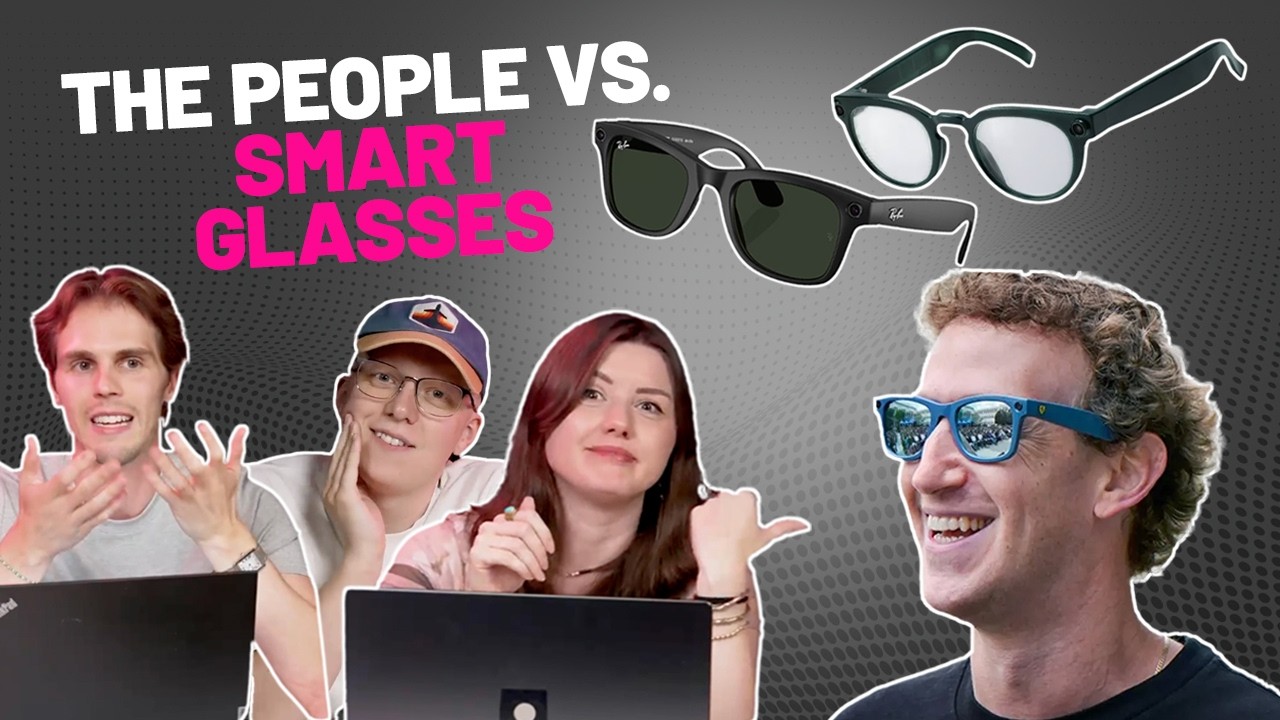
We rounded things up with a quick discussion on what smart glasses could do to solve their privacy problems and clean up their public perception. I want to continue that chat here with you, our readers and viewers.
Below I’ll outline four possible paths forward, followed by a quick poll asking you which path you believe we should take.
1. Keep cameras in glasses
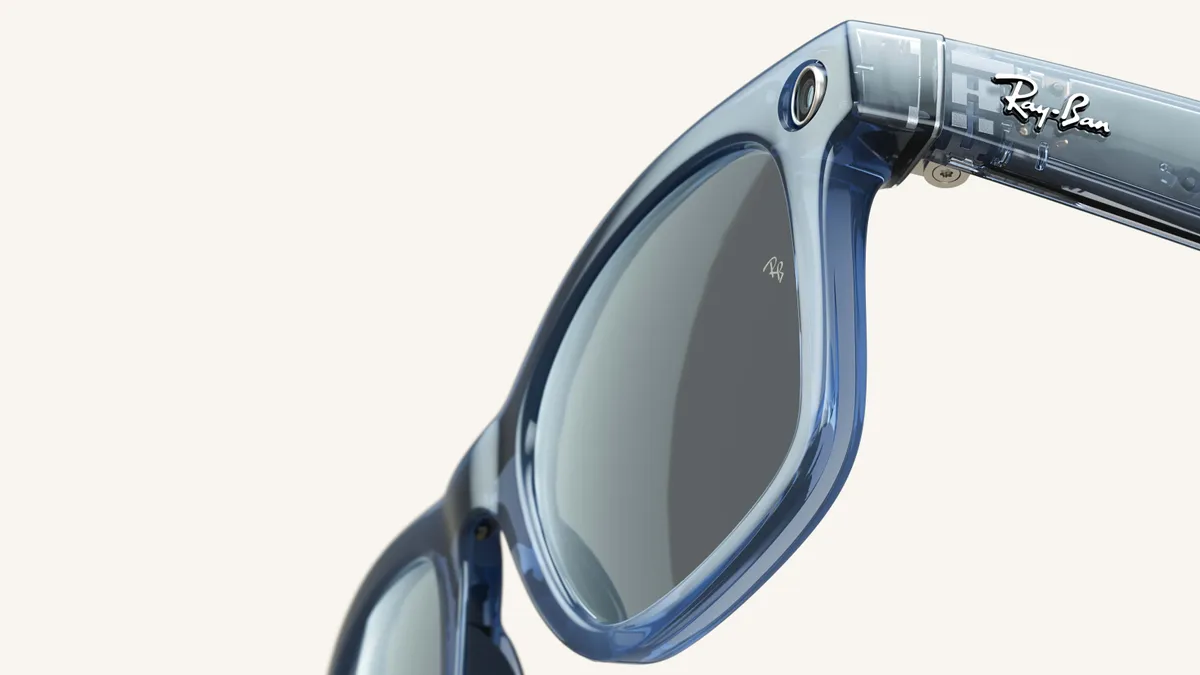
If you are a smart glasses maker like Samsung, Meta or one of the many others, this would likely be your preferred approach: keep calm, and carry on churning out glasses with cameras (or AirPods if a recent Apple leak is to be believed).
The backlash against surveillance tech is at a fever pitch right now, but public outrage has a way of waxing and waning. Smart specs have been wildly popular before, who says they won’t go back to being mega popular in a few months?
This process could also be sped along by rolling out new privacy policies, or software which aims to mitigate the way smart specs with cameras are misused. If new useful features are released, marketing could also help to make smart glasses look more essential, and get their detractors to overlook the glaring privacy issues they’re so bothered about right now.
For current smart specs users it means their Meta Ray-Bans would still be completely usable, and fully functioning — allowing them to rely on the first-person content capture capabilities for recording memories, informing their AI, or for accessible needs that the glasses are offering the visually impaired.
It’s also unclear how effective a ban could be if it wasn’t universal.
Countries like China already feature major public surveillance and tight regulation of what people can share online, so the downsides of camera glasses aren’t as strongly felt there. As such they’re less likely to see a ban. Bad actors could import glasses from countries where they are sold and attempt to dodge restrictions from brands who might not be as willing to address concerns as Meta has been with its various safety updates.
On the flip side, not banning features in some way means that the privacy issues persist — plenty of folks could still be being recorded without their knowledge or consent. This could lead to serious public consequences if people take action into their own hands, or heavy-handed legal consequences if governments decide to ban smart glasses in all their forms to avoid any possible workarounds — depriving us of the useful features XR specs could offer in all aspects of our life (if the technology was allowed to develop).
2. Ban smart glasses outright

Rather than waiting and letting things continue before taking action, we could ban smart specs right now.
Of course this would limit access to the useful features they provide, and would see people’s purchases become paperweights, though it would tackle the privacy problems head on.
I’ll address banning simply camera glasses below, but the one advantage of this approach is it also hits glasses with microphones that could be used as a form of covert surveillance technology. While audio is often less invasive than video or images, privacy advocates would argue any kind of surveillance is a terrible thing.
As I touched on above, removing smart specs entirely would deprive us of some potentially exceptionally useful and awesome tech that could provide benefits to our work, our ability to travel and communicate, and our play.
However, smart specs are also causing plenty of headaches. This approach would make them all go away if it proves effective.
3. Ban cameras in glasses

A less heavy handed approach would be to merely ban cameras, but allow glasses with displays, speakers and/or microphones only to continue.
This would allow smart specs to offer audio or screen-based AI assistance, to play music, let you watch a TV or film, or perform a host of tasks that don’t depend on computer vision.
Though a lack of cameras would limit the tech’s immediate usefulness quite considerably. I’ve touched on this already, but the snapper can provide context to the AI when you ask it questions about a landmark or sign you can see, it can offer hands-free recording capabilities many like to use while on vacation or while doing an action sport, and it has been used as an accessibility tool by the visually impaired to allow their smart specs to describe the world around them.
The advantage to smart spec makers is this approach could see them dodge an outright ban on glasses wearables — cameras or not. It may also keep a door open for a safer camera-equipped version of smart glasses to materialize; a model that addresses the privacy concerns of the original.
Of course, this wouldn’t remove the risks of covert audio recording posed by smart specs, though you could argue that the dangers posed by such recordings is less severe, especially since plenty of other accessible covert tools (even a smartphone) could be used to privately record sound.
4. Keep the cameras, ban video recording

The issue with camera glasses isn’t necessarily that they can record, it’s that they can record relatively discreetly. While Meta’s glasses do have a recording light it’s easy to miss if you don’t know to look for it.
For photos, an obvious solution would be to require the specs to play an audible camera snapping effect whenever a shot is captured. Meta’s specs can already do this, and it's a requirement of smartphone cameras already in countries like Japan.
Because Meta glasses don’t have zoom capabilities you can’t take useful photos from very far away, meaning an audible effect like this would be heard by anyone you attempt to photograph covertly. They could then confront you about being a creep in much the same way someone obviously taking photos with a phone or camera could be addressed in the moment.
Video is a little tougher to make obvious and still usable in the end result. An audible effect would need to play throughout the recording which could spoil the clip’s audio. An alternative could be to make the recording light brighter and have it pulse to make it a little more obvious, but it still may not be completely noticeable. So you could simply ban video recording with smart glasses.
This halfway house would allow the specs to sense the world around them — facilitating AI and accessibility tools — but could greatly restrict the harm they could cause.
The downside is hackers could modify the cameras to facilitate video recording as all the hardware would still be there. That said, tamper-proof measures could mitigate this risk.
Now it’s time to have your say. These four possibilities are somewhat simplistic, but I think they capture four general strategies we could deploy to ‘solve’ our smart glasses problem. Let me know which you like best, or feel free to comment below with your thoughts!

Follow TechRadar on Google News and add us as a preferred source to get our expert news, reviews, and opinion in your feeds.
