


Over the last few years, our list of the best Android phones has featured a smaller and smaller array of brands. That's not because we're biased towards particular companies; it's just that some of our favorite manufacturers have been winding down operations.
The last Nokia phone I reviewed was in 2022, the same goes for Realme, and we haven't published a full review of a Vivo or Nubia phone since 2024 (not including Nubia's RedMagic sub-brand). LG and Asus are two other high-profile brands that have retired from the mobile game in recent years, and I'm surprised that Sony is still ticking along (though its new mobile offerings are scant).
Unfortunately, it sounds like OnePlus might join that esteemed crowd very soon. Tech commentators have been down about what seems like a 'writing on the wall' situation for the Chinese brand; OnePlus is beloved among testers, and it's maintained a dedicated corps of fans online, too. But while rumors of OnePlus' demise certainly aren't nice to hear, in the long term, I think this could turn into a great thing for smartphone buyers. Let me explain.
What's happening to OnePlus?

Since the year began, rumors of OnePlus' imminent closure have been swirling. While the brand has denied these reports, it's clear that OnePlus has slowed down its usual product launch cycle (where's the OnePlus Nord 6?). Many assume that the brand's ditching the West to focus on Chinese and Indian markets, and indeed OnePlus itself has confirmed to Android Authority that it's "evaluating its regional roadmap and product strategy".
Most recently, we've heard that OnePlus could merge with Realme, its sister brand (both are owned by Chinese giant BBK Electronics, like Vivo and Oppo), which also stopped selling phones in Europe about four years ago.
Again, OnePlus has denied these reports to the Financial Express, but its statement only refers to "OnePlus India" and "local operations". Reading between the lines, that seems to confirm that global changes are afoot.
It's unclear what such a merger could look like; OnePlus also merged with Oppo back in 2021, and from the outside perspective, this didn't result in many changes.
But best case scenario — and again, this is total speculation — the companies could start to combine some aspects like R&D, distribution, and marketing, in order to save costs while remaining in operation. That's likely what the OnePlus and Oppo merger resulted in, and it's quite telling that Oppo remains active in Europe despite not being a household name.
It's a bad time to be a phone company

Why are so many phone brands struggling? Well, it's no secret that mobile sales are down globally. According to Counterpoint Research, shipments in the first quarter of 2026 were down 6% year-on-year, with "the shortage of DRAM" and "weaker demand" to blame for troubles in the mobile market.
Without wanting to put too fine a point on it, that latter is code for 'the cost of living crisis', with various factors encouraging buyers to hold onto a phone for longer before buying a new one, and sticking to tried-and-true brands rather than up-and-coming Chinese competitors.
Only the biggest companies, like Apple, seem to be keeping their head above water — Counterpoint also points to Honor, Google, and Nothing as other brands that are growing year-on-year, but basically everyone else is down.
In short, it's not a great time to be selling phones, unless you're a well-known company (mind you, even Samsung's sales were down, according to Counterpoint's data). But this has all led to total stagnation in the smartphone market.
The need for flagship-killers has never been greater

When OnePlus began, it brought rise to a phrase: "flagship killers". Its phones had mid-range prices, yet specs to rival the big dogs of the time. The OnePlus One was a Samsung Galaxy S5 rival that cost half the price.
For most of its existence, this strategy served OnePlus well, and other companies copied it. I remember the first Xiaomi phones I tested being incredible-value mid-rangers, and Oppo first came to my attention through its Reno handsets.
Yet if you look at any of these companies now, you'll see they've all joined the top-end game. Oppo and Xiaomi are pumping out fancy Ultra phones that cost thousands (see the Oppo Find X9 Ultra and Xiaomi 17 Ultra).
What's left around the mid-range Android market is a load of fine mobiles that do the job, but it's been years since I've seen a lower-cost handset that'd seriously compete with Samsung, Apple, or Google's latest flagships. And if I, a tech reviewer, can barely get excited for affordable phones, I can't expect buyers to. Handset companies are leaving the market, but the need for flagship-killers has never been greater.
Realme to the rescue?
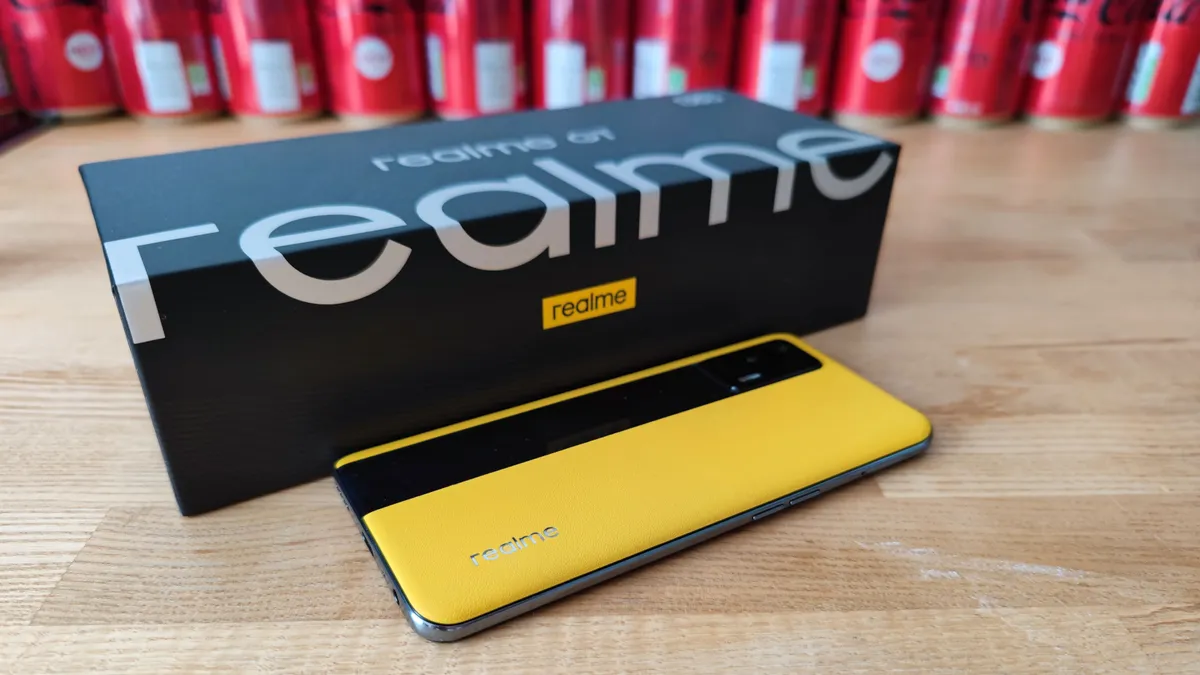
Now here's where I've got to admit something: I'm not coming to this article as a OnePlus fan — it's a solid brand, which has made some great phones, don't get me wrong — but instead as a Realme fan.
Back when the brand used to release phones in the UK, I was constantly giving its handsets glowing reviews. I awarded four and a half stars to the affordable, colorful Realme 9 Pro Plus, the midrange powerhouse Realme GT, and the affordable camera phone Realme 8 Pro, and four stars to the super-cheap Realme C35 and Realme 7 Pro.
Even after Realme stopped selling its phones, I kept using them. My daily driver is, when I'm not testing a handset, the Realme 13 Pro Plus, and my laptop is the Realme Book. And I still cover the brand's tech from time to time, like when I took the Realme 15 Pro Game of Thrones Limited Edition to some castles in 2025.
What made Realme such a great brand is that it took the mantle from OnePlus: its gadgets were reasonably priced, and offered features or designs that made them indistinguishable from high-end rivals. The Realme 9 Pro Plus, for example, changed color in the light, while the Realme GT was a leather-clad compact phone with loads of gaming power.
I get the impression that, since leaving European markets, Realme has followed its siblings in focusing on high-end mobiles over tempting mid-rangers. But crucially, I don't think any other brand has followed in its footsteps.
A plan to save OnePlus

If OnePlus is planning to wind down operations, and if it does end up merging with Realme — two big 'ifs', I know — it could look a lot like a dignified retirement for a once-great brand. Perhaps this is the end for OnePlus after all (indeed, some Redditors have suggested that the merger "is going to be a disaster").
But if, as one can hope, it's more of a hibernation phase, to reduce overheads and weather the current economic storm, the story could be a lot different.
The tech world is full of comeback stories, some glorious and others not. Many legacy brands have been saved from the landfill site of history by mergers and buyouts.
Nokia survived for years through HMD Global. Apple was only saved from bankruptcy in 1997 by a massive Microsoft investment. Blackberry made a brief return thanks to OnwardMobility. Harman was saved by Samsung (although many audiophiles still mourn the death of still-operating Harman brands like AKG, so this last case is debatable).
So, maybe, just maybe, this will be another one of those cases: two Chinese tech brands circling their wagons to protect each other in the hopes of continuing onwards into the future. And if that does come to pass, the renewed collaboration could be really exciting for phone fans.
Realme still seems to retain some of that "flagship killer" magic that OnePlus lost along the way, and so if one of the brands does return to Western markets, that sparkle could come back too.
I'm so bored of the iPhone / Samsung Galaxy / Google Pixel triumvirate that's been dominating phone headlines for the last few years; these phones are great, but they're all equally and predictably great. I want something weird, something unexpected, a real challenger for once. Will that be OnePlus or Realme? Not soon, by the looks of it, but I can't see anyone else coming to save us.
Until then, if I want a handset that looks competitive or interesting, I'll turn to the best cheap phones. They lack some of the pizazz that competitive mid-rangers once did, but at least they still give you value for money.

Follow TechRadar on Google News and add us as a preferred source to get our expert news, reviews, and opinion in your feeds.
