- Fitbit has just expanded its AI health coach to iOS users
- The feature was previously only available on Android
- It uses Google Gemini to analyze your metrics and give health tips
Fitbit has been testing an AI health coach on Android for some time now, and it harnesses Google Gemini to analyze your health metrics and give you tips on improving your wellbeing. Its Android-only availability has been a sticking point for some, but Fitbit has just announced that iOS fans can now join up as well, with the feature rolling out to interested users over the next few days.
An official post on the Fitbit community forums explained that the health coach now supports iOS users of Fitbit’s Premium subscription. To sign up, customers will need to join the Fitbit Public Preview and meet other eligibility criteria as specified by Google.
Once joined, users will gain access to Fitbit’s AI-powered health coach, which offers a conversational chatbot that you can ask to investigate your health stats, draw up plans for a fitness regime, point to suggestions and areas to improve, and more.
It can track your heart rate, temperature, blood oxygen levels and your sleep over time, as well as being able to deliver health insights in the morning, after a workout and before bed.
That makes it quite a competent wellness assistant if you need something that’s available all day, every day, without an additional cost. But as with many AI tools, it might not always get things right and is not a full-fledged replacement for a doctor or personal trainer.
Pulling ahead of Apple
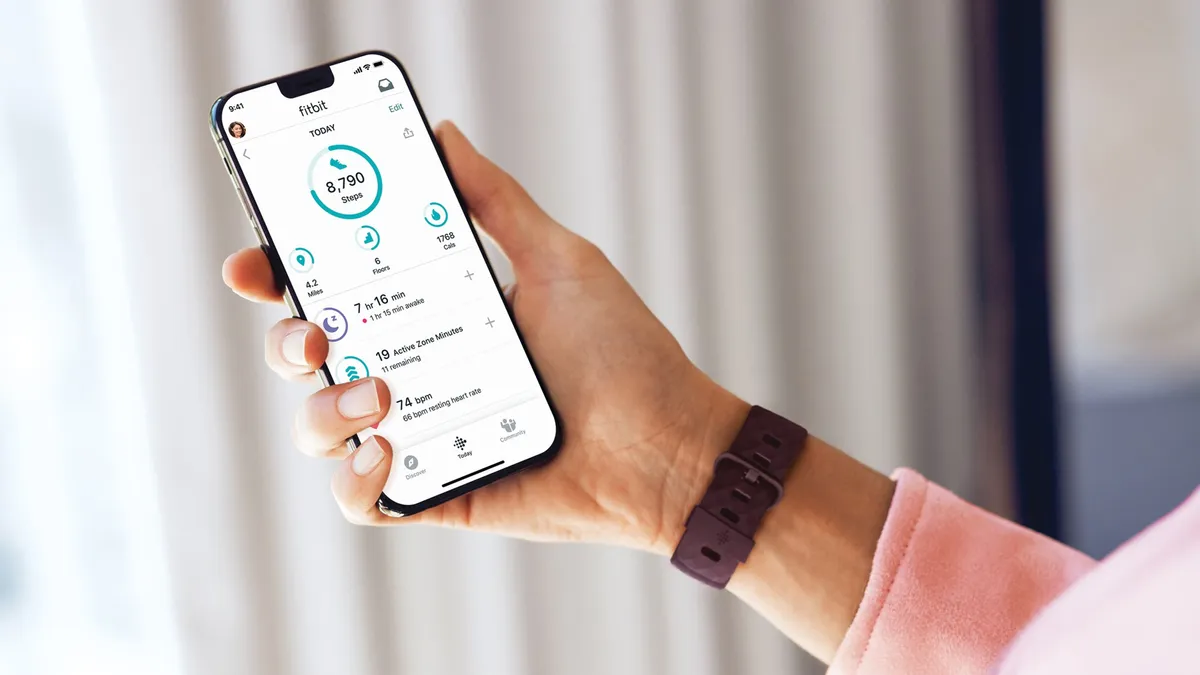
Fitbit’s move comes amid rumors that Apple is rethinking its own health coach plans. Although past rumors had indicated that Apple was developing a so-called Health+ service with a built-in AI health coach, a recent report from Bloomberg suggested that Apple had decided to instead integrate the tool into its existing Health app.
The expansion of Fitbit’s own AI coach to many more users, then, stands as a very different approach. It suggests that Google has confidence in Fitbit’s AI coach and the progress it has made on Android so far, as well as indicating that Google believes the decision to launch the coach as a standalone feature is the right one.
It’s worth remembering that Fitbit’s health coach is currently in the Public Preview stage – both on Android and iOS – and that means it’s a work in progress where bugs and unfinished features are possible. Still, it could be seen as a rough indicator of the type of product Apple might be working on for its own devices in one form or another.
We won’t know what Apple is planning for sure until the company reveals its own health coach at some point in the future. But with Fitbit’s offering expanding to more and more users, Apple is going to have its work cut out to catch up with its rivals in this area.
Follow TechRadar on Google News and add us as a preferred source to get our expert news, reviews, and opinion in your feeds. Make sure to click the Follow button!
And of course you can also follow TechRadar on TikTok for news, reviews, unboxings in video form, and get regular updates from us on WhatsApp too.