





It's pretty much an open secret at this point that Google is making a new Fitbit fitness tracker. In a teaser video posted on Instagram, the tech giant's brand ambassador and 'performance advisor', basketball legend Steph Curry, promised that something big (or in this case, small) was coming, while wearing a conspicuous screenless wristband.
The upcoming fitness tracker could be a bit of a cash-in on the screenless wearables trend. The Whoop 5.0, the Polar Loop, and the Amazfit Helio Strap all came out last year, and it looks like a Garmin CIRQA smart band is on the horizon too.
However, I think the move makes sense for Google — it's a return to Fitbit's pre-Google acquisition philosophy and formats, and the new tracker has the potential to shoot to the top of our best Fitbits guide.
Back to where it all began
2008 was a simpler time, in which we were all excited about technology and smart gadgets without worrying about being manipulated by tech companies, or that AI was about to take our jobs.
At the 2008 TechCrunch50 conference, a small startup company debuted the FitBit, a wireless smart pedometer that clipped to your clothes, tracked your steps, monitored your sleep patterns with its gyroscopes, and uploaded your data to a server whenever you passed near the Bluetooth-connected dock. You could log in to view your stats, and add information like nutrition tracking.
Back then, TechCrunch's John Biggs said: "the device clips to almost any piece of clothing and is almost invisible", and called it "a tiny fitness gadget that I actually want". It had a very small LED screen, but no other way to interact with the device other than to log onto a computer and tinker with your data. It was a 'set and forget' wellness tracker in the purest sense.
A few years later, the Fitbit Flex popped the tracker on your wrist and the rest is history. The Fitbit Flex was similarly hands-off, with five LED lights indicating your step count as the only interactive elements of the band.
With all that cardio, no wonder Fitbit's eating itself
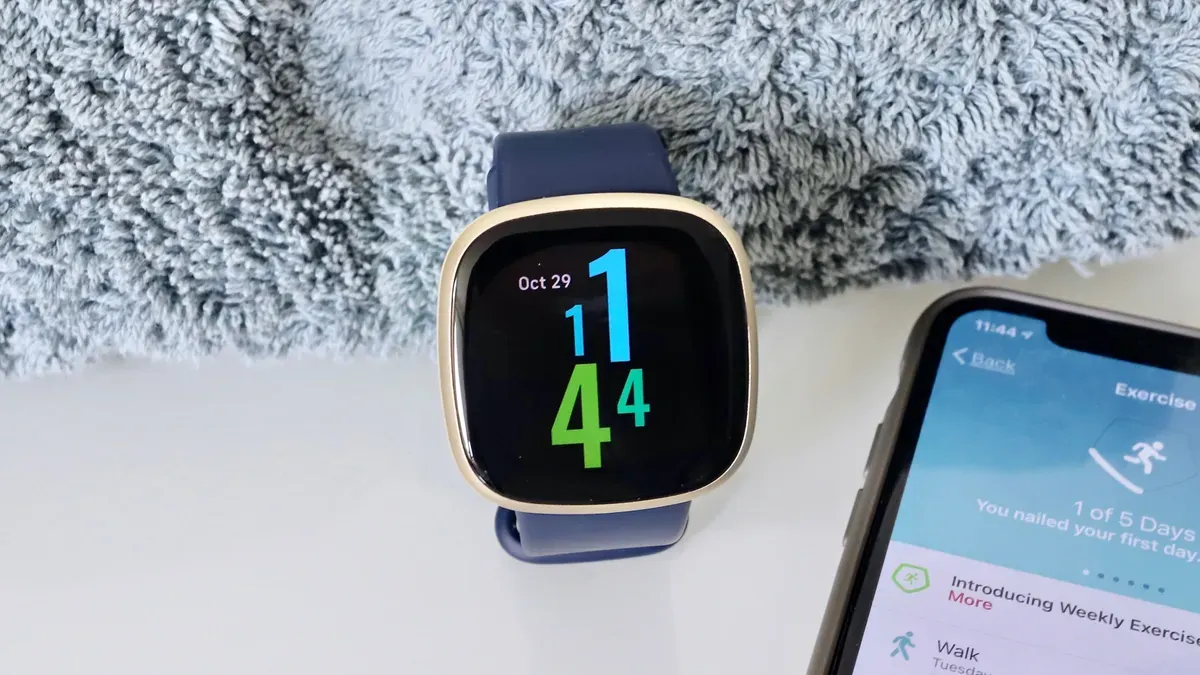
That minimalist design ethos didn't last. After the success of the Apple Watch, Fitbit joined every other consumer tech manufacturer in going big on interactive watch-format wearables, and in recent years Fitbit only saw moderate success with its watch-style trackers (we gave the Fitbit Versa 4 only 3/5 stars), especially after Google bought Fitbit and used the brand's best features for its excellent Pixel Watches, which ran Google's more advanced Wear OS operating system rather than Fitbit's clunkier software.
Later, Google quietly axed most Fitbit smartwatches after slowly discontinuing many community features. The Fitbit smartwatches were just superfluous to Google's plans.
However, I think the upcoming screenless tracker could represent a return to form for the brand. Similar to the Fitbit Flex, it's a smart band with very little in the way of on-wrist interaction, just passive data collection. While the phone app is obviously much more advanced than Fitbit's early desktop databases, the principle is the same: focus on your workout or sleep, forget the tracker is there, and access your information when and how you want, rather than being subject to push notifications or flashing screens.
If Google gets this right, it could mean Fitbit returns to relevance again as the best fitness tracker, and a top-tier name in a crowded market. I'm waiting for more news with great anticipation.
Follow TechRadar on Google News and add us as a preferred source to get our expert news, reviews, and opinion in your feeds. Make sure to click the Follow button!
And of course, you can also follow TechRadar on YouTube and TikTok for news, reviews, unboxings in video form, and get regular updates from us on WhatsApp too
