


- Dell's XPS 14 has proved to have over 40 hours of battery life
- This was in a web browsing test where the laptop's LG Display could flex its VRR muscles
- That screen has the ability to automatically drop to 1Hz with static on-screen content, which provides some huge power savings as evidenced here
Dell's new XPS laptops have again been in the spotlight due to their impressive battery life, and this time, it's due to a truly eye-opening result.
The XPS 14 was tested by Hardware Canucks as seen on YouTube (as Notebookcheck.net noticed – see the video below), and was found to have just a smidge over 43 hours of battery life.
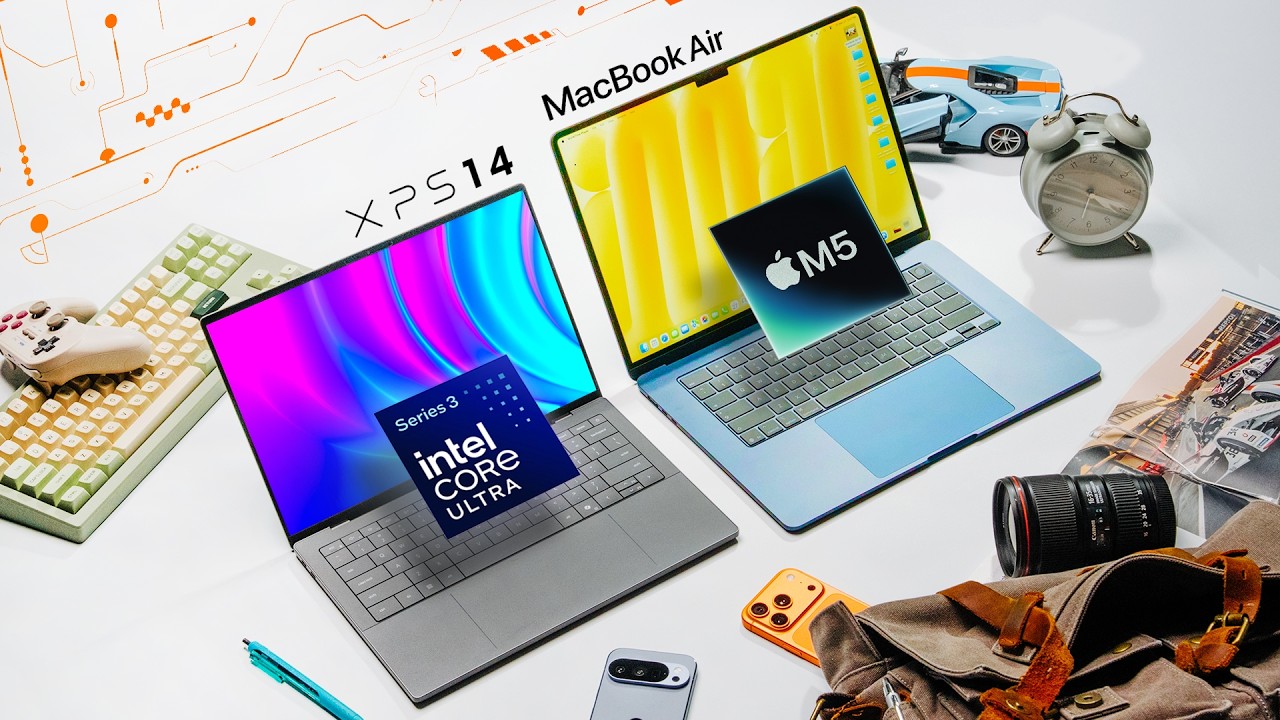
Yes – 43 hours, you read that correctly, in a test involving web browsing (in Chrome) with the brightness set at 150 nits. And this is for a Windows 11 laptop, whereas huge battery life tends to be the domain of Arm-based notebooks. Indeed, Hardware Canucks compared the XPS 14 to Apple's MacBook Air M5 (15-inch) which recorded 14.5 hours in the same test, effectively being routed by the Dell laptop.
Why is there such a difference here? Well, it's due to the type of test – the gap between the Apple and Dell devices isn't nearly as large in video playback and gaming tests (but the XPS 14 still wins by a good margin) – and a critical piece of tech Dell has used, namely a panel with a new implementation of VRR (variable refresh rate). Let's dig into why this matters next.
Analysis: VRR situational advantage with the XPS 14
As I've pointed out before – when the XPS 16 made waves due to its battery stamina, though not quite to the same extent as its smaller sibling does here – Dell's trump card is the LG panel which uses a new take on VRR.
This innovation means that VRR can adjust the screen's refresh rate down to a paltry 1Hz automatically when there's static content on the display. (Note: this is the LCD version, whereas the OLED on the XPS 14 and 16 can drop low, but only to 20Hz – although a 1Hz-capable OLED panel is coming from LG Display next year).
Why this is important is because web pages are static content (well, mostly), and so the XPS 14 is clearly managing to notch down to run at that 1Hz level a lot in Hardware Canucks' browsing tests, saving a good deal of power. There's not such a great effect seen with content in motion (videos, games), of course, as higher refresh rates are needed there (the LG panel is a 120Hz affair, in case you were wondering).
Notebookcheck.net itself tested the XPS 14 in web browsing (on Wi-Fi), but without VRR kicking in, so the screen was at its full 120Hz constantly, and saw close to 17 hours of battery life – underlining the major difference that 1Hz VRR makes.
As ever, battery life will be variable – even given the same type of testing, based on exactly what you might be doing, and laptop configuration aspects as noted – but to get over 40 hours of longevity on any test is a truly jaw-dropping result, frankly, especially for a non-Arm Windows laptop.

➡️ Read our full guide to the best laptops
1. Best overall:
Apple MacBook Air 13-inch M4
2. Best budget:
Asus Chromebook CM14
3. Best Windows 11 laptop
Microsoft Surface Laptop 13-inch
4. Best gaming:
Razer Blade 16
5. Best for pros
MacBook Pro 16-inch (M4 Pro)
Follow TechRadar on Google News and add us as a preferred source to get our expert news, reviews, and opinion in your feeds. Make sure to click the Follow button!
And of course, you can also follow TechRadar on YouTube and TikTok for news, reviews, unboxings in video form, and get regular updates from us on WhatsApp too.