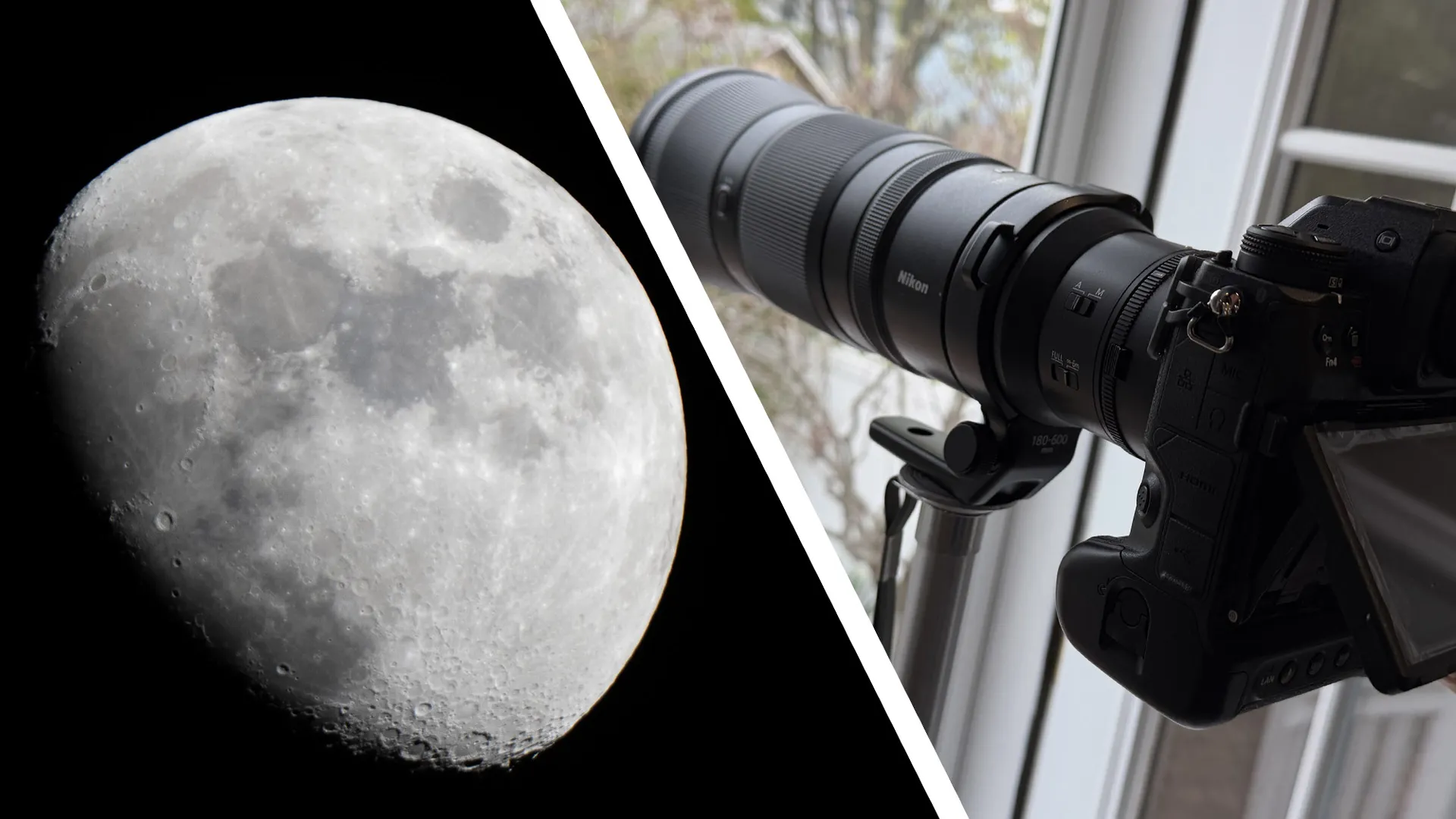
By now, we've seen dozens of incredible and inspiring Artemis II mission images, all taken with a range of cameras, including something similar to the iPhone you have in your pocket. Some of the best, though, were captured with pro-level, mirrorless cameras like the Nikon Z9, a powerful, behemoth of a 45.7MP shooter equipped with a 400mm lens.
For the past few weeks, I've been shooting with that very same kit, though, in my case, Nikon loaned me a massive 180 mm to 600 mm lens (Nikon told me it's like the newer version of the 400mm lens the astronauts used) and added a 2x teleconverter for good measure. It's inarguably the most camera I've ever used.
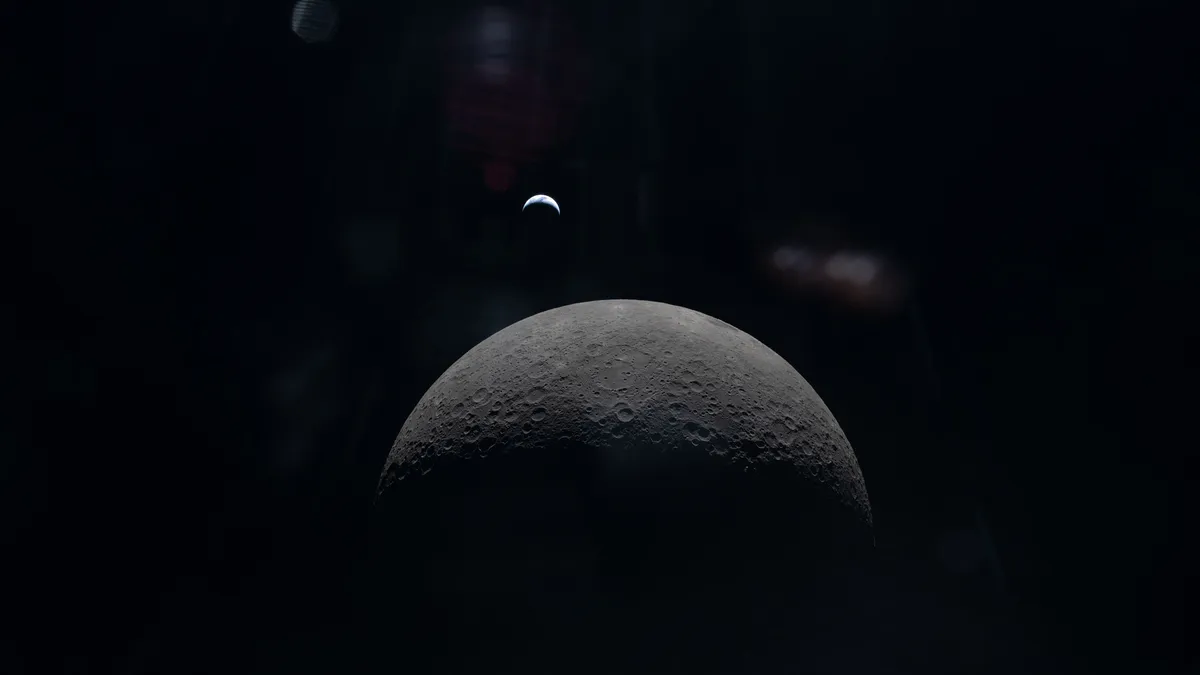
The Nikon Z9 is a robust (and at $4,996.95 expensive) camera that NASA chose because it can work in some pretty extreme environments. In addition to its most recent work on the Artemis II mission, it's currently on the International Space Station and is scheduled to join the Artemis III mission, which should land astronauts on the surface of the moon in 2027. The camera should, with a special enclosure, join the astronauts for space and moon walks.
When we reviewed the Nikon Z9 in 2022, we called it Nikon's "most powerful camera" yet, and I have to say it can be both powerful and complex. There are auto shooting modes, including nearly 500 points of auto focus capabilities, but the more I shot with the camera, the more I took control of the aperture, shutter, speed, and ISO, all in an effort to take the best moon shots of my life.
I mostly succeeded while also failing, largely because of my own fault.

The weight of the moment
When the full kit arrived, I realized how much I'd underestimated the size and scale of this equipment. Without a lens, the Nikon Z9 weighs almost three pounds. Part of that is to accommodate one of the largest batteries I have ever encountered in a mirrorless camera (it lasts for days). Even the storage media is larger: the camera uses a pair (one is for instant backup) of pricey Compact Flash Express cards (slightly smaller than classic compact flash).
Even though the Nikkor 180 mm to 600 mm lens ($2,095.96) features an internal zoom mechanism, it's still a foot long. Add the TC-2.0x teleconverter ($280), and it sticks out almost two more inches. The overall weight had to be close to 10 pounds, and I was glad I had a sturdy unipod, which came in handy during my first few days of trying to shoot the moon and various birds.

Let me start with a warning: if you don't have a pro-level, industry-grade tripod, keep walking. The Nikon Nikkor lens arrives with a collar that lets you attach the camera to your tripod with the weight properly balanced between the lens and the camera. That was a huge help for my unipod, but my tripod, which had been more than effective for my Sony Alpha a6000 and 200MM lens, was totally overmatched by this kit. It was barely strong enough to hold the thing still for long exposures.
A lot of my star or astrophotography was ruined by imperceptible vibrations. The other issue, I do blame on Nikon: No matter how hard I tried, I could not connect the camera via Bluetooth or WiFi to the SnapBridge app on my iPhone 17 Pro Max. With it, I could've used a remote shutter. At least I figured out how to gently touch the display to trigger a photo. When I did that, the camera would pause for a second and then snap the shot.
While the camera does not default to this setting, I chose to take every photo in both the highest resolution RAW and JPEG compressed. The former meant I could take all the information the sensor captured for every photo and pour it into Adobe Lightroom, where I would apply maximum adjustments to perfect each image.
Getting hooked
Yes, the Nikon Z9 with that massive lens is expensive and a bit overwhelming, but all it takes is one great photo to hook you, and let me tell you, I got hooked.
My first few days were spent taking some backyard bird photography. I had installed the 2X teleconverter, which essentially doubles your zoom but also amplifies any lens issues and removes a couple of lower f-stops (bigger aperture for more light), meaning you either need to increase the ISO or slow down the shutter.
The first bird photos I took on a cloudy day were grainy, even with some work in Lightroom; I didn't love them. So I opted to remove the teleconverter. After all, the birds weren't that far away (closer than the moon, at least), and with 45MP of sensor to work with, I could crop in quite a bit.
I saw instant improvement, and really appreciate the clarity and speed of the lens. The level of detail I was capturing, say, of local cardinals was stunning.


The big moment

Standing outside with the Nikon Z9 resting on my unipod, I scanned the sky for distant objects. The day was clear, and I noticed a fast-moving jet thousands of feet overhead. Mostly, I could see it's chemtrails, but I pointed the long lens at it and, for this shot, let auto settings (and autofocus do its work).
In the preview on the touch-screen viewfinder, I could see the plane, but I also thought I noticed a faint crescent nearby. Quickly, I opened Lightroom on my MacBook Pro and used the Nikon-supplied card reader and a USB-3-to-USB-C adapter to import the NEF file. That's when I saw it.
Not only had I captured the airplane, but the thin crescent moon; to have them both in frame like that was an incredibly lucky shot. In Lightroom, I did some adjustments to correct the sky color and help bring the moon and jet plane into dual focus.
You can see the photo above.
The moon and stars


I need to make something clear. The Artemis II astronaut's moon photos with the Nikon Z9 and other cameras are even more amazing when you realize that they captured these detailed views with relatively modest lenses. The Nikon Z9 they had was equipped with a 400mm lens. Nothing to sneeze at, but you look at what I captured with the Nikkor 600mm lens and then with the doubling 2x converter (akin to 1,200mm) and realize that my view is still not even remotely as close and clear as NASA's Integrity spaceship astronauts were.
It's humbling, really.
Even so, I did my level best to capture sharp, clear images of the moon and stars. As I noted above, the astrophotography was something of a bust. To do it well, you need not only to change all your settings to manual (including focus), but also to use the Nikon Z9's nifty Starlight setting on the large display viewfinder. It's an ultra-low-light view that helps immensely when you want to view the stars in your frame during what can be a challenging situation: outside, at night, in the dark.
I also had to adjust my ISO far higher to capture more light (I tried everything from 400 to 1250) and slow down the shutter speed, anywhere from 1 second to 30. My problem was the tripod, which, when I tried pointing the camera almost vertically at the stars, could not hold still. Most of my star shots have some starlight squiggles (not the tech term). Ultimately, I captured a couple of semi-usable images of Jupiter and its moons. One is super tight, and you can just make out some moons very nearby.


Fly me to the moon
I had better luck with the moon. It's a lot closer than constellations and planets, and far brighter, which meant I could lower my ISO (for less grainy shots), close down my aperture a bit, and use faster shutter speeds (usually 125th of a second).
I did not have the benefit of a full moon during most of my shooting window, but the 3/4 moon I saw the other night was still impressive. As before, I put the shots in Lightroom and did some adjustments to reduce the exposure and increase the contrast. I didn't adjust sharpness, and therefore the level of detail I can show you here (yes, I did crop the image) is still impressive. Since I didn't travel with the Artemis II crew, my photos still only represent the side of the moon we all see. They used the Nikon Z9 to show us the dark side in ways we had never seen before (and to capture views of our home looming in the distance).
There's no frustration that I could not fully match Team Artemis II's photographic accomplishments. Instead, holding that camera in my hand, I imagined what it must have felt like to look through the viewfinder and see the weathered face of our Moon in such impressive, almost touchable detail.
For the briefest moment, I felt a kinship with those astronauts, and while I'm aware that the onboard iPhone 17 Pro Max also captured some inspiring images, I know there's no substitute for a pro camera and big lens when it comes to capturing unforgettable, lucky, and sometimes historic astro and nature images.

Follow TechRadar on Google News and add us as a preferred source to get our expert news, reviews, and opinion in your feeds.