





The best touchscreen laptops of 2025 continue to prove Apple, a company that is famously anti-touchscreens on MacBooks, wrong. Having a touch-capable screen gives you more options for interacting with your laptop, and operating systems like Windows 11 and Chrome OS have been built with touchscreens in mind, so buttons and other aspects of their user interfaces are large enough to comfortably control via taps, prods, and even the occasional swipe.
While a lot of the best touchscreen laptops are 2-in-1 laptops (which means they can be used as a traditional laptop, or as a tablet-like device), there are also some that stick to the tried-and-tested laptop form factor. These offer a comfortable and intuitive way to control your laptop, and can be useful for people who find using a keyboard or mouse uncomfortable.
In this guide we'll look at all types of touchscreen laptops, but make sure to check out our guide to the best 2-in-1 laptops for dedicated buying advice for laptops that can also be used like tablets.
We'll be giving this buying guide a major update soon with the very latest touchscreen laptops.
This buying guide was reviewed on 08/14/2025. We will be giving this guide a major overhaul in November 2025 with the very latest touchscreen laptops.
The best touchscreen laptop overall
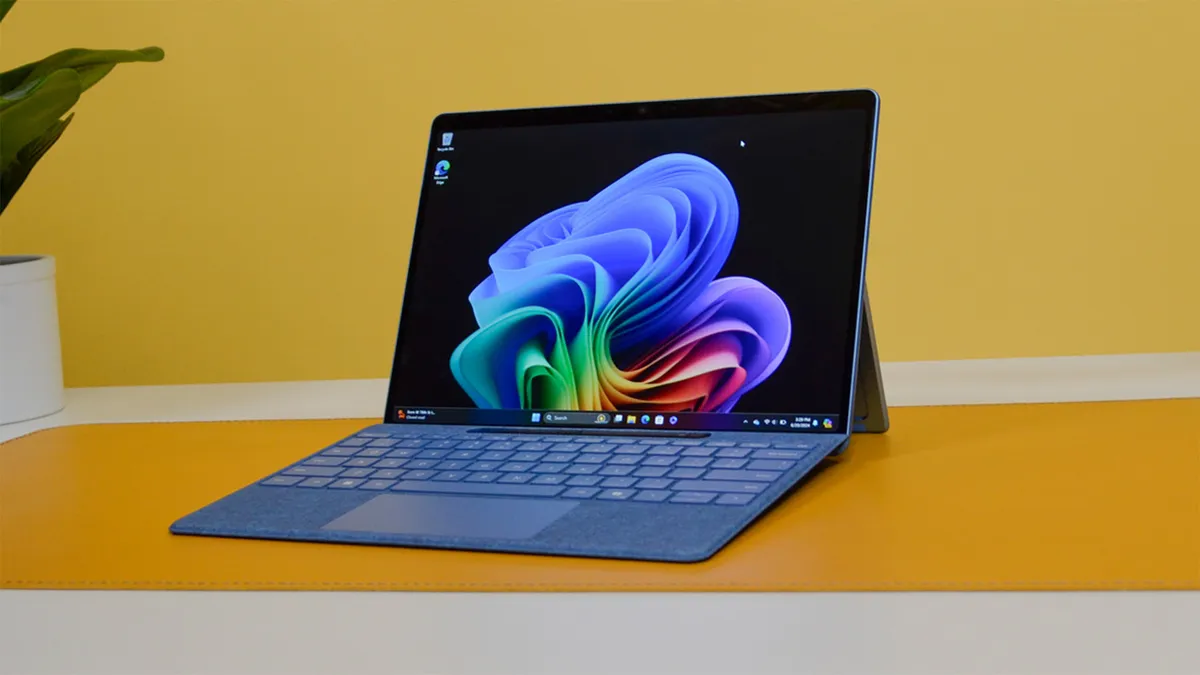
With its exceptional design, stunning touchscreen display, and impressive battery life, the Microsoft Surface Pro 11 stands out among the best laptop picks on the market. Its full Windows 11 OS surpasses the iPad Pro in functionality, and while its performance might slightly lag behind the latest iPad Pro with Apple M4, it excels in benchmark tests and has no major weaknesses for most users.
The Surface Pro 11’s design and battery life are particularly noteworthy, featuring an optional 2.8K OLED touchscreen display with incredible color accuracy that is well worth the upgrade. This touchscreen capability enhances the user experience, making it a versatile tool for both work and play.
Additionally, it boasts a 1440p webcam and a solid, lightweight build. The battery life meets Microsoft’s 14-hour claim, even approaching 15 hours in our local video playback tests, showcasing the power efficiency of Arm architecture.
The Microsoft Surface Pro 11 excels in all areas, pushing the boundaries of what users expect from a top-tier Windows laptop. As more developers release Arm-compatible apps and more AI features roll out, this laptop is set to become even more remarkable.
Read our full Microsoft Surface Pro 11 review
Editor's note: Microsoft has recently released a follow-up to the Surface Pro 11 - the Microsoft Surface Pro 12 (2025). However, when we replace the Surface Pro 11, we'll be recommending the Samsung Galaxy Book5 Pro 360 instead. This is because the Book5 Pro 360 is our pick for the best touchscreen laptop in 2025, plus the fact that the Surface Pro 12, like the Pro 11, can't be used as a laptop unless you buy the keyboard cover, which is sold separately. We'll also be adding the Microsoft Surface Laptop 13-inch and Microsoft Surface Laptop 7, two traditional laptops with touchscreens, to this list.
The best budget touchscreen laptop

The Lenovo IdeaPad Duet 5 Chromebook is a rarity, being as good and as affordable as it. It’s not a premium Chromebook so the specs aren’t high-end, but it still delivers plenty of power for its target users – the ones who rely heavily on Google Chrome workloads and use it for the more casual workloads. In fact, we love using it for sending emails, writing our articles, and naturally, streaming our favorite shows.
We also adore the fact that it’s incredibly portable, making it easier to take with us if we want to squeeze in a little bit of work whilst traveling. Naturally, its decently-sized keyboard and outstanding battery life – we yielded about 16 hours and 20 minutes of juice during testing – make it a boon for that very purpose as well.
This being a 2-in-1, there’s also the touch display aspect, which by the way got a major upgrade to OLED from its predecessor. Its touch capability has always been nice and responsive, but now you've also got the vivid colors that only an OLED panel can offer.
Read our full Lenovo IdeaPad Duet 5 Chromebook review
Editor's note: The Lenovo IdeaPad Duet 5 Chromebook is now showing its age, and while that's not a major issue with Chromebooks, as the lightweight Chrome OS operating system lasts a lot longer on older hardware, we'll be replacing it in our next major update with the newer Acer Chromebook Spin 312.
The best premium touchscreen laptop
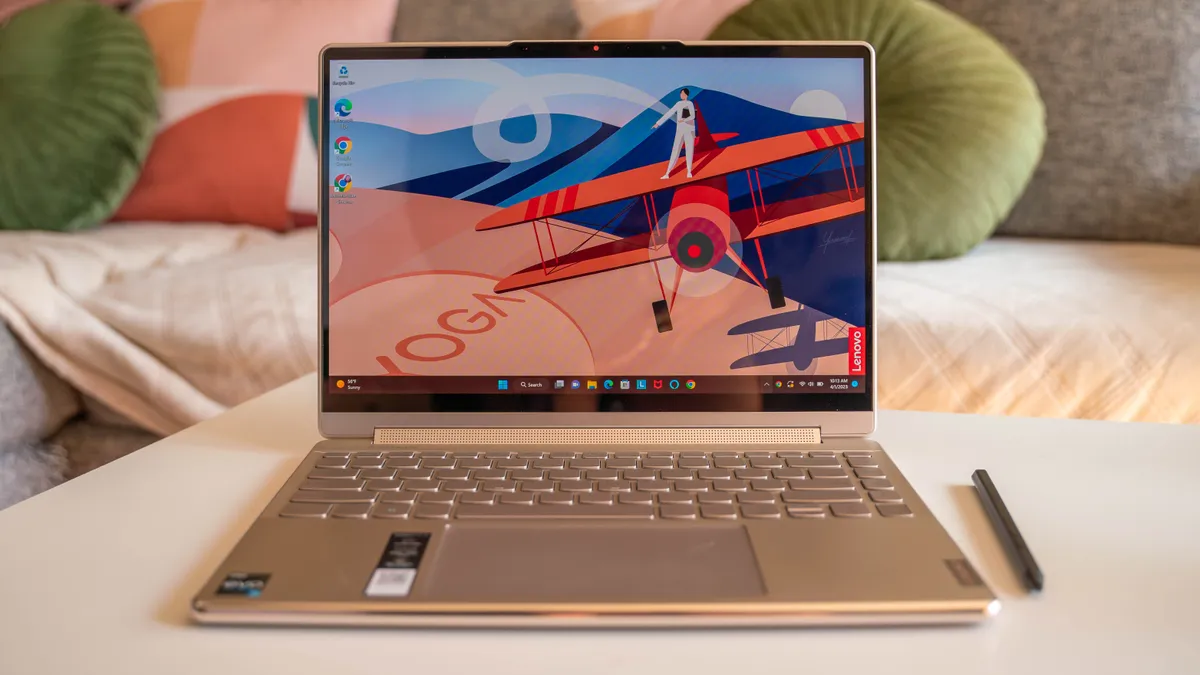
The Lenovo Yoga 9i Gen 8 (2023) delivers an elevated design, speedy performance, and wonderful elements all for less than the price of its more popular rivals. Even as we were taking it out of the box, it was already apparent that this was going to be an amazing option, especially for users who care just as much about aesthetics as they do performance.
This crushed other touchscreen laptops such as a similarly-specced and similarly-priced Samsung Galaxy Book3 Pro 360 in benchmarks during our testing. And while it may not have discrete graphics to blaze through creative workloads, it still holds its own, taking less time than we expected to process and export 50 high-res 7952 x 4472 images from RAW to JPEG in Lightroom. It delivers on battery life as well, giving us a little over 10 hours on a full charge when we ran our web surfing battery test.
The OLED display is not as bright as we'd hoped - it averaged around 350 nits in our readings - but its picture quality is stunning nonetheless. To interface with the display, Lenovo throws in a stylus, which is good as it’s pretty steeply priced. Not that you need it because not only is it vibrant but responsive and intuitive to your touch commands as well.
Read our full Lenovo Yoga 9i Gen 8 review
Editor's note: If you want a more modern touchscreen laptop from Lenovo, then check out our review of the new Lenovo Yoga Book 9i, which we'll be adding to this guide in our next major update.
Also, get your laptop for less with our Lenovo voucher codes.
Best touchscreen laptop deals
