
 Become a TechRadar Insider





The best processor for you will meet your performance needs without going over your budget. It'll have some degree of future proofing so you won't be inclined to upgrade shortly after picking up a piece of new hardware, and it'll be compatible with the rest of your system.
Choosing between AMD vs Intel is another important decision, as each offers unique advantages depending on your system and goals.
That's exactly why we've chosen processors for a range of different PCs to make this roundup.
As far as critical PC upgrades go, the CPU is near the top of the list. A high-quality processor will make everything run smoother, from browsing the web to multitasking and even gaming.
We've tested every option on this guide so you can be sure our recommendations come from first-hand experience.
The quick list
We reviewed this guide in August, 2025. Some of the options on this list are a few years old now, but you can often find them at heavily discounted prices and they still offer significant value for self-built PCs.

Value ★★★★☆
Specs ★★★★☆
Performance ★★★★☆
There are few processors out there right now that are going to match the i7-14700K for performance, and its much better priced.

Value ★★★★☆
Specs ★★★★★
Performance ★★★★★
There are very few things to fault this mainstream processor for, as it brings great performance to the table for an even better price.

Value ★★★☆☆
Specs ★★★☆☆
Performance ★★★☆☆
If you're looking for the best performance out of a desktop processor, this is it. It might be overpriced, but you'll find few processors this powerful.

Value ★★★★☆
Specs ★★★★☆
Performance ★★★★☆
If you're looking for the best gaming processor, this is it. Not only does it beat everything Intel brings to the market, it even beats higher-end Ryzen 9 X3D processors.

Value ★★★★☆
Specs ★★★★☆
Performance ★★★★☆
While this chip is a couple years old at this point, it's still one of the best AM4 processors you can get, especially for gaming.

Value ★★★★★
Specs ★★★★☆
Performance ★★★★☆
If you've yet to upgrade to an Intel LGA1700 processor but you want the best of the last chipset, the i5-11600K is a remarkably strong chip for the price.
The best processor in 2025
Why you can trust TechRadar We spend hours testing every product or service we review, so you can be sure you're buying the best. Find out more about how we test.
Here you'll find the best processors in 2025, backed by our rigorous testing and decades of collective experience working with the best CPUs Intel and AMD have to offer. If you want to learn more about CPUs before you buy, check out our what is a processor page for more details.
The best processor overall

The Intel Core i7-14700K is a heck of a processor to end the LGA 1700 era with, thanks to its very solid performance and excellent price for a midrange processor. It's only a small improvement over its predecessor, but it does pack four additional efficiency cores for better multitasking and freeing up the performance cores to focus on the workloads that need that extra power.
It also comes with discrete Wi-Fi 7 and Thunderbolt 5 support out the box, and even though those technologies are still a ways away from becoming mainstream, it's nice to have a certain level of future proofing a new processor.
While this chip boasts similar performance to the Intel Core i9-13900K, it also has a similar problem managing heat, so you will need the best CPU cooler around to keep this chip from throttling, which is something some i7 users might not have been used to in the past.
Read the full Intel Core i7-14700K review
The best affordable processor
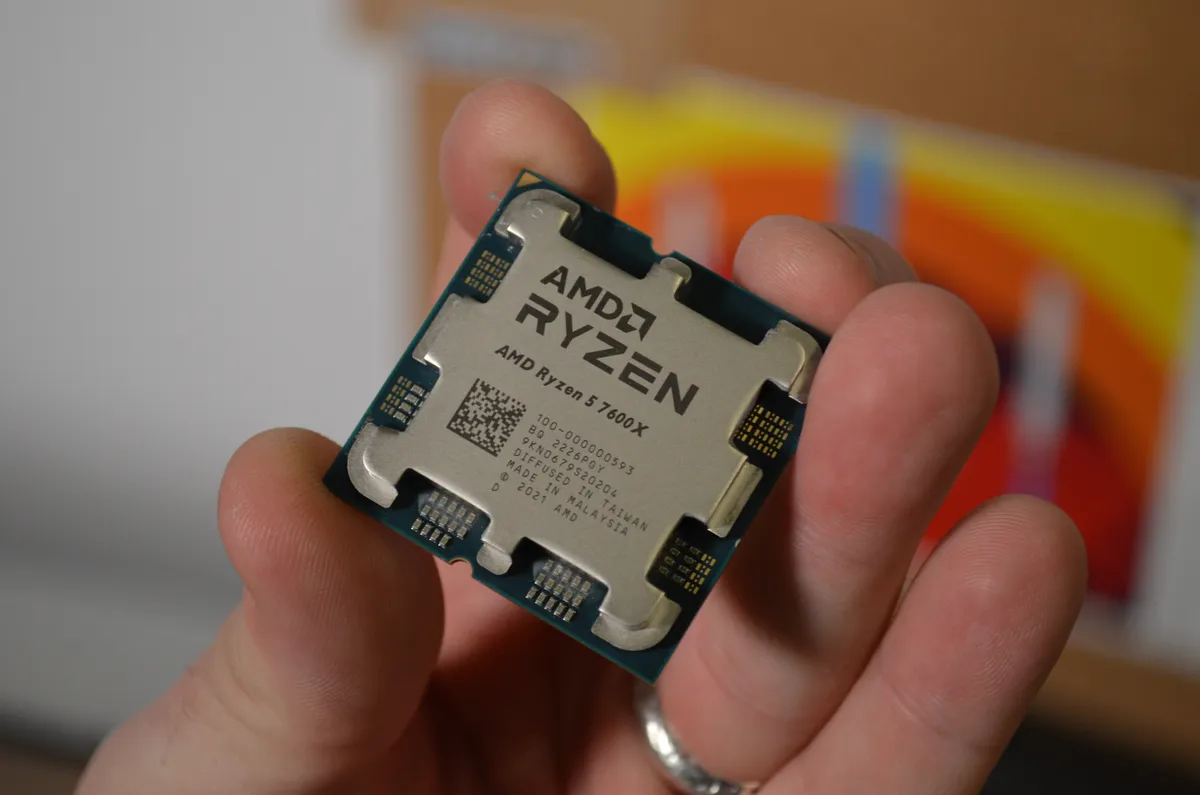
The most value-oriented processor in the new AMD Zen 4 lineup is the AMD Ryzen 5 7600X, but don't let its price fool you: this chip is anything but a lightweight. Sure, it can't hold up against the massive, 16-core Ryzen 9 7950X, but its single-core performance is nearly on par with its beefier cousins.
What's more, the lack of V-Cache doesn't slow this chip down one bit when it comes to gaming performance, and gamers looking to make the jump to AMD's AM5 platform will find a lot to love about this processor, especially as its more accessible cost helps to offset the cost of a new motherboard and RAM.
Fortunately, you won't need a different CPU cooler if you already have one compatible with AM4, and fortunately the Ryzen 5 7600X manages to stay cool under load.
Read the full AMD Ryzen 5 7600X review
The best processor for performance
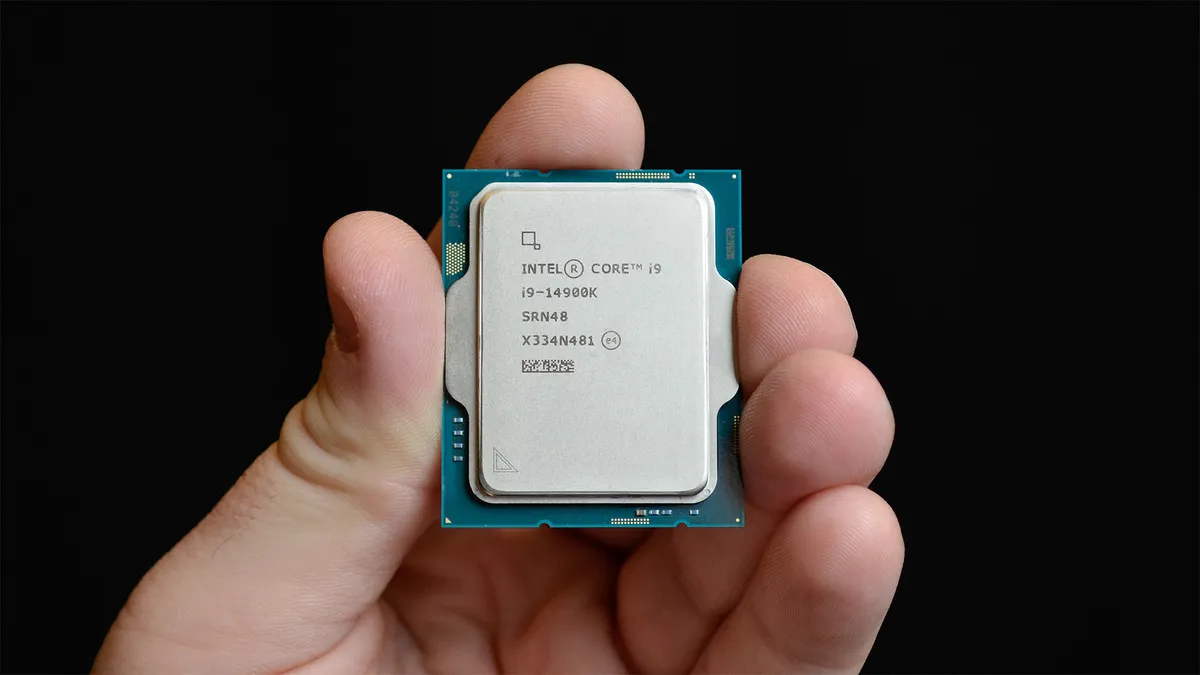
The Intel Core i9-14900K normally wouldn't be the kind of chip I'd put on this list, given its fairly mild gen-on-gen performance increase, but there's no denying that the 14900K is the fastest chip Intel — or anyone, really — has put out.
Right out of the box, this chip is capable of hitting 6.0GHz, something no other consumer processor can do. And while it can only do so under the right conditions, it still counts, and it's why Intel maintains its performance lead over AMD as it heads into a new era next year with a redesigned Meteor Lake processor.
And all for the same price as its predecessor, which is a relief given the way inflation has been wrecking havoc around the world.
It's not without its faults. The 13900K will likely be a better value for you, if you can find it, and this level of performance comes with more heat than any other chip we've ever teted, so make sure you've got the best cooling solution possible.
Read the full Intel Core i9-14900K review
The best processor for gaming

The AMD Ryzen 7 7800X3D is easily the best AMD processor on the market for gamers, thanks to its outstanding performance in just about any game you throw at it thanks to its 3D V-Cache technology.
Its non-gaming performance isn't as great, however, so if you're looking for a chip that can do everything, the AMD Ryzen 7 7700X is a great option in this tier, assuming you don't want to go with the Intel Core i7-14700K listed above.
This is also an expensive chip, though it's somewhat more reasonably priced than the Ryzen 9 7950X3D. If you don't already have an AM5 motherboard though, by wary that you will need to upgrade a lot of components in your PC as well in order to run the new AMD ryzen processors.
Read the full AMD Ryzen 7 7800X3D review
The best processor for AM4 motherboards
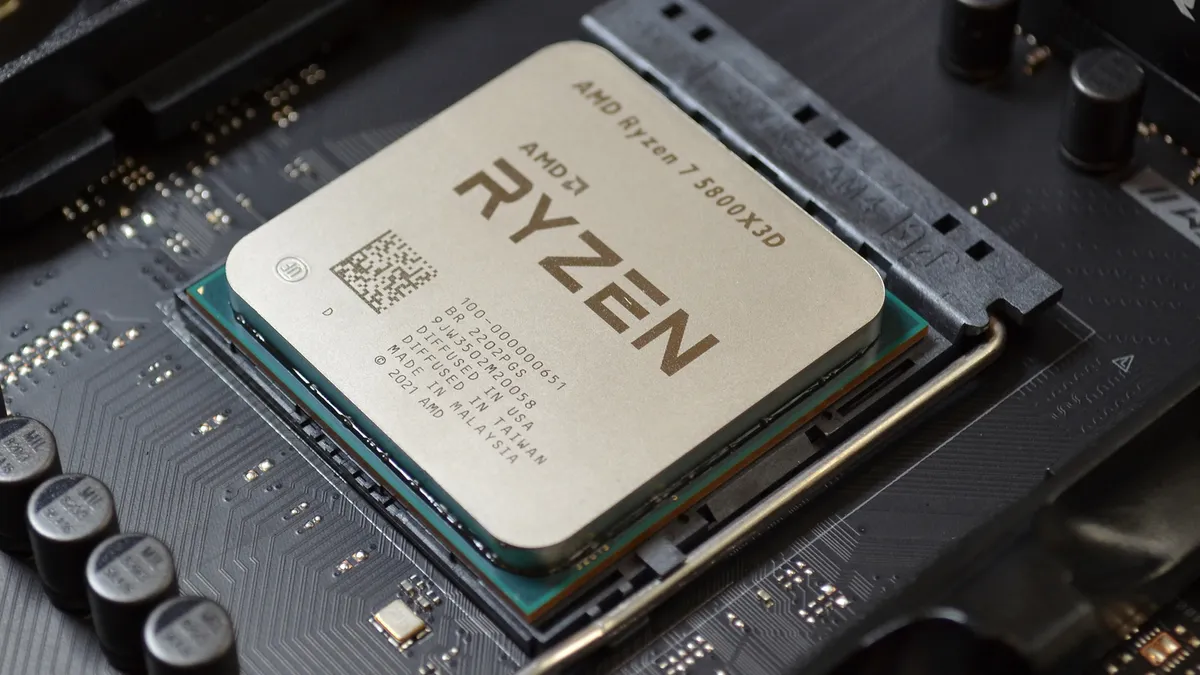
The AMD Ryzen 7 5800X3D is - without question - one of the best processors for gaming on the market. With incredible performance thanks to AMD's 3D V-Cache technology, the 5800X3D punches way above its weight class and can even beat out the more expensive Core i9-12900K when it comes to gaming.
Since this is essentially an AMD Ryzen 7 5800X with triple the cache memory thanks to a new microarchitecture that lets AMD 'stack' cache on the CPU die, it keeps the same AM4 motherboard socket as earlier Ryzen chips - meaning that you don't need to spend more to upgrade your motherboard if you're already rocking an AM4 system.
This is still a last-gen chip though, so you're not going to get all the perks of the AM5 platform like PCIe 5.0 and DDR5 RAM, but if you've got an AM4 system and you want an upgrade but not ready for a total overhual, this is a great chip to carry you for another couple of years at least.
Read the full AMD Ryzen 7 5800X3D review
The best processor for LGA 1200 motherboards

Intel's 11th-gen processors generally weren't much to celebrate, given that they didn't provide all that much of a gen-on-gen performance increase. But the Core i5-11600K is a noteable exception, providing outstanding performance for the price, making it a great chip to upgrade to if you are still using an Intel LGA 1200 system.
You won't be able to take advantage of the latest PCIe 5.0 and DDR5 RAM, however, and the i5-11600K's performance comes at the cost of power consumption and heat, which might require you to upgrade your CPU cooler to compensate. This might possibly even mean upgrading to an AIO cooler, whereas earlier generations could get away with air cooling.
Still, if you're not ready just yet to make the jump to Intel's 12th- or 13th-gen chips — especially if you are waiting for Intel's 14th-gen chips, which will use a whole new LGA 1851 socket.
Read the full Intel Core i5-11600K review
Frequently asked questions about processors
What does "3D" mean in an AMD processor?
If you see the "3D" suffix, such as on processors like the Ryzen 7 5800X3D, that means the processor utilizes AMD's 3D V-cache technology. The chip uses additional layers of L3 cache memory stacked on top of each other, creating more cache capacity and improving gaming performance.
It's often a wise choice to opt for a 3D processor if you're going to use your PC for resource-heavy gaming.
Is a good CPU important for gaming?
Yes, the vast majority of the time you will want an efficient CPU to run your gaming PC. While some games are more GPU heavy and don't rely as much on the CPU, your processor still carries out critical functions to keep your gaming running smoothly and will slow you down if it's not up to snuff.
How we test processors
It's impossible to tell the best processors from the worst just by looking at them. All of the core components are hidden away in near-identical packaging, and even if you were to peel back that packaging, the transistors on the CPU die are literally measured in nanometers. How can you tell a million transistors on a chip from a billion, and how can you measure a processor's clock cycle by looking at the box?
Fortunately, there are tests we can run to see how well a processor performs in the real world, and the best way to do that is to push a processor to its limits by running finely-calibrated benchmarking tools that produce comparable scores based on how well a processor performed a specific task - like compressing a video file, or performing the complex math used for 3D gaming.
We use industry-standard tools like Geekbench 6, Cinebench R24, and PCMark 10 to synthetically push processors to the limit using realistic workloads that you're likely to experience in day-to-day use.
We also use modern PC games set to the lowest graphical settings on the best available gaming hardware to isolate CPU performance while gaming, which we measure in frames per second.
Then, with the scores in hand, we look at the price of the processor. The best processors offer either best-in-class performance regardless of price, or compelling value for the customer. We won't score a CPU highly if its performance is just fine but it's out of reach for most people's budgets.
For more information, see How We Test.
Today's deals on the best processors
