





Mirrorless cameras might be the future, but that doesn't mean that the best DSLRs don't have plenty to offer – especially if you value their trademark features, like optical viewfinders, tactile controls and excellent battery life.
The Nikon D850 is a great example – and today's best DSLR. It's several years old, but its full-frame sensor produced fantastic, high-resolution 45MP stills in our tests – and the images still hold up well today. We also enjoyed its rugged build, fantastic handling and dependable autofocus system, and think it's the standout choice for anyone who wants a classic DSLR experience. Better yet, it's often available at a heavily discounted price point.
The TechRadar team has tested and reviewed more than 200 DSLR cameras over the past two decades, and all of our recommendations are based on real-world shoots and not just specs.
This guide features the best DSLRs that you can still buy new, from entry-level options to professional workhorses. However, if you're happy to go secondhand, you'll find our recommendations on picking up a used DSLR towards the end of the page.

I'm TechRadar's Cameras Editor, and have more than 15 years of experience working as a freelance photographer and technology journalist. In that time, I've had the opportunity to test a wide range of DSLR cameras from the top manufacturers and, as a result, develop a deep practical understanding of what makes a good DSLR camera. In fact, I still use my own full-frame Nikon model from time to time. New DSLRs are a rarity these days, with the manufacturers now focused almost entirely on mirrorless models. That being said, if you're a fan of the DSLR format, there are still some excellent new and second-hand options in my list.
Why you can trust TechRadar
Every DSLR camera in this guide has been comprehensively tested by TechRadar’s expert team. Over the past 20 years, our specialists have reviewed hundreds of DSLRs, from simple, beginner-friendly bodies to pro-grade flagships.
We put each DSLR through a series of genuine field tests to assess everything from image quality to autofocus performance. To start with, we look at the camera's design, handling and controls to get a sense of what kind of photographer it's aimed at and who would most enjoy shooting with it. When we take it out on a shoot, we'll use it both handheld and on a tripod to get a sense of where its strengths lie, and test its startup speed.
☑️ 100s of cameras reviewed
☑️ 15 years of product testing
☑️ Over 16,000 products reviewed in total
☑️ Nearly 200,000 hours testing tech
When it comes to performance, we use a formatted SD card and shoot in both raw and JPEG (if available). For burst shooting tests, we dial in our regular test settings (1/250 sec, ISO 200, continuous AF) and shoot a series of frames in front of a stopwatch to see if it lives up to its claimed speeds. We'll also look at how quickly the buffers clear and repeat the test for both raw and JPEG files.
⭣ Read more
Where applicable, we also test the camera's different autofocus modes in different lighting conditions (including Face and Eye AF) in single-point, area, and continuous modes. We also shoot a range of photos of different styles (portrait, landscape, low light, macro/close-up) in raw and JPEG to get a sense of metering and the sensor's ability to handle noise and resolve fine detail.

If the camera's raw files are supported by Adobe Camera Raw, we'll also process some test images to see how we can push areas like shadow recovery. And we'll also test its ISO performance across the whole range to get a sense of the levels I'd be happy to push the camera to.
Battery life is tested in a real-world fashion, as we use the camera over the course of the day with the screen set to the default settings. Once the battery has reached zero, we'll then count the number of shots to see how it compares to the camera's CIPA rating. Finally, we test the camera's video skills (where necessary) by shooting some test footage at different frame rates and resolutions, along with its companion app.

We then take everything we've learned about the camera and factor in its price to get a sense of the value-for-money it offers, before reaching a final verdict.
Whether you’re buying your first DSLR or upgrading, we compare each DSLR to its closest competitors to give you a complete picture of what options are available. This process is designed to help you find the best DSLR for your needs and budget. Because our recommendations are based on in-depth experience, you know they can be trusted.
Meet the team
Our team of reviewers has amassed many years of experience testing cameras, covering all of the latest and greatest cameras in the last 20 years – including all of the top DSLR cameras, old and new.

Rod is an independent photographer and photography journalist with more than 30 years' experience. He's previously worked as Head of Testing for Future’s photography magazines, including Digital Camera, N-Photo, PhotoPlus, Professional Photography, Photography Week and Practical Photoshop, and as Reviews Editor on Digital Camera World.
Matt has written and reviewed cameras for just about every leading photo publication, including Digital Camera World (where he was Editor), What Digital Camera, WEX and of course TechRadar.

Mark is TechRadar's Senior news editor and has been a technology journalist since 2004. Formerly Trusted Reviews and TechRadar's cameras editor, Mark has tested cameras over many years from all of the leading brands.

James Abbott is a professional photographer and freelance photography journalist. He contributes articles about photography, cameras and drones to a wide range of magazines and websites where he applies a wealth of experience to testing the latest photographic tech.
Today's best DSLRs, still available new
Why you can trust TechRadar We spend hours testing every product or service we review, so you can be sure you're buying the best. Find out more about how we test.
Below you'll find full write-ups for each of the best DSLR cameras in our list. Each has been tested by a member of our team extensively, so you can be sure that our recommendations can be trusted.
The best DSLR for image quality


Nikon D850 sample images


✅ You want the best image quality: The 45.7MP full-frame sensor is the best made for a DSLR.
✅ You want amazing battery life: 1,840 shots from a full charge, enough said.
❌ You're a hybrid shooter: Unlike for photography, the video performance of the D850 can't compete with mirrorless.
❌ You want seamless connectivity: Nikon's Snapbridge remains a clunky app for wireless connectivity.
It's hard to think of another DSLR that wows like the D850 does, even after several years on the market. It's on the pricey side for sure, but this is justified by the things we discovered in my tests, including excellent image quality, bags of features and a rugged, weather-resistant magnesium alloy body. The 45MP sensor is still one of the highest in terms of resolution in any DSLR, while the 7fps burst mode is unusually high for a camera with such a sensor.
Add to that a cracking AF system, wonderful handling and great 4K video, and its versatility should be easy to appreciate. Like the sound of the D850, but want to go mirrorless? Well, while not strictly a mirrorless version of the D850, Nikon's Z7 mirrorless camera shares the same 45MP resolution as the D850, but features some clever tech of its own, including an all-new lens mount.
Read our in-depth Nikon D850 review
The best professional DSLR


Canon EOS 5D Mark IV sample image

✅ You're a multi-disciplinary photographer: Landscapes, portraits, sports, wildlife, the EOS 5D IV does it all.
✅ You need the best battery life: Better than mirrorless, but Nikon rivals' battery life is superior.
❌ You're after good value: Years after its release, the EOS 5D IV remains a pricey DSLR.
❌ You're a videographer, too: 4K video options are limited compared to rivals.
The Canon EOS 5D Mark IV tweaks and improves on almost everything before it, with a 30.4MP sensor and advanced 61-point AF system, together with 4K video recording – all of which performed well in our real-world tests. With a 5D Mark V successor essentially ruled out by Canon, the Mark IV will continue to be one of the most compelling DSLRs at this price point.
Its 4K video options are a little limited, with the frame-rate topping out at 30fps and no options to shoot in a flat gamma profile. But if you're mainly looking for a powerful DSLR for stills photography, the EOS 5D Mark IV remains a surprisingly modern proposition, considering its age – and the fact that you can still buy it new is a testament to its popularity.
Read our in-depth Canon EOS 5D Mark IV review
The best beginner DSLR camera


Nikon D7500 sample images


✅ You have a budget of $1,100 / £1,000: The D7500 is regularly on sale, and you'll struggle to find a better DSLR for the price.
✅ You're happy with the crop sensor: This is arguably the best all-rounder DSLR with an APS-C sensor.
❌ You shoot a lot of action: The quicker, dual-card-slot D500 is the crop sensor camera to get for action.
❌ You want the best autofocus: Autofocus performance is the most notable sacrifice in this low-budget all-rounder.
Originally pitched at enthusiasts, we think the D7500 is a solid all-rounder for beginners to grow with. It's not an entry-level DSLR, but regular reductions mean it now represents excellent value. Furnished with the same brilliant 20.9MP APS-C sensor as the D500, together with a powerful 51-point AF system, we remain impressed by its stills performance. 4K video is a welcome feature, too.
We found its 3.2-inch tilt-angle screen useful in testing, even if its resolution isn't the sharpest. We also commented favorably on the D7500's battery life, as well as its weather-sealed body, which feels reassuringly robust. Live View focusing isn't the fastest, but if you're happy to accept a couple of minor compromises, we think the D7500 is a very solid option for the money.
Read our in-depth Nikon D7500 review
The best DSLR for sports and wildlife
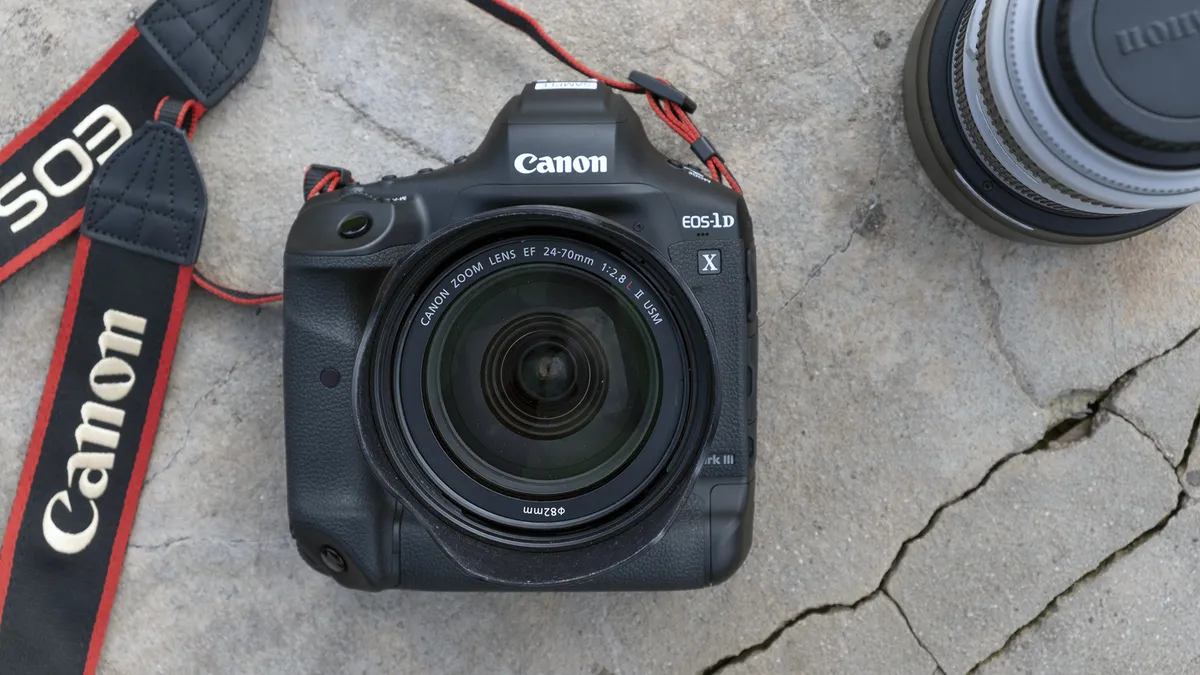


Canon 1D X Mark III sample images


✅ You shoot sports: Quicker and longer burst shooting, plus the best autofocus – there's no better DSLR to shoot sports and wildlife, period.
✅ You need a reliable camera: Rugged build and excellent weather-sealing for extreme conditions.
❌ You're on a budget: Yes, it's a flagship model, but by heck, is the EOS 1DX Mark III expensive, even now.
❌ You shoot from all angles: The fixed LCD screen is sturdy but hardly versatile for shooting from high or low angles.
Canon’s last-ever flagship DSLR is a fitting swan song. Designed for professionals who need speed, performance and image quality in a sturdy package, the 1D X Mark III pretty much covers it all. In our tests, we were extremely impressed with the 1D X Mark III’s capabilities. Its rugged build feels solid enough to survive a war zone and, while it’s a big camera, we appreciated its ergonomics during my review. We also found it a camera that could handle any situation.
Sports, wildlife or front-page action: its performance was never in doubt. With a fast processor, deep buffer and rapid 20fps burst speeds, this is a camera that doesn’t compromise. That’s equally true of the AF system, which uses deep learning to enhance precision. Its video prowess is handy, too, with 4K/60p capture available. Stacked to the hilt with features and power, it’s probably overkill for the average photographer, especially considering its expensive price tag. Yet it’s also a truly impressive DSLR that represents a worthwhile investment for professionals.
To save some money on Canon products, check out our Canon discount codes.
Read our in-depth Canon EOS 1D X Mark III review
The best full-frame hybrid DSLR


Nikon D780 sample images


✅ You shoot video, too: One of Nikon's most capable DSLRs for video, with 4K shooting and decent autofocus chops.
✅ You want a hybrid DSLR: Traditional DSLR benefits like great battery life and optical viewfinder fused with mirrorless tech.
❌ You want the best bang for buck: The D780 remains pricey, and the mirrorless Z6 is a cost-efficient alternative.
❌ You want high-resolution photos: 24MP is nothing to sniff at, but the D850 has almost twice the resolution.
The D780 is effectively a hybrid of a full-frame DSLR and a mirrorless camera like the original Nikon Z6. While it's still relatively expensive, the D780's slight price drop since it landed in 2020 means it's now my top pick for anyone who wants to combine the benefits of mirrorless tech and DSLRs. My review revealed that the D780's image quality is among the best around, while its 4K video skills are boosted by the inclusion of modern features like Face and Eye detection.
Building on the solid foundation laid by the D750, the D780 uses the same 273-point on-sensor phase-detection AF system as the Z6, allowing it to focus rapidly when you're shooting via Live View. If you prefer to frame through its optical viewfinder, you'll be able to make the most of its impressive 2,260-shot battery life. As one of the latest DSLRs, it's still quite pricey, but if that isn't an issue for you, then the D780 is one of the best full-frame all-rounders you can buy.
Read our in-depth Nikon D780 review
The best DSLR for enthusiasts
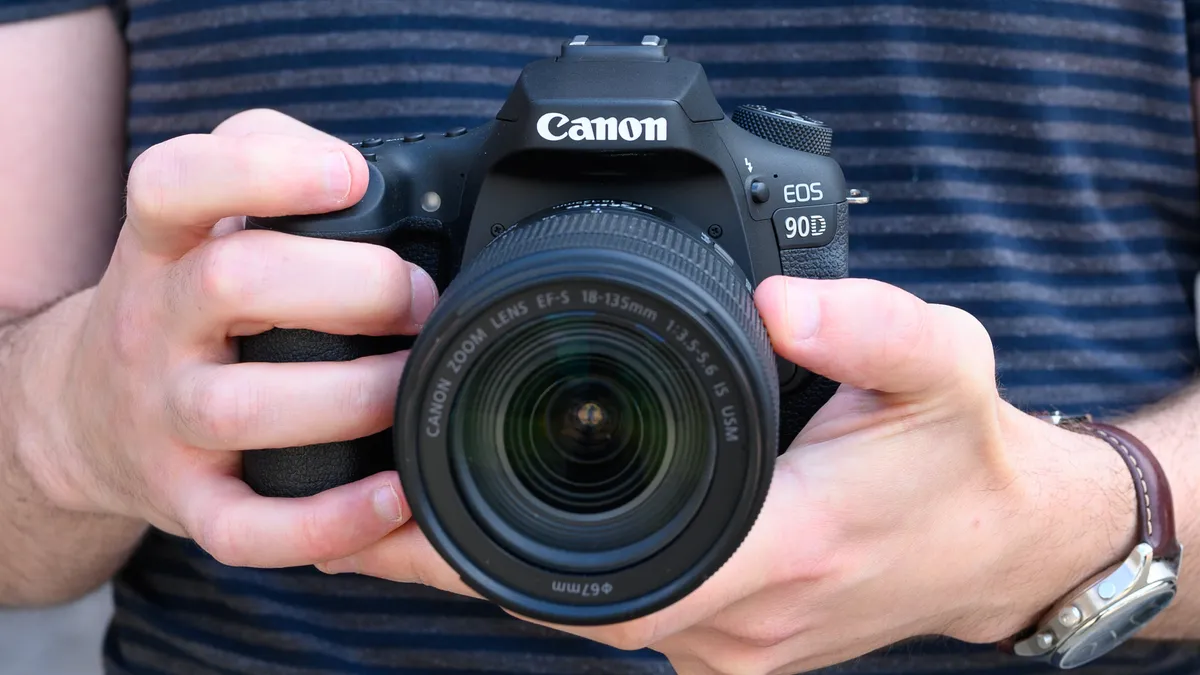


Canon EOS 90D sample images


✅ You like a lot of pixels: With a 32.5MP APS-C sensor, the Canon EOS 90D produces detailed stills with lots of cropping flexibility.
✅ You want to shoot 4K video: Unlike a lot of beginner DSLRs, the EOS 90D can record 4K footage at 30fps, using the full width of the sensor.
❌ You already have an EOS 80D: Unless you need the option of 4K video, the Canon EOS 80D does a remarkable job of shooting stills.
❌ You shoot a lot after dark: Noise is well controlled at lower ISO values, but it becomes very evident at sensitivities above 8000.
The EOS 90D was quite the step forward for the EOS DSLR line when it launched in 2019. It was the first of its kind to sport a 32.5MP APS-C sensor, giving it a decent number of pixels for both cropping and producing large prints. Unlike the earlier 80D, it offered uncropped 4K video recording, along with a new processing engine and faster burst shooting. The 1300-shot battery also provided far more juice than the average mirrorless camera, while protection against dust and water was a bonus.
It still stacks up well today. In our review, we were impressed by the versatility of the 90D. It's an excellent all-rounder for those who like to photograph a broad range of different subjects. It is worth weighing up whether the benefits of a mirrorless alternative to the EOS 90D, like the Canon EOS M6 Mark II, might appeal to you. The M6 Mark II is smaller, cheaper and offers faster burst shooting. But by focusing on key areas like battery life, handling and a fully articulating rear screen, Canon has made the EOS 90D a strong and versatile alternative for anyone who prefers the DSLR experience.
Read our in-depth Canon EOS 90D review
Second-hand DSLRs
There are a lot of good reasons to check out the second-hand DSLR market – and saving some serious cash is one of them. It's a great option for newbies taking their first steps into the world of photography, too, providing an option where you don't need to shell out a fortune on a hobby you may not develop a long-term interest in.
Besides the savings, older and pre-used DSLRs can be more rugged, battle-tested options that'll continue to stand the test of time (and the elements). Plus, there's also a great amount of pre-loved lenses available, too
There are a few key factors to keep in mind when scouring second-hand options, however. These include:
- Figure out the shutter count: this is just as important as determining how many miles a used car has on the clock. Shutter count tells you how much the camera has been used, and while a low shutter count typically means that the DSLR will have a longer life, it's not a deal breaker if the count is in the thousands. If you do see a high count, it's worth inspecting other elements of the camera with more scrutiny.
- Take a test image: pop in a memory card and snap a few shots, then review them on the digital screen. This'll also give you a good idea of whether there's any loose dust or scratches on the glass elements, as well as any defects in the sensor.
- Test the lenses and lens mount: if your seller is throwing in some lenses with the DSLR, give them a once-over. Are they scratched or damaged? If you've brought lenses with you, or if any are included with the DSLR, swap a few around to see if there's any friction or incompatibility issues.
- Check the hardware: examine the buttons, dials, and rotating rings on the camera – you're looking for anything that feels loose, sticky, or might otherwise impact their ability to communicate to the camera.
- Stick to reputable sellers: you can pick up a second-hand DSLR all over the internet but, as is often the case, they're not all made equal. Head to your local camera store to get a better feel for what's on offer. If you'd prefer to stay online, check out MPB and KEH, and avoid Facebook Marketplace - where scams can run riot!
- Ask about accessories: while some sellers are just offering a DSLR, others will include extras, like batteries, straps, lens caps, and the like. Consider whether these accessories provide actual value – and, if you've already got your own trusty accessories, consider whether you're paying more for things you don't need.
Also consider
Our team has reviewed a whole range of DSLR cameras, which means there are plenty more that almost made it into this list. Here are a few honorable mentions to consider.
Best retro – Nikon Df: OK, so all DSLRs are retro, but Nikon's Df is retro in a Fujifilm / OM System mirrorless camera sense, with a gorgeous metal top plate and manual exposure dials. It's an absolute joy to use as a stills-only camera, with no video recording capabilities whatsoever.
Best second-hand beginner – Nikon D3500: Nikon has discontinued the D3500, but you can still find it second-hand. That’s good, because its combination of great image quality, intuitive menus and superb battery life make it a fantastic option for beginners.
Best cheap – Canon EOS Rebel SL3 / EOS 250D: It might not do anything exciting, but a lightweight body, excellent battery life and generally reliable performance make this a budget DSLR for beginners that still gets the essentials right.
Best second-hand workhorse – Canon EOS 80D: With good ergonomics and a solid build, the 80D is a mid-level DSLR that’s capable of fantastic image quality – ideal for those who don’t need the latest photography tech.
Best entry-level full-frame – Canon EOS 6D Mark II: Impressively user-friendly, the EOS 6D Mark II is a well-rounded entry point into full-frame DSLR ownership. There’s no 4K video and the finish is plasticky, but it also produces reliably good stills.
Best rugged – Pentax Kf: A very minor upgrade to the Pentax K-70, the Kf is a compact DSLR with a rugged build. Dustproof and weather-resistant, it’s a good all-rounder for shooting quality stills in all conditions.
Best for black-and-white photography fans – Pentax K-3 Mark III Monochrome: If you’re committed to black-and-white photography, the Pentax K-3 Mark III Monochrome is a good choice. Our tests found the niche model to be well-built and lovely to handle. It’s also capable of sharp stills.
How to choose

How do I choose the best DSLR camera?
A DSLR remains the cheapest way to get a camera with interchangeable lenses and a viewfinder (you’ll find many entry-level mirrorless cameras don’t have viewfinders). But what else should you consider when choosing one?
Design
The main differences between an entry-level DSLR and a more advanced one are in the camera’s design, sensor and shooting features. Beginner DSLRs like the Nikon D3500 are often smaller than their more premium equivalents. This has historically made them some of the best travel cameras around, though it usually also means a lack of weather-proofing and fewer manual controls.
Sensor size
The size difference is often also related to sensor size. More affordable DSLRs tend to have APS-C size sensors, while pro-friendly ones like the Nikon D850 are full-frame cameras. You can see a diagram showing the difference below.
There is no outright ‘better’ sensor size, with each having its own advantages and drawbacks. To find out more about these, check out our guide on how to buy a full-frame camera.
Features
When it comes to choosing between a beginner DSLR and a mid-range model, paying a bit more for the latter will usually get you increased shooting flexibility, which could see you keep the camera for longer and save you money in the long run. The extra features you tend to get are improved continuous shooting speeds (handy for shooting sport or wildlife), superior high ISO performance (useful in lower light), and sometimes an extra memory card slot.
New vs secondhand
You can also find outstanding value by shopping for a second-hand DSLR from a reputable retailer. Because many manufacturers are no longer making new DSLR models, there is a healthy market for good quality used models. The Canon EOS 800D, for example, is a solid entry-level DSLR that can be found at a good discount. Similarly, the Nikon D750 is an older full-frame option that represents excellent second-hand value.
Consider a lens kit
If you’re just looking to step up from your smartphone or point-and-shoot camera, though, then an entry-level DSLR will give you the image quality boost and manual controls you need to grow into your new hobby. Finally, a quick word of advice if you don’t have any lenses – buy your new DSLR with a kit lens, as it’s cheaper to do this than buy them separately.
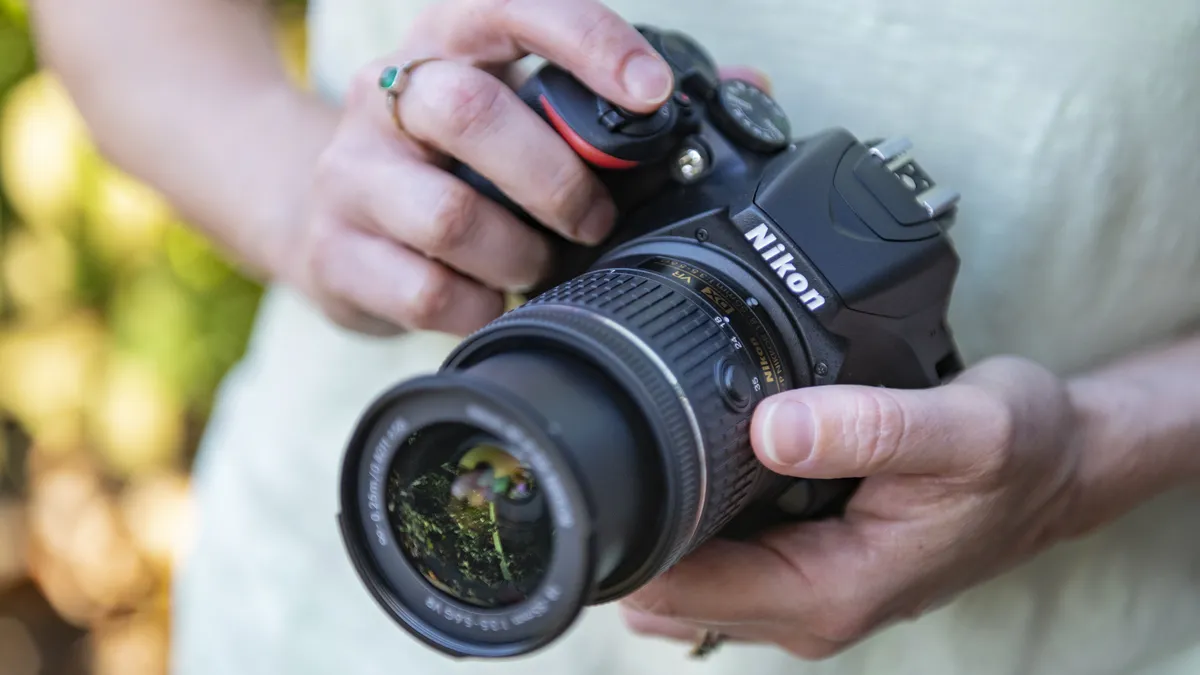
What is a DSLR camera exactly?
Digital
Like most modern cameras, a DSLR allows you to record still images to a memory card. What makes a DSLR camera different is the way that it directs light to the sensor inside. DSLR stands for digital single-lens reflex camera. Breaking that down, the ‘digital’ refers to the sensor. This can be anything from a standard APS-C sensor, all the way through full-frame to the much larger medium format.
Single lens
‘Single-lens’ is fairly self-explanatory: it means that DSLR cameras use the same lens to frame, focus and shoot photographs. Almost all cameras do this nowadays, but the terminology is a hangover from the days when retro rangefinder and twin-lens-reflex models used multiple lenses to achieve the different functions.
Reflex
‘Reflex’ refers to perhaps the most important component of a DSLR camera. It means that a mirror inside the body directs the light that comes down the lens. When you’re framing a shot, this light is sent to the optical viewfinder, giving you a true analogue impression of the scene. But when you press the shutter button to start an exposure, this mirror will flip up. In an analogue SLR camera, this would expose the film inside. In a DSLR, it allows the digital sensor to capture the available light.
Design hallmarks
Besides the optical viewfinder, another benefit of this reflective system is that DSLR cameras have to be larger than their mirrorless equivalents. This might sound like a downside, but it means DSLR cameras can benefit from famously good ergonomics. DSLR cameras also support interchangeable lenses, so you can switch to more suitable glass when you need to shoot a different scene – from a prime lens to a zoom lens, for example. And because the format has been around for so long, you should have no trouble finding compatible lenses and accessories.
For a more detailed explainer on how DSLRs compare to their mirrorless counterparts, check out our in-depth Mirrorless vs DSLR comparison feature.

Who stopped making DSLR cameras?
As you’ll see from the list above, there are still plenty of excellent DSLR cameras available for photographers. That said, it’s an unavoidable truth that most manufacturers are now focused squarely on putting their latest tech into mirrorless models.
The result of this industry shift is that many of the biggest camera manufacturers have stopped developing new DSLR cameras. That includes two former stalwarts of the genre: Canon announced in 2021 that the EOS 1D X Mark III would be its last DSLR flagship, while Nikon followed suit in 2022. Some feel it could be a good thing for photography as a whole.
That doesn’t mean you can’t buy DSLR cameras from those companies: both are still producing existing models. In fact, Canon has promised to continue making DSLRs for as long as there is demand for them. But that doesn’t mean their future is secure, either. Nikon has officially discontinued several models, including both the D5600 and D3500, and neither brand will bring any new models to market. And they’re not alone, with Sony also withdrawing the last of its DSLRs from shelves.
While this development doesn’t augur well for fans of the format, chances are that the total demise of DSLRs is still several years away. What’s more, you can still find fantastic value on the healthy second-hand market.