- Apple’s Lockdown Mode stopped the FBI accessing a reporter’s iPhone data
- When enabled, Lockdown Mode disables several iPhone features
- It does this to protect against ‘highly sophisticated cyber attacks’
One of the big selling points of the best iPhones is Apple’s self-proclaimed commitment to privacy and security. That’s been put to the test multiple times over the years, and a recent clash between the FBI and a Washington Post reporter has Apple’s protections proving useful once again.
The case revolves around Washington Post journalist Hannah Natanson, whom the FBI is investigating over alleged leaks of classified information to the press. In a raid on Natanson’s home, the FBI seized an iPhone and a MacBook Pro owned by the Washington Post, as well as a MacBook Pro owned by Natanson, plus other electronic devices.
The Washington Post has filed a court motion that, at present, prevents the FBI from accessing Natanson’s data – but that didn’t stop the agency from trying and running up against Apple’s safeguards.
In a filing opposing the one submitted by the Washington Post, the FBI said that “Because the iPhone was in Lockdown mode, CART could not extract that device.” CART is the FBI’s Computer Analysis Response Team, which was attempting to remove data from the device.
Aside from the iPhone, FBI agents apparently forced Natanson to unlock the Washington Post’s MacBook using her fingerprint, although the agents were unable to gain access to her password-protected personal laptop.
In 2024, a federal appeals court ruled that police officers could compel a suspect to unlock a device using biometric data, although this did not extend to forcing people to provide their device passwords – hence the FBI’s lack of success with Natanson’s personal laptop.
How does Lockdown Mode work?
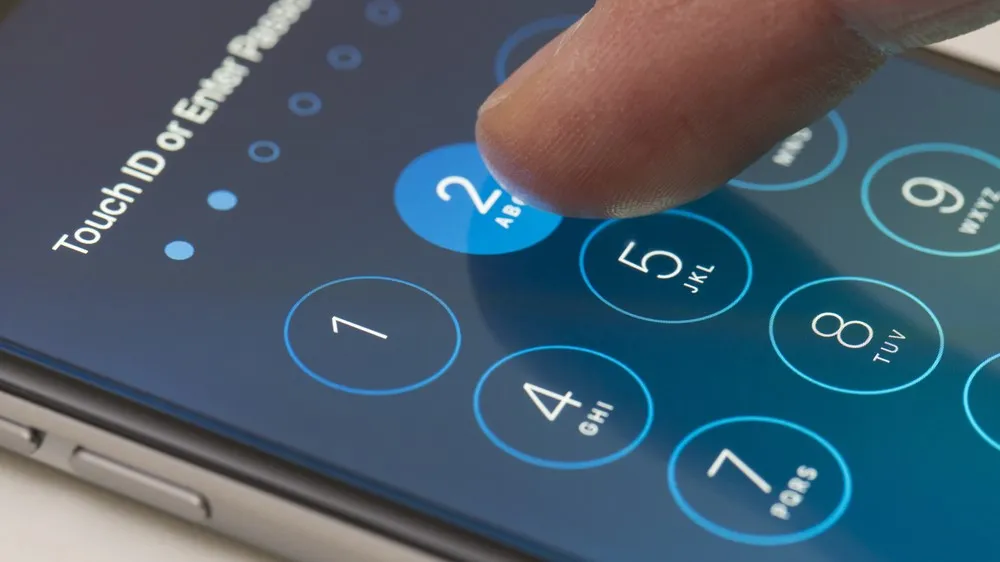
The case highlights the apparent value of Apple’s Lockdown Mode to high-risk users. We don’t know if Natanson’s work iPhone was locked using biometrics or a passcode, but unlike with the laptop, it would not matter because the iPhone was secured using Lockdown Mode.
So, what is this iPhone feature? Introduced in 2022, Lockdown Mode is a suite of safeguards intended to protect users who Apple says might face “highly targeted mercenary spyware” and “highly sophisticated cyber attacks.” It’s available for iPhones, iPads, Macs and Apple Watches.
Apple warns that enabling Lockdown Mode means that your device “won’t function like it typically does.” Most attachments in Messages are blocked, Focus modes won’t work as normal, certain web browsing technologies are prohibited, image sharing is heavily restricted, and more. Devices in Lockdown Mode cannot join insecure Wi-Fi networks, while devices must be unlocked in order to connect to accessories and computers.
The kind of targeting that Lockdown Mode aims to protect against does not affect most people, and its protections are described by Apple as “extreme.” However, if you feel you are at risk and want to use Lockdown Mode, you’ll need to open the Settings app on your iPhone and go to Privacy & Security > Lockdown Mode > Turn On Lockdown Mode. Tap Turn On Lockdown Mode again, select Turn On & Restart, then enter your passcode.
While it’s uncertain how the FBI’s case will progress and whether the agency has any ways to bypass Lockdown Mode, for the time being the feature has demonstrated its resilience against being cracked. If you feel like your device could be at risk from governments, mercenary spyware groups or similar, it’s a useful tool to have around.
Follow TechRadar on Google News and add us as a preferred source to get our expert news, reviews, and opinion in your feeds. Make sure to click the Follow button!
And of course you can also follow TechRadar on TikTok for news, reviews, unboxings in video form, and get regular updates from us on WhatsApp too.