





I'm lucky enough to have several wildlife enthusiasts on my TechRadar testing team (myself included). And it's thanks to decades of collective experience both reviewing cameras and shooting in the wild, that we know what it takes to get the shot on safari. If you’ve got your sights set on a new wildlife camera, you’ll find our favorites rounded up here, covering a range of experience levels and budgets.
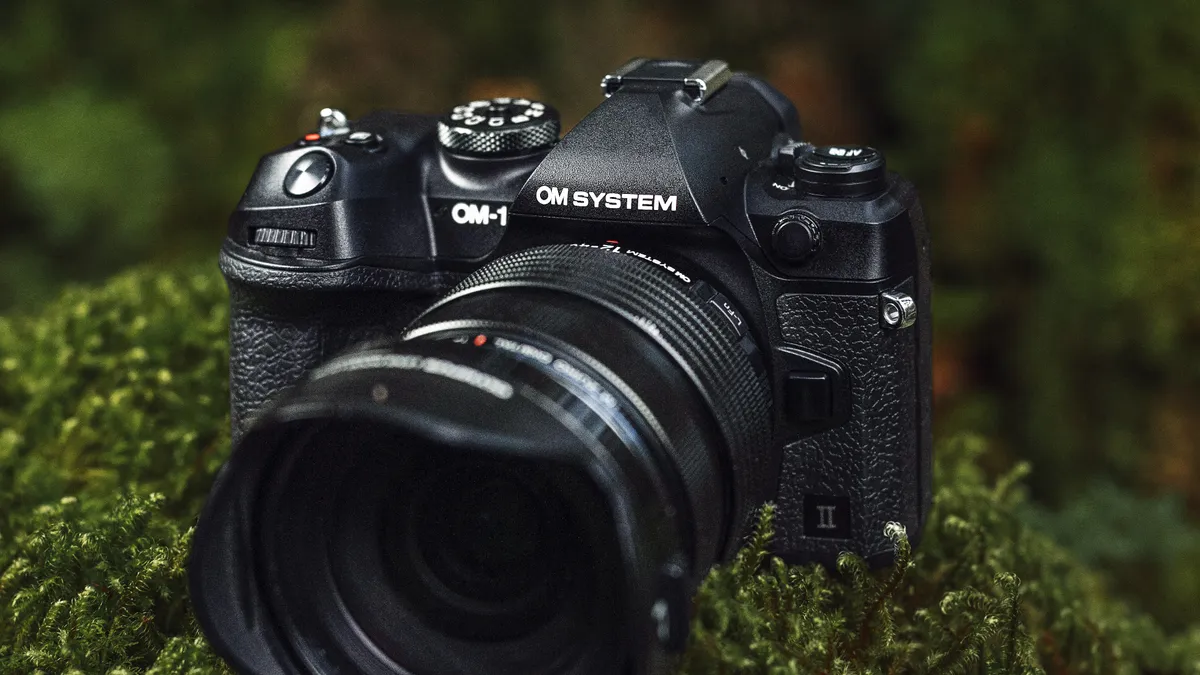
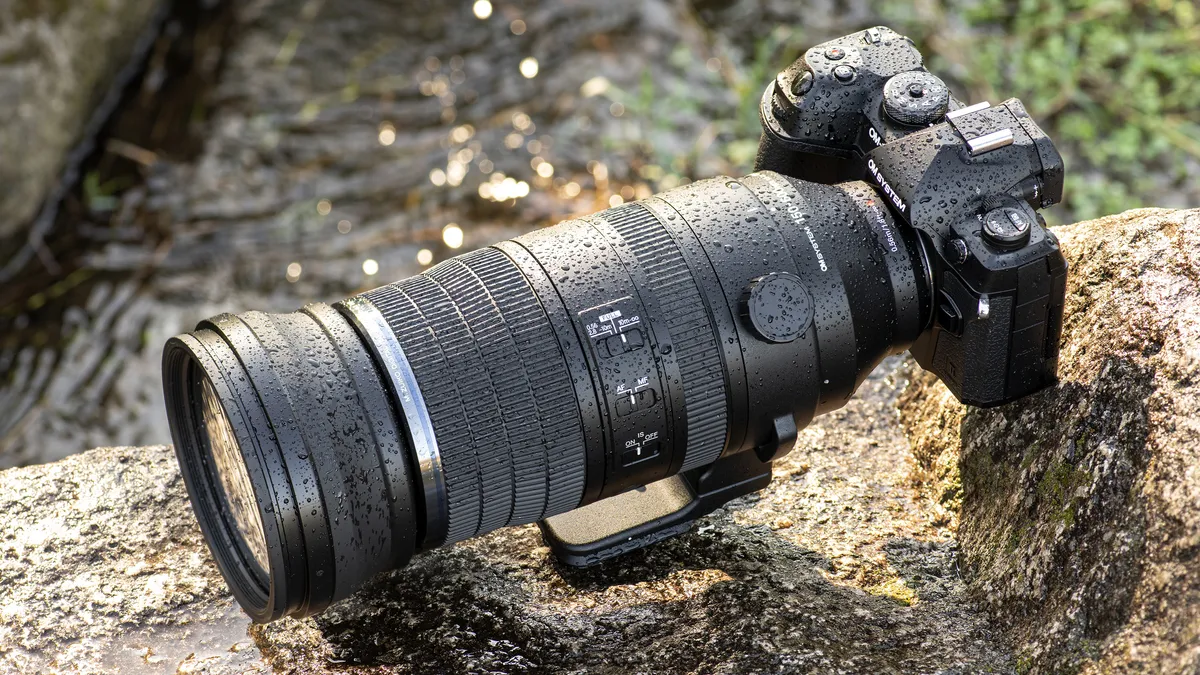
The OM System OM-1 II is a great example of a camera that’s built for wildlife photography. It’s small, smart and rugged: the Micro Four Thirds format makes it easy to wield, while fast performance and computational modes help you get the shot. It can survive some rough stuff, too. That said, if you need something even faster or sharper, we’ve covered all bases below.

I'm TechRadar's Cameras Editor, with more than 15 years of experience in the photography and video industry – both as a professional and a journalist. As a keen wildlife photographer myself, I know what makes a good camera for capturing the natural world.
Wildlife and the outdoors go hand in hand, so you'll need a dependable camera, with fast burst shooting to capture high-speed action, and one with telephoto lenses capable of getting you close to distant subjects. Adventurous wildlife photographers will need to spend a little more to bag a camera able to withstand adverse conditions.
Why you can trust my judgement
We don’t recommend any camera until we’ve tested it extensively in the field, putting it through the kind of challenges it will face in the hands of a keen wildlife photographer. That’s why you can rely on our suggestions, because they’re all based on the results of our comprehensive reviews process. Whatever your budget or skill level, you’ll find your ideal wildlife camera here.
☑️ 100s of cameras reviewed
☑️ 15 years of product testing
☑️ Over 16,000 products reviewed in total
☑️ Nearly 200,000 hours testing tech
Buying a camera for wildlife photography is a big investment, so every camera in this guide has been tested extensively, either by me or a member of my highly experienced team. We focus on real-world tests, including shooting a variety of animals, alongside standardized tests for factors like ISO performance.
To start with, we look at the camera's design, handling and controls to check it suitability for wildlife photography. When we take it out on a shoot, we'll use it both handheld and on a tripod to get a sense of where its strengths lie, and test its startup speed.
⭣ Read more
When it comes to performance, we use a formatted card to shoot in both raw and JPEG. For burst shooting tests, we dial in our regular test settings (1/250 sec, ISO 200, continuous AF) and shoot a series of frames in front of a stopwatch to see if it lives up to its claimed speeds. We'll also look at how quickly the buffers clears and repeat the test for both raw and JPEG files.
In various lighting conditions, we also test the camera's different autofocus modes (including Animal Eye AF, if available) in single point, area and continuous modes. The tests we run are usually relative to the camera's user level – for beginner models, we'll take them to the local zoo, but for pro models with more advanced wildlife photography features we'll take them for day out in a bird hide.

If the camera's raw files are supported by Adobe Camera Raw, we'll also process some test images to see how we can push areas like shadow recovery. And we'll also test its ISO performance across the whole range to get a sense of the levels we'd be happy to push the camera to.
Battery life is tested in a real-world fashion, as we use the camera over the course of the day with the screen set to the default settings. Once the battery has reached zero, we'll then count the number of shots to see how it compares to the camera's CIPA rating. Finally, we test the camera's video skills by shooting some test footage at different frame-rates and resolutions, along with its companion app.
We then take everything we've learned about the camera and factor in its price to get a sense of the value-for-money it offers, before reaching our final verdict on whether it deserves a place in our list of the best cameras for wildlife photography.

Average metering allows the camera to look at the whole frame, average out the range of brightness across the whole scene, then shoot an exposure that sits halfway (roughly) between the brightest and darkest points. This is an exceptionally simple metering mode to use when you’re shooting a scene that is evenly lit. If you’ve got a subject against a particularly bright or dark background, though, you might find average metering to be inaccurate, which is where centre-weighted and spot metering come in.
They’re close bedfellows – spot metering reads the brightness from the very centre of the frame, and will use that as the average brightness of the whole scene. If you meter from a dark background and your subject is brighter, it will turn out over-exposed, and vice versa. The upshot? For tricky, small subjects – particularly ones against bright backgrounds (think snow, but also birds in flight against grey skies), spot metering, and a bit of experience, are the ways to go.
Don’t be discouraged if your first experience with centre-weighted and spot metering are disappointing – a few missed exposures are absolutely par for the course, and part of your valuable learning experience.
Meet the team
TechRadar has been testing cameras for more than 20 years. Our team of expert reviewers has a wealth of knowledge when it comes to photography equipment. With a huge amount of shared experience, they know what makes a good camera for wildlife photography.

Rod is an independent photographer and photography journalist with more than 30 years' experience. He's previously worked as Head of Testing for Future’s photography magazines, including Digital Camera, N-Photo, PhotoPlus, Professional Photography, Photography Week and Practical Photoshop, and as Reviews Editor on Digital Camera World.

Mark is TechRadar's Senior news editor and has been a technology journalist since 2004. Formerly Trusted Reviews and TechRadar's cameras editor, Mark has tested cameras over many years from all of the leading brands.

James Abbott is a professional photographer and freelance photography journalist. He contributes articles about photography, cameras and drones to a wide range of magazines and websites where he applies a wealth of experience to testing the latest photographic tech.

Paul is a digital expert. In the 20 years since he graduated with a first-class honours degree in Computer Science, Paul has been actively involved in a variety of different tech and creative industries that make him the go-to guy for reviews, opinion pieces, and featured articles. You'll also find his writing in other places, including Creative Bloq, Digital Camera World, and 3D World Magazine.
Today's best wildlife photography cameras
Why you can trust TechRadar We spend hours testing every product or service we review, so you can be sure you're buying the best. Find out more about how we test.
You'll find full write-ups for each of the best wildlife photography cameras in our list below. We've tested each one extensively, so you can be sure that our recommendations can be trusted.
The best wildlife photography camera overall



OM System OM-1 II sample images


✅ You want to ditch some optical filters: With digital ND and ND grad filters, the OM-1 II removes the need to use traditional optical filters, although the two types of digital filters can’t be used at the same time so you may still need to carry ND grads or ND filters.
✅ You want a compact kit: MFT cameras and lenses are typically smaller and lighter than other camera systems, so if you want to reduce weight while enjoying a high-performance camera, the OM-1 II is a great option to consider.
❌ You own an original OM-1: If you have the 2022 OM-1, upgrading will provide new features and performance improvements, but it’s not a huge upgrade so you may just be better off sticking with what you have.
❌ You need high-resolution: While the OM-1 II can capture 50MP handheld sensor shift shots and 80MP on a tripod to create 14-bit Raw files, this feature isn’t suitable for many situations and subjects; for which you're limited to 20MP.
Bigger doesn't necessarily mean better in the camera world. While there's lots to be said for medium format and full-frame cameras, it's often the case that a smaller sensor size makes more sense – and doesn't necessarily mean a lack of cutting-edge tech either.
The OM System OM-1 Mark II, with its Micro Four Thirds sensor, is a prime example – even if it’s more of an incremental update over the original OM System OM-1 than a significant upgrade. This latest model is one of the most technologically advanced cameras currently available, offering features and functionality that could easily tempt photographers away from larger format cameras, especially if they're looking for a lightweight camera system.
The OM-1 II offers many of the same features as the original, including the same 20MP back-illuminated sensor with its 1053-point AF system, 50fps continuous shooting with autofocus, Live ND filters (software-based) and an IP53-rated weather-sealed body.
Its asking price puts it in the same bracket as many mid-range full-frame cameras, which can seem like a negative when you’re getting a much smaller sensor. However, you're getting a typically smaller and lighter camera system, including the lenses, which most OM System fans favor. It's an easier-to-carry and more compact system that’s capable of shooting any subject, but we think it particularly excels at landscape and wildlife photography.
Read our in-depth OM System OM-1 II review
The best professional camera for wildlife photography


Nikon Z9 sample images


✅ You need a dependable camera for most situations: Pros especially need a reliable tool, first and foremost, and they won't be let down by the Nikon Z9.
✅ You want resolution and speed
What's seriously impressive about the Z9 is that it outguns the similarly-priced Nikon D6, while boasting more than twice the resolution
❌ You want a lightweight system for long shoots: The Z9 is the bulkiest camera in this guide and heavier than Canon EOS R3 and Sony A1 rivals.
❌ You don't need the extra stamina: The cheaper and smaller Nikon Z8 can do just about everything the Z9 does for wildlife photography, save for its lesser battery life.
Nikon's flagship Z9 is as tough as they come and well suited to the rigors of wildlife photography, even if it is on the heavier side. You get sealed magnesium alloy body, built-in vertical grip for impressive battery life plus horizontal and vertical shooting, illuminated controls for working in low light and a fantastic two-way tilting touchscreen. Nikon knows how to make cameras that are a pleasure to use.
The Z9 is also a powerhouse that can keep up with the most intense wildlife action. It as a stacked 45.7MP full-frame sensor with virtually no rolling shutter distortion, reliable subject tracking autofocus that includes various animal detection modes, plus it's a powerful video tool capable of capturing crisp video at 8K/60p or 4K/120fps. Oh and it'll shoot at 20fps with continuous autofocus and autoexposure for as long as you like without skipping a beat.
Compared to its flagship rivals, the Z9 is decent value, although you can get virtually the same performance for wildlife photography from the smaller and cheaper Nikon Z8. And if you're regularly out for long wildlife shoots, the substantial form factor of the Z9 is a major drawback, while there are better viewfinders elsewhere. However, the Z9 is a dependable and extremely powerful pro-grade tool, blessed with some fantastic lenses to choose from.
Read our in-depth Nikon Z9 review
The best beginner camera for distant wildlife


Nikon Coolpix P1100 sample images


✅ You want an all-in-one package with great reach: The P1100 is a superzoom bridge camera, so it includes a built-in lens with a massive 125x optical zoom.
✅ You want comfortable handling: This camera fits nicely in your hands with all essential controls within easy reach and balances well with its huge lens barrel.
❌ You want quality over versatility: If you want the best quality photos, look elsewhere: the P1100 is all about that versatile zoom.
❌ You own the P1000 or P950: The P1100 is the latest version in this series, but is in some ways a downgrade on its discontinued predecessor the P1000. If you've got one of those, stick with it.
The star of the show here is the built-in lens, which offers an astonishing 125x optical zoom – equivalent to 24 to 3000mm on a 35mm camera. That range covers pretty much everything you might want to shoot bar ultra wide-angle, and if you're a wildlife photographer it's pretty much ideal for getting up close and personal to birds and beasts without disturbing them. There's nothing else like this lens around, so if range is key, this is the camera to beat.
However, it's not without its issues. Having replaced the now-discontinued Coolpix P1000, the Coolpix P1100* actually downgrades optical stabilization by a stop and its flash guide number from 16m to 12m compared to its predecessor. The P1000 wasn't great on the picture quality front either, and the P1100 makes no improvements there. With a small 1/2.3-inch sensor, your photos aren't going to be as sharp or punchy as those taken with a mirrorless camera, particularly in tricky lighting.
It's also a fairly bulky camera and its contrast-based autofocus isn't particularly great. I think it makes a good pick for beginners due to the huge zoom range, though – just don't expect superb results every time.
*We haven't tested the Coolpix P1100 specifically, but it's practically identical to the Coolpix P1000 which we have (see review link below). We've also put together 5 things you need to know before buying the Coolpix P1100, highlighting the differences between the two models.
Read our in-depth Nikon Coolpix P1000 review
The best APS-C camera for wildlife enthusiasts



Canon EOS R7 sample images


✅ You want performance on a budget: If you can't shell out for Canon's full-frame models, the EOS R7 is a more affordable route to excellent subject-tracking autofocus.
✅ You want high-speed burst shooting: Its small proportions and fantastic handling make the EOS R7 a lovely all-rounder to travel with.
❌ You want decent native lens choice: At the time of writing, the native RF-S lens range is limited; rivals like the Sony A6600 and Fujifilm X-H2S are better served.
❌ You want the full-frame experience: The EOS R7 works wonders with its APS-C sensor, but it can't compete with full-frame alternatives when it comes to low light.
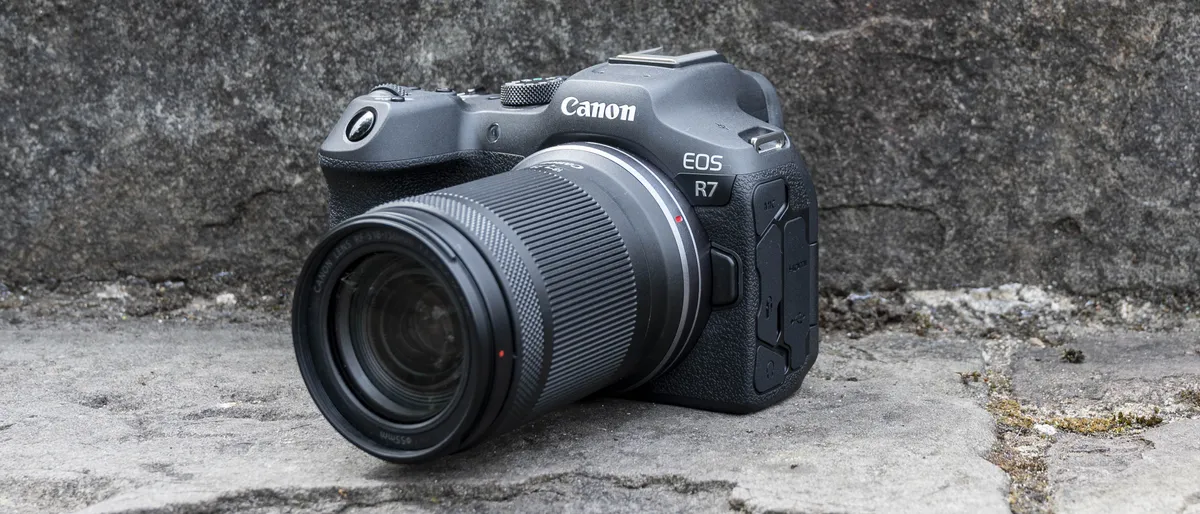
The larger full-frame format can be a hindrance when it comes to wildlife photography, and the crop sensor (APS-C) Canon EOS R7 is a case in point. In our review, we were majorly impressed by its class-leading 32.5MP stills that deliver sharp detail, its superb autofocus performance, rapid 30fps burst shooting speeds, plus its excellent in-body image stabilization, all of which combine to great effect for wildlife photography. Its full-frame cousins such as the EOS R6 Mark II still have the edge in low light scenes, but none-the-less the EOS R7 produced lovely images across a range of scenarios in our real-world tests.
We also found the EOS R7 to be a lovely camera in the hand, with a comfortable grip, balanced form factor and generous selection of direct-access controls. The EOS R7 is a decent video camera too, with uncropped 4K 60fps output, plus dual UHS-II card slots. The remaining drawback to Canon's crop sensor mirrorless cameras is the continued lack of native lenses, and no obvious high-quality contenders for telephoto perspectives. You can use Canon's pricier full-frame RF-mount lenses or use the Canon EF to RF adaptor and make use of Canon's DSLR lenses, but neither are ideal solutions. The likes of the Sony A6700 and Fujifilm X-T5 have better lens choice.
Read our in-depth Canon EOS R7 review
The best professional wildlife camera for speed


Sony A9 III sample images


✅ You need the speediest stills camera available: 120fps burst shooting and one second pre-capture? You're equipped to capture key wildlife moments.
✅ You shoot in challenging environments: The A9 III is Sony's toughest mirrorless camera able withstand a range of weather conditions.
❌ You want the most amount of detail: The A9 III is a speed monster, but stills are capped at 24MP.
❌ You're a low-light shooter: A drawback to the global shutter design is noisier images at high ISO settings compared to pro-grade rivals.
Sony made waves with the A9 III being the first camera of its kind to feature a global shutter. The result is industry-leading high-speed performance, including 120fps burst shooting and, in a first for Sony, one second pre-capture. These features can be game-changing for certain wildlife photographers – for example you might miss the moment a bird takes flight from a branch, but pre-capture gives you one second grace, while the high frame rates can ensure you get the perfect capture of the bird's wings. Oh, and of course you get Sony's best ever subject detection AI-autofocus with various animal tracking modes.
If you have the need for speed, then the A9 III is our top pick, but it's not for everyone. It caps out at 24MP and it doesn't shoot 8K video, so if it's the best resolution you're after, look in the direction of the likes of the Nikon Z9. The global shutter that realizes those unbelievable speeds also has an adverse impact on low light image quality, while Sony opting for a CFexpress Type A card slot also limits the number of shots you take at peak speeds – we wish the A9 III utilized the speedier CFexpress Type B media instead. Those things aside, the A9 III can perform at speeds that no other camera can, plus it's out favorite camera for flash photography given there's no real limit on its flash sync speeds.
Read more: Sony A9 III review
The best DSLR for wildlife enthusiasts


Canon EOS 90D sample images


✅ You like a lot of pixels: With a 32.5MP APS-C sensor, the Canon EOS 90D produces detailed stills with lots of cropping flexibility.
✅ You want to shoot 4K video: Unlike a lot of beginner DSLRs, the EOS 90D can record 4K footage at 30fps, using the full width of the sensor.
❌ You already have an EOS 80D: Unless you need the option of 4K video, the Canon EOS 80D does a remarkable job of shooting stills.
❌ You shoot a lot after dark: Noise is well controlled at lower ISO values, but it becomes very evident at sensitives above 8000.
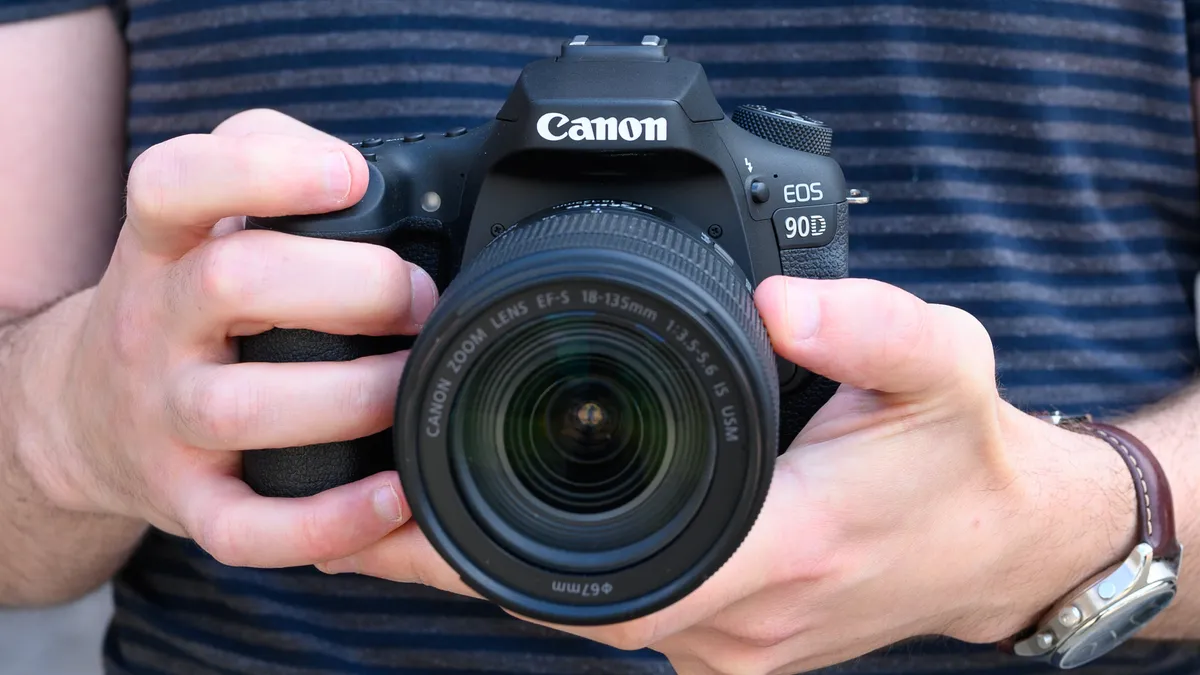
Canon is firmly focused on mirrorless cameras now, but that doesn't mean that you should ignore its dated DSLRs for wildlife photography. If you want a delicious blend of detailed images, high-speed performance and easy handling, as well as a decent choice of native lenses, we recommend the EOS 90D. Launched in 2019, it was Canon's first DSLR to sport a 32.5MP APS-C sensor, giving it a decent number of pixels for both cropping and producing large prints, as well as uncropped 4K video recording. It also packs impressive burst shooting speeds, enabling you to capture the decisive moment.
We enjoyed the EOS 90D's handling too. It boasts a mirrorless-beating 1300-shot battery, plus protection against dust and water. The vari-angle touchscreen provides clear viewing at awkward angles, while the optical viewfinder gives a bright and natural view of the scene. What we miss for wildlife photography in this camera the most, especially shooting with telephoto lenses, is in-body image stabilization to reduce the effect of camera shake in your shots – that's what the EOS R7 gives you. However, many of Canon's lenses have optical stabilization that helps. If you prefer DSLR over mirrorless, then the EOS 90D is a decent pick for wildlife.
Read our in-depth Canon EOS 90D review
Also consider
We've reviewed a whole range of cameras for wildlife photography, which means there are plenty more that almost made it into this list. Here are a few honorable mentions to consider.
Best bridge camera – Sony Cyber-shot RX10 IV: If you want the convenience of a super-zoom, the RX10 IV is our top pick. Launched in 2017, it’s still a strong performer. With 25x optical zoom, a 1-inch sensor, sharp glass and excellent handling, it’s a versatile choice for wildlife photography. It offers 24fps burst shooting too.
Best beginner mirrorless – Canon EOS R10: With powerful subject tracking autofocus and 15fps continuous shooting speeds, the R10 is a beginner-friendly mirrorless camera that’s well-equipped for wildlife photography. It’s relatively lightweight, making it easy to work with in the field. Paired with a fast telephoto prime, it can capture moving subjects in sharp detail.
Best high-speed – Fujifilm X-H2S: It doesn’t come cheap and lacks the charm of other Fujifilm cameras, but if you want the fastest shooting speeds when capturing animals, the X-H2S is a good choice. Thanks to a stacked sensor, it can capture stills at incredible 40fps. It also benefits from effective subject tracking autofocus.
Best Micro Four Thirds – Panasonic Lumix G9 II: A second-generation upgrade, the G9 II is a fantastic choice for wildlife photography. It has Panasonic’s best-ever autofocus, as well as faster performance and eight stops of image stabilization. Resolution isn’t as sharp as some, but the Micro Four Thirds sensor and lens selection is ideal for wildlife.
Alternative OM System camera – OM System OM-1: Before the Mark II version appeared, the first-generation OM-1 was our favorite overall wildlife photography camera. And it's still a great choice, offering many of the same perks and capabilities as the newer model. If you can find one at a good price, it's worth a close look.
How to choose the best wildlife photography camera for you
Along with sports, wildlife photography is the genre that places the greatest technical demand on a camera. Wildlife subjects are often small, reluctant photo subjects, which means autofocus accuracy, and speed, are absolutely critical. You can all-but guarantee that subjects will appear in surprising locations, so a camera that can quickly detect a subject and drive the lens’ autofocus to the right distance is critically important.
You’ll also want a camera that offers good continuous shooting performance. This isn’t something you’ll need absolutely all the time, but for birds in flight, animals jumping, or other pouncing, feeding and hunting behavior, being able to rattle off a dozen frames a second – and in some cases even more – is incredibly useful. Yes, timing is everything, but sometimes keeping the shutter button held down and hoping for the best can yield equally spectacular results.

There’s more. If you’re going to shoot wildlife in regions like northern Europe, weather-sealing is vitally important, as you won’t want to let a spot of rain deter you from getting out. Things to look out for include weather-sealed buttons and switchgear, as well as sealing at the junction between lens and camera body. For those embarking on more far-flung adventures, dust-sealing will also save you a few bucks in repair bills. As ever, the best kind of camera protection is insurance.
There are a few other things to consider. If you’re heading off on a once-in-a-lifetime trip, you might consider a camera with two memory card slots. This offers a bit of peace of mind – if a camera is writing every image to two memory cards at once, it doesn’t matter if one fails mid-shoot. Social media doyennes might also think about a camera with integrated Wi-Fi, which can allow you to send images to your phone, and then on to the wider web, without to hook things up to a memory card reader or a laptop.
What are the best settings for wildlife photography?
Figuring out how to set up a camera for wildlife photography takes a bit of experience and, dare we say it, a spot of trial and error, but we can get you started.
Starting from the top, we’d suggest shooting in raw if possible. A raw file is the data gathered by your camera’s sensor and nothing else – by contrast, a JPEG has a round of processing and compression applied to it. The result is that a JPEG file is easier to use straight from the camera, and will look better thanks to the processing, as well as being smaller.
But a raw file will have more dynamic range – that is, areas of bright highlights and dark shadow will have more data within them, allowing you to tweak your photo’s exposure with more latitude than it could withstand if it was already processed and compressed. The single biggest drawback is file size – expect a raw file to be several times larger than even the least-compressed JPEGs, so you’ll need a bigger memory card and hard disk to capture the same number of images.
Which metering mode is best for wildlife photography? The straightforward answer is, “whichever gets you the exposure you want”, but we’re happy to give you something a bit more technical. Metering describes how your camera measures the brightness of the scene in front of it. Different manufacturers use slightly different terms to describe different metering modes, but virtually all interchangeable lens cameras will offer average, centre-weighted, and spot metering.
- Check out our guide to the world's best cameras for photography