





The GPU market is more competitive than ever this year as the AMD vs Nvidia matchup is in full swing now that AMD's midrange graphics cards have launched, filling out the company's stack to compete against the offerings from Team Green.
The rivalry between the two has given rise to some of the best graphics cards ever in the past couple of years, and these GPUs have transformed both gaming and creative workloads alike. Now, with AI thrown into the mix, the battle for GPU champ is hotter than it's ever been, even as the fight on the more budget-friendly end of the spectrum is also engaged, with both companies putting out strong contenders for the best cheap graphics card of 2023.
The competition has fluctuated quite a bit over the years, mostl;y driven by innovations like ray tracing and graphics upscaling, as well as pricing strategies that have seen both companies leapfrogging each other at times. Whether its the best 4K graphics card, the best 1440p graphics card, or the best 1080p graphics card, each company has compelling products that make it hard to easily pick a winner this year.
And while Nvidia presently edges out AMD in high-end performance thanks to the almighty Nvidia GeForce RTX 4090, AMD still holds a very favorable position when it comes to pricing, especially since the AMD RDNA 3 generation of graphics cards (like the AMD Radeon RX 7800 XT) are offering excellent performance for gamers while keeping prices within range of more budget-conscious buyers.
Will the lines between Team Red and Team Green ever blur enough to shift the discourse towards a more nuanced discussion that considers a holistic view of features, performance, and value propositions that each brings to the table? We certainly hope so, and I'm here to break down what the two GPU giants have offered this year to highlight each company's strengths and where they faltered.
AMD vs Nvidia: price
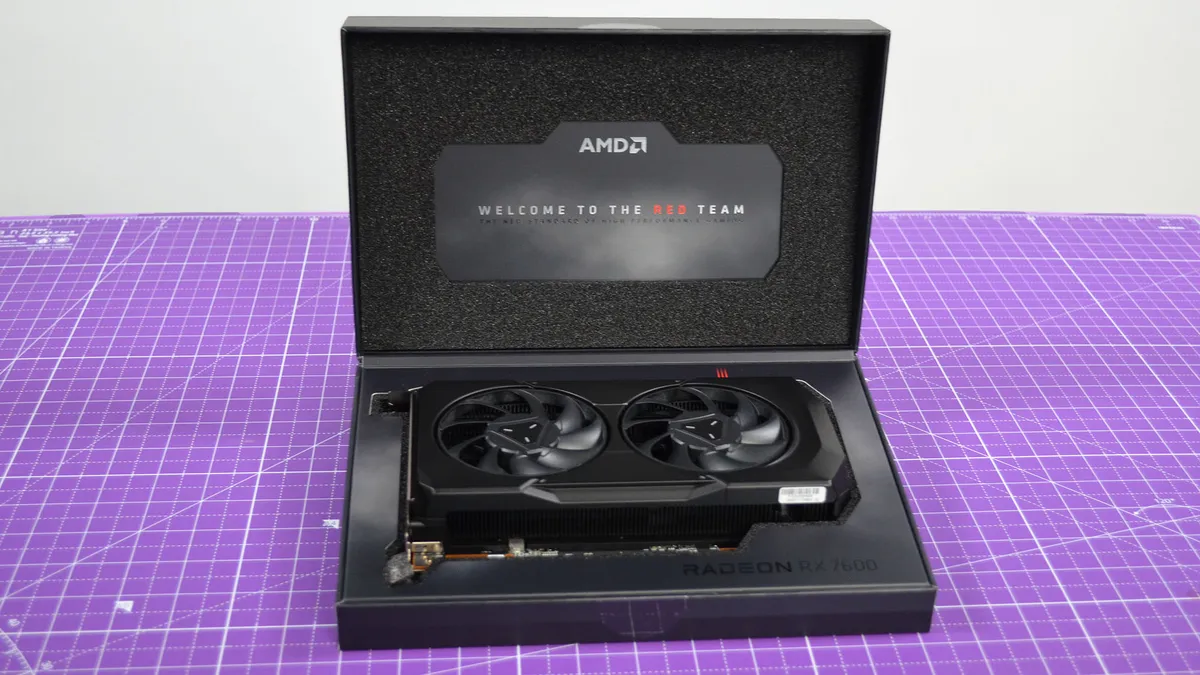
Traditionally, AMD has always been known as the more affordable brand of graphics cards. This remains true after 2023's graphics card launches have filled out each company's primary product stack, with AMD comes out ahead in every pricing tier, whether its premium, midrange, or budget.
The AMD Radeon RX 7900 XTX has an MSRP of $999.99 (about £760 / AU$1,450), which is the cheaper price of the flagship GPUs, with the RTX 4090 coming in at $1,699.99 (about £1,340 / AU$2,475). The Nvidia GeForce RTX 4080, meanwhile, has an MSRP of $1,199.99 (about £910/AU$1,740) and the AMD Radeon RX 7900 XT starts at $899.99 (about £685/AU$1,305), while the Nvidia GeForce RTX 4070 Ti has an MSRP of $799.99 (about £610/AU$1160) to fill out the premium tier.
For the midrange, you start with the Nvidia GeForce RTX 4070, which has a just-within-the-midrange-tier MSRP of $599.99 (about £460/AU$870), followed by the RX 7800 XT and Nvidia RTX 4060 Ti 16GB, both of which start at $499.99 (about £380/AU$725), and the AMD Radeon RX 7700 XT with an MSRP of $449.99 (about £340/AU$650). The Nvidia RTX 4060 Ti 8GB, meanwhile, comes in at $399.99 (about £300/AU$580) to round out the midrange stack.
Even as the RTX 4060 Ti 8GB is technically the cheapest midrange card available, it's generally not one that I would recommend to anyone given the low amount of VRAM really keeping the card's performance below where it should be at this price. If you're going for an Nvidia midrange, just go for the RTX 4070. It's easily the best Nvidia graphics card for most people and well worth the money, but if you're looking for the best value in the midrange, the RX 7800 XT is where its at this gen.
Finally, we have the two sub-$300 graphics cards, the Nvidia GeForce RTX 4060 with an MSRP of $299.99 (about £230/AU$435) and the AMD Radeon RX 7600, which is the cheapest graphics card of this generation with an MSRP of $269.99 (about £205/AU$390).
AMD vs Nvidia: performance
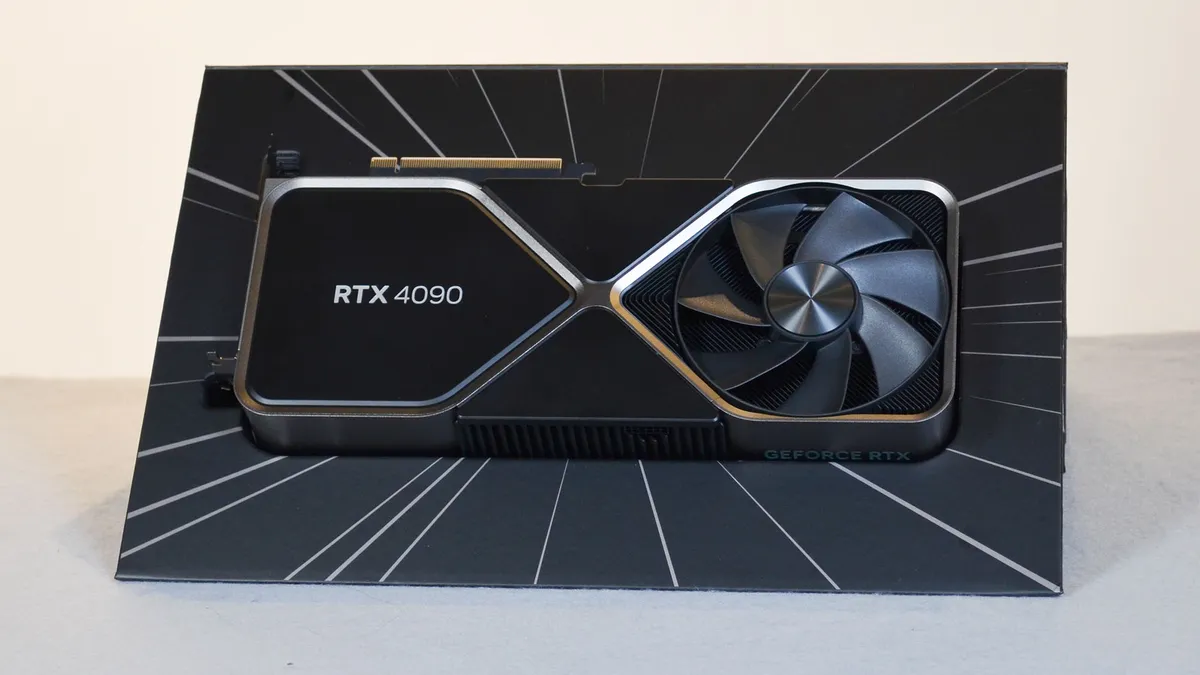
AMD may lag behind in ray tracing-heavy tests and creative performance, but a few of the cards in the line are certainly giving Nvidia some stiff competition in overall performance. If you want to play the best PC games at 4K and get a solid 60+ fps frame rate, you're no longer stuck with Nvidia.
Unquestionably, the best graphics card by performance is the RTX 4090, and it's not even close. This card can do just about anything and runs laps around last-gen's offerings, though it has a price to match. If gaming is your main interest, the RX 7900 XTX offers the best value for 4K gaming, followed by the RTX 4070 Ti.
In the midrange, the RX 7800 XT vs 4070 battle comes down to a draw on the numbers, with AMD having the advantage on traditional rasterization performance and the RTX 4070 having better ray tracing performance, as well as better DLSS support over AMD's FSR. Generally, the RX 7700 XT outperforms the RTX 4060 Ti 8GB, and while I haven't tested the 16GB variant, from the numbers available online (including Nvidia's own performance data) it doesn't look like the 16GB card performs much better than its 8GB counterpart.
On the more budget-y side of things, the Nvidia RTX 4060 delivers better performance than the RX 7600, and provides better features like ray tracing and DLSS support, but the RX 7600 is still a great card if your budget is really tight.
AMD vs Nvidia: exclusivity and features

When it comes to features beyond just rendering games, Nvidia and AMD take much different approaches.
Typically, AMD's approach is much more consumer-friendly, as it releases features and technologies that can be used even on Nvidia graphics cards – though they will usually work best on AMD's own silicon. AMD doesn't always have the best track record when it comes to driver support, but real problems are generally few and far between.
Nvidia, on the other hand, likes to keep things close to its chest, launching features like DLSS 3 that only work on its own platform, and even then, DLSS 3 will only work with the latest generation of graphics cards. The Nvidia Ampere 3000 series cards from 2020 and 2021 will only support up to DLSS 2.
Recently, however, Nvidia has launched a ton of features that are helpful outside of gaming, both as part of its ongoing Nvidia Studio suite program for creative and professional workloads.
Most notably, with Nvidia Lovelace, you get Nvidia Broadcast, which is incredibly useful technology for pretty much everyone. With this program, you can replace backgrounds in any video conferencing app using AI. What's better is that you can also use it to filter out all background noise from your microphone while in a call, so you don't have to worry about disrupting that 10am meeting by drinking coffee and hurriedly eating breakfast.
Conversely, AMD is still very much centered on gaming with its mainstream graphics cards, with its second-gen Ray Accelerators and FSR 3 coming soon to further improve AMD's upscaling tech, both of which will help deliver better 4K ray-tracing gaming experiences. This includes things like contrast adaptive sharpening (CAS) that makes playing on a higher resolution display easier, and better ambient occlusion.
AMD vs Nvidia: which is better?
There’s so much to love about both Nvidia and AMD graphics. In the end, both of these companies rely on competition with each other to thrive. Suffice to say, the Nvidia vs AMD debate requires that you understand there’s a reason Radeon and GeForce GPUs are so similar in performance right now.
Each company is doing its best to keep up with the mindshare of the other, and that’s good for us. They’re basically fighting for our money, learning from each other’s mistakes and legislating marked improvements along the way.
It’s up to you who wins the AMD-Nvidia fight, ultimately, and the best gaming PCs are going to feature both brands in their builds, so you'll have plenty of options whether you're looking for pre-built systems or looking to upgrade an existing rig. Whatever your choice, though, you're in for some truly incredible graphics performance.
