


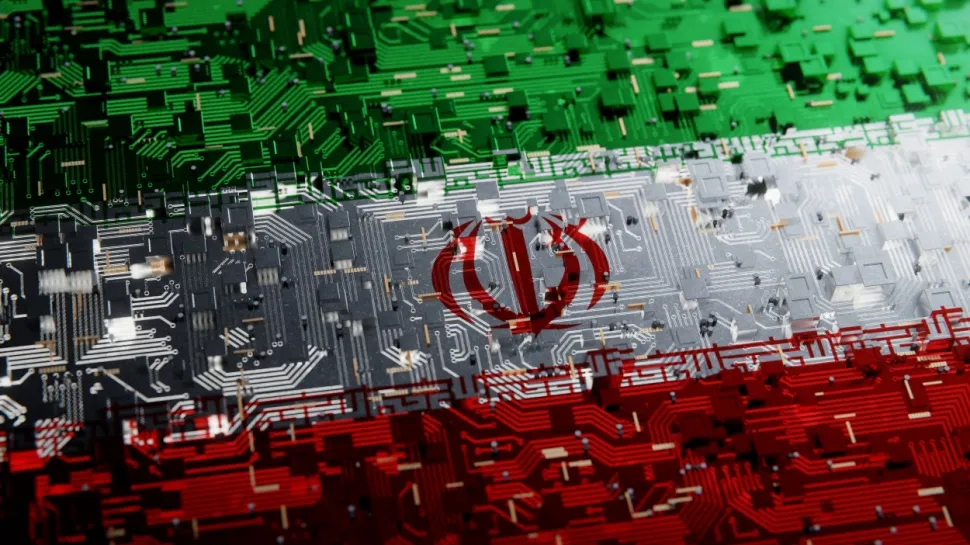
Three months, 88 days, 2,093 hours — that's how long people in Iran were plunged into near-total digital darkness, cut off from the global internet. Connectivity began to be restored on Tuesday May 26, but experts warn that "the internet is not connected" as severe restrictions persist.
According to the latest data from Doug Madory, director of internet analysis at Kentik, traffic has only reached 60% of pre-January 8 levels — the day authorities enforced the first wave of blackouts to crack down on massive anti-government protests.
While the government insists that full restoration "would be a gradual process," Amir Rashidi, Director of Internet Security and Digital Rights at the Miaan Group, describes this partial easing as a "new type of internet cutoff," explaining that "the connection is there, but the traffic isn't."
TechRadar spoke with Mahsa Alimardani, a London-based Iranian internet and human rights expert, to understand the devastating impact of the shutdown, what this partial restoration actually means for citizens, and what could happen next.

With over a decade of experience working at the intersection of digital rights, freedom of expression, and emerging technologies, Mahsa Alimardani leads research and advocacy on digital repression and contributes to the design and development of technologies that serve the most vulnerable. Together with the team at Access Now and other digital rights groups, she leads a coalition urging makers of Direct-to-Cell (D2C) to prioritize helping people facing shutdowns.
What is the feeling of residents coming out of this almost 90-day-long internet shutdown?
I can’t speak for every Iranian. A lot of people are relieved, but celebrating this partial restoration isn’t right, because this is going to happen again.
There has been no solution to the power the regime wields, and it needs to be underlined that the problem is not solved. People are still not fully connected, and they are paying inordinate amounts of money to connect to the international Internet, which the authorities deliberately make more expensive.
The emphasis should be on the injustice done to the Iranian people by shutting down the Internet, whether it was against protesters in January or against citizens facing bombardment. A precarious humanitarian condition that the regime chose to exacerbate by shutting down the Internet.
They will likely do this again. They have the capacity to go back and damage Iranians’ well-being.
This was the longest national shutdown ever recorded. What was the impact on people's everyday lives inside the country?
So many marginalised and vulnerable people’s livelihoods were affected by the shutdown. And there’s no recourse for accountability for the damage that has been done. There’s never been any accountability for the damage they’ve done in terms of the more horrific atrocities, but this is another form of damage.
So many businesses and industries have been harmed by the choice the authorities made. There have been various estimates; guild representatives inside Iran were putting it at something like hundreds of millions of US dollars a day throughout the shutdown.
It needs to be emphasised that the systems and the infrastructure still remain in place for them to inflict this damage. So we should not lose momentum or take the priority off the fact that we still need to reimagine how these infrastructures work, and how they are used to disempower people.
The people are still being disempowered by the system that controls and rations the infrastructure. Access to the international Internet is still more expensive, still difficult, still with so many hurdles.
If the conflict intensifies, or if we see any sort of protest, which is a right Iranians have, to protest and demand their rights, the Internet will be taken away again. Because everything remains the same in terms of governance and the technical infrastructure.
Are you worried about the whitelisting and the 'internet pro' system? What do you think will come next?
I do think they will figure out more ways to do this.
We did have the whitelist system for pre-approved access, and the 'Internet Pro' tier for people who paid. We’ll have to see what this really means, because there isn’t one consolidated policy.
Internet policy in Iran is often incoherent and not always definitively decided upon, so we will have to see what the elite stakeholders decide, and whether the approach will be consolidated or scattered and chaotic.
Many commentators describe this partial restoration as a "new type of internet cut-off." As an exiled Iranian, how do you feel about the partial restoration?
As an Iranian, I’m someone who can’t go back to Iran because of my work. So I rely on the Internet to stay connected to my loved ones. Many people in the diaspora live in this condition of not being able to go to Iran for various reasons. The Internet is how we maintain that connection.
The Internet really is a lifeline. So being disconnected, not being able to have safe and secure conversations, is a form of isolation, a way of further distancing you from the people you love. A form of suffering produced by the decisions and politics the authorities choose to take.
But I’ll be watching closely to see what this partial restoration really looks like, and whether we are going to return to full restoration. There was some partial restoration happening at the end of the protest period and the beginning of the war before the shutdown fully happened. So I would be very cautious about what’s happening right now.
Traffic levels into Iran have reached 60% of pre-Jan 8th levels as the partial internet restoration continues to unfold.Iran may be entering a phase that resembles the partial restoration (Jan 27 to Feb 28), marked by instability and erratic blockages.#DigitalBlackOutIran pic.twitter.com/FdjqtN4Ib3May 29, 2026
What can the international community do to make sure Iran's internet connectivity is fully restored and lasting?
Not normalising what the regime does, and not celebrating the small concessions they give, because this should not be celebrated, and should not be rewarded as good behaviour.
The pressure needs to focus on the fact that this should never have happened in the first place, to the point where we are now marking a restoration. And we need to acknowledge that this will happen again.
People still need to be working on the solutions we’ve been discussing. In the next few weeks, we are holding a session with various countries to make sure they back what we need at the International Telecommunication Union (ITU), the United Nations agency for digital technologies, so that satellite connectivity is developed in ways that adhere to rights and keep the infrastructure shutdown-resistant.
Right now, we haven’t been able to do very much when it comes to terrestrial Internet infrastructure, which remains tightly controlled by states like Iran.
But the next generation of direct-to-cell (D2C) satellite technology is being designed and regulated right now. If the satellite operators and telecommunications companies building it decide to prioritise vulnerable users in places like Iran, the investment and resources could make it a reality very soon. It is a matter of choosing to prioritise it.
Follow TechRadar on Google News and add us as a preferred source to get our expert news, reviews, and opinion in your feeds. Make sure to click the Follow button!
