


This week Google debuted its Pixel 11 tech, and Honor wowed us with a Robot Phone. Though we doubt it's the next iPhone revolution, we did also celebrate the birthday of a phone that did spark one back in the 90s — the Nokia 9000 Communicator, which just turned 30 years old.
But that's enough nostalgia for now — to catch up on all of the freshest gadget news, scroll down for the seven biggest tech news stories from the past week, plus links to the wider picture if you're desperate to learn more.
And before that test your memory against last week's biggest tech news stories with our quiz.
7. We reviewed Garmin’s 5-Star smartwatch

We spent months with the latest Garmin Fenix Pro 8 smartwatch — it survived heatwaves, blizzards and 4,000m altitudes — and our reviewer decided to declare it “the pinnacle of multisport smartwatch performance.”
Why? Well, it boasts the full suite of Garmin functionality from sleep tracking to a bewildering array of activity tracking options, as well as the ability to follow stats like altitude and atmospheric pressure. Plus, it can operate as a full-on dive watch, and boasts satellite messaging for the extreme wilderness wanderers amongst us.
The only downside is that it costs significantly more than the AMOLED version and has a shorter battery life (it’s still four days, though, and turning the always-on display off will see it jump to over 10), but these don’t stop it from being the champion of the sports tracking world right now.
- Read our full Garmin Fenix Pro 8 microLED review
6. Spotify labelled AI music

Earlier this week, Spotify announced its new AI Persona tags, a new feature designed to differentiate human artists from those that are AI-generated. The tags are tipped to roll out in mid-September.
Once AI Persona becomes available, it will give users some peace of mind knowing that they’re listening to music that hasn't been generated by AI. Spotify added that artists with AI Persona tags will be excluded from all personalized recommendations by default — which is an added bonus.
Artists can disclose to Spotify if they are AI musicians, but Spotify will conduct reviews of profiles where it thinks an artist’s images have been created using generative AI to imitate a lifelike persona. The only caveat is that Spotify uses an artist’s image to determine if they’re an AI Persona, and not the music itself.
5. We spent two hours with Honor’s Robot Phone
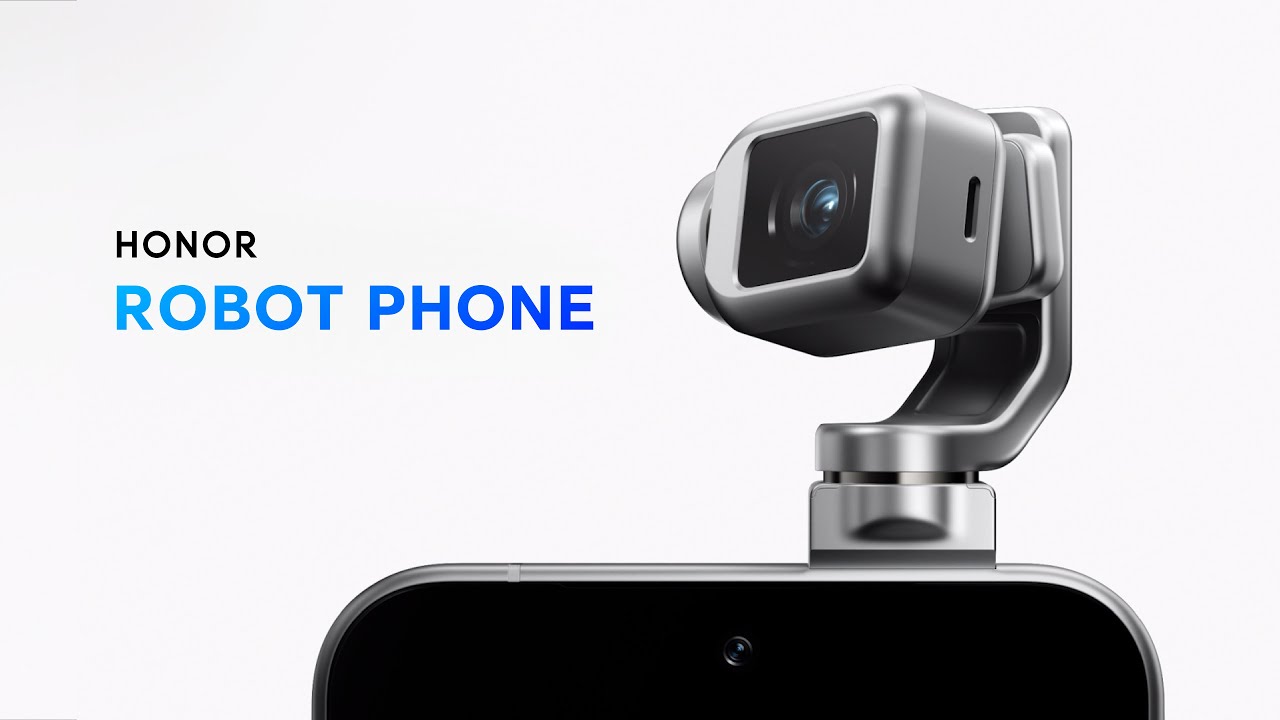
Look. We love to call out marketing department hyperbole as much as the next tech news outlet, but while we must disagree with Honor’s attempt to position its new device as the evolutionary successor to the iPhone — the best-selling phone of all time — it is fair to say the Robot Phone is unlike anything we’ve seen before.
TechRadar’s Axel Metz was among the first tech journalists to touch and test the new phone, and the device’s unfolding gimbal is genuinely impressive as a content capture tool — effectively combining the DJI Osmo Pocket with Honor’s flagship Magic 8 Pro.
It also allows the phone’s assistant, YOYO, to express itself in a physical way. This is the definition of gimmicky, though controlling the gimbal with hands-free controls can be genuinely useful.
4. We photographed the solar eclipse

The peak of the Perseid meteor shower, with perfect viewing conditions and a rare six-planet alignment, was a celestial treat on August 12, but it was the total solar eclipse hours before that captured the world's attention. In select parts of Europe, northern Spain and in Iceland, totality lasted around 2 minutes while a partial eclipse could be seen as far afield as northern North America. Viewers lucky enough to get solar glasses could enjoy the phases around totality, while others came outside with their DIY pinhole cameras and colanders. Predictably, we've been treated to spectacular images in the aftermath of this once-in-a-generation show.
3. Google gave us its answer to Apple’s AirTags

Apple’s AirTags launched over five years ago, and we now finally have a Google-made equivalent for Android fans. The Pixel Tag is a little tracker that weighs only 12g and helps you follow the location of your keys, luggage, or devices via a web browser or Android app.
Unfortunately, it won’t actually be launching until November, but when it does, you’ll be able to buy one for $29 / £29 / AU$49 for a single Tag or $99 / £99 / AU$169 for a four-pack. That’s pretty competitive considering the Pixel Tag is water-resistant and has ultra-wideband (UWB) support for more precise location tracking.
However, as you can read below, the Find Hub network still has weaknesses compared to its Apple Find My equivalent, which we hope Google addresses by the time its Tag launches in a few months.
- Read the full story: The Pixel Tag is here — but it won't be an AirTag for Android until Google fixes these Find Hub issues
2. Google’s Pixel Watch 5 debuted

Along with Google's cornucopia of new phones, the Google Pixel Watch 5 was also released in two sizes and with the same teardrop design as previous years. However, we've got a bunch of new features and improvements at play, with more accurate GPS, the redesigned Google Health app with its AI coach, better on-device Gemini, and a suite of Health Guardian features. These include Breathing Emergency Detection, which alerts emergency services and contacts if you have a consistent blood oxygen drop, and Insulin Resistance Trends, which helps users control their blood sugar levels. Apple and Samsung haven't quite cracked this technology yet, and we can't wait to test them for ourselves — although hopefully we don't have any breathing emergencies during our review.
1. Google debuted its Pixel 11 lineup

Of course, the stars of Wednesday's Made by Google 2026 event were the debut of new Pixel 11 phones.
They boast the usual slew of updates you should expect from flagship refreshes by now, but also a brand new ‘HiLight’. This is an array of LED lights built into the camera’s flash module, which can alert you to calls from favorite contacts via customized color glows when your phone is face down and silenced. And these lights will also pulse when Gemini is listening, thinking, or responding.
Not everything is an improvement, disappointingly. You'll only get 12GB of RAM as standard rather than 16GB, perhaps a reflection of the surging computer memory costs.

Follow TechRadar on Google News and add us as a preferred source to get our expert news, reviews, and opinion in your feeds.
