
 Become a TechRadar Insider





There was a time when tripods tended to fall into one of two categories: the good ones and the cheap ones. Yes, there were some reasonable deals to be found here and there, but if you wanted a high-quality build and a portable design, you had to be willing to reach deeper into your pockets. Part of the reason may have been to do with the weight of the camera gear of the day. The best DSLRs were bigger and heavier, even the entry-level models, so flimsy plastic legs simply wouldn't do if you wanted sharp images and a stress-free experience when using gear out in the elements. That meant sacrificing portability for an aluminum model, or paying out for a pricy carbon fiber type.
Things have changed significantly now that the market is dominated by diminutive mirrorless cameras. We still need stability, but in low-wind conditions, it's more viable to pair a higher-end camera with a lighter-weight set of legs. As with many photography products, there is more choice than ever before, covering all budgets and user levels.
Over the years, the TechRadar team and I have tested most of the major tripods and monopods to be released. For this guide, I've rounded up the very best options available today, including both aluminum and carbon fiber models for still photography and video shooting. Some of these tripods come bundled with a suitable head right in the box, while others are frequently bought as a legs-only option, with a head purchased separately.

Overall, it's the Manfrotto One that ticks the most boxes for functionality, clever design, stability and build quality. It isn't the cheapest option on my list, but for professional photographers and mixed media content creators, there isn't much it can't do. That's why I've broken down the following list into categories – so that you can easily decide which tripod is the best fit for the type of imagery you like to create. If you're specifically looking for a lightweight support, there are even more options in my best travel tripods guide.

I'm TechRadar's Cameras Editor, and have more than 15 years of experience working as a freelance photographer and tech journalist. In that time, I've had the opportunity to test a wide range of camera gear from the top manufacturers, including the best tripods and monopods (currently I own four different ones). As cameras have evolved, specifically getting smaller and lighter and the advance of in-body image stabilization performance, tripod supports can feel like less of a necessary accessory. However, there's still plenty of reason to use one – for video work, long exposure photography and more.
Why you can trust my choices
Every tripod that appears in this guide has been comprehensively tested by me, or another member of TechRadar’s expert team. Over the past 20 years, our specialists have reviewed countless camera supports, from simple, entry-level tripods, to heavyweight models that are built for all weathers and temperatures.
☑️ 10s of tripods reviewed
☑️ 15 years of product testing
☑️ Over 16,000 products reviewed in total
☑️ Nearly 200,000 hours testing tech
The team put each tripod through a series of genuine field tests, to assess everything from the build quality and resilience to the elements, to how portable and easy to use each model is during a shoot, to the quality of the setup to produce sharp images in all conditions. The tripods were used over a period of several days to multiple months, to get a true sense of what each model is like to own and rely on for great shots every day.
These tripods are all assessed and chosen for this list based on their respective value too: just because a tripod is cheap doesn't mean it's good value, and conversely, a model with a higher price might be more expensive because it's the best money can buy.
⭣ Read more
To test stability I use each tripod on a range of terrain, from level surfaces to steep inclines, solid ground to soft sand at the coast, where the ocean can flow around the feet. This helps measure the ability of the legs to absorb vibrations that might otherwise be transmitted to the head, causing blurriness of fine detail.
I also use the setup with the legs fully retracted, then at each subsequent level with the sections gradually extended until the maximum height. This is where there is generally the lowest stability and the greatest risk of vibration.
Where applicable, I'll also use the tripods in low-level mode, with the legs spread out to their maximum angle. From here, I can see how this might affect the usability of the rotating center column and how likely the leg hinges are to 'creep' under the weight of a mounted camera.

Where a tripod has a rotating or reversible center column I'll use it in all configurations throughout the course of testing, to observe how this might impact overall stability, as well as the ease of use of the system, especially mounting and removing a camera or repositioning the setup.
Where the tripod head is removable, I'll take this into account when assessing image quality results. This is critical as a bundled head may not provide the ideal pairing with the legs for every shooting scenario or skill level, and it is always possible for a tripod system to be let down by an inadequate head attachment. Where possible, when a tripod is usually bought as a legs-only kit, I'll mount a standard pro-grade head as a control, to remove this from the testing equation.
For still images, I'll shoot at a range of shutter speeds and view the files at 100% magnification to assess them for signs of vibration or leg creep during the exposure. For video I'll shoot longer-duration clips and preview a magnified view to get a feel for the average performance of the tripod to absorb movement.

I then take everything I've learned about the tripod legs, head and attachments, then factor in its price to get a sense of the value-for-money it offers, before reaching a final verdict.
Whether you’re buying your first tripod or upgrading, I compare each model to its closest competitors to give you a complete picture of what options are available. This process is designed to help you find the best tripod kit for your needs and budget. Because my recommendations are based on in-depth experience, you know they can be trusted.
Meet the team
My team of reviewers has amassed many years of experience testing camera gear, covering all of the latest and greatest cameras and accessories in the last 20 years – including all of the best tripods for any and all specialisms and budgets.

Rod is an independent photographer and photography journalist with more than 30 years' experience. He's previously worked as Head of Testing for Future’s photography magazines, including Digital Camera, N-Photo, PhotoPlus, Professional Photography, Photography Week and Practical Photoshop, and as Reviews Editor on Digital Camera World.

Peter has over 18 years of experience as a photographer and journalist. As the former Editor of Digital Photographer Magazine, he has used almost every camera, lens, and photo accessory currently on the market. A landscape and travel photography tutor by trade, he's an avid collector of tripods, monopods and more

James Abbott is a professional photographer and freelance photography journalist. He contributes articles about photography, cameras and drones to a wide range of magazines and websites where he applies a wealth of experience to testing the latest photographic tech.
Today's best tripods for photography and video
Why you can trust TechRadar We spend hours testing every product or service we review, so you can be sure you're buying the best. Find out more about how we test.
Below you'll find full write-ups for each of the best tripods in my list. Each has been tested by me or a member of my team extensively, so you can be sure that my recommendations can be trusted.
The best tripod overall


Manfrotto One in-the-field


✅ You shoot both stills and video: The Manfrotto One is designed specifically for creators who shoot both types of content. Where, before, you might have had to carry multiple tripods, now you can streamline your gear to one/
✅ You like to work quickly: The XTEND leg system and Q90 center column make rapidly reconfiguring your setup a breeze
❌ You’re a beginner: The Manfrotto One is a serious piece of kit that's aimed at professionals. The size, weight, and feature set might be intimidating if you're just starting out
❌ You're on a tight budget: It's not the most expensive tripod out there, but it might still be a stretch for photographers or video shooters with shallower pockets
There isn't much that the Manfrotto One hybrid tripod can't do. As the name might suggest, it's designed to do more than just support a camera for stills or video – it bridges a gap in the market and allows content creators to shoot both media. Before the Manfrotto One came along, you'd probably have to haul two separate tripods along on a shoot, one for photography and another for video, since they require notably different features. But not anymore.
Still photographers need rock-solid tripods that lock the camera securely in place, with no chance of creep or movement between frames. Videographers, on the other hand, want the flexibility to move the camera smoothly during a clip. The levelling center column and 500X Fluid Head, which comes with the legs as standard, allow easy repositioning of the camera for video, while the XTEND Fast Leg system is great for quickly setting up the tripod on uneven ground, satisfying the needs of both.
Meanwhile, the XCHANGE head attachment allows the video-centric 500X head to be almost instantly swapped out for a photography-optimised model, using the XCHANGE adaptor. Overall, the Manfrotto One perfectly caters to mixed-media content creators, providing a versatile, highly stable tripod that is unmatched in its flexibility.
Read our in-depth Manfrotto One review
The best premium tripod


Peak Design Pro Tripod in-the-field


✅ You already use the Peak Design Travel Tripod: As legendary as it has become, the travel variant isn't really geared up to support heavier equipment. These new Pro tripods bring the design you love and blend this with upgraded stability
✅ Price isn't a problem for your bugdet: Nobody can accuse the Peak Design Pro Tripods of being cheap, but if you value quality and design above all else, these models are for you
❌ You're on a strict budget: You'll need to dig deep to buy these tripods, so if money is a concern, you're better off looking elsewhere
❌ You need flexible angle/boom options: If you shoot specialist images in a studio, like flat-lay product shots, or macro nature shots at awkward angles, there's no option to add a boom arm to this tripod
I loved the original Peak Design Travel Tripod for its design philosophy and aesthetic styling – it really gives a premium feel that is a joy to use in the field. Where that model struggled to support larger cameras, this new trio of pro-grade tripods scale up my favorite features. The carbon fiber build offers the perfect balance of strength, stability, and portability. The legs won't weigh you down even after a lengthy all-day shoot, but you can be confident of their ability to hold your gear steady.
While all three variants – Pro Lite, Pro, and Pro Tall – have their individual benefits, I'm focussing on the standard Pro version here. At only 1.9kg, it virtually feels like a travel tripod itself, but with a max payload of 18.1kg, which it shares with its Pro Tall stablemate, it can carry a great range of pro-level gear without breaking a proverbial sweat.
The pro ball head is also brilliant: knurly and easy to handle without topping up the weight much. It's smooth to operate and get the camera into position but isn't so slippy it's likely to allow gradual creep when using a heavier lens.
Read our in-depth Peak Design Pro Tripod review
The best budget tripod


Manfrotto Befree Advanced in-the-field


✅ You value super-lightweight build: The carbon fiber model is one of the lightest travel tripods around, although the aluminium version isn't exactly heavy
✅ You don't need super-advanced features: The feature set has been scaled back to keep weight and cost down, so the tripod is tailored to budget-conscious photographers
❌ You're on a very tight budget: This only applies to the carbon fiber model, which isn't the best value if you are looking for a rock-bottom price. The aluminium variant, however, is much cheaper
❌ You want a tall set of legs: With a modest height of 150cm with the center column extended, the Manfrotto BeFree Advanced isn't much use for greater-than-head-height shots
Even at its most expensive, the Manfrotto BeFree Advanced carbon fiber tripod is a lot less to buy than many other carbon fiber travel models. Meanwhile, the aluminum type is even less, without adding too much weight to the scales. It's small, compact, and easily transported, which makes it ideal as a travel tripod.
The construction feels high-grade and able to withstand all that a mid-weight travelling photographer can throw at it. It's easy to use too. The signature twist locks make it quick and easy to extend the legs and stow them again, while the head is quick to position, even if it isn't the most versatile on the market.
There are certainly cheaper tripods to be found, especially if you look at the major technology retailers who like to sell camera supports as add-on accessories with a consumer camera. However, the BeFree Advanced, in both of its material options, caters to serious enthusiast photographers and beginners alike. I don't like to call it a 'proper' tripod, but even if it doesn't support a pro camera, these legs will allow you to grow your system without breaking the bank.
Read our in-depth Manfrotto Befree Advanced Carbon Fiber Review
Best travel tripod


3 Legged Thing Punks Brian 2.0 in-the-field


✅ You need elevation on the move: The 3 Legged Thing Punks Brian 2.0 is quite tall for a travel tripod when extended fully, so it's useful when you need to shoot over crowds or a barrier railing, for example
✅ You need it for multiple applications: In many ways the 3 Legged Thing Punks Brian 2.0 is a 3-in-1: you get a full-sized tripod, a table-top tripod, and a tall monopod
❌ You use heavy pro gear: This is a travel tripod, designed to be easy to carry, but if you use a large DSLR or large professional mirrorless system, you may encounter stability issues
❌ You shoot from all angles: Unusually, there is no rotating center column on offer here, which you might miss if you need to shoot at physically demanding angles, for macro photography, for example
Travel tripods need to be easy to transport above all, but that doesn't mean they can't support a reasonable amount of weight. This is a compromise that many photographers who are regularly in transit need to make, so carbon fiber provides a popular and effective alternative.
The 3 Legged Thing Punks Brian 2.0 looks snazzy, which for shallower buyers such as myself is a bonus, but it's about far more than appearance. The legs are well-built and feel able to withstand their fair share of knocks and scrapes, while being hauled on and off planes, trains, and assorted luggage racks. The legs also provide a highly usable height range, folding into a diminutive package when stowed and extending up to an impressive 186 cm.
The five-section legs lead the competition, and can be removed so that with the optional Vanz ‘footwear’, the tripod can be transformed into a tabletop or ultra low-level setup. It's a versatile and inventive design that really adds value for the multimedia photographer and jobbing professional, who never know where their work may take them and their gear.
Read our in-depth 3 Legged Thing Punks Brian 2.0 review
The best versatile tripod


Heipi 3-in-1 W28S in-the-field


✅ You often use lots of accessories: The phone clamp and mini tripod are a nice flourish, but are more than gimmicks. They are well-built and allow you to shoot in a variety of ways
✅ You want a super-compact tripod: There are few tripods with a ball head that fold away as neatly as the Heipi 3-in-1 W28S.
❌ You need a greater-than-head-height: With a maximum height of 59.8 inches / 152cm, even with the center column fully extended, it isn't the tallest available
❌ You'd like a monopod too: It's odd not to have been included, but there is no integrated monopod for work in restricted or impractical situations
So, you're in the market for a tripod. How about a mini-tripod and phone clamp too, at no extra cost? I thought you'd like the sound of that. With the Heipi 3-in-1 W28S, you'll find a fully removable set of mini legs and the clamp hidden within the main legs and ball assembly, respectively.
It's a clever design that manages to balance features with practicality. It's easy to remove and use both secondary components, while the system can be further expanded with accessory arms for an external monitor – great for video shooters.
The mini tripod is the perfect tool in this age of vlogging, while it would also come in handy for still-life, macro, and product photography. The only downside is the lack of a built-in monopod, which might have made sense for this multi-tool tripod concept, but overall, this is a brilliantly clever and valuable tripod for any multimedia creator.
Read our in-depth Heipi 3-in-1 W28S Travel Tripod review
The best monopod


Sirui SVM-145P in-the-field


✅ You have the need for speed: The greatest asset of a monopod is that it's quick to set up, and this model doesn't disappoint.
✅ Portability is paramount: For those occasions where a tripod is just too cumbersome, this Sirui Monopod is well built but won't weigh you down or draw unwanted attention.
❌ You need extra height: The monopod only extends to 145cm, so if you need additional elevation, you might need to look at a tripod
❌ You're on the tightest of budgets: While it won't break the bank, there are cheaper monopods out there that might be a better choice if you're looking to buy your very first one
Many people think of monopods as the realm of sports photographers, but they can be tremendously useful anytime or place where three legs aren't allowed. Many landmark destinations don't permit the use of tripods, but don't extend the ban to monopods, so if you're planning a trip, the Sirui SVM-145P might be a good place to start looking.
The name refers to the maximum height of the monopod when extended, and while 145cm isn't tall enough for every purpose, it's plenty for most everyday uses. The P refers to the 'pedal' that is used to release the base lock to allow quick access to 20 degrees of tilt and 360 degrees of rotation when the stabilising feet are deployed.
It's an efficient and effective system, as is the friction control that can be used to modify how smoothly these movements are done. Meanwhile, the quick-release feet and head mounting plate can be put together to create a desktop / mini tripod for low-level shots. Overall, there are plenty of features to keep enthusiast photographers happy.
Read our in-depth Sirui SVM-145P review
The best video tripod

Sachtler Ace M MS Mk II in-the-field


✅ You shoot more video than stills: This is a video tripod first and foremost. If you shoot professional-level video assignments, both in the studio and on-location, this is a great choice
✅ Your video system is mirrorless: Many pro videographers use mirrorless cameras like the Canon EOS R6 Mark III or Sony A7 V. For these lightweight cameras, the maximum payload here is more than enough
❌ You don't use lots of accessories: The tripod is designed to support a modular system of accessories, which is in part what you're paying for. If you don't plan on using an external monitor or a rig such as a Magic Arm, these attachment points will be somewhat wasted.
❌ You're a vlogger: While vlogging still requires a good-quality camera support, if you're used to a POV style of filmmaking, you might find the bulk and weight of the Sachtler Ace M MS Mk II more of a hindrance than a help.
Sachtler is a company with a serious pedigree. Having been making tripods for high-end video applications since the end of the 1950s, they know a thing or two about what videographers need from a camera support. Unlike a purely still photography tripod, which needs to provide a rock-solid support, the Sachtler Ace M MS Mk II offers both stability and the flexibility to move the camera during a shot.
The giveaway that the tripod is video-centric is the mid-level spreader, which maximises stability when used close to its maximum payload. This can be easily and quickly removed when the tripod is to be used on an incline, however. The leg sections can be instantly extended for rapid work, rather than having to unlock and relock each section independently.
The build quality is top-notch, but the tripod isn't overly heavy, which can be an issue for broadcast-style video tripods. If you want to use a lightweight mirrorless system with it, you won't find it adding a disproportionate weight to your kit bag. Meanwhile, the integrated fluid head is simple to work with and offers an intuitive friction control range for bespoke adjustment for rotational panning. It's not cheap, but the Ace M MS Mk II will be a reliable bit of gear for professional video work, on the move.
Read our in-depth Sachtler Ace M MS Mk II review
Also consider
My team and I have reviewed a whole range of camera support options, which means there are plenty more that almost made it into this list. Here are a few honorable mentions to consider.
Great for versatility: Vanguard VEO 3+ 303CBS
Vanguard is another well-respected brand name in tripod circles, and they have some very clever products. This tripod has a center column design that really stood out to the team. Its pivot style is unique and comes with an additional attachment that allows the user to mount two cameras or one body and an accessory like an LED panel or monitor.
Stylish design: 3 Legged Thing Winston 2.0
Although I ranked the 3LT Punks Brian as the best tripod for travel, the Winston 2.0 goes heavy on the build quality while retaining a lightweight form factor. I've always been a fan of 3 Legged Thing aesthetics, and the Winston 2.0 exudes professionalism but without the rigid functionality of some other brands. Quirky but without sacrificing on quality.
Best value: Manfrotto BeFree Advanced AS Aluminium
The carbon fiber model appeared as the best in the group for affordable quality, but the aluminium version might be worth looking into if you don't need the benefits of a carbon construction. You get a very similar design but for an even lower price.
How to choose
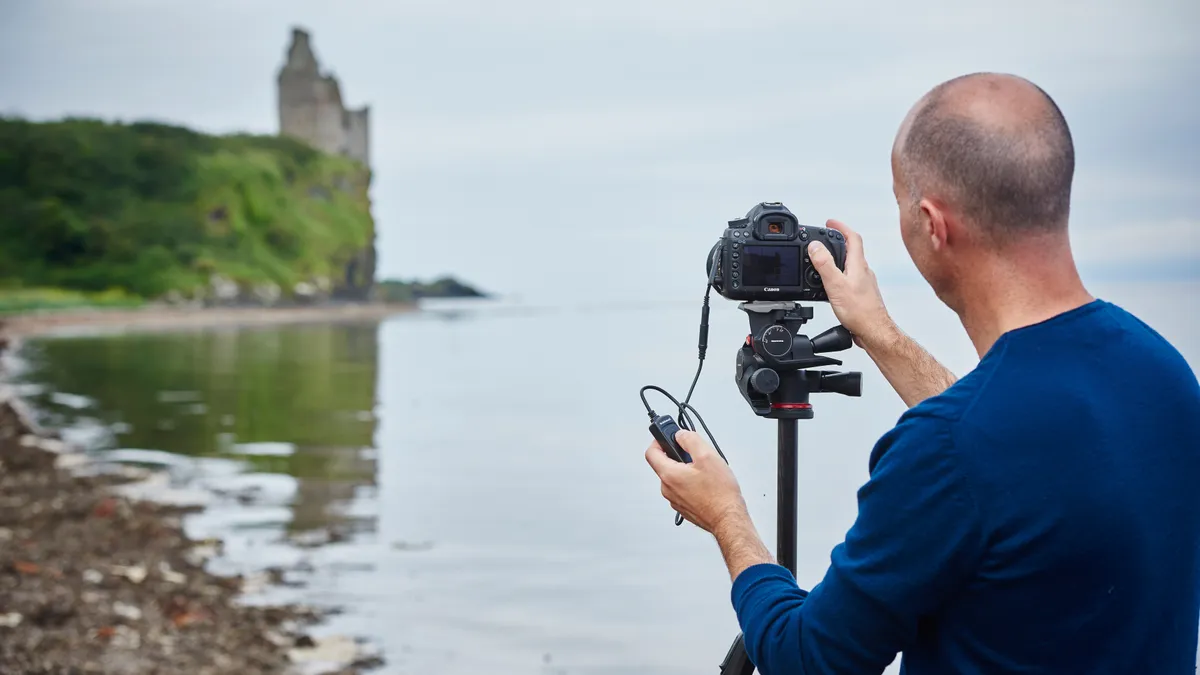
How do I choose the best tripod
Tripods open up a world of photography that simply isn't possible when shooting handheld. Here are the main features to look out for when deciding which one is best for your requirements.
Materials
Tripods come in a couple of different flavors, and while the cheapest models are often made from plastic, those designed for discerning photographers are generally made from either aluminum or carbon fiber. Aluminum models are often cheaper thanks to the complexity of carbon fiber manufacturing processes, but they are also very sturdy in heavier winds. If you own an older DSLR or a pro-level mirrorless camera with large lenses, then aluminum is a great choice. These do tend to be heavier, however, and carbon fiber is specifically designed to cut down on weight. If you're going to be travelling a lot, this will still provide excellent stability but will be friendlier to your back and luggage allowance alike.
Maximum/minimum height
The taller your tripod the easier it is to place your camera above obstructions like barriers, fences, or crowds. Professional tripods often enable the camera to be positioned above head height for dramatic perspectives. Meanwhile, some models allow the legs to be spread outward bringing the head down to ground level. This is useful for landscapes where you want to capture foreground detail, such as waves rushing over rocks on the shoreline. Be careful that the legs remain stable when in high and low configurations, however. The models on my list aren't too easily caught by the wind when fully extended, nor do the legs 'creep' when in low mode.
Center column design
Some tripods feature a rotating center column that enables the camera to be swung out and rotated around the middle of the tripod legs. This allows you to either create rotational panoramas or to place the camera close-up to macro photography subjects. By pushing the column out, sideways, the lens can be brought much closer to the subject than would be possible with the camera mounted at the top of the legs. Meanwhile, a removable column allows the camera to be placed at ground level when the legs are folded out in a low configuration.
Head mount
Some entry-level tripods come fitted with an integrated head, which cannot be removed. These are often the most affordable. Higher-end models allow you to remove the head and replace it with another, either an upgraded pro head or a specialist type like a pan/tilt. Heads often have a universal 3/8" screw thread in the base, which is screwed onto the attachment point on the base plate of the legs, generally meaning you can mix and match heads and legs from different brands, with some exceptions. Meanwhile, heads themselves vary more greatly in their designs and fittings. Many use Quick Release plates as part of the Arca-Swiss concept, which attach to the bottom of the camera and then clip into a slot on the top of the head. These plates can vary in size and shape and may preclude the use of one brand of plate with another brand of head.
Leg lock system
It might not sound like a big deal, but how you lock and unlock the legs sections of your tripod matters in the long term. Some legs use a common clip-lock system, by which you simply flip open a leg lock, extend the leg section, then flip the lock closed again. This can be an easier system to use with gloved hands, but it can prove laborious and lead to sore fingers after a long day of shooting. Meanwhile, twist-locks are built for speed. You rotate a ring around the leg to release the section below it then, when the leg is at the desired height, rotate the ring in the opposite direction to lock it. It is possible to improperly secure a twist lock, causing instability with heavy kit, as it's far easier to overlook this than with a clip-lock. There is no 'better' system; it all comes down to personal preference.
