
 Become a TechRadar Insider





The best cheap fitness tracker will help you track your exercise, sleep, calories, and more – all for a fraction of the price of the best fitness trackers out there.
As you might expect, these devices tend to be slimmer and more subtle than something like an entry-level Apple Watch, with smaller screens and reduced functionality a hallmark of their lower price points. That said, we have included one cheap fitness watch, the Amazfit Active 2, on our list for its excellent value while remaining fitness-oriented.
Mainstays in our guide include the likes of Fitbit and Garmin, but it might surprise you to learn that the king of the cheap fitness tracker in 2026 is Xiaomi. The Smart Band 10 takes the top spot in our testing thanks to its notable value, bright AMOLED display, and generous battery life.
Every fitness tracker in this guide has been tested by our experts, so you can pick one knowing it’s been properly put through its paces.
The best cheap fitness tracker overall

The Xiaomi Smart Band 10 is our top pick for cheap fitness trackers. According to our testing, we think it delivers one of the strongest all-round packages in the category.
A key part of that is the tracker's battery life, with our tester getting around a whole 18–19 days in use. This falls just under Xiaomi’s up-to-21-day claim but is still excellent for the price, in our eyes anyway.
Now let's talk about the main attraction, the fitness features. The Smart Band 10 covers all the essentials and more. With support for over 150 tracking modes, it reliably handles daily step counts, heart rate, sleep monitoring, and a broad set of activities.
Just as importantly, the experience is easy to read in motion. The 1.72-inch AMOLED display is bright enough to stay legible outdoors thanks to its 1500-nit peak brightness, meaning stats remain clear whether you’re mid-run, walking on a sunny day, or glancing down between sets at the gym.
One thing our tester didn't love about the Band 10 is that the clasp was prone to come undone. It's not the end of the world, as Xiaomi does sell extra bands with better clasps, but it's just a shame if your default one is no bueno.
Unlike pricier competitors such as the Amazfit Active 2, which features built-in GPS, the Smart Band 10 relies on your phone for location tracking. However, it's what helps keep the cost down and battery life up.
Read our full Xiaomi Smart Band 10 review
The best cheap fitness tracker for Android

Samsung isn’t usually the first brand you think of for cheap fitness trackers, but the Galaxy Fit 3 shows what it can do at the very low end of the market, especially for Android users. It’s one of the cheapest branded trackers you can buy, yet it still feels more polished than its price suggests.
It comes with a large 1.6-inch AMOLED display that gives it a more smartwatch-like feel than most basic bands. You get over 100 workout modes, along with tracking for heart rate, sleep, blood oxygen and stress, all presented through a simple swipe-based interface that’s easy to get used to quickly.
In testing, heart rate tracking held up well, sitting within a few beats per minute of a Garmin Forerunner during workouts. The Fit 3's battery life came in at around 10 days with regular use, just under Samsung’s 13-day claim, and dropped to just over 5 days with the always-on display enabled.
It doesn’t include built-in GPS, so outdoor runs and rides rely on your phone for route tracking, which is the main shortcoming here. The strap is lightweight and flexible, which helps it disappear on the wrist for most of the day. However, our fitness editor Matt did find the raised sensor to be a little uncomfortable at times.
Read our full Samsung Galaxy Fit 3 review
The best cheap fitness watch

The Amazfit Active 2 is technically a fitness watch rather than a band-based fitness tracker, but as it's under $100 / £100 / AU$150, we'd certainly say it qualifies. It includes built-in GPS (score!), and not only is it a great fitness tracker in terms of its features (it's got 164 sports modes, even a dedicated Hyrox mode), but with offline maps, it's also a terrific fitness tracker for running and hiking.
It's one of the best smartwatches on the market for the price, but as its focus is fitness, we're comfortable recommending it as a tracker. During our tests, we praised its vast feature set, calling it "impressive for a smartwatch of any price tag, let alone one that costs less than $100." We'd certainly call it feature-rich, and it deserves its impressive five-star score.
It's not a perfect watch, as it didn't quite sit flush on-wrist and the NFC features require a premium version of the watch, but for a fitness watch with an onboard AI assistant, a load of specialist sports features, those offline maps and even a handy to-do list functionality, it's a steal. As a value prospect, it's 100% a buy.
Read our full Amazfit Active 2 review
The best cheap fitness tracker for beginners
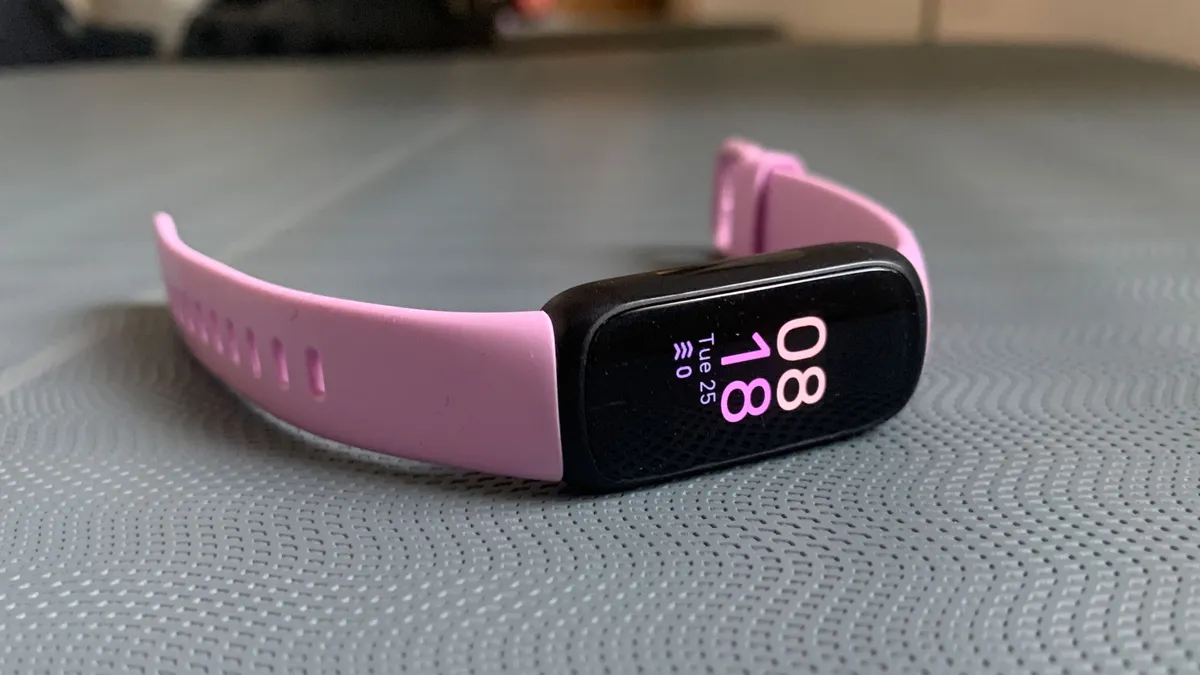
The Fitbit Inspire 3 remains Fitbit’s simplest and most beginner-friendly fitness tracker, and it still earns its place in this guide thanks to its easy setup and approachable take on everyday health tracking.
Now sitting within Google’s wider health platform, the Inspire 3 continues to focus on the basics rather than overwhelming users with advanced training metrics. It tracks everyday essentials like steps and heart rate, alongside broader health metrics including heart rate variability, stress, breathing rate and time spent in different heart rate zones during exercise. It also supports sleep stage tracking, guided breathing exercises and a general cardio fitness estimate.
The Inspire 3 doesn’t have built-in GPS, but it can connect to your phone for route tracking during runs, walks and bike rides, with workout data viewable in the Google Health app. You can also sync activities to third-party platforms like Strava.
There’s also an optional premium tier through Google Health if you want extra insights, guided workouts and mindfulness content, though the Inspire 3’s core tracking features work perfectly well without paying extra.
Read our full Fitbit Inspire 3 review
The best cheap fitness tracker from Garmin
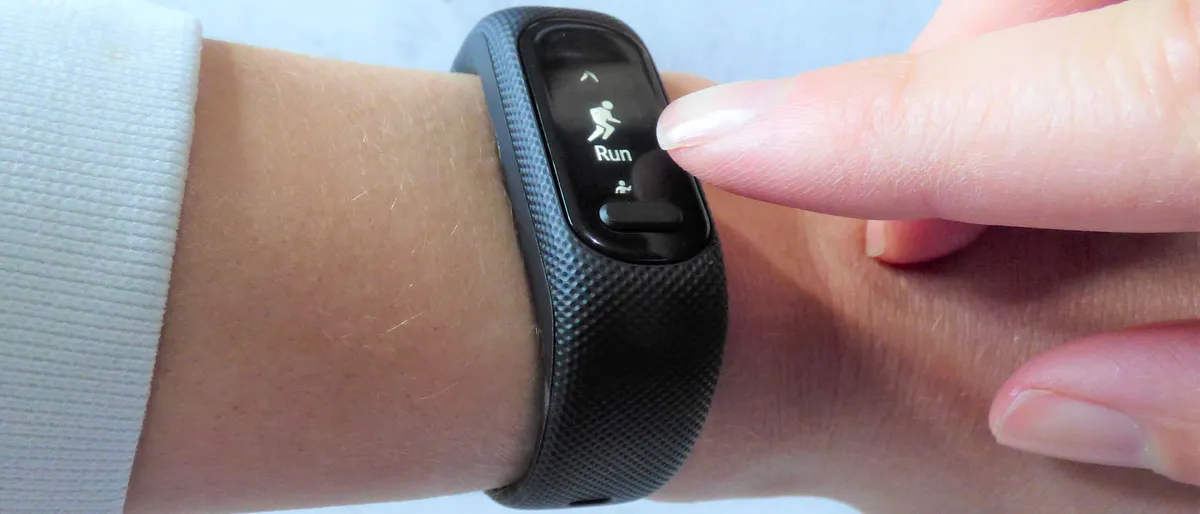
Garmin is known for making some of the flashiest fitness tracking devices on the market, but a good chunk of its range sits firmly in premium smartwatch territory. The Vivosmart 5 is the more modest option. That being said, it certainly has a lot to offer.
You get step counting, heart rate tracking, sleep monitoring and stress tracking, plus Garmin’s Body Battery metric, which gives a quick read on your energy levels throughout the day. Despite the small monochrome screen, there’s a surprising amount of detail packed in, with simple graphs and stats that are easy to check at a glance.
There’s no built-in GPS, so outdoor runs and walks rely on your phone for tracking your routes. That’s the usual trade-off at this level, but it helps keep the band small, lightweight and easy to forget you’re even wearing it.
It’s not trying to be showy, the design is functional rather than stylish, but that’s also the point. It’s a comfortable, all-day tracker, and all your data syncs into Garmin Connect, with no subscription needed, at least not for the core features.
Read our full Garmin Vivosmart 5 review
How to choose the best cheap fitness tracker

There are several things to consider when choosing a fitness tracker, but it gets trickier when you're trying to find a cheap one. That's because you're working with a smaller budget, which means you can't exactly go for the best money can buy. Luckily, quite a few affordable fitness trackers will see you through most of your health, fitness, and wellness needs.
Be sure to consider what type of activity you enjoy most. For example, if you're into cycling or running, you should get a cheap fitness tracker with a built-in GPS module. If you just want a device to log your workouts and track your sleep, the Fitbit Inspire 3 is your best bet. It doesn't have GPS, but it can monitor your energy levels with its Daily Readiness Score, and use Active Zone Minutes to tot up how much activity, both active and passive, you're doing each week.
That's necessary to track your route and speed accurately. If you're training for an arduous multi-day hike up a mountain or a marathon, you might be better off with a proper fitness watch or a tracker with GPS like the Amazfit Active 2. If you frequently find yourself spreading yourself too thin, the Garmin Vivosmart 5's Body Battery metric can monitor your recovery and tell you the best time to work out.
Make sure you have a list of stats you require, especially for everyday use, and pick the best cheap fitness tracker that offers them. You might have to sacrifice some, but not too many, since many of these trackers are feature-filled. Battery life is also something to consider, as are display, resolution, and design.
How we test the best cheap fitness trackers

Testing cheap fitness trackers mainly involves using them in our day-to-day for a week or more. That's the best and most efficient way of seeing how much data they gather, how accurate they are, how well they perform, and how comfortable they are on our wrists.
Naturally, we put them through different fitness and wellness activities, from different workouts to things like breathing exercises and sleep. That way, we can test aspects like the heart rate monitor's accuracy and responsiveness, GPS accuracy, and build or ruggedness. We'll also measure the heart rate and exercise metrics against a control smartwatch during physical exercise.
