





- ChromeOS Flex is now available to buy in kit form
- The $3 kit provides a USB stick and full instructions to install the OS easily
- Flex is meant to breathe new life into old hardware, specifically Windows 10 PCs, which soon run out of road for extended support
ChromeOS Flex is a lightweight OS designed to be easily installed on older PCs — like Windows 10 laptops — to provide a way to keep what would otherwise become obsolete hardware usable, and it's now even easier to install.
That's because, as was previously promised, Google, in conjunction with Back Market (an outfit that specializes in refurbished tech), now has a ChromeOS Flex kit available to buy.
It costs $3 (or £3 in the UK, €3 in Europe) and for that outlay, you get a USB stick containing the operating system and guides on how to install it.
The Flex version of Google's OS is pretty much the same as standard ChromeOS, albeit with some features cut, and with its highly streamlined (cloud-focused) nature, it's designed to run nicely on older hardware.
Emphasizing the eco-friendly aspects here, Google tells us: "The manufacturing process of a new laptop is responsible for a large part of its carbon footprint. ChromeOS Flex allows the already-manufactured device to be used for longer, which keeps hardware out of landfills and avoids the emissions of making a new device. Savings do not stop there, ChromeOS also consumes 19% less energy on average than other comparable systems."
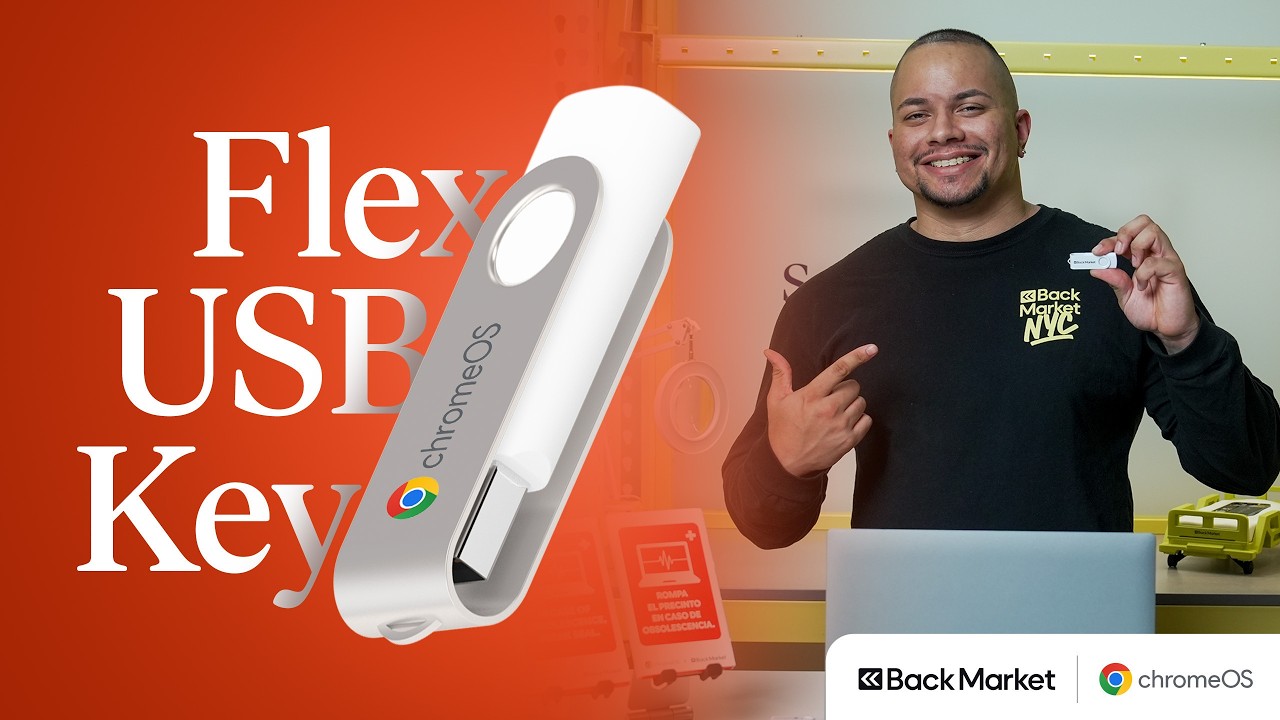
As the blog post announcing the arrival of the $3 kit makes clear, this is targeted at Windows 10 PCs, which will lose extended support (updates) for consumers this October, in six months. (Official support actually ceased last October.)
It will also convert other machines, including some Macs, to ChromeOS Flex, and there's a full list of compatible devices here (including caveats, such as if a webcam might not work with Google's OS).
Analysis: Flex for the win

It's a great idea to produce a dead easy-to-use kit in order to try and recruit more PCs to the ChromeOS Flex fold. As Back Market puts it, this is about "administering the cure" for the Windows 10 blues, and the "side effects may include curiosity".
All you need to do is turn off your laptop, put the USB stick in a free port, boot the machine, and from the boot menu, install ChromeOS Flex from the USB key. As mentioned, the full instructions are provided, and the kit is commendably cheap at just a few bucks. The idea is that you can pass it on to others once you're done, and as this is still a pilot program for now, there's a limited number of these kits. More will be made if they're popular, though.
However, you don't have to buy a kit, as you can make your own USB stick and install ChromeOS Flex by following our full guide here. The kit does make everything very novice-friendly, though, which is the idea, of course.

➡️ Read our full guide to the best laptops
1. Best overall:
Apple MacBook Air 13-inch M4
2. Best budget:
Asus Chromebook CM14
3. Best Windows 11 laptop
Microsoft Surface Laptop 13-inch
4. Best gaming:
Razer Blade 16
5. Best for pros
MacBook Pro 16-inch (M4 Pro)
Follow TechRadar on Google News and add us as a preferred source to get our expert news, reviews, and opinion in your feeds. Make sure to click the Follow button!
And of course, you can also follow TechRadar on YouTube and TikTok for news, reviews, unboxings in video form, and get regular updates from us on WhatsApp too.