





TechRadar Verdict
The iPhone 7 offered a slightly longer battery life, a better camera, fast innards and protection against water over its predecessor. While it may not be the top dog in the iPhone paddock, its lower price still makes it an attractive option.
Pros
- +
Good low light camera
- +
Water resistant
- +
Double the internal capacity
Cons
- -
Lacks clear upgrades
- -
Same design for last 3 phones
- -
Battery life unimpressive
Why you can trust TechRadar We spend hours testing every product or service we review, so you can be sure you're buying the best. Find out more about how we test.
The iPhone 7 (along with the iPhone 7 Plus) are no longer sold directly by Apple, but it remains one of the cheapest iPhones around, and packs all the modern features included in iOS 14.
The iPhone 7 has long been an entry level option, which is great news for those in the market for a cheap iPhone.
It's even cheaper during deals seasons, like the leadup to Black Friday on November 27 and Cyber Monday after. Expect to see the iPhone 7 sold for even less by third-party retailers through the end of the year.
When the iPhone 7 arrived it wasn't all that different to the iPhone 6S, feeling more like another incremental 'S' variant update rather than a whole new device.
The iPhone 7 did offer up a brighter, more colorful screen, a waterproof design, dual speakers, and a boosted 12MP camera over the 6S it replaced, and Apple changed the home button from a clickable entity to one that responds to pressure, lost the headphone jack and included a 256GB storage model (though now only offers it with up to 128GB).
Some of that felt pretty alien back in 2016, but the iPhone 7 paved the way for the far different iPhone X the following year and then the arrival of the iPhone XS, iPhone XS Max and iPhone XR.
Here's our take on the iPhone 7 in a video review:
iPhone 7 price and availability
- iPhone 7 price (32GB): $449 (£449, AU$749)
- iPhone 7 price (128GB): $549 (£549, AU$919)
- Launch price: from $649 (£599, AU$1,079)
- iPhone 7 release date: September 2016
The iPhone 7 price now starts at just $449 (£449, AU$749) for the 32GB model after it received another price drop thanks to the arrival of the iPhone XS, XS Max and XR.
If you want more space, the 128GB iPhone 7 price is now $549 (£549, AU$919). Apple did sell a 256GB iPhone 7 model that it now no longer produces, so you're unlikely to find a new handset at this maximum capacity.
As Apple has now discontinued the iPhone SE and iPhone 6S, it makes the iPhone 7 the cheapest iPhone available directly from the firm.
The iPhone 7 is still widely available, from Apple itself and a host of retailers and carriers. With two significant price drops since launch, there are also great contract iPhone 7 deals to be had from carriers too.
Design
- Water resistance brings confidence in robustness of device
- Same design as previous two years
- Headphone jack removal is inconvenient
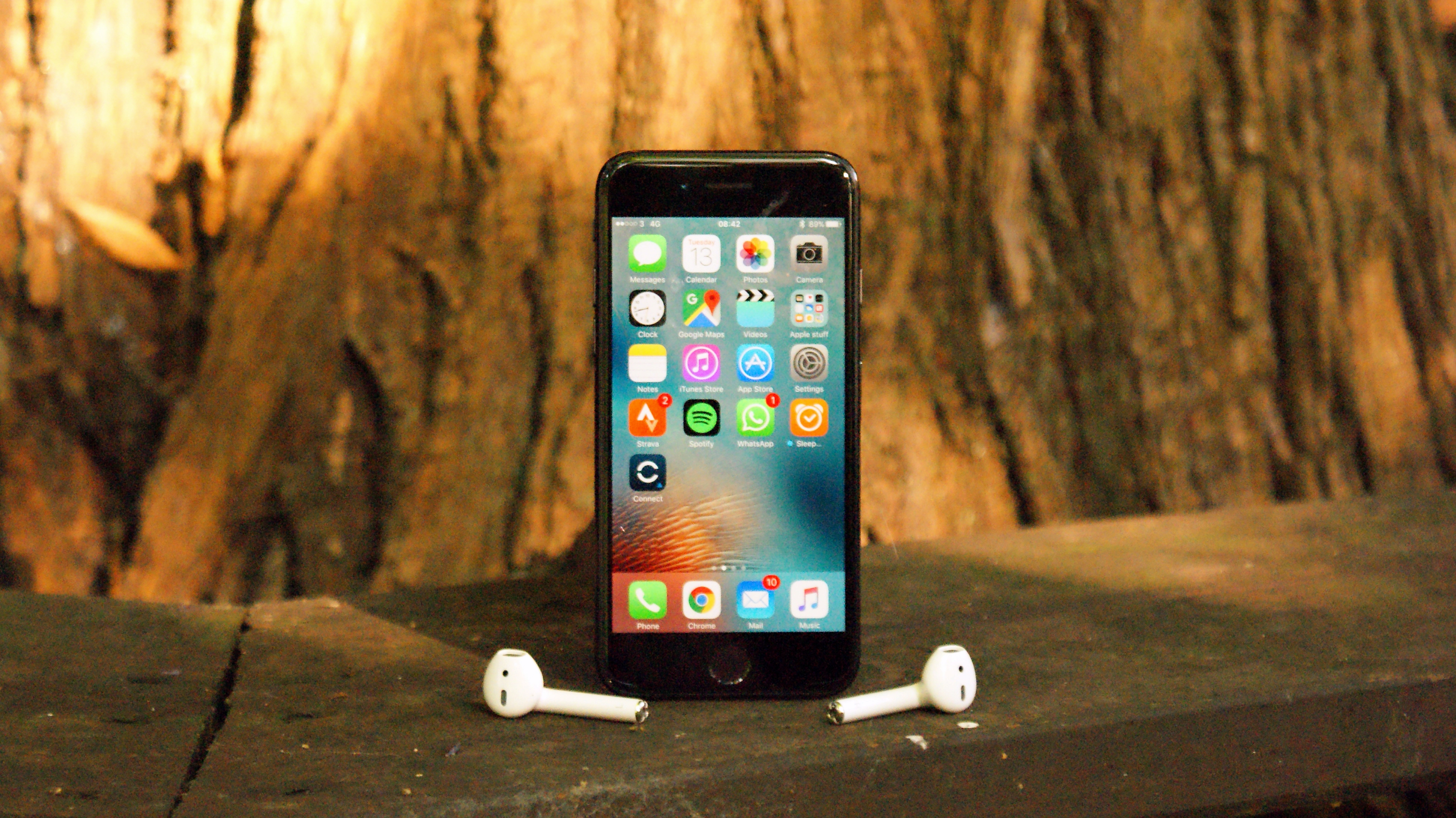
The two bigger design changes on the iPhone 7 are big talking points: it can now survive plunges into a swimming pool, thanks to the water-resistant chassis, and the headphone jack on the bottom of the phone is no longer there.

Let's start with the biggest of those changes: the omission of the headphone jack. It's a bold move from Apple – although calling it 'courageous' during the launch event was a bit much, and has led to some warranted memes – and one that could shake up the headphone industry.
The loss of this port will impact users in varying degrees: for some people it'll be no more than a shrug before they get on with their day, because they only use the EarPods in the iPhone box – and those are still there, just with a Lightning connector.
For others, though, it'll be an inconvenience, as they'll need to attach the short white dongle to the 3.5mm jack on the end of their headphones in order to plug them into the Lightning port.
In a survey conducted over three commutes, we noticed that out of 60 people wearing headphones, 34 were using the bundled EarPods that Apple offers – given than many of those people might not have been using an iPhone, that's a higher number than expected.

Losing the headphone jack also severely limits those wanting to buy a new pair of headphones for use with their iPhone, given how much we all listen to tunes or watch films on our phones these days.
Sure, you can buy regular 3.5mm headphones, but then you'll have to connect the adaptor. If you want to get something directly compatible you'll either need to go Bluetooth or Lightning-ready – and there are fewer decent models available to buy in that latter category.
AirPods
A quick Public Service Announcement: you DO NOT need to buy Apple's AirPods to get audio on the iPhone 7.
Three separate people have told us that that's what they thought was the case when Apple launched them – that's something the brand needs to clarify soon.
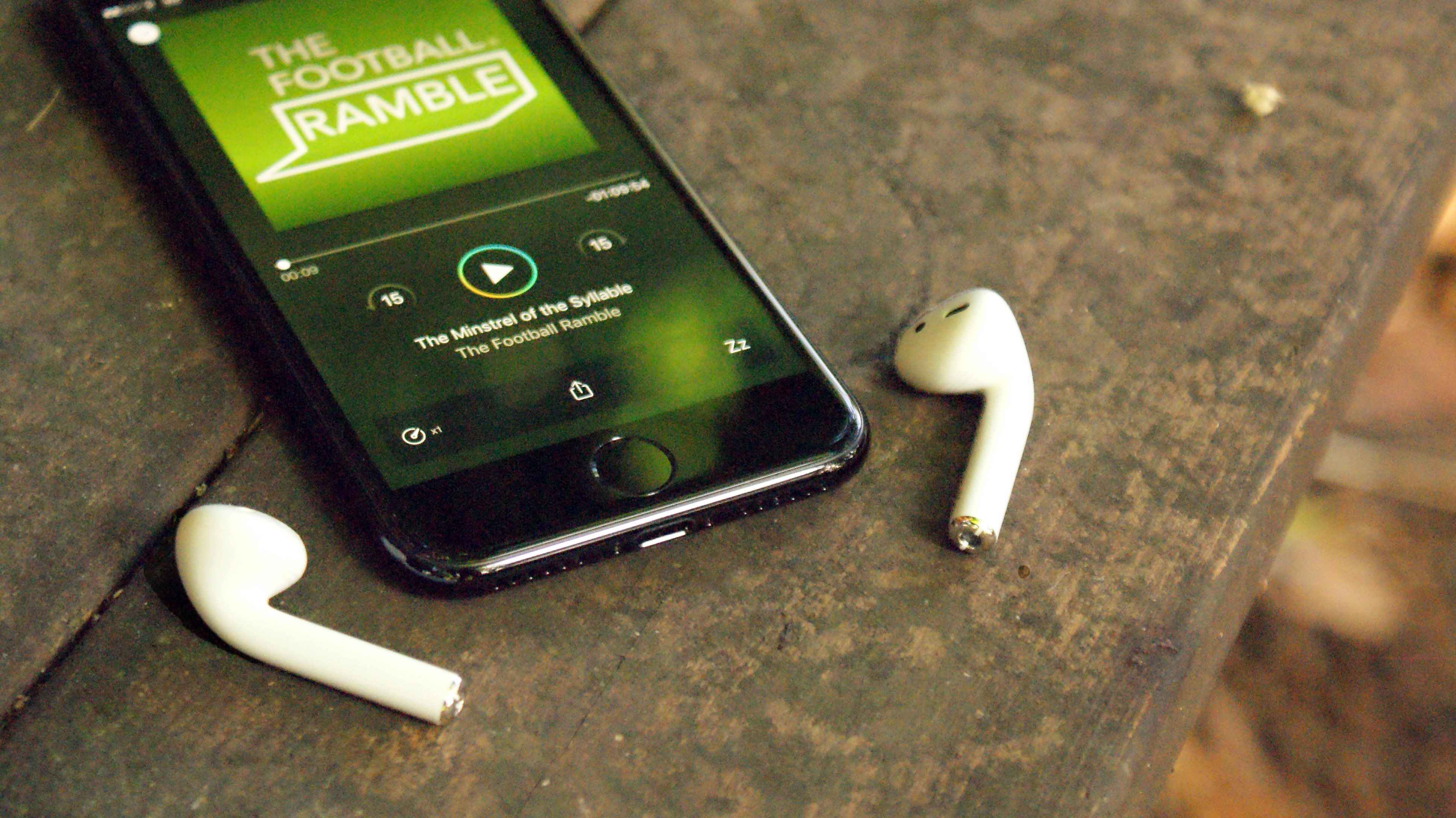
They're incredibly expensive at $159 / £159 / AU$229, and all they really do is cut the wire from the EarPods you get in the box.
The sound quality doesn't feel like it's much better, and while the ability to tap one pod to activate Siri, or remove a Pod and have the sound instantly stop, is cool, it's not really worth the cash.
Plus, there's also the fact that they don't look the most elegant in the ears – and if you struggle with the fit of the EarPods, these things are going to fall out all the time.
They do have a lot of charge, come with a cool magnetic carry case (which also adds 24 hours of charge, to the point where we've not even come close to running ours down during the review) and free you from the wires… but these feel more like reference designs for future wireless Apple devices than the must-have iPhone accessory.

- Read our full Apple AirPods review
You can buy the iPhone 7 in a variety of colors, but the much loved Space Grey color has been dropped for this release. You're limited to gold, rose gold, silver, black, jet black or red - and of those only the black, silver, gold and rose gold options are still officially sold by Apple.
The red iPhone is the newest addition to the color range and it's made in partnership with an AIDS charity called (RED). We've used a red iPhone 7 Plus for over a week since it was announced and found it garnered quite a lot of excitement when people spot the color.
That excitement will have died down a little now though, especially as other iPhone models have also been made available in that color.


Weight: 138g
Dimensions: 138.3 x 67.1 x 7.1mm
OS: iOS 12
Screen size: 4.7-inch
Resolution: 750 x 1334 resolution
CPU: Apple A10 Fusion
RAM: 2GB
Storage: 32/128/256GB
Battery: 1,960mAh
Rear camera: 12MP
Front camera: 7MP
The overall design of the iPhone 7 is actually rather impressive when you consider some of the changes that have taken place. The waterproofing always adds thickness, as the seals will need some space within the device.
The new dual speakers, which fire out of the earpiece and the bottom of the phone, also needed somewhere to go, which starts to explain why the iPhone 7 is 7.1mm thick… the same as the iPhone 6S, and 0.2mm more than the iPhone 6.
Perhaps it's something to do with the fact that these features aren't the first of their kind to market, but there's something unexciting about the iPhone 7 being waterproof. It had already been done already by Sony on the Xperia Z and Samsung on the Galaxy S7, and those phones combined impressive design with the reassurance that you could sling them in a lake and still have a working phone.
It's still a nice feature to have, but it's one that now in 2019 most high-end phones have, including numerous other iPhones, and one that Android got first.
The home button, that iconic design from Apple that's endured throughout the years (up until the newer iPhone X anyway), has changed dramatically too: it's no longer a clickable, physical entity, but a sunken point on the front of the phone that responds to the force of your touch.
Initially, it seemed terrible, something that would be impossible to get used to; the loss of the dependable, pressable button was awful, and we kept getting no response when trying to get back to the home screen from within an app.
But then suddenly it clicked (well, not physically), and it felt like a completely natural motion. After a while we forgot what was happening, and when you remember that nothing is moving beneath your finger it's quite an odd sensation.
Despite the same / slightly higher prices (UK readers can thank Brexit for that one), Apple has doubled the storage sizes on offer with the new iPhone, with 32GB, 128GB and 256GB options. While it's nice to have a microSD card to be able to move files on and off your phone, these new capacities kind of put the debate over why the iPhone doesn't have expandable storage to bed – it's not needed any more.

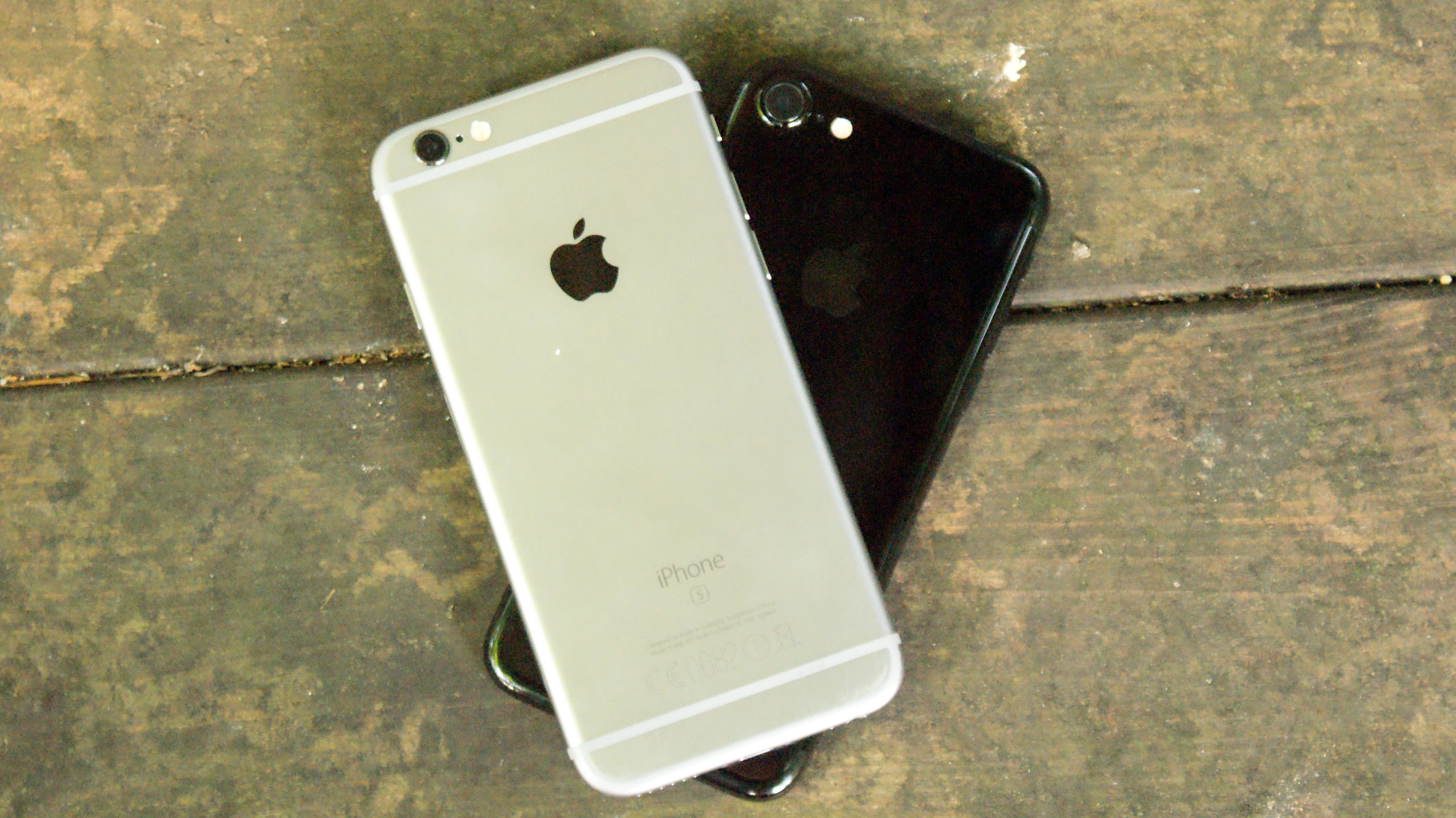
The overall design of the iPhone 7 wasn't anything new really even at launch – unless you're looking at the jet black version. This darker version has the antenna bands colored in, a black iPhone logo and a weird shine to the plastic.
It's kind of like an iPhone 5C was given the Pretty Woman treatment, if that makes any sense.
This model does scratch very easily though, so you'll need to sling it in a case the second you get your hands on it… which rather defeats the object of owning it in the first place.
The iPhone's design hasn't changed a great deal from the 6S, with the only significant alterations other than the loss of the headphone socket being the larger and more protruding camera lens, and the two speaker grilles at the bottom of the phone.
These dual grilles are deceptive though – only one actually fires out sound, while the other is entirely aesthetic, perhaps trying to distract us from the lack of the headphone jack.
As it's so similar to the iPhone 6S, it's familiar for most iPhone users. The screen is a little hard to reach with one thumb, but not overly so – and the strong build quality in the volume and silencer switch is still as evident as ever.
Apple knows how to put together a smartphone, and it's done so effortlessly again here, but if you want a 'budget' iPhone with a more modern design you might want to check out the iPhone XR - though note that it's substantially more expensive than this phone.
- You can always protect your phone with one of the best iPhone 7 cases
Screen
- 25% brightness boost and more colors are hard to spot
- Sharpness is still far lower than competitors
- Contrast ratio for movie watching could be better
The main change to the screen on the iPhone 7 is the brightness and color, as it's otherwise identical. The same 4.7-inch 1334 x 750 resolution display is on offer here, meaning that if you hold it side by side with something like the Galaxy S7 Edge, you'll notice the lack of sharpness.
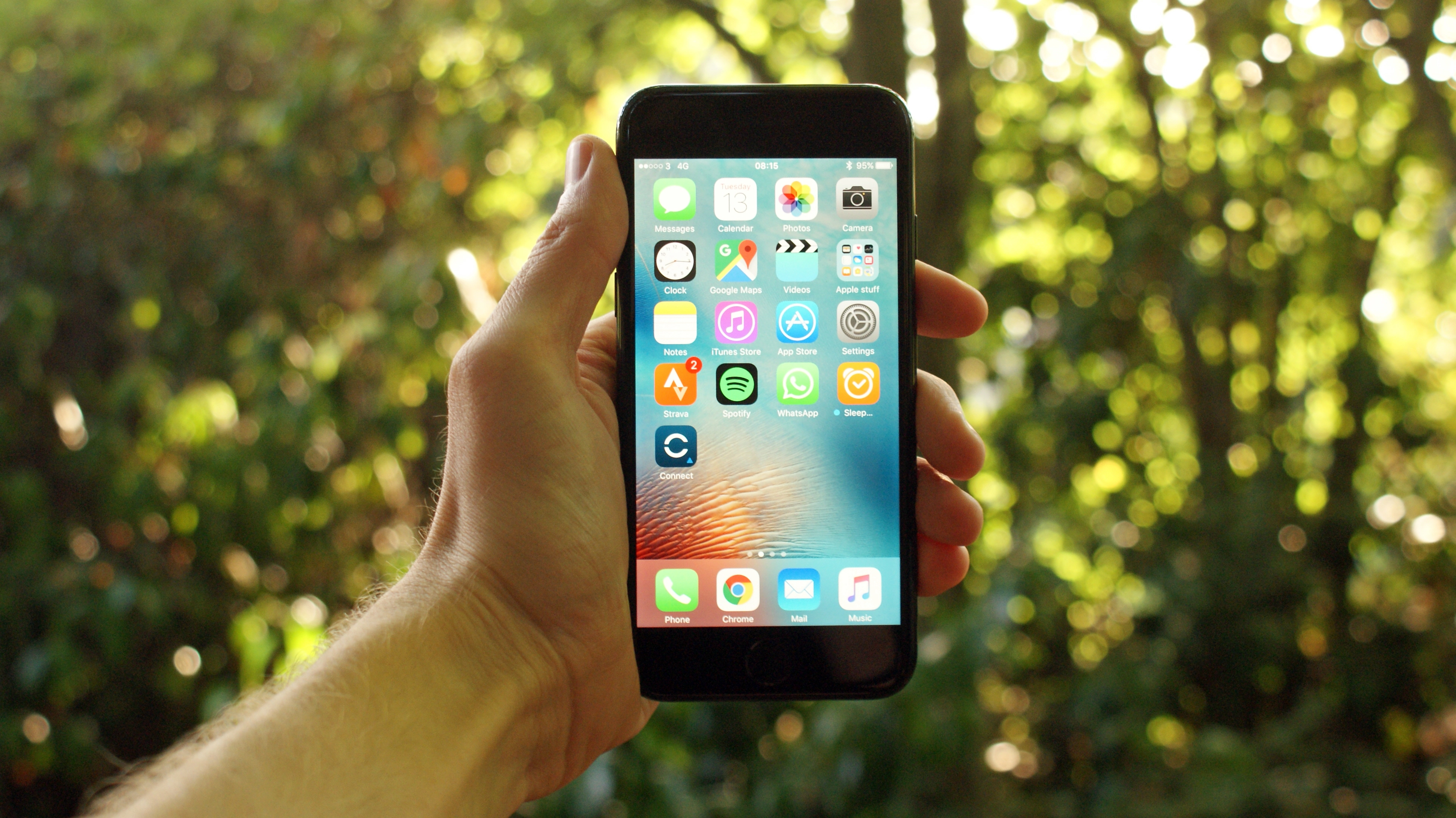
However, in day to day use you won't notice much wrong with the screen at all, as even at the HD resolution on offer you've still got a decent amount of pixels, so internet browsing and movie watching is still clean, clear and crisp enough.
There's also 3D Touch in the mix again – it's an identical system to that on the iPhone 6S, where the handset can detect the amount of pressure your finger is exerting on the screen. We were promised loads of apps that make use of this, but while most icons will do something when force is exerted, it's not often very useful.
How you view this screen depends on what phone you're coming from on – if it's the iPhone 6 or lower, then you'll love the display, as it's brighter, more colorful and just as crisp as before. If, however, you're moving from certain Android handsets, then you might struggle with the lower res, as even many budget Android phones have 1080p screens, and side by side there is a drop.
This is where Apple sets out its stall when it comes to its screens: it's not about the sharpness, or the number of nits of brightness – it's how the display looks when it's in your hands that matters.
And to that end, the iPhone 7 is a step forward from the 6S. The screen is more colorful – not in an overpowering technicolor way, but just in terms of richness, with the depth of color matching that of the 'cinema screen' according to Apple. It's a hard metric to test, but the color quality is certainly high.
The brightness is also improved in the right way – again, it's not overpowering, but more of an upgrade in the right way, giving you an easier look at the screen when it's as bright as it can go.

The white balance of the display is also improved to a warmer tone – there were rumors that Apple was going to be using the same True Tone display as seen in newer iPads.
One thing Apple badly needs to sort out, though, is its auto brightness feature. The current setup is to blind you if you look at the phone in the dark, where other phones are more adept at dropping right down to the lowest possible brightness to save you from burning out your retinas.
Apple will maintain that it's done enough with the screen to make it a great viewing experience without packing in too many pixels and forcing the battery to work hard unnecessarily.
To a degree that's right, but in truth if this is the best that can be done on battery life then it's something of a problem, as the iPhone 7 isn't stellar at all in that department.
That's the feeling that comes across when watching movies on the new iPhone: it's fine, but nothing special. The contrast ratios don't feel as clear and crisp as on some other phones - including newer iPhones - and the size is a little small compared to others.

Perhaps that's an unfair criticism. The size of the screen is precisely what attracts some people, and as such it's presumably acceptable for media.
However, the size of the phone should be able to accommodate a larger display, pushing closer to the edge of the handset rather than the amount of bezel used. Of course, it's terribly naive to just say things like 'make the screen bigger!' 'Put in more battery!' 'Shove in more pixels!' as everything is a trade-off.
But, as other brands seem to have managed it, it seems that thinner bezels are at least possible.
Talking of watching movies, the dual speakers that Apple has popped into the new iPhone are a real upgrade. The location at the top and bottom is a little weird, given that they fire in different directions, but the sound quality is much better than before.
They don't have the impressive sound quality of the speakers on the iPad Pro, but that has extra chambers and four speakers, so that's understandable.
The audio is a little on the tinny side, but for just showing off a YouTube video or watching a movie in a quiet room they're more than fine. It's not a perfect setup for listening to music – there needs to be more bass for that – but Apple has pushed things forward well here.
- iPhone 7 tips and tricks: how to make the most of your new iPhone
