
 Become a TechRadar Insider





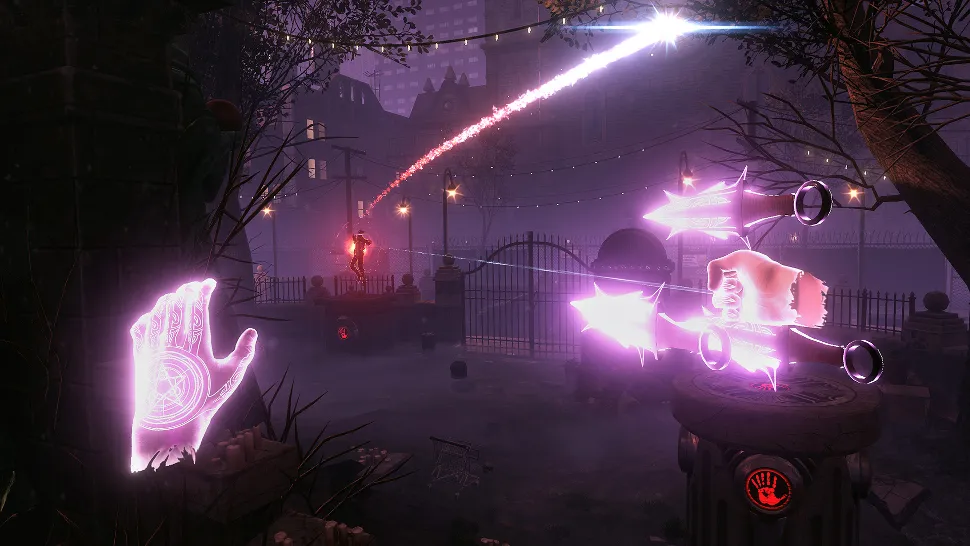
We’ve seen a huge growth in the popularity of eSports in recent times – to the point where big games have been covered on Sky TV – but will competitive matches be something that can help stoke the popularity of VR gaming, which remains a rather niche pursuit? Intel certainly believes so, with the company announcing a big push behind VR eSports to this end.
Over at E3 2017, Intel announced that it will collaborate with eSports giant ESL and Oculus to form the VR Challenger League.
This will kick off next month, featuring professional VR gamers slugging it out in a pair of virtual reality games: The Unspoken (by Insomniac Games – pictured above) and Echo Arena (from Ready At Dawn Studios).

The former is a one-on-one action game featuring dueling mages flinging spells at each other and summoning beasts, and the latter is an as yet unreleased team-based five-versus-five futuristic zero-gravity clash in which players have to score goals with a Tron-like disc.
Furthermore, Intel is actively sponsoring Echo Arena, so the game will be a free download for Oculus Rift when it’s launched on July 20 (at least for the first three months).
- VR is also coming to the MacBook Pro
Online and offline
This VR eSports league will play out in online matches through which top players will qualify for competition events around the world, culminating in the finals, which will be held at the Intel Extreme Masters World Championship in Poland next year. The available prize money pool will top $200,000 (around £155,000, AU$265,000).
If you fancy yourself as a VR hotshot, note that the online qualifiers start on July 12.
- What's going on with HoloLens?
As mentioned, virtual reality gaming remains a niche for obvious reasons – not the least of which is the cost of the pursuit, and physical problems such as trailing cables running from headset to PC, or issues with nausea for some folks – but it will be interesting to see if watching VR pros in full-on eSports action can stoke enthusiasm on a broader level.
Of course, it’s still very much early days for Intel’s league, and the VR games involved, but virtual reality brings forth an interesting element in that it’s closer to real sports in terms of being a more physical activity than traditional gaming – a ‘purer’ sports experience compared to sitting at a mouse and keyboard.
- E3 is the world's largest exhibition for the games industry, stuffed full of the latest and greatest games, consoles, and gaming hardware. TechRadar is reporting live from Los Angeles all week to bring you the very latest from the show floor. Head to our dedicated E3 2017 hub to see all the new releases, along with TechRadar's world-class analysis and buying advice about the next year in gaming.