





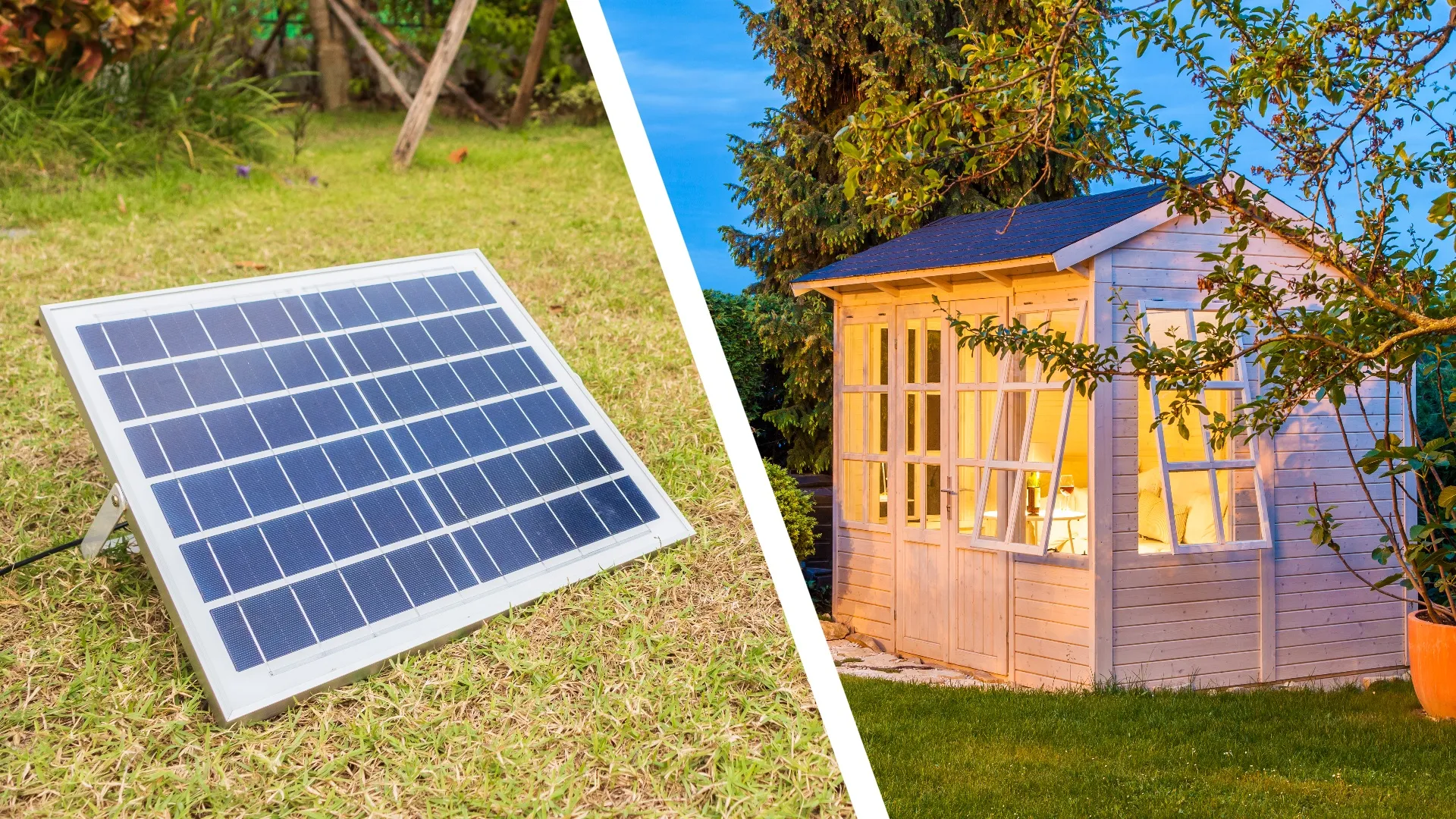
If your shed tends to sit unloved and unused during the darker months, adding power will make it much more useful year-round — whether you want to use a heater, add lights, charge power tools, or just keep your phone and laptop charged up. You don't have to go through the complicated process of laying an electricity cable, either; an off-grid solar generator means you can upgrade your shed in an afternoon.
To find out more, I spoke to Brady Sun, Head of Europe at solar generator company Jackery. He gave his top tips for powering your shed safely, starting with the key question: why go off-grid at all?
"Running 20-metre extension cords across damp lawns and patios creates trip and water-exposure risks, while trapping cold air inside your house through open windows," Sun explains "Installing a plug-and-play solar generator inside your shed creates a completely wireless, self-contained power hub — giving you mains-free electricity without the £1,000+ cost of professional electrician fees, armoured cabling, and trench digging."

Become a TechRadar Insider by simply clicking 'Join Now' at the top of this page. Have a question? Please email membership@techradar.com
Choose the right hardware
You can pick up a whole solar power kit, including panels, cables and battery, for well under £1,000 — and because the battery has UK plug sockets built-in, you can start using it immediately without making any modifications to your shed. But which kit should you choose? Sun says it depends on what you want to power.
"Before choosing your setup, calculate the total running and peak (startup) wattage of the devices you plan to run simultaneously," he says.
"If you’re running LED strip lighting, Wi-Fi extenders, laptops, or small battery chargers (~100W-300W load), a compact 500Wh to 1,000Wh unit (like [the] Jackery Explorer 1000 v2) provides quiet, reliable power.
"High-draw power and garden tools (table saws, lawnmowers etc) and electric heaters demand high continuous output and substantial surge capacity. Opt for a 2,000Wh+ expandable system (like the Jackery Explorer 2000 Plus v2) capable of handling 3,000W+ peak surges."
Set up a workbench charging hub
So you've got your solar panels and power station set up. Now you're ready to start tackling all those DIY jobs you've been putting off.
"Flat 18V tool batteries are a major bottleneck during autumn garden upgrades and DIY projects," says Sun. "Setting up a solar power station as a permanent workbench charging hub ensures you to continuously recharge cordless tool batteries right where you work. Paired with solar input, you can cycle through tool batteries continuously without stepping foot inside the house."
No more excuses — you can now fix those broken fence panels and trim that hedge without worrying about your tools running out of juice. It'll be great for a leaf-blower as well.

Optimise solar input
As the days get shorter, positioning your solar panels correctly is particularly important. Sun advises angling foldable solar panels at 30-45 degrees, facing south, to catch lower autumn sun trajectories.
"Choose a power station that supports pass-through charging," he adds. "This allows solar panels to feed power into the battery while the battery simultaneously powers shed lights or laptops."
You should also bear in mind the wet and cold weather that's just around the corner. "Feed solar cables through a rubber grommet or sealed cable port in the shed wall to maintain weatherproofing," Sun recommends.
Protect your battery
Finally, remember to take care of your battery in an unheated shed, which will experience moisture buildup and sharp temperature drops during autumn and winter nights.
"Always place your power station on a raised shelf, workbench, or cabinet rather than directly on cold concrete or wooden shed floors to protect it from dampness and dust," says Sun.
You should also pay attention to cold-weather charging limits. "Lithium (LiFePO4) batteries perform best when charged above 0°," Sun adds. "During freezing winter spells, insulate your setup or bring the battery unit indoors overnight to maintain optimal charging efficiency."

Follow TechRadar on Google News and add us as a preferred source to get our expert news, reviews, and opinion in your feeds.
