





It would be fair to say that AI and the rise of chatbots have kicked off a colossal gold rush for fitness apps. The combination of generations' worth of training knowledge packed into a device you carry to the gym in your pocket meant the best workout apps were already popular, but now they can adapt on the fly to your needs or queries.
Fitbod is one of those apps, and it’s one this writer knows very well, having used it for a couple of years. It’s a workout app with a big focus on generating plans for your chosen goal, whether that’s powerlifting or weight loss, and blends cardio exercises with an impressive catalog of strength exercises.
I caught up with Allen Chen, Fitbod’s cofounder and CEO. He’s a UCLA computer science graduate who’s also a NASM-certified personal trainer, making him something of a unicorn in the space.
A decade under the influence

Fitbod launched in 2015, long before the letters ‘A’ and ‘I’ were shoehorned into just about any product. I asked Chen what the biggest changes in the development of fitness apps have been in the last 10 years.
“The biggest shift is the move from generic training plans to truly personalized strength training, but the most striking thing is actually what hasn’t changed,” he said.
“Resistance training was the core of health and fitness when we started, and it remains the core today. It transcends trends. You’re seeing gyms actively swap out cardio equipment for free weights and functional training spaces because that’s what members want.”
“What has changed is how people relate to their workouts. When Fitbod launched, most users were following generic programs they found online, the same templates everyone else was running. Today, people expect personalization. They want a program that reflects their individual schedule, available equipment, recovery status, and fitness goals.”
“What’s new is that they also expect understanding and support, not just a recommendation. It’s no longer enough for an app to tell you what to do. People want to know why they’re seeing a certain exercise, weight, or workout structure, how it connects to their goals, and what to do when progress slows down. That’s the direction the category is moving in, and it’s a big part of where we’re investing.”
Chen says Fitbod is tied to real strength-training inputs, and not generic broad-knowledge prompts. “The foundation of Fitbod has always been adaptive workout planning. The first version of the app was about solving a hard algorithmic problem: given your workout history and muscle recovery state, what’s the optimal workout today? That was genuinely novel in 2015.
“The recent AI acceleration has dramatically expanded what’s possible on top of that foundation. We’re moving from simply generating the right workout to helping members understand their data, interpret their progress, and get more active coaching inside the app.”
Fitbod doesn’t offer a chatbot like the Google Health Coach, but that’s going to change soon, with an upcoming feature called Coach Chat.

“We think about [Coach Chat] in four roles,” Chen explains. “First, as an interpreter, it helps explain things like, 'How does Fitbod help me improve my squat?' Second, as an analyst, it can summarize patterns and help diagnose issues like, “Why has my squat plateaued recently?”
“Third, as a coach, it can guide the next step: 'How do I break out of this plateau?' And fourth, as a motivator, it can reinforce progress and help users stay consistent when they feel discouraged.”
Coach Chat is one part of a salvo of improvements that also includes Workout Insights. This will help users understand why exercises and weights are recommended. Chen says AI can make Fitbod feel “much more human, more transparent, and more supportive”.
“When users hear ‘AI,’ they sometimes expect instant magic. The reality is that the system gets materially better with more user data. Someone with six months of logged workouts gets a fundamentally different experience than someone in week one. Keeping users consistent long enough to see that compounding effect, that’s still the real product challenge.”
“This year alone, we’ve rolled out and expanded features like Focus Exercises, Exercise Percentiles, Injury Mode, Plate Calculator, Live Heart Rate, and broader localization work. We’ve also been developing prototypes and internal tools, including Coach Chat, Chart Generation, Insights M0 and M1, an Internal Evaluation Tool, and a Pydantic Insights Tool, all aimed at making the product smarter, more explainable, and more useful.”
Next steps

With AI becoming an increasingly common part of daily life, Chen says it’s going nowhere.
“In two to three years, AI will have crossed the threshold from novelty to expectation. Users won’t just want an app that generates a workout, they’ll expect it to explain itself, adapt in context, and support them through the inevitable ups and downs of training.
“Systems that can interpret training history, diagnose patterns, explain recommendations, and motivate users in a way that feels timely and personal. In other words, the best products won’t just say, 'Here’s your workout.’ They’ll also be able to say, “Here’s why today looks different, here’s what to focus on, and here’s what your recent data suggests.”
Can users trust programs build by AI? Chen, unsurprising, says yes — and he also doesn’t think trustworthy AI coaches as a concept will devalue personal trainers or traditional programming.
“Trust is a huge issue in AI fitness. If a user can understand why they’re being asked to squat lighter today, or why a plateau might be happening, they’re far more likely to stay engaged and consistent.
“As for devaluing traditional programs, I’d argue the opposite. AI handles more of the science, interpretation, and day-to-day adaptation, which frees coaches to focus on what they’re uniquely good at: judgment, accountability, and the human relationship. The best coaches will become more valuable, not less.”
That trust is important when Fitbod (or another app) recommends you go for a PB when you’re ready, but how does the company balance the need to push a user to a new goal witb the risk of injury?
“It’s something we take seriously. Any system generating workout recommendations at scale carries injury risk if it isn’t built with the right constraints,” Chen acknowledges.
“Most common failure modes are volume spikes, too much, too fast, and failing to respect recovery signals. Fitbod’s architecture is specifically designed to guard against that. The muscle recovery model tracks fatigue at the muscle-group level, and the system adapts recommendations based on training history, recovery, performance, and user feedback.”
“We’re conservative with newer users, and the app is built to adjust if someone struggles with a weight, takes time off, or changes exercises.”
“That same philosophy carries into newer product work. Features like Injury Mode are part of a broader push to make Fitbod more supportive when real life interrupts training. And with future coaching features, we want to help users understand not just what to do, but when to scale, when to modify, and how to train more responsibly.”
“Responsible AI fitness isn’t about pushing people harder at all costs. It’s about helping them progress safely and sustainably.”
Apple’s Health app and Android’s Health Connect functionality will have a role to play in that future, too.
“The long-term vision is a system that knows not just what you lifted last Tuesday, but how well you’ve been recovering, how your heart rate is responding during training, and what that means for what you should do today. Over time, better data infrastructure makes it possible for coaching to become more proactive.
"Instead of only reacting to what a user logged after the fact, the app can become better at helping them understand what’s happening in the moment and what adjustment makes sense next.”
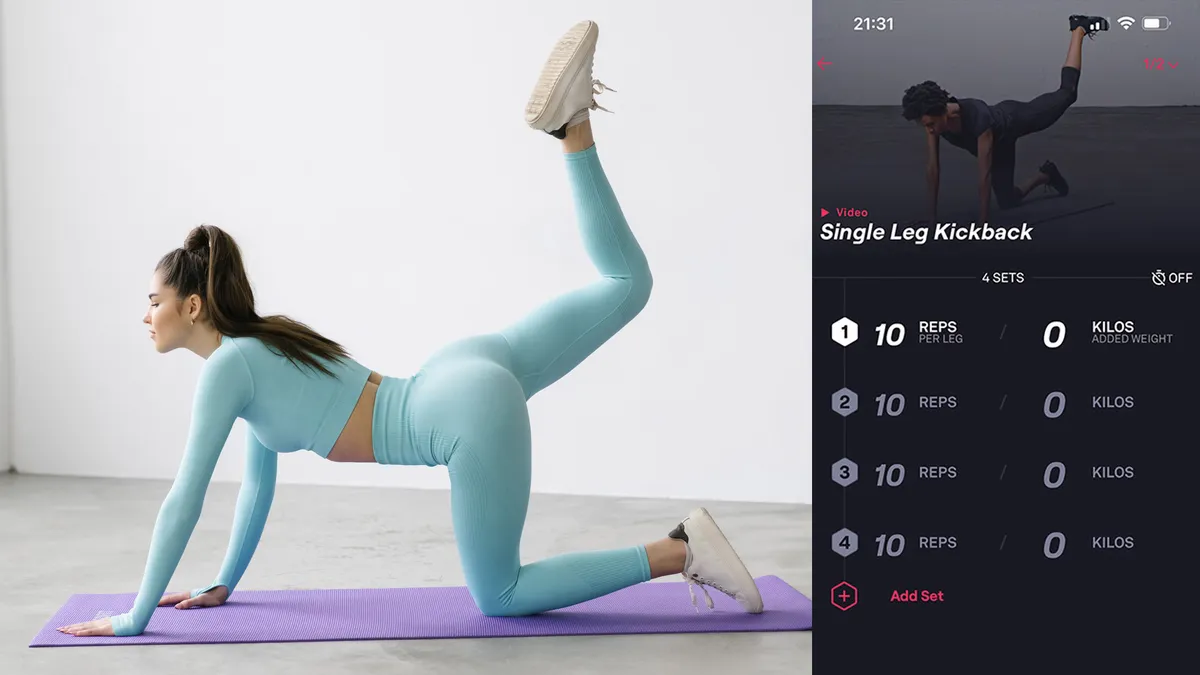
Finally, I wanted to ask how best to take advantage of Fitbod’s feature set. I’ve been using it for a while, but it never hurts to learn more.
“Treat setup the way you’d approach your first session with a personal trainer. Give it real information: your actual fitness level, your real goals, your actual schedule, and your real equipment. The quality of what Fitbod generates is directly proportional to the quality of your inputs.”
“Second, log consistently, especially when you change something. When you swap exercises, adjust weights, change reps, or work through a plateau, that data helps the system learn. The program compounds with use.”
“Third, use the features that make progress visible. Focus Exercises [like squats, bench press, and other cornerstone lifts] are a great example because they help users stay anchored to lifts they care about most. Metrics, percentiles, charts, and insights all matter because they turn vague feelings into something measurable. That’s especially important on the days when progress feels invisible.”
“And more broadly: strength training is one of the highest-leverage health investments most people can make. It affects metabolism, bone density, injury resilience, longevity, and day-to-day quality of life. If you’re not doing it, start. If you are, get more systematic about it. That’s exactly what we’re building Fitbod to support.”

Follow TechRadar on Google News and add us as a preferred source to get our expert news, reviews, and opinion in your feeds. Make sure to click the Follow button!
And of course, you can also follow TechRadar on YouTube and TikTok for news, reviews, unboxings in video form, and get regular updates from us on WhatsApp too
