


Upgrading your GPU is a momentous occasion for any die-hard PC gamer, and so it was with great joy that I finally retired the Nvidia RTX 3090 card inside my home desktop with a shiny new RTX 5070 earlier this year.
Now, you might be thinking ‘but wait, isn't that technically a downgrade?’ and that's an understandable reaction. After all, the 3090 was the original flagship card of its generation (before the release of the 3090 Ti, anyway), and packs a whopping 24GB of VRAM compared to the 5070’s 12GB. Sure, it's two generations older, but it's also two steps down the Nvidia GPU hierarchy – four steps, in fact, if you want to include the Ti variants.
In practice, though? The new RTX 5070 Founders Edition in my build cruises past my old 3090 in performance, and delivers some added bonuses too (which I'll get into later in this article).
It's also very competitively priced; mine cost me £540 (around $725 / AU$1,100), while the launch price of the 3090 back in 2022 was a whopping £1,399 ($1,499 / AU$2,249). With such a vast difference in pricing, you might expect that three years of improvements wouldn't be enough to close the gap – but that's not the case.

New is always better
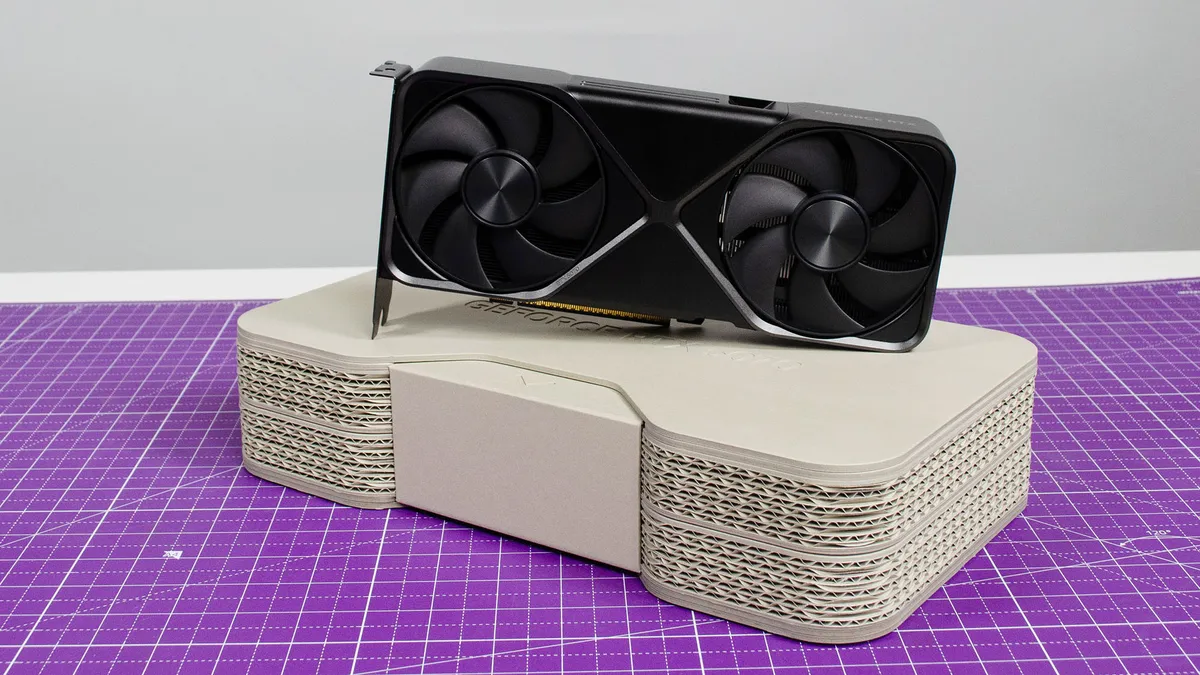
Our resident GPU expert John Loeffler might have preferred the RTX 5070 Ti over the non-Ti version when he reviewed them both earlier this year, but I can attest that the regular 5070 is still a powerful and price-smart upgrade for anyone not already rocking a 4000- or 5000-series card.
Speaking as someone who primarily plays at 1440p, the 3090 was undeniably overkill for me, but I did bust out my 4K testing panel for some comparison work after swapping out the GPU. You don't get to upgrade your hardware as a tech journalist without that little voice in the back of your head telling you to properly test and write about it.
So I sat down and ran some tests. I wasn't expecting too much; while the 5070 has the advantage of newer microarchitecture and support for fancy Nvidia software features such as DLSS 4 resolution upscaling and Multi Frame Generation, I was under the impression that it was a fundamentally less powerful card than the 3090 – purely from a specs perspective, anyway.

The results I got, though, were impressive. In my home desktop, with an AMD Ryzen 5800X3D (still one of the best processors ever made, in my opinion) and 32GB of RAM, I was averaging about 15% better performance on the 5070 across a range of games, and that was without using any kind of frame-gen boosts.
Some had even more pronounced improvements over the 3090; I'd been getting framerates just shy of 50fps in Cyberpunk 2077 at 4K Ultra settings with DLSS turned on, but the 5070 was clearing a stable 60fps with ease.
Generation sensation
Now, I'm still not 100% convinced by Nvidia’s Multi Frame Generation mode, which is exclusive to RTX 5000 cards. Stepping up from the 4000 generation’s 2x frame insertion to a new maximum of 4x sounds good on paper, but my experience with the 5070 was pretty mixed in this regard.
It does seem to vary from game to game, so it's possible that some degree of responsibility lies with the game devs (after all, PC game optimization seems to get worse with every passing year), but some games felt like a blurry mess while running MFG’s 4x mode.
2x seems to be stable in most games that support it, though – I know frame-gen has been historically controversial, but it's already improved a lot from its first iteration, to the point where the standard 2x version is essentially a free performance boost in some games. DLSS is more or less perfectly stable in the majority of titles at this point, too.

In terms of real-world performance in the games I've been playing lately – Warframe, The Alters, and DOOM: The Dark Ages – I saw a small but noticeable uptick in performance once I'd installed the new GPU and optimized everything via the new (and greatly improved) Nvidia App.
DOOM felt mostly the same, but is admittedly the best-optimized title of the lot; I was already cracking triple-digit framerates there. But Warframe clearly benefited a lot from the new GPU, leaping up by a clean 20 frames per second at maximum graphical settings.
If, like me, you've been sitting on a GPU that's starting to show its age – and that's quite a lot of you, judging from the latest Steam Hardware Survey – then the RTX 5070 is seriously worth considering.
With a reasonable price point (which you can actually find it at, unlike the higher-end 5000 cards) and performance at 1440p and even 4K that beats the flagship cards of older generations, it's an easy recommendation.
