





For the last year or so I have mostly used just one pair of wireless earbuds, outside of the many pricey sets I've reviewed – the Samsung Galaxy Buds FE.
For casual listening, running and the gym (plus blocking out the sound of nearby annoying people while trying to work), the Galaxy Buds FE have done the trick.
I mostly use Android phones, so the big iPhone-shaped problem we had in our Galaxy FE review has been no issue for me. And they are decent all-rounders. Their battery life is OK, their ANC is solid enough and their sound is pretty close to the Harman curve designed to satisfy the average western listener, with a bit of extra bass. Because apparently everyone likes a bit of extra bass.
I’ve stuck to the Samsung Galaxy Buds FE in part because I’ve been mostly satisfied with them. But laziness has also been a massive component here, and it's finally time to shake things up in 2026.
Shake it off
I’m doing this with a category of earphones that often goes by a colloquial name in online hi-fi communities that may sound like an insult: Chi-Fi. Many of you can probably guess what this stands for – it’s Chinese hi-fi.
A vast amount of hi-fi tech is made in China. Not the Galaxy Buds FE, apparently, which come from Vietnam, but a whole host of big-name pairs are. But this name refers to hi-fi kit made by actual Chinese brands.

Open that box and you’ll find a whole pantheon of names most people haven’t heard of, but that light up enthusiast online spaces like Head-Fi and Reddit. It’s audio kit by nerds, for nerds.
And they are really the only companies truly pushing things in areas most people think are dead, like the traditional wired IEM (in-ear monitor) earphone. In this part of the hi-fi world, things have never looked so vibrant.
The wild, wonderful world of Chinese hi-fi
Ever heard of Moondrop, 7Hz, Shanling or Letshuoer? These are some of the bright stars of the scene. And while most 'influencer' products seem to make the world worse, headphone YouTuber Crinacle even started his own brand this year, CrinEar, and is by all accounts coming up with awesome products.
These companies deserve your attention for one key reason: with them you’ll get the kind of sound per dollar that just isn’t available from Sony, Bose and co.

The caveat is that for the very best deal you’re looking at classic, cabled IEMs. Dusty dinosaurs of the audio museum. Sure, lots of the most popular designs are available with a phone-friendly USB-C cable as well as a 3.5mm, but many of us now find the idea of having a cable dangling out of our phones a bit weird.
But you know what else you don't get with those earphones? The annoying need to keep yet another thing charged.
Say hello to Letshuoer
I have started my new deep dive into this part of the headphone world with a pair of Letshuoer S12 earphones. They came out in 2022 and there have been a few follow-up pairs since. But they’re still sold online, and often at a healthy discount. I got mine for just £45 (around $60 / AU$90), down from their usual $99 / £89 / AU$159. That’s why I picked up a pair.
However, even at their original price, these things blow the Samsung Galaxy Buds FE out of the water for what headphone nerds often describe as a headphone’s technical performance characteristics. This is the stuff you can’t get out of a headphone simply by tuning it well: think imaging, attack, timbre/texture and the resolution of the earphone’s detail.

It’s what you start thinking about when you go a step beyond whether a headphone has too much bass, or dull-sounding treble. And it’s where earphones start to get exciting, and worth nerding out over.
Headphones of other kinds
The Letshuoer S12 are also doubly nerdy because they have an unusual kind of driver, a planar magnetic one.
These are known for their low distortion, accurate and fast-responding sound, thanks to the way the driver diaphragm is sandwiched between magnets. It allows for more uniform driver movement that makes a standard dynamic driver look positively wibbly-wobbly – were you to slow down the driver movement using a super-zoomed slo-mo camera, anyway.
It’s this very tech that made me get my first ever major pair of Chinese headphones, the brilliantly-named HiFiMAN HE-5, all the way back in 2009.

You will see this kind of slightly more unusual audio tech across the entire enthusiast Chinese hi-fi space. For under $50 (or around £40 / AU$75), you can pick up a pair of IEMs with five drivers per earpiece, like the Linsoul KZ ZS10 Peo. It’s the stuff that used to be the preserve of earphones costing hundreds upon hundreds of dollars, if not more.
More drivers doesn’t necessarily make a better earphone. But what makes the Chinese IEM scene so special is that you’re given an opportunity to play around with headphone tech, getting to know it and learn about driver tuning approaches, without spending a fortune.
And as that’s kind of the pervasive vibe across the audience, it’s generally easier than you’d think to offload a pair of IEMs from a brand none of your friends have ever heard of too, by simply selling online.
Why the norm is boring now
Take a step into this world for a minute and you realise how much the mainstream headphone scene has become obsessed with everything but the most important thing, the sound.
A decade ago the first true wireless earbuds came out, the 2015 Bragi Dash, while Apple’s AirPods arrived the year after in 2016.
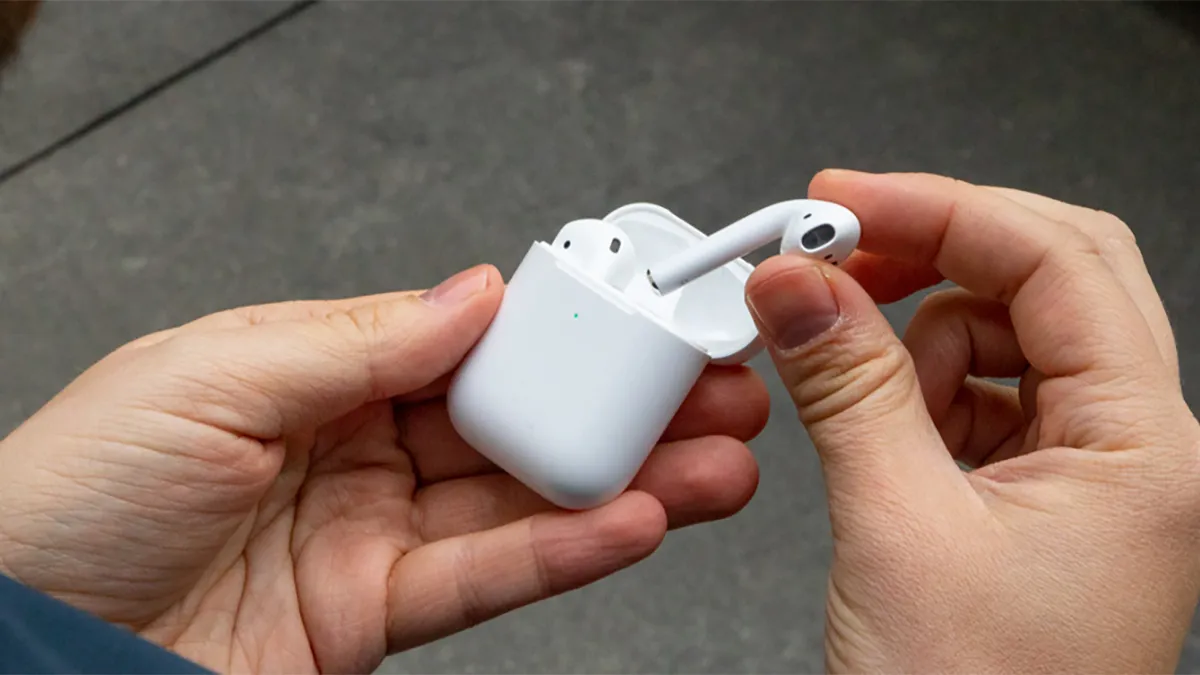
Since then we had the race to, well, make true wireless earbuds work properly – Bluetooth reliability problems were a big thing in those early years.
There was the race to increase battery life, to boost the prevalence and effectiveness of active noise cancellation. But actual sound quality has kind of taken a back seat, amplified in the recent trend for 'open' earbuds that are compromised by design. If you think that’s a shame, maybe it’s time to get some Chinese IEMs in your ears.
The one word of warning is that if you do try to get the best of all worlds, with a Chinese IEM earphone that also has active noise cancellation and wireless, you may end up a little disappointed.
As much as big audio brands can be criticized for some of their approaches, the work they’ve put into ANC, wind noise reduction, call quality and transparency modes is easy to undervalue – and pretty awesome.
And the upcoming Chinese crowd of companies? Well, the ones that bother with that techy stuff at all are a work-in-progress. But scene star Moondrop is getting closer by the month…
Follow TechRadar on Google News and add us as a preferred source to get our expert news, reviews, and opinion in your feeds. Make sure to click the Follow button!
And of course you can also follow TechRadar on TikTok for news, reviews, unboxings in video form, and get regular updates from us on WhatsApp too.

➡️ Read our full guide to the best open earbuds
1. Best overall:
Shokz OpenFit 2+
2. Best cheap around-ear design:
Huawei FreeArc
3. Best cheap clip design:
Shokz OpenDots One
4. Best high-end clip design:
Bose Ultra Open
